 CoreMacro
Find out more
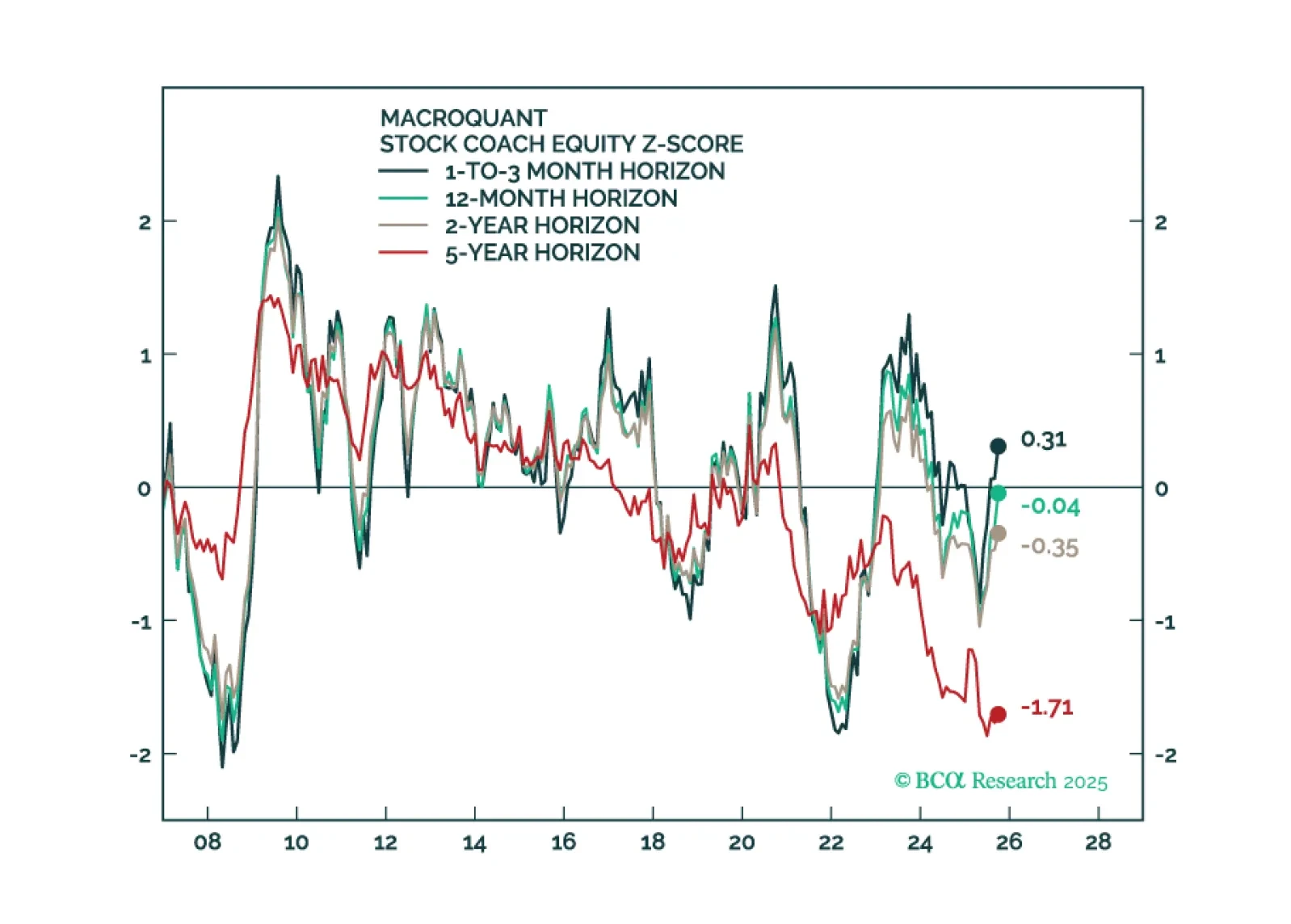
In this Q4 Strategy Outlook, we discuss where we stand on our recession call, the outlook for stocks and bonds in various scenarios, why investors are misunderstanding the impact of AI on corporate profits, whether the US dollar has entered a structural downtrend, our perspective on the yen, gold and other commodities, and much more.
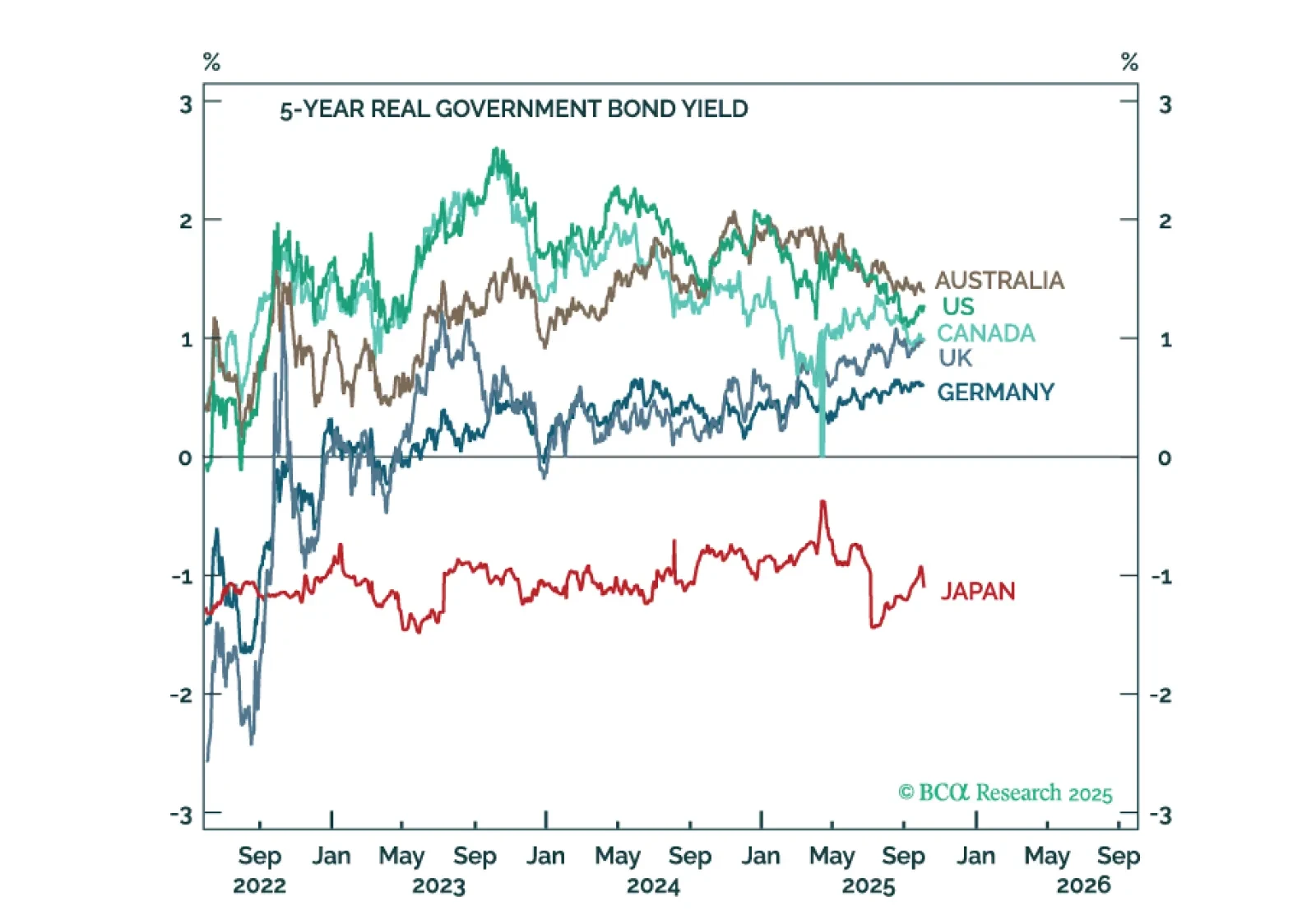
The surprise election of Sanae Takaichi as Japan’s ruling party new leader has delivered yet another blow to the beleaguered yen. Takaichi is widely expected to pursue the basic tenets of Abenomics – easier fiscal and monetary policy.
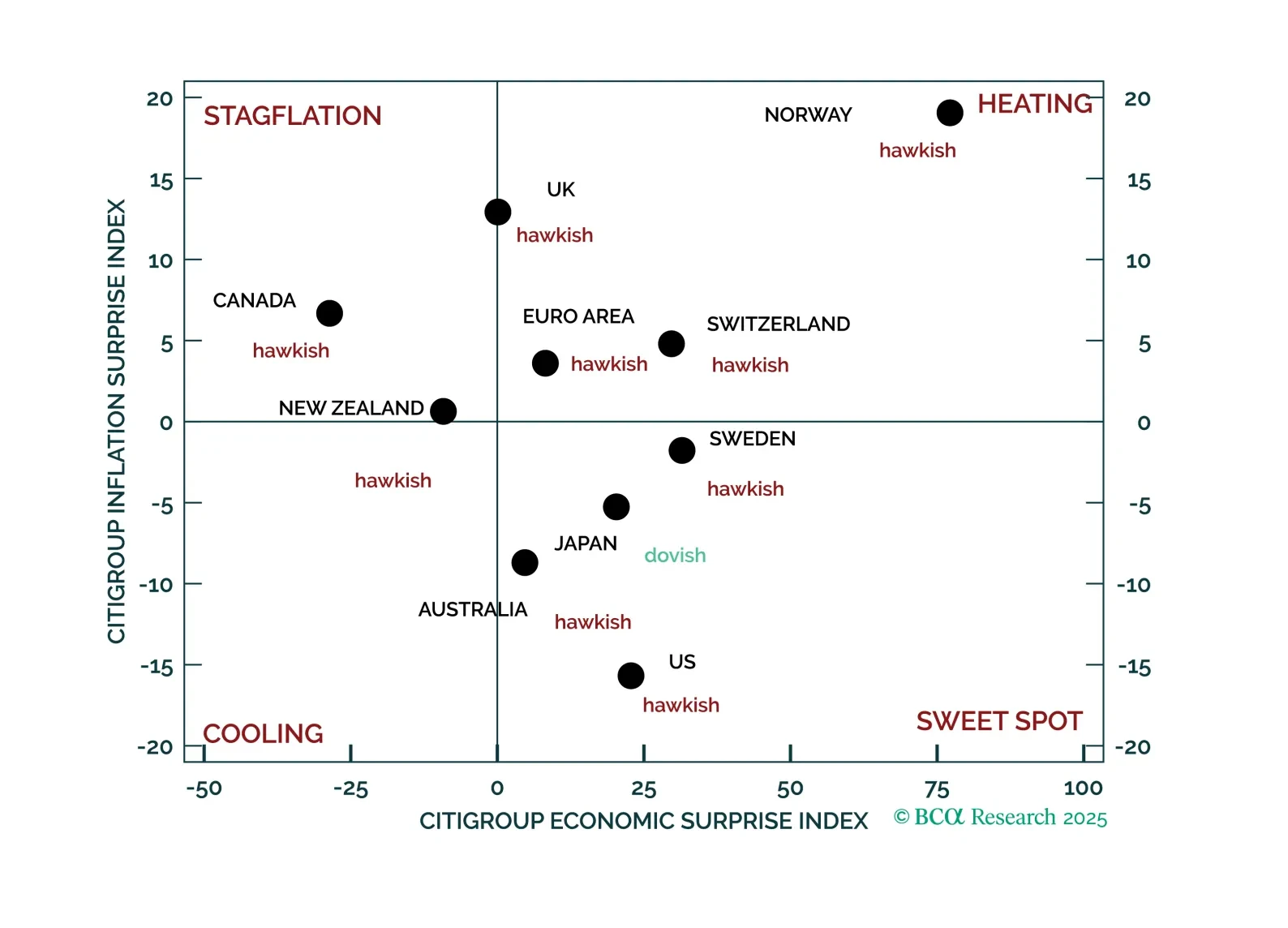
In this update, we apply our Macro Surprises framework to equities for the first time. Overall, the message is broadly consistent with our current equity views: Investors should favor Eurozone equities and continue to overweight cyclical sectors relative to defensive ones.

The K-shaped economy aptly describes the bifurcation between low- and high-end households but it’s not something investors should celebrate if they want the expansion to continue.
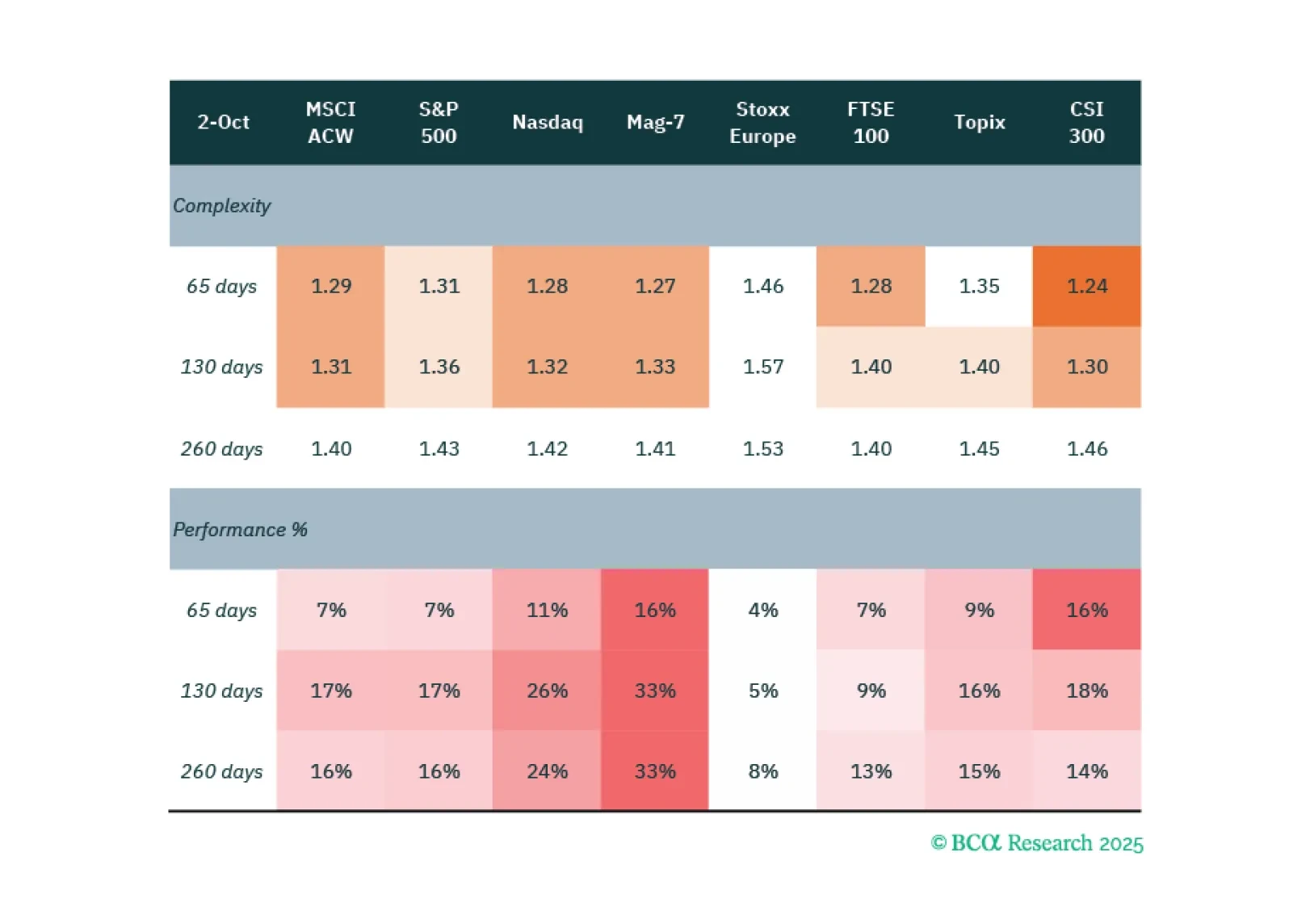
A short guide on how best to use and interpret our real-time fractal heatmap for asset allocation.
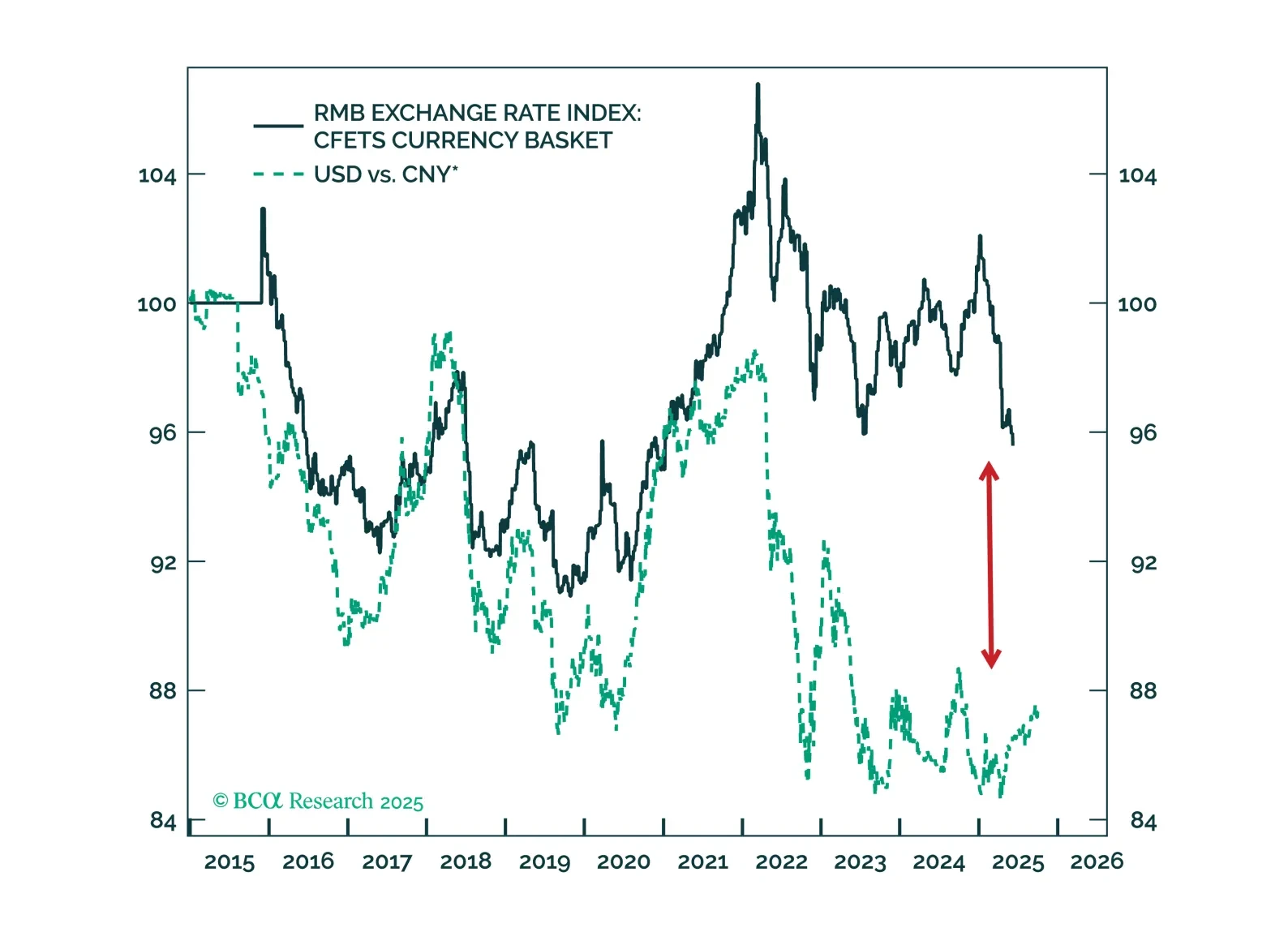
The CNY/USD has room to appreciate both cyclically and structurally, while nominal yields on China’s long-duration government bonds are set to fall. This combination supports Chinese equities.
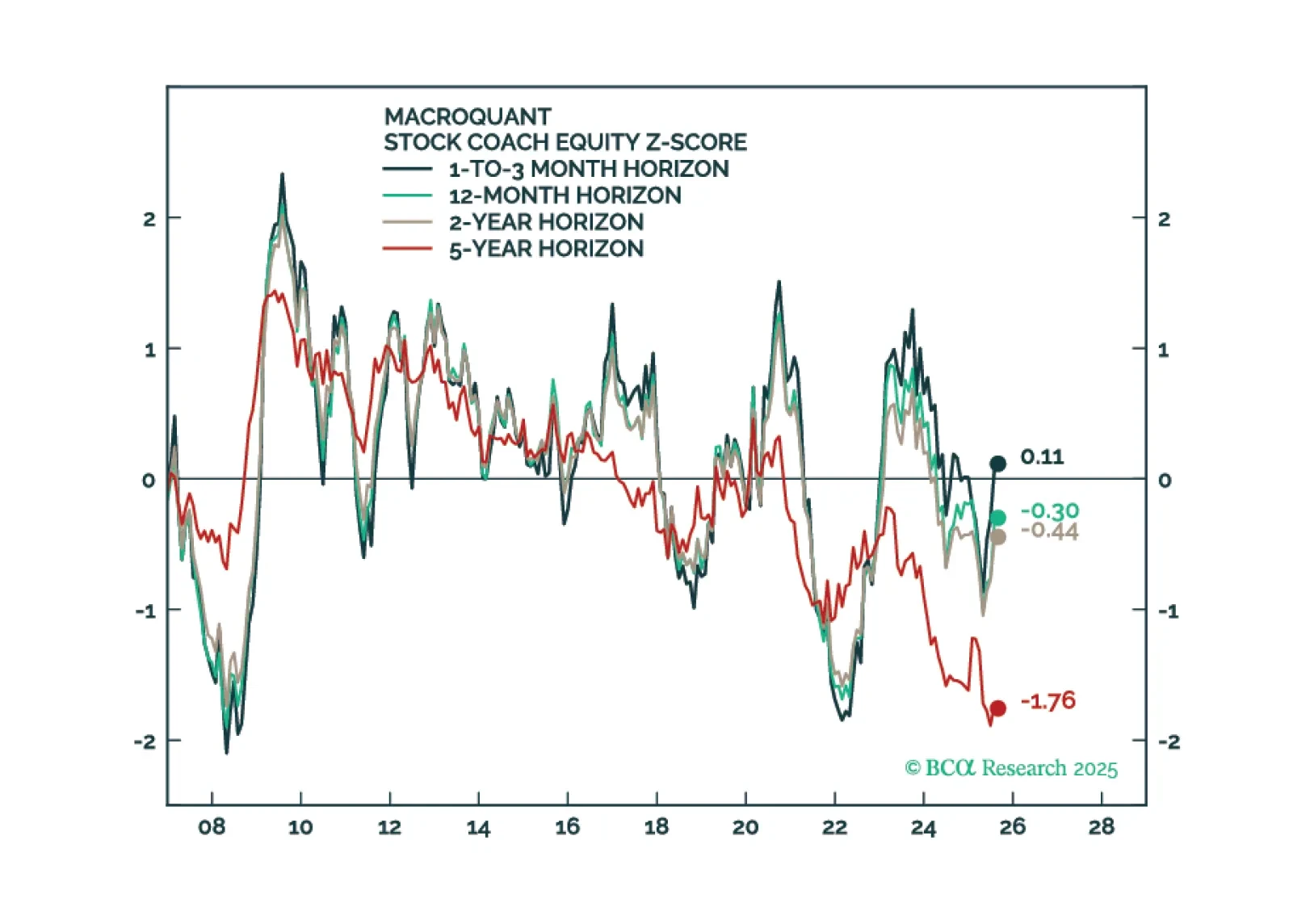
MacroQuant is neutral-to-slightly positive on stocks on a tactical 1-to-3 month horizon but sees downside risks over a longer-term horizon. Its favorite equity sectors are communication services and IT. Regionally, it prefers EM and US equities. The model is bullish on duration. It remains bearish on the US dollar. It is upbeat on gold and copper but is slightly negative on oil.
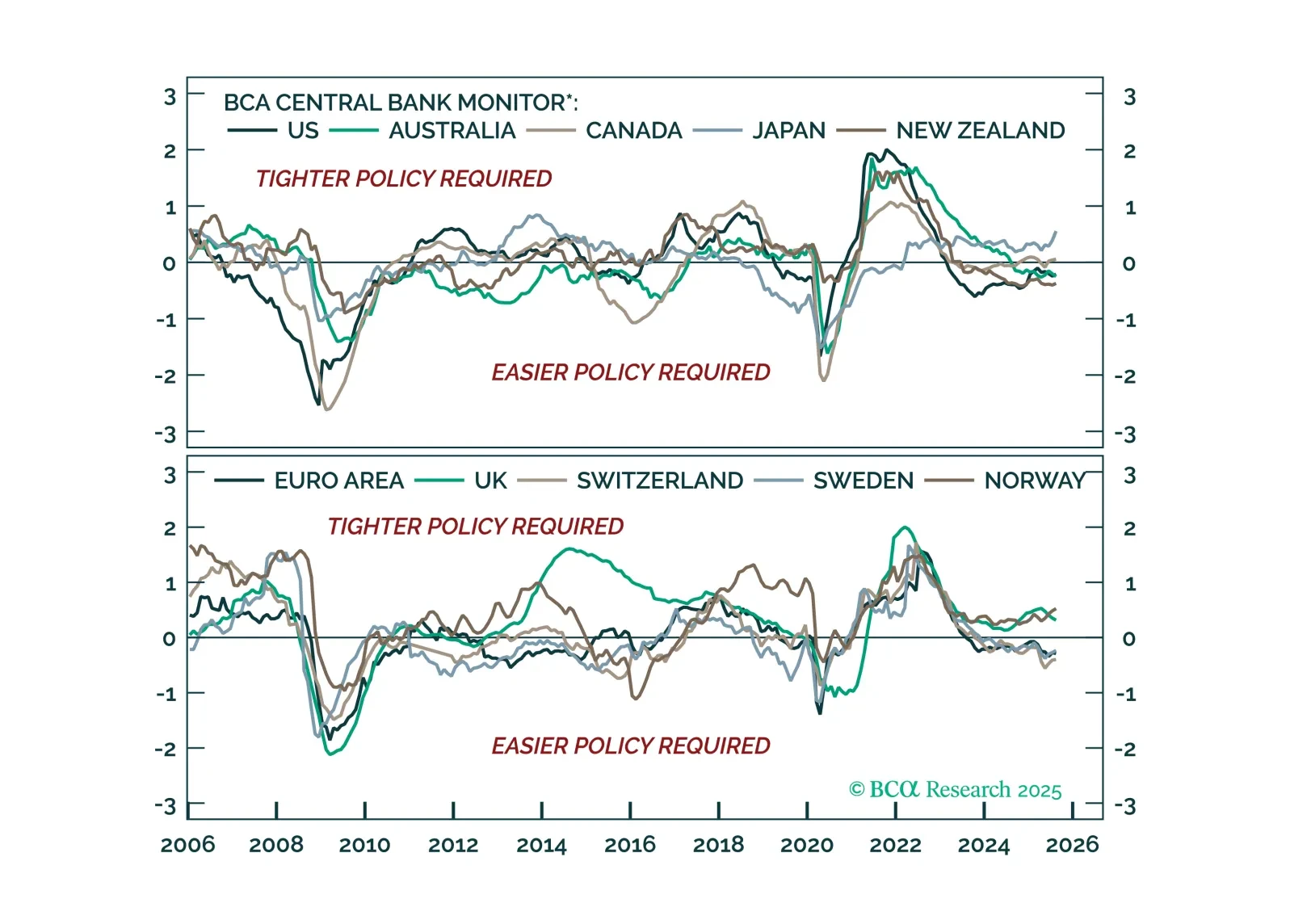
Monetary policy divergences are re-emerging. We rely on BCA’s Central Bank Monitor to assess the current policy stance of major central banks, and highlight the tactical opportunities across bond markets and currencies.
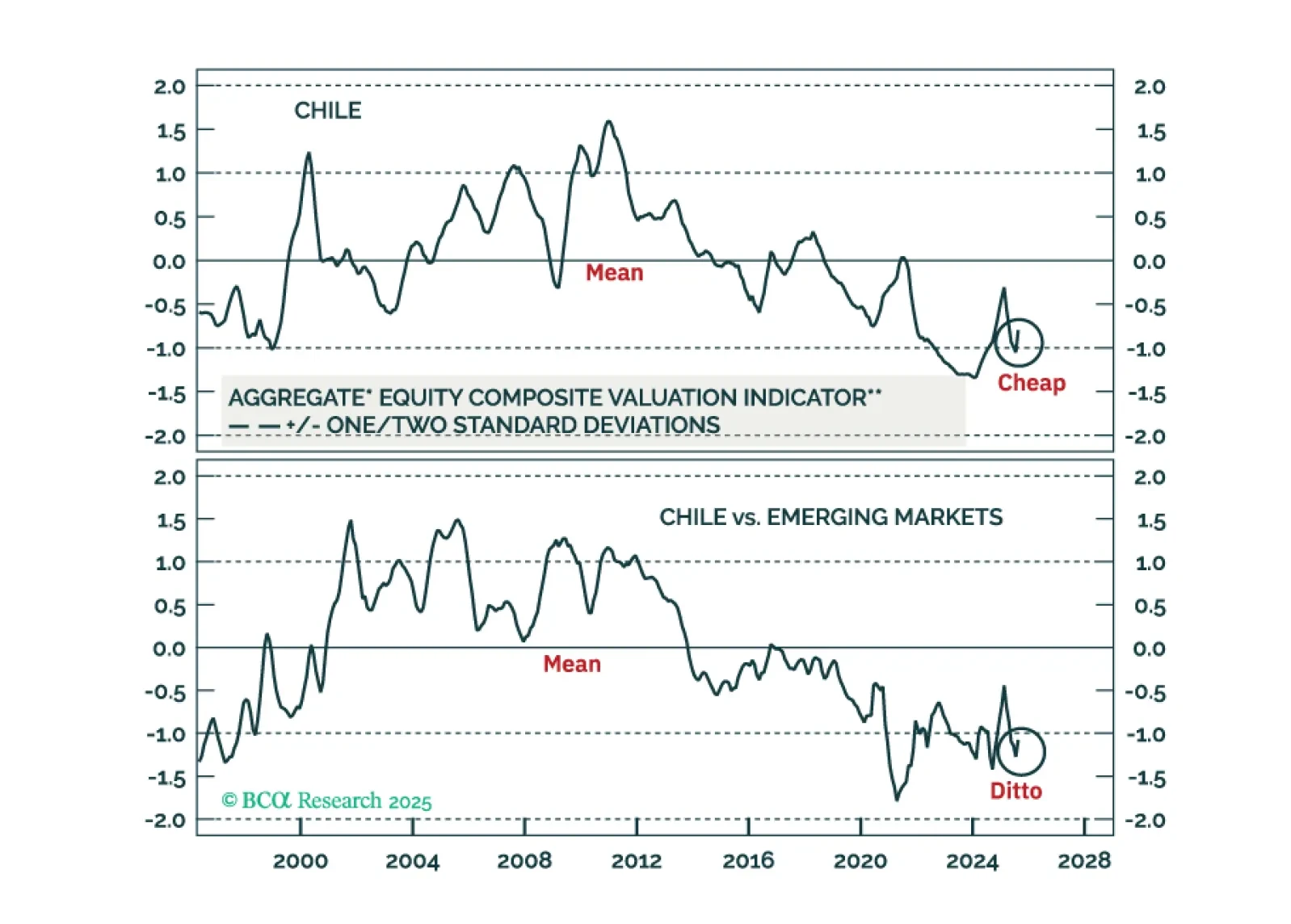
Chilean equities are undergoing a structural re-rating. A political swing back to a pro-business administration, a benign macro backdrop, and a resilient exchange rate will drive Chilean markets’ outperformance versus EM peers.