Sorry, you need to enable JavaScript to visit this website.
Skip to main content

Bubbles

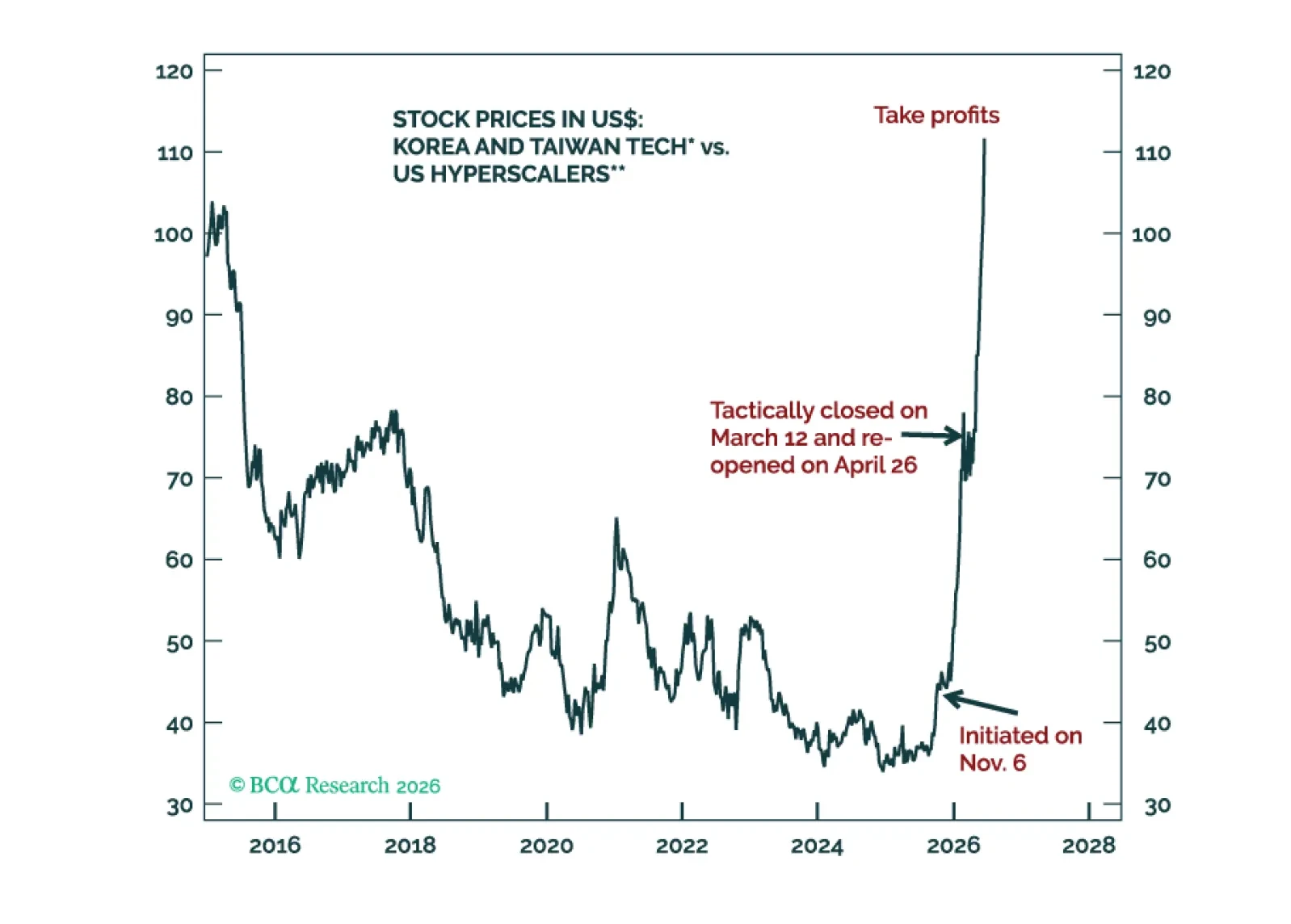
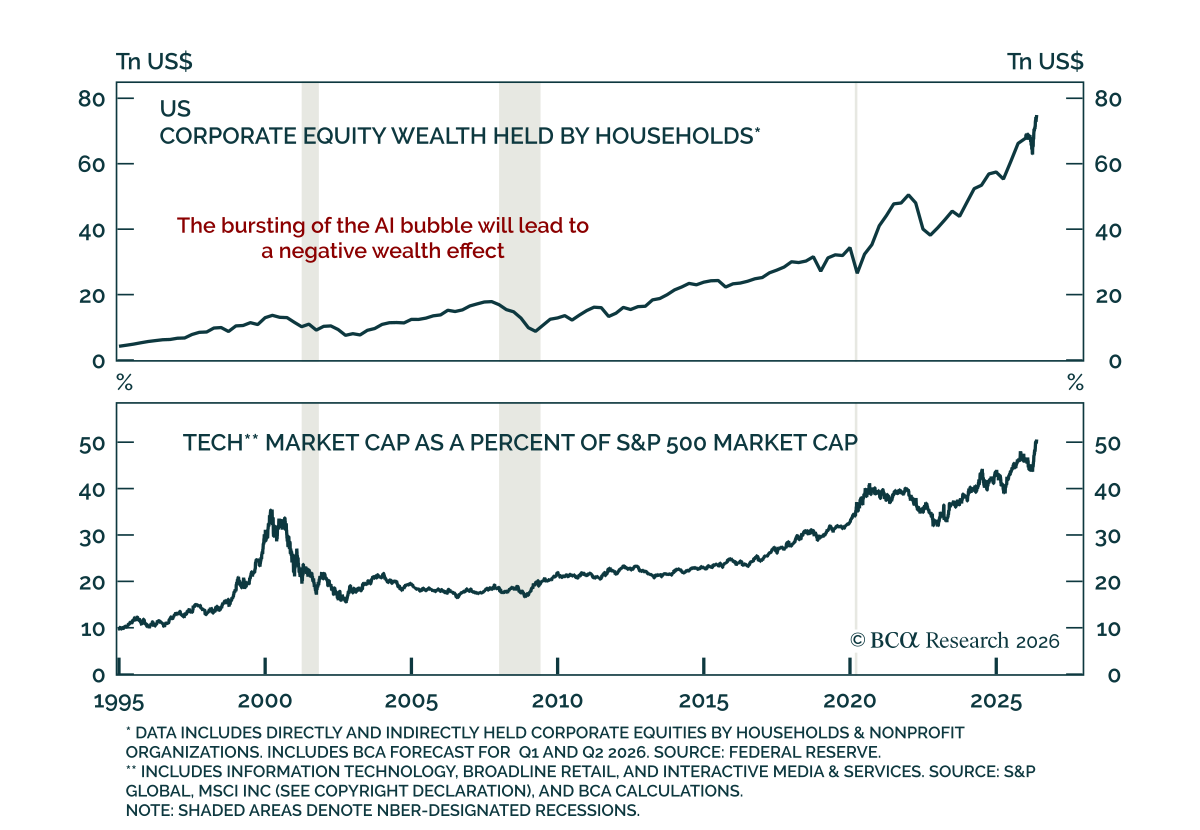
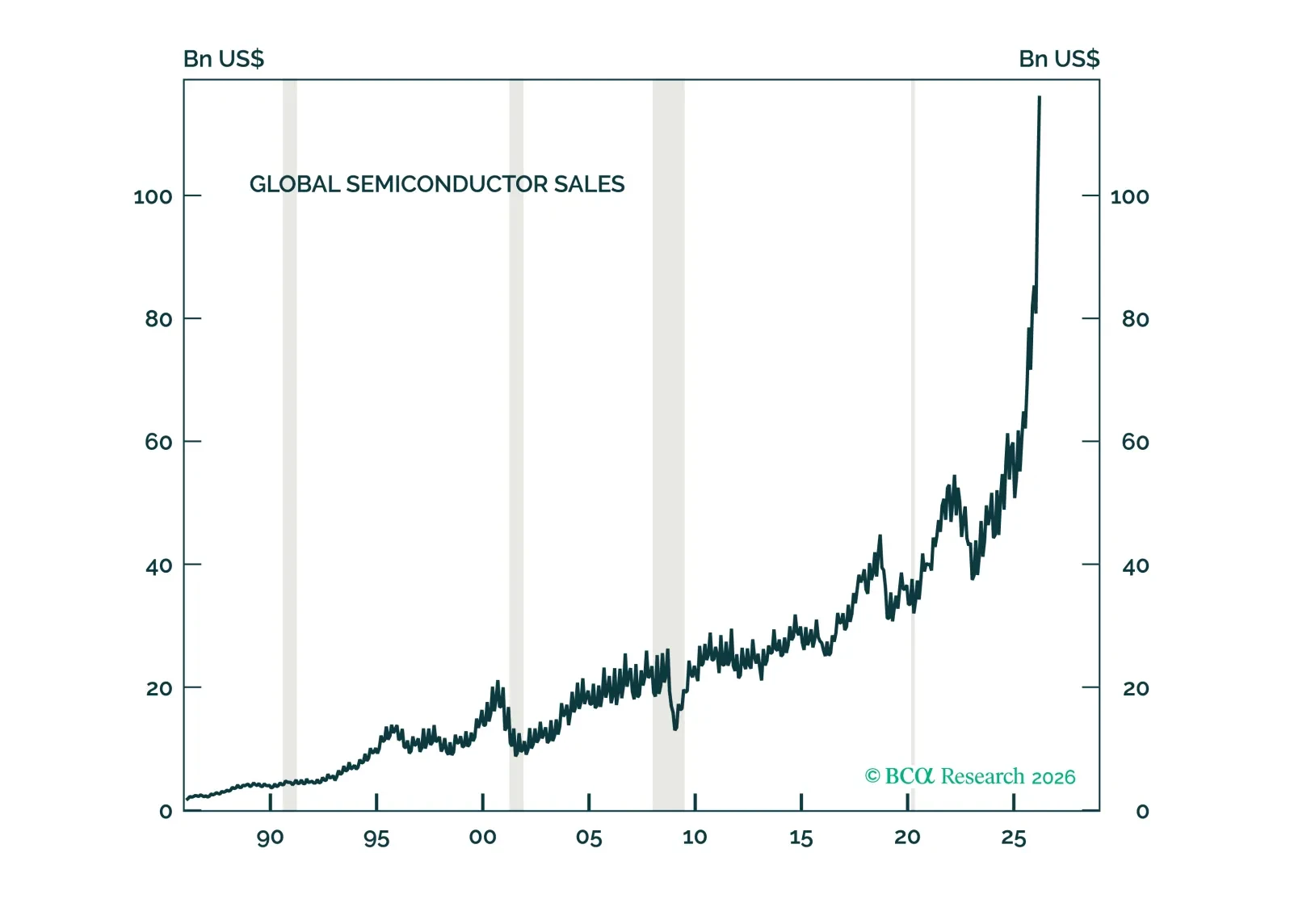
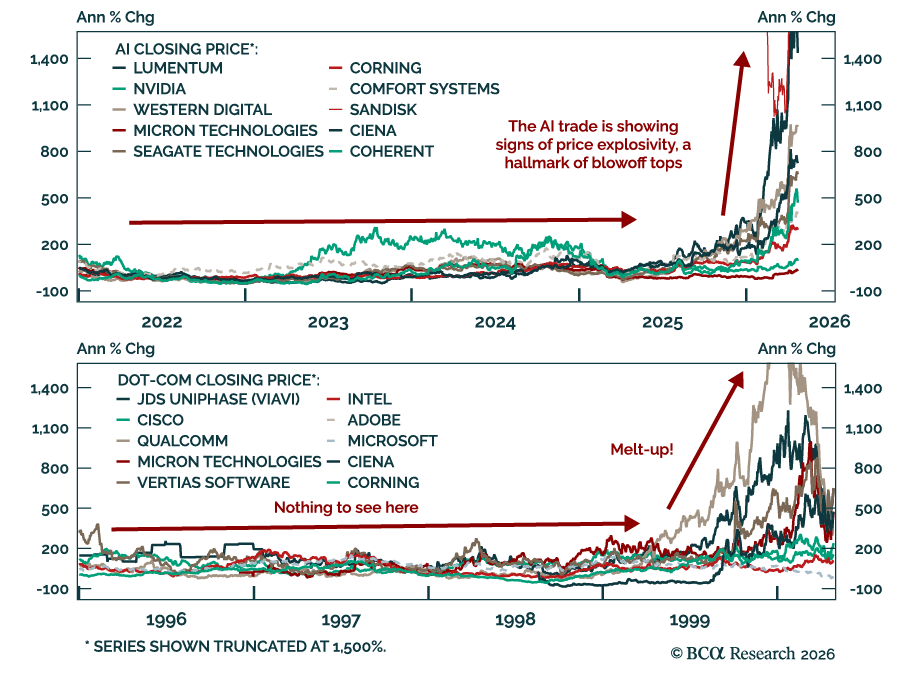
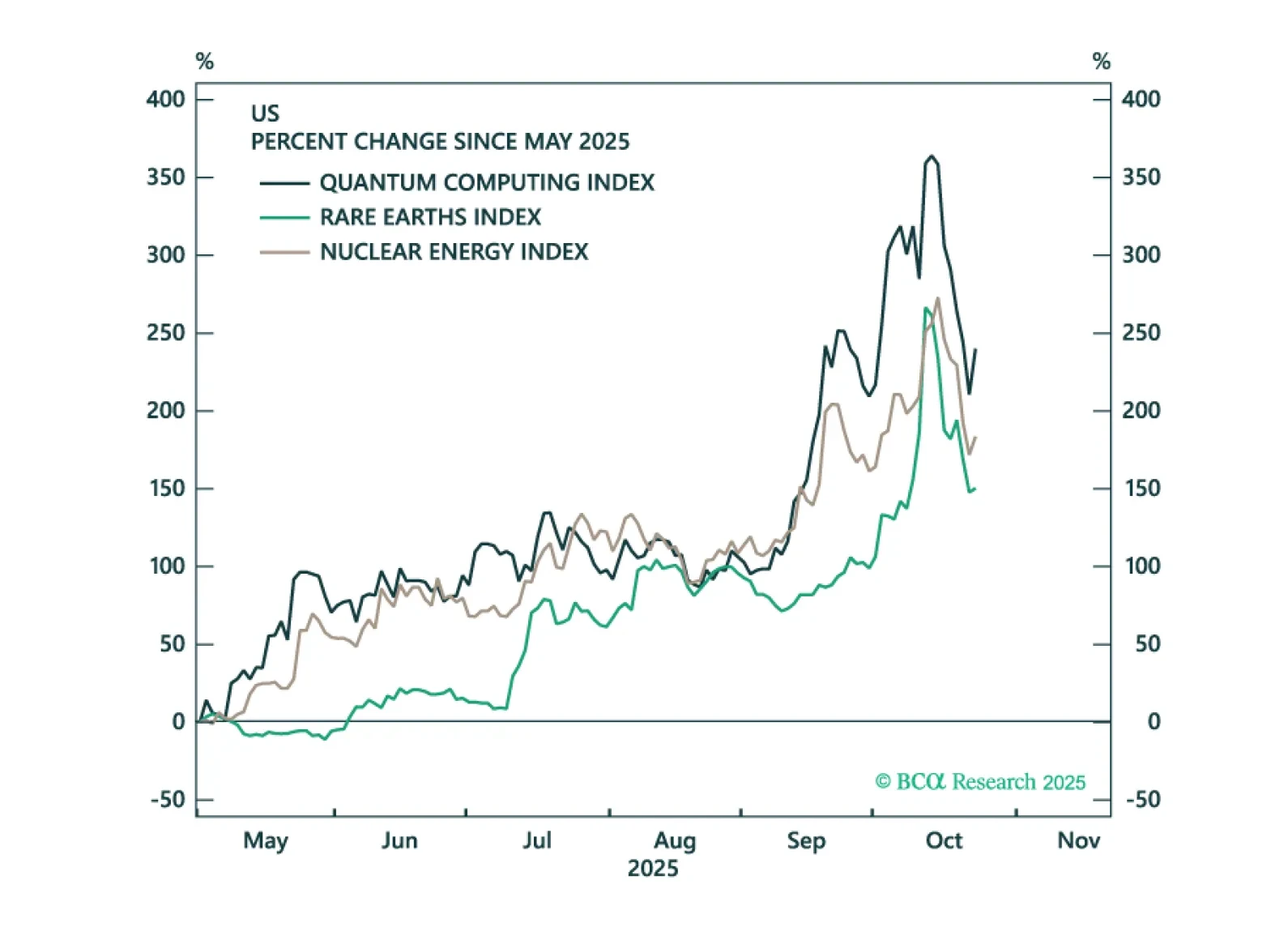
Precious metals, corporate credit, and tech stocks are all showing signs of late-cycle euphoria. We identify various trigger points that investors should monitor to turn more bearish.
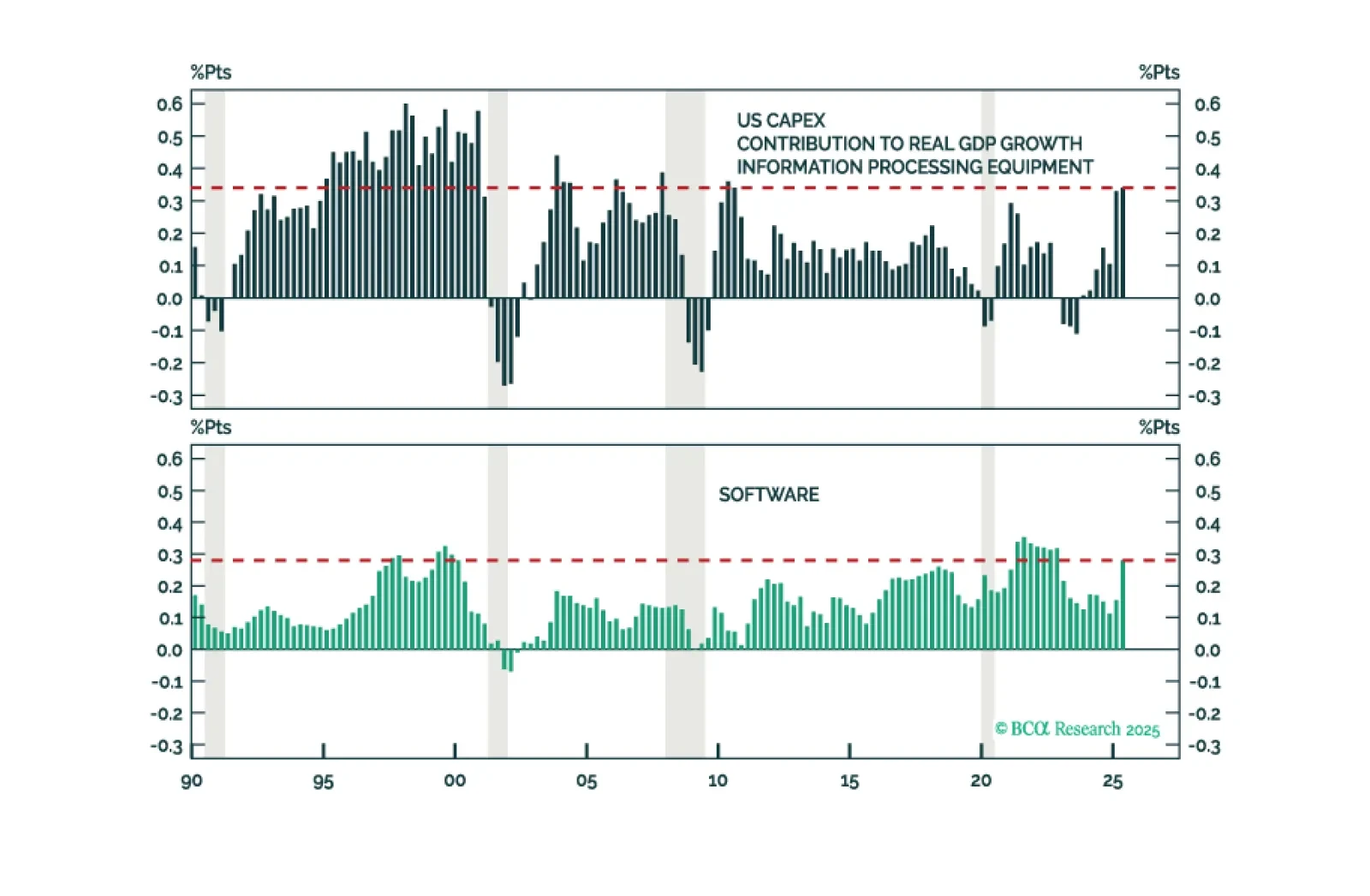
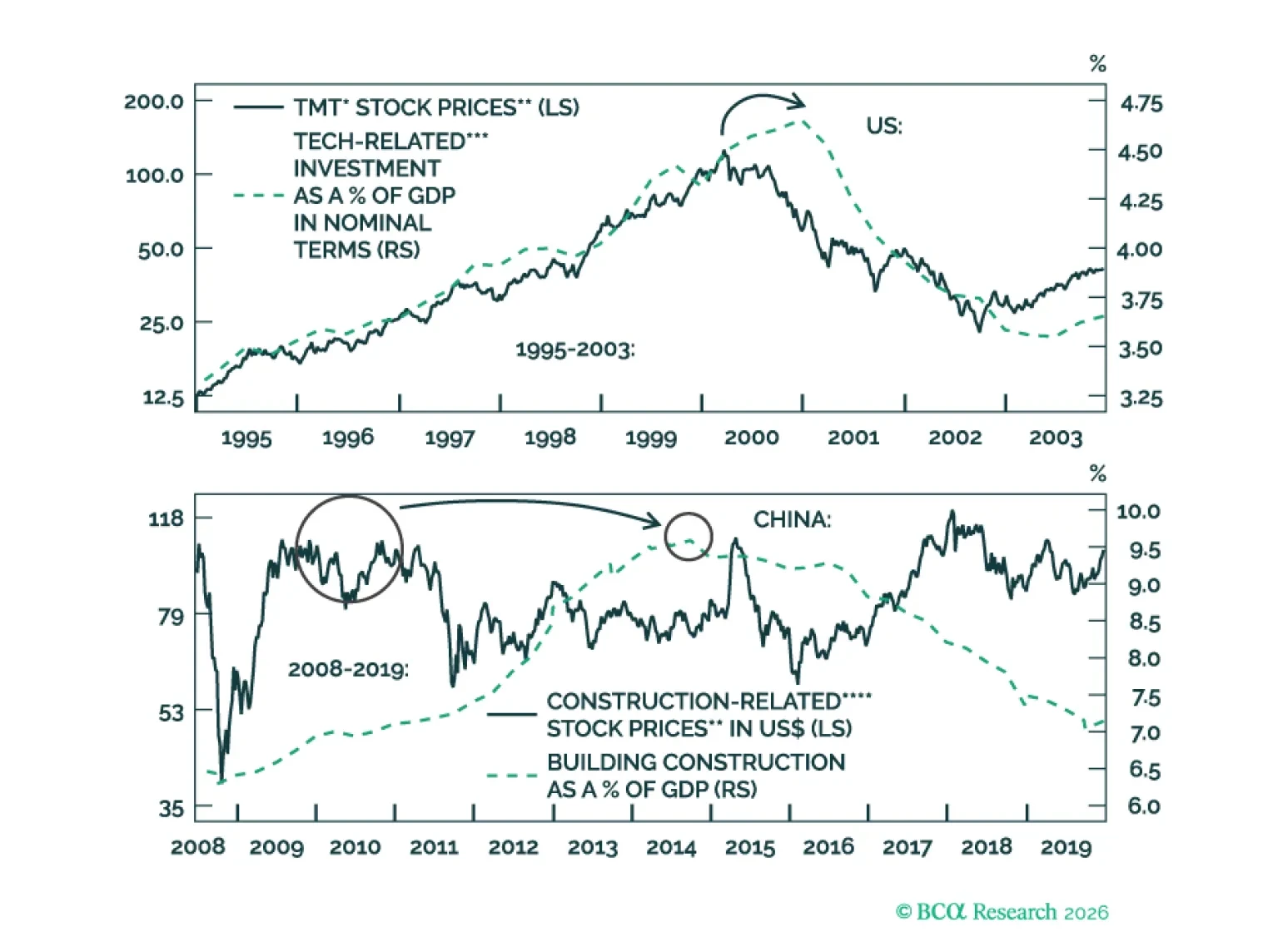
The AI capex boom is having a measurable impact on the economy but, so far, it is more muted than often cited.

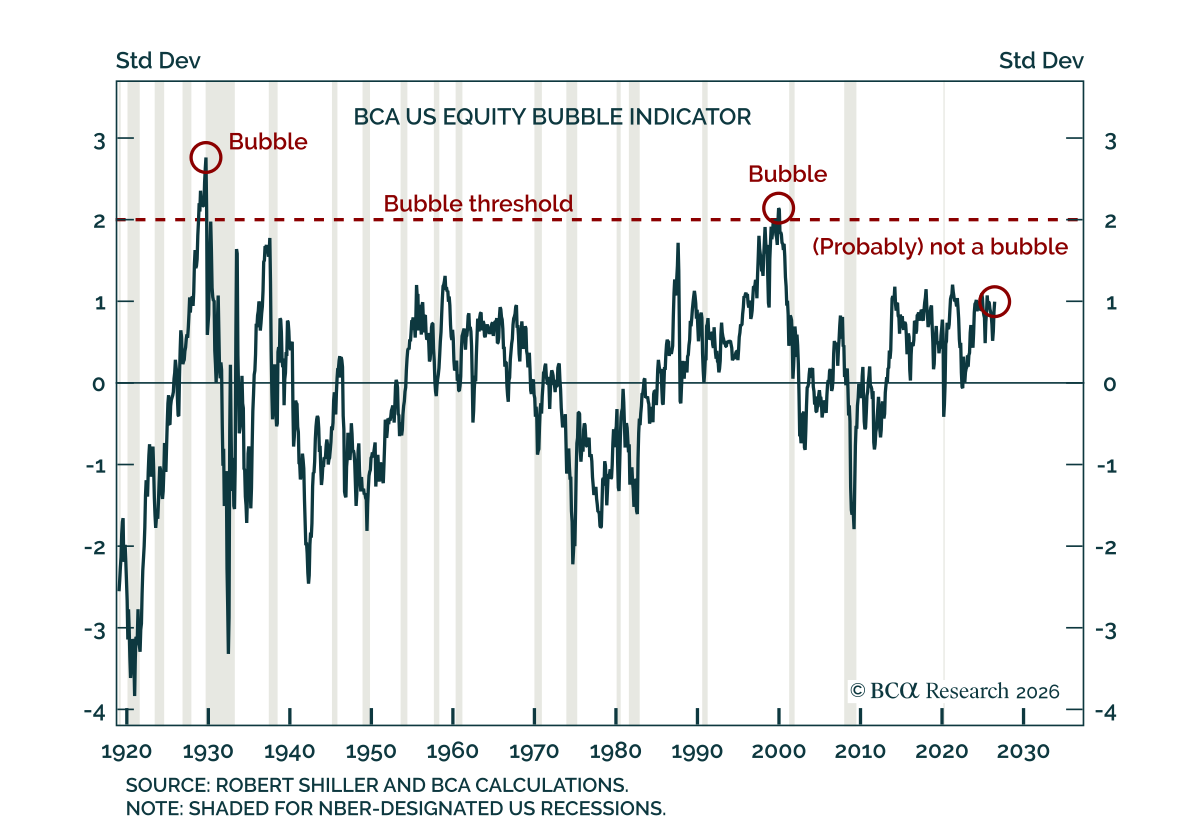
In Section II, Jonathan presents a new indicator that investors can use to track the odds of bubble formation in real time and shows how it fits into a larger framework that accurately explains US bear market severity over the past century. The US equity market is not in a bubble today, but it is meaningfully overvalued. Investors should expect a relatively severe cumulative loss from equities in a recession scenario.

Are you sure you are in a trade war-induced selloff and/or recession? Or, is America – writ large – the bubble? Fed a steady dose of fiscal profligacy over the past five years, the US economy and its various associated assets have become fat and complacent. As such, the end of the fiscal gravy train – our signature macro call for 2025 – is what is causing the underlying weakness, with the Big Tech – the biggest beneficiary of US Exceptionalism – now buckling.

Our message? The tech bros are lying to you. The AI revolution is not positive for Big Tech, not at their current valuation. Play the rotation, even if a (mild) recession may be afoot, as we have been saying throughout 2024.

In this report, we reassess our bullish stance on crypto from early 2023, following Bitcoin’s recent all-time highs. While institutional adoption is broadening, there are also signs of excessive exuberance, speculation, and optimism. Given these conditions, a near-term correction appears likely. We are booking profits and will look to re-enter the market at $75,000.

Over the past few weeks, global equities have been hit by rising scepticism over the bullish AI narrative and increasing concerns over global growth. Stocks should stabilize in the near term, but the medium-term direction is to the downside. We expect the S&P 500 to drop to 3750 in 2025 and the 10-year Treasury yield to fall to 3%.

Highlights Investors who are optimistic about the potential for artificial intelligence (AI) to impact economic growth have several bullish private sector estimates to point to. At the same time, other credible estimates point to a minimal impact of AI on economic growth. Bullish estimates of…

In Section I, we examine some concerning signs of US economic weakness that emerged in June. We also discuss portfolio positioning in the face of falling interest rates and cross-check our recommended US equity overweight in the face of extremely optimistic expectations about AI’s impact on growth. We conclude that defensive positioning continues to be warranted. In Section II, we dig into those optimistic expectations for AI. We find that the US equity market is significantly overvalued unless the deployment of AI technology causes a 10-to-20 year productivity surge in line with what occurred during the IT revolution of the 1990s, with persistently high margins on the revenue generated from the improvement in growth. We doubt that AI will end up truly boosting economic activity by this magnitude.

GAI technology has made tremendous gains over the past year. It has advanced from being a mere “curiosity” to becoming an everyday helper. While the promise of GAI is enormous, its effects are still limited: Companies are still struggling with monetization while productivity improvement is still at least a year away. In terms of evolution, the focus is shifting away from “picks and shovels” infrastructure companies toward model and application developers.

The soft landing and rate cuts narrative is being priced out, and the S&P 500 is overvalued and getting overbought. The Magnificent Seven are about to get a new moniker on the back of performance dispersion. However, without the cohort, S&P 500 earnings would have been even deeper in the red.