Sorry, you need to enable JavaScript to visit this website.
Skip to main content

Labor Market

Special Report

The Goldilocks environment for US profit margins should start to sour next year. Contrary to conventional wisdom, AI could end up eroding margins for both producers and consumers of artificial intelligence.

We are increasingly being asked if higher for longer interest rates could help spur consumption by boosting interest income. This report examines household income and balance sheet data to see if they might.

Our Portfolio Allocation Summary for July 2026.

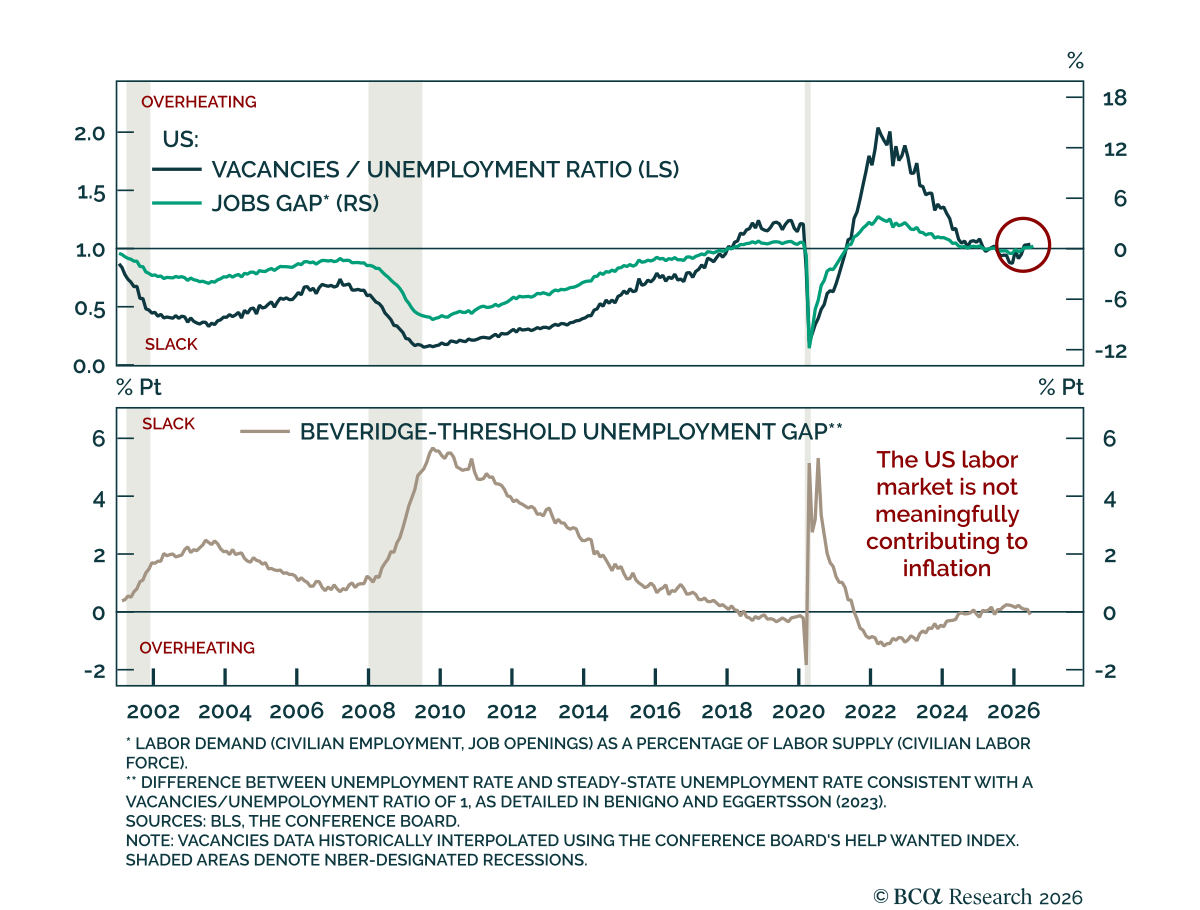
The June US employment report missed estimates, but still showed a labor market that remains healthy without overheating. Nonfarm payrolls rose by 57k, slowing from a downwardly revised 129k in May. Two-month revisions removed 74k jobs, leaving the 3-month…
The June Conference Board survey sent a softer signal, but broader labor data still point to a stabilized job market and a supportive backdrop for risk assets. The Consumer Confidence Index missed estimates at 91.2. The index technically rose, as the previous…
Special Report

China holds a structural advantage in this "Age of Electricity" by operating the world's largest electricity system. However, this advantage has inherent limits, and the US remains competitive despite its challenges.

Section I maps how the broad distribution of wealth gains is supporting US consumption. Section II examines how countries can meet swelling electricity demand. The winners will find paths to build the infrastructure needed to power the high-tech future.

Australia's May data came in firmer than expected, but the RBA will stay on hold. Headline inflation eased to 4% y/y (-0.7% m/m) from 4.2% (0.4%), undershooting estimates. Lower energy prices cooled the print. The trimmed mean, however, climbed to 3.6% y/y…

Kevin Warsh announced an ambitious reform agenda for the Federal Reserve. We discuss the potential impact and the current outlook for interest rates.

South Africa’s ambitious reform agenda will take time to bear fruit. Meanwhile, the country faces a stagflationary squeeze as inflation rises while growth slows. South African stocks, bonds, and currency are all vulnerable.