Emerging Markets
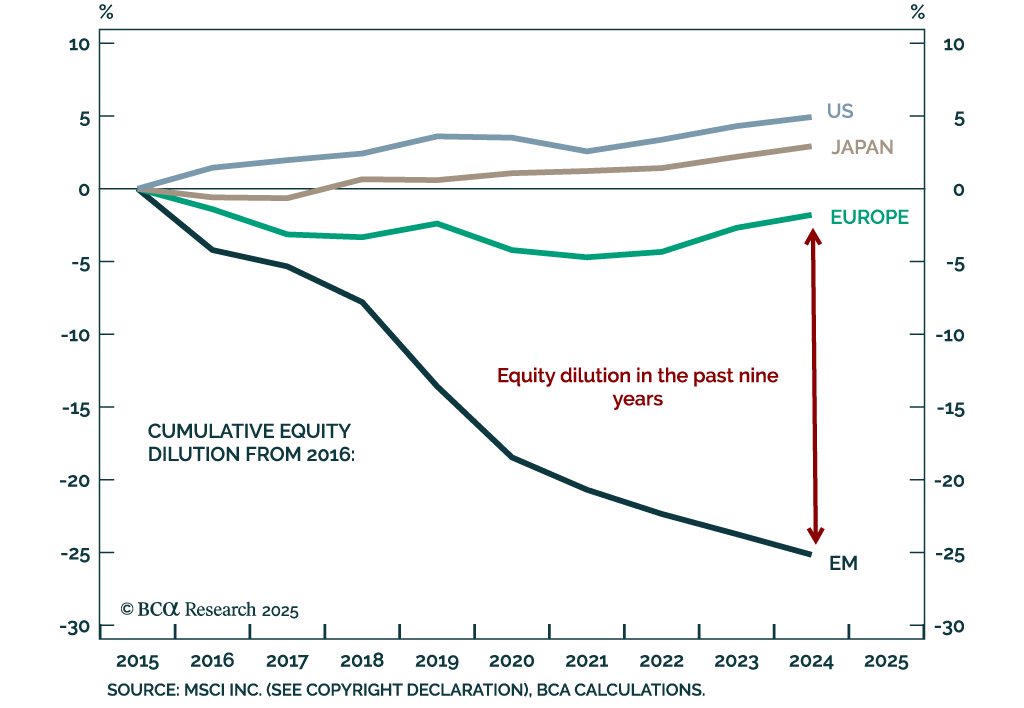
希薄化:株式リターンに潜む静かな足かせ(パート1) 希薄化:株式リターンに潜む静かな足かせ(パート1) 当社の新興市場ストラテジストは、システマティックな株式希薄化が新興市場の株主利益を大幅に侵食し、利益成長と1株当たり利益(EPS)の長期的な乖離を説明していると指摘しています。過去18年間、新興市場企業は現地通貨ベースで非希薄化後の利益を倍増させた一方で、広範囲に亘る希薄化と継続的な通貨下落により、EPSはほぼ横ばいのままでした。…
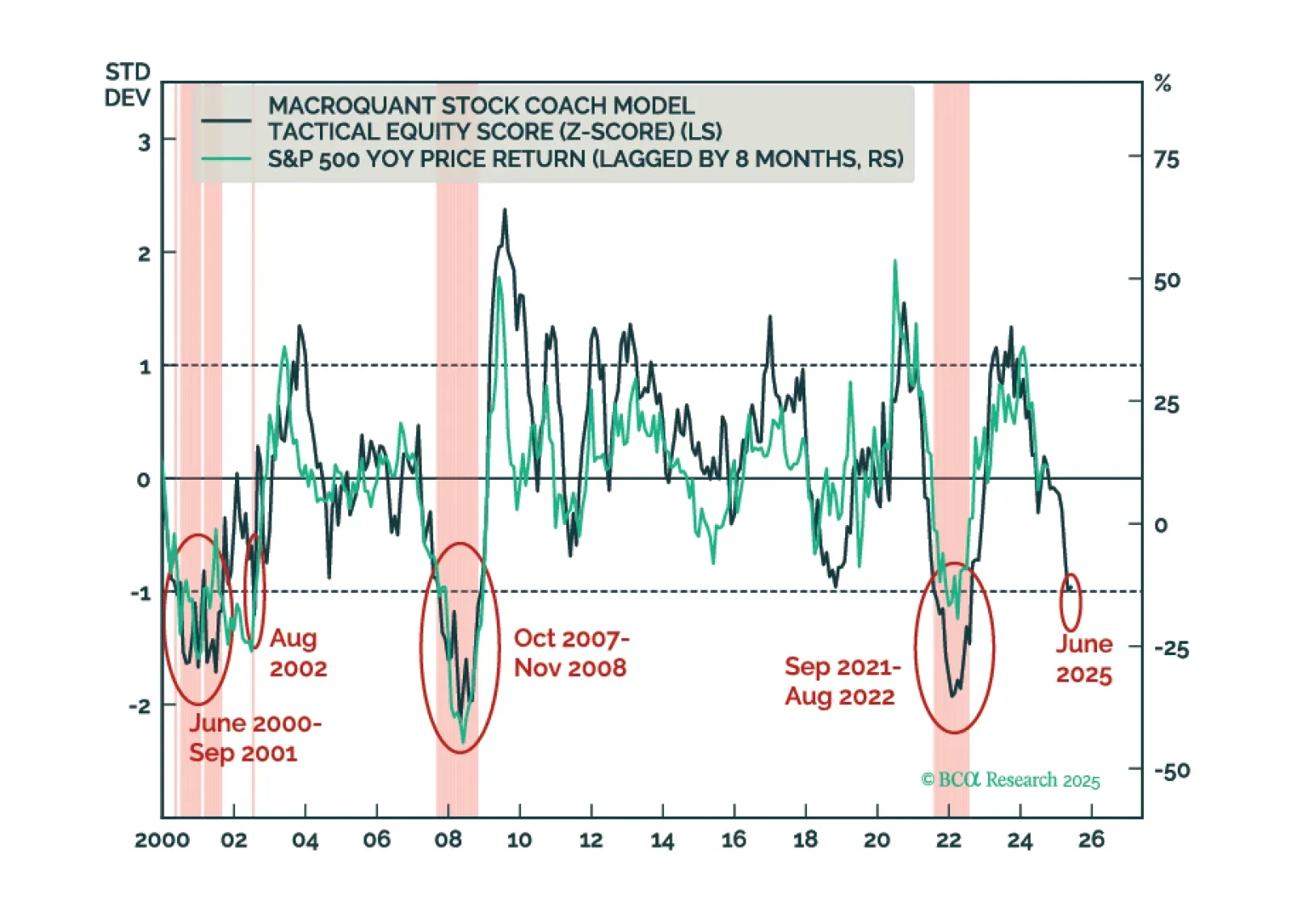
投資家はポートフォリオにおいて株式を控えめにアンダーウェイトにし、不況の具体的な兆しが見え次第、より積極的にディフェンシブな姿勢に転じるべきです。私たちはこれが数ヶ月以内に起こると考えています。
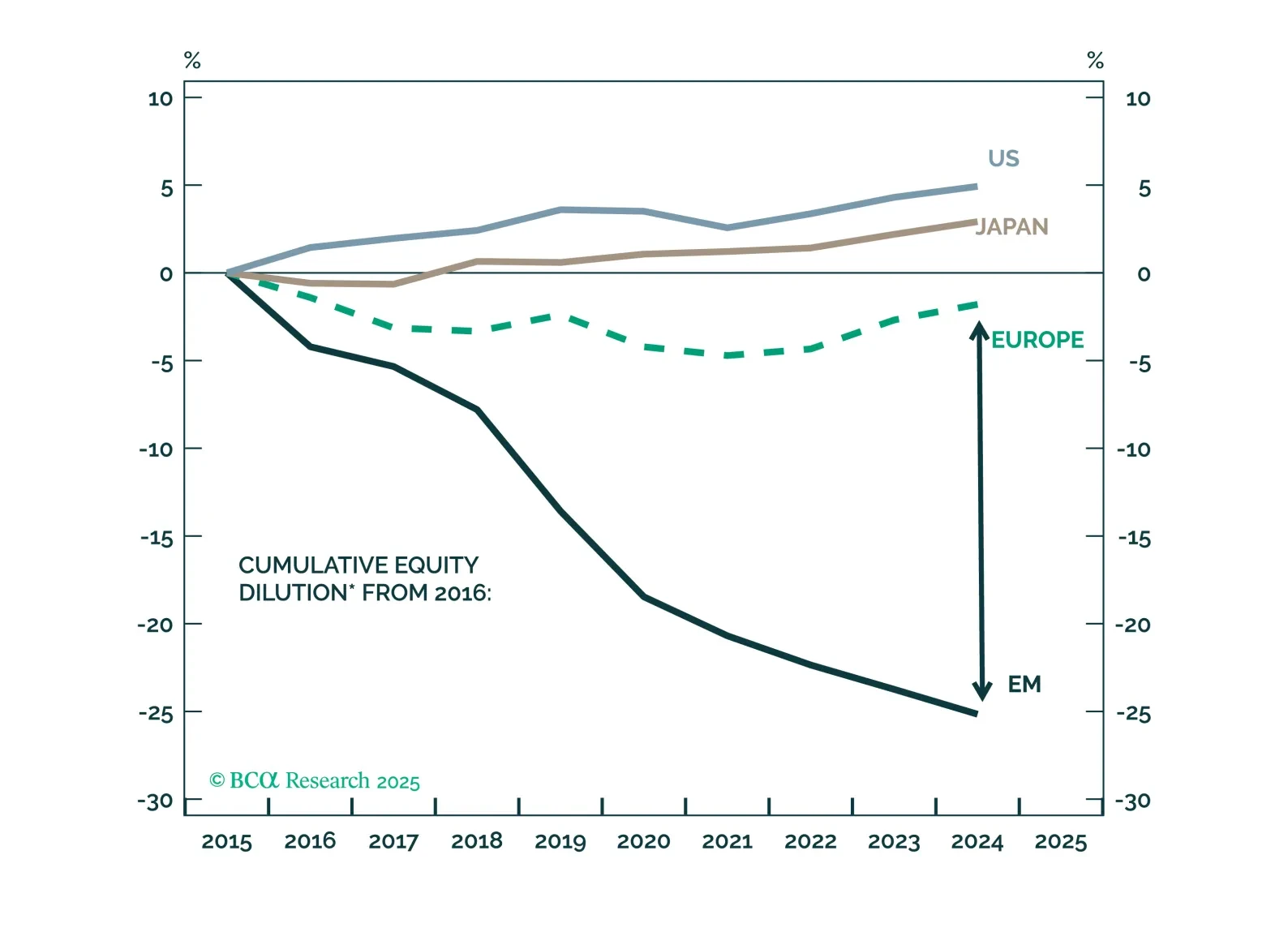
希薄化は、EM EPSがEM GDPやEM非希薄化利益に比べてはるかに弱い主な理由の一つです。私たちは、株式指数への企業の追加および除外を調整した「純粋」な希薄化を、世界中のさまざまな証券取引所に対して算出しました。私たちの知る限りでは、この分析が実施されたのは今回が初めてです。

新興市場利益の再評価 新興市場利益の再評価 BCAのEMストラテジストは、限定的な利益の向かい風とバリュエーションのサポートが乏しいことを理由に、弱気な米ドルの見解があるにもかかわらず、EM株式に対して慎重な見解を維持しています。 現在進行中のEM収益回復は、中国、台湾、韓国のTMTセクターに狭く集中しており、より広範囲な企業利益は世界貿易と製造業における収縮が迫っているため、脆弱な状態にあります。…
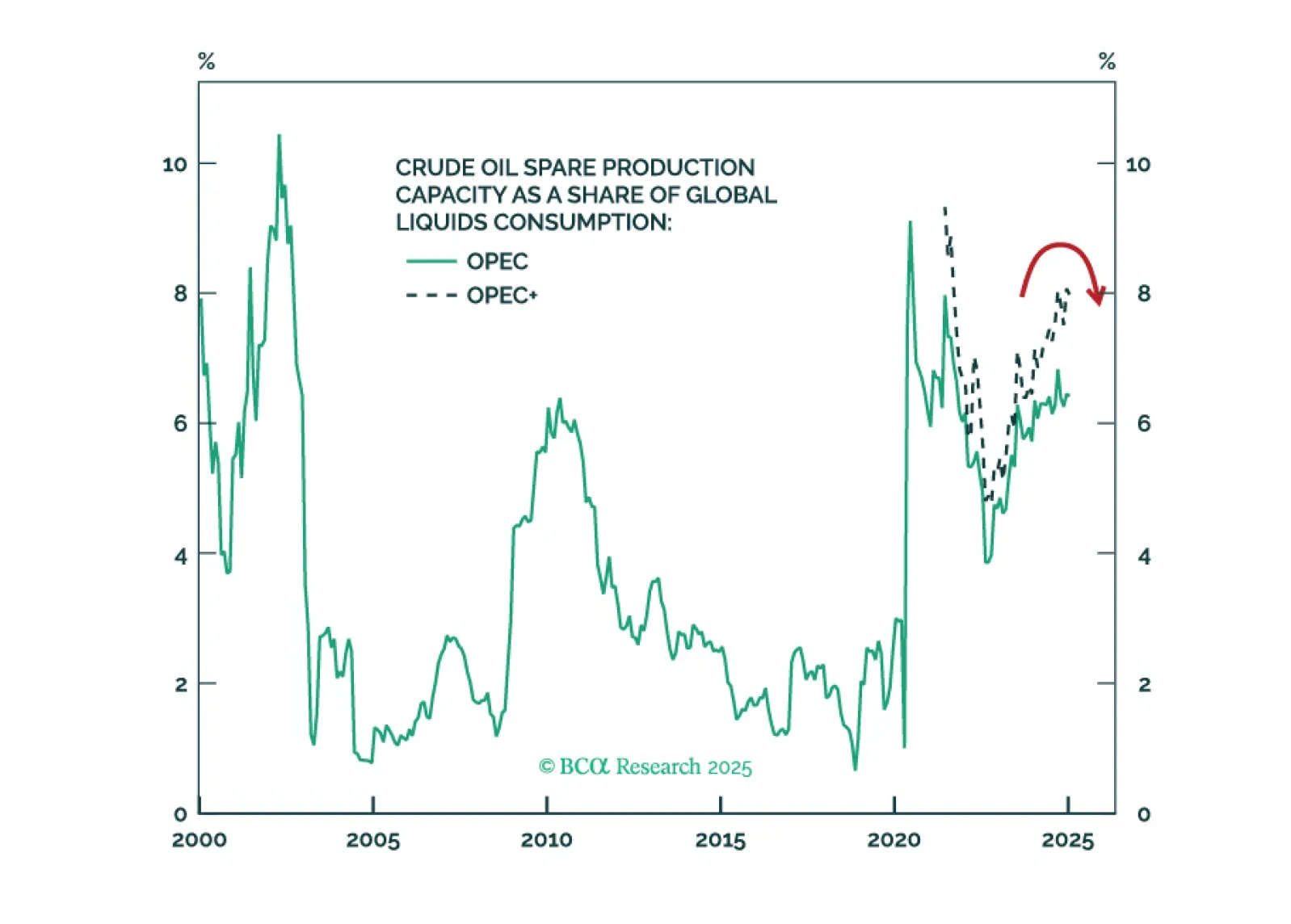
Investors should hold gold, build up some cash, tactically overweight US equities relative to global, and prepare for at least minor oil supply shocks – possibly major shocks – as the Israel-Iran war escalates.
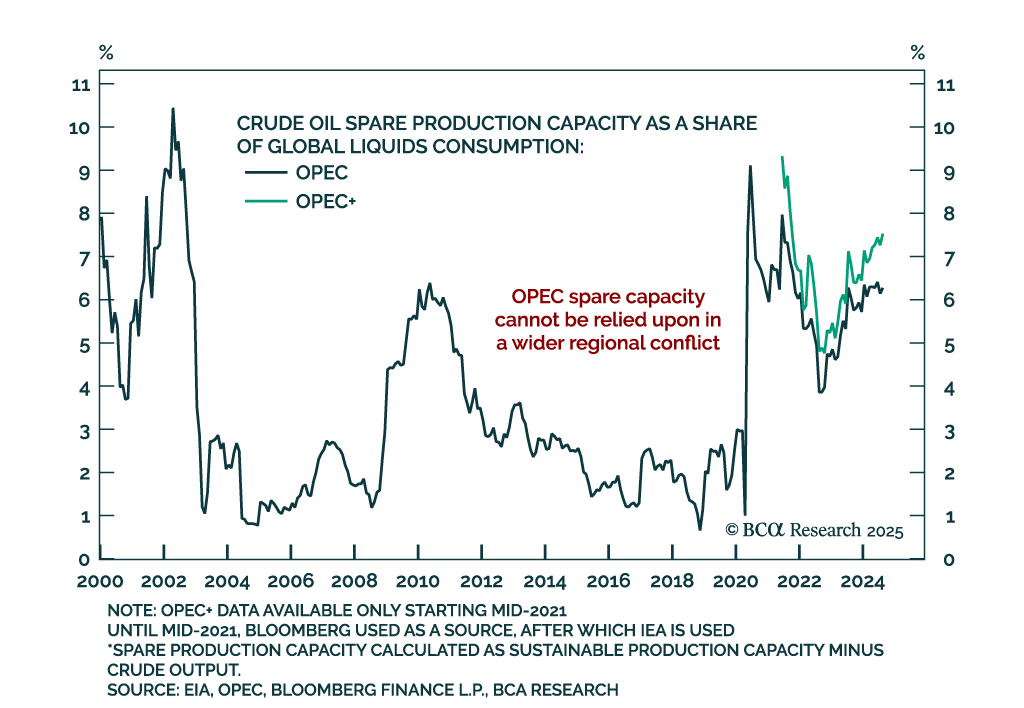
The Israel-Iran conflict is escalating, raising the odds of a major oil supply shock and reinforcing the case for cash, US equity overweight, and tactical energy exposure. Our Chart Of The Week comes from Matt Gertken, Chief Geopolitical and US Political…
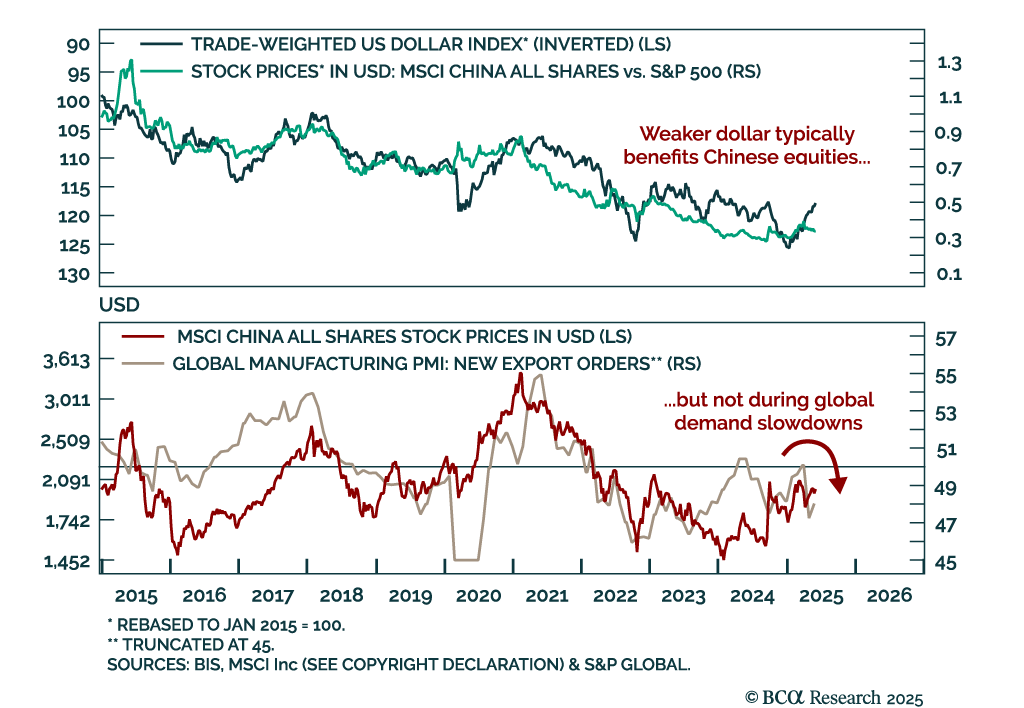
BCA’s China Investment strategists see limited upside for Chinese equities and favor bonds, as trade tensions ease but domestic headwinds persist. This week’s US-China trade talks in London lowered the risk of near-term escalation or new retaliatory tariffs,…
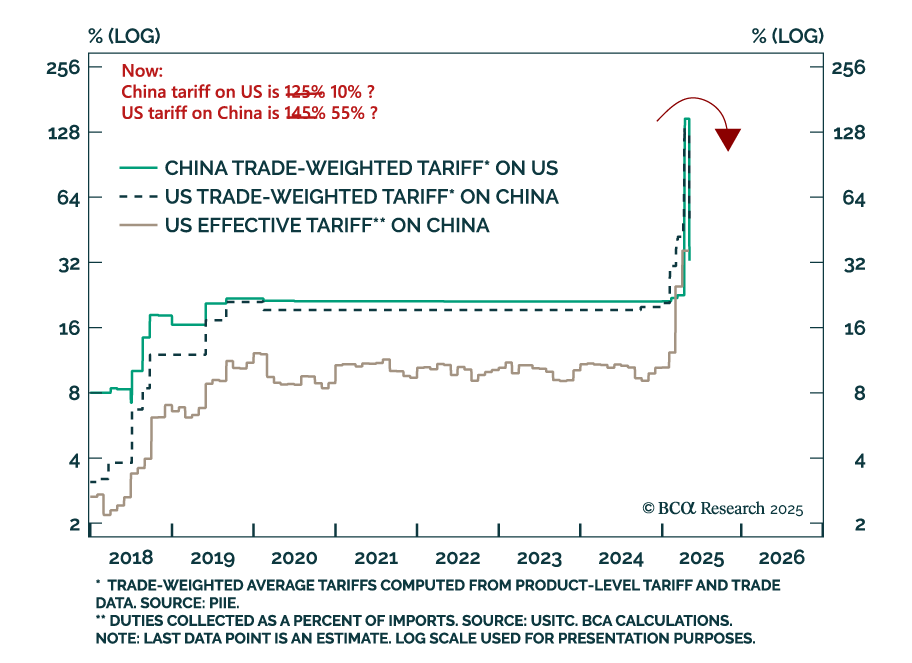
The US-China tariff deal confirms one thing: markets are still priced for perfection, with little upside even if a recession is dodged. The London negotiations yielded a partial agreement: The US will reduce tariffs, and China will remove export restrictions…
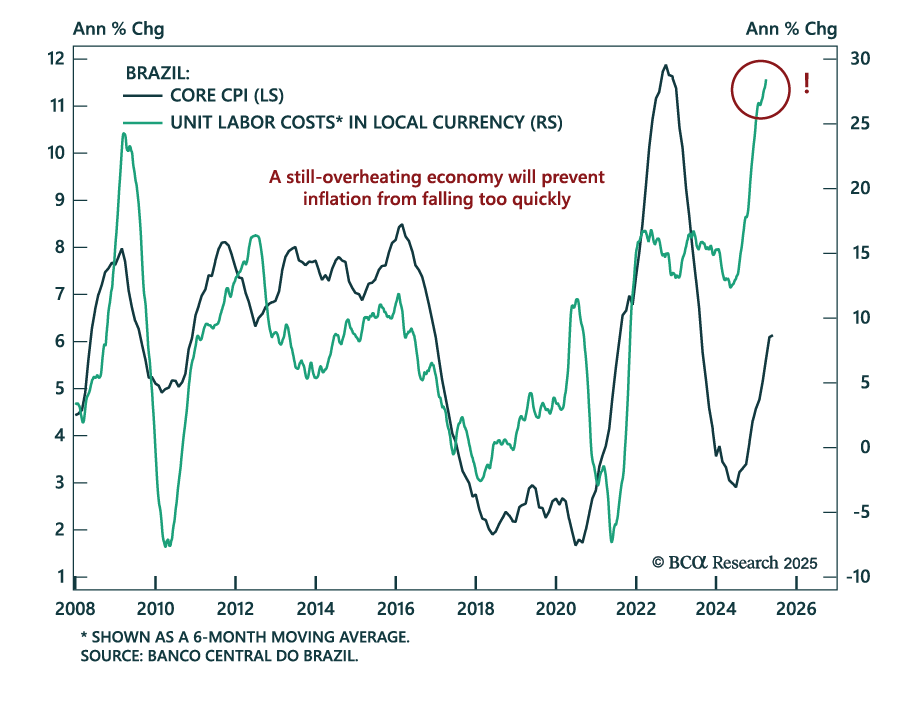
The May Brazilian CPI suggests that price pressures may have reached a peak, but do not expect immediate monetary easing to support fixed income markets. Headline CPI slowed to 5.3% y/y from 5.5% April, but core CPI remained flat at 6.1%. Despite peaking…
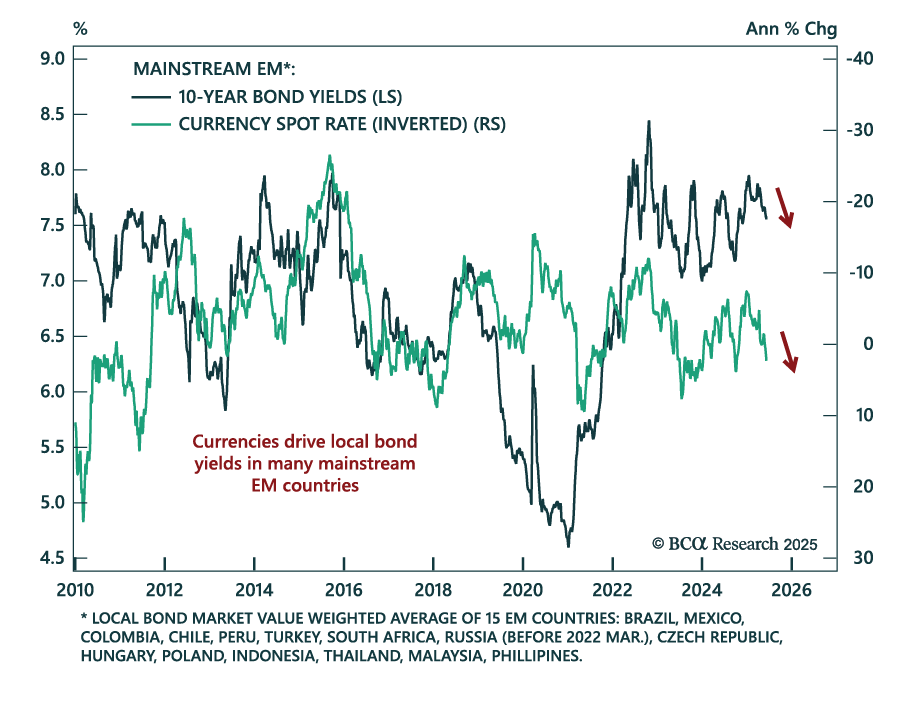
BCA’s EM strategists argue that a global macro shift is underway: A weaker US dollar will drive a retrenchment in US domestic demand and imports. Unlike previous cycles, dollar depreciation will be deflationary for the rest of the world rather than…