Saltar al contenido principal

Estados Unidos

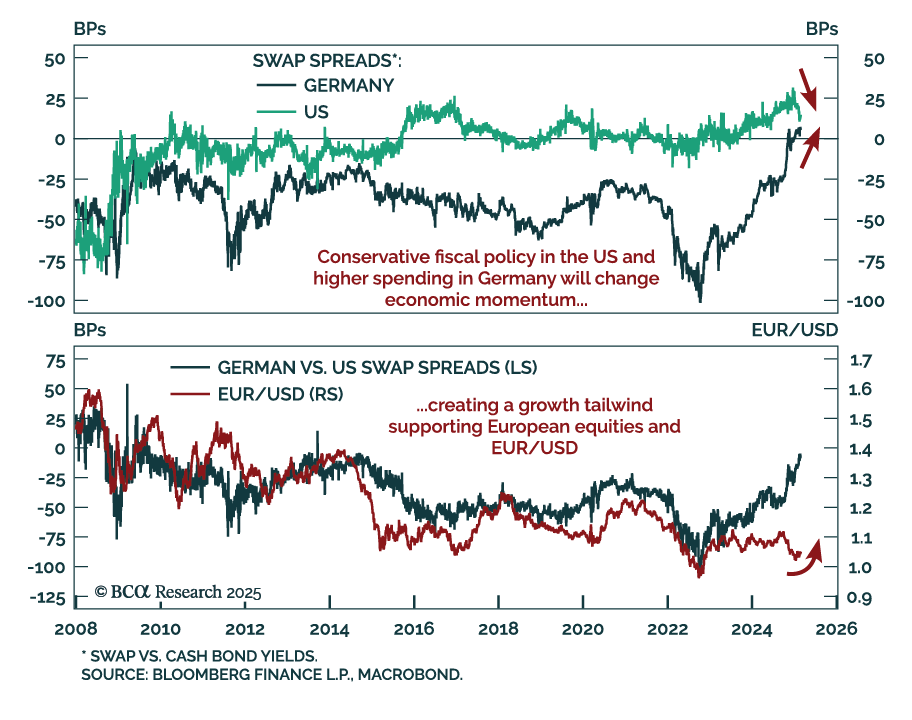
German election results were roughly as expected, but Europe’s biggest economy suddenly just got more interesting. While the details of the governing coalition have yet to be finalized, Chancellor Merz has floated options to ease the “debt brake”, which…
Our US Investment strategists visited Midwest clients, and provided a summary of their discussions with investors. Despite solid data, investors should focus on where the economy is headed rather than where it has been. Excess savings have been spent,…
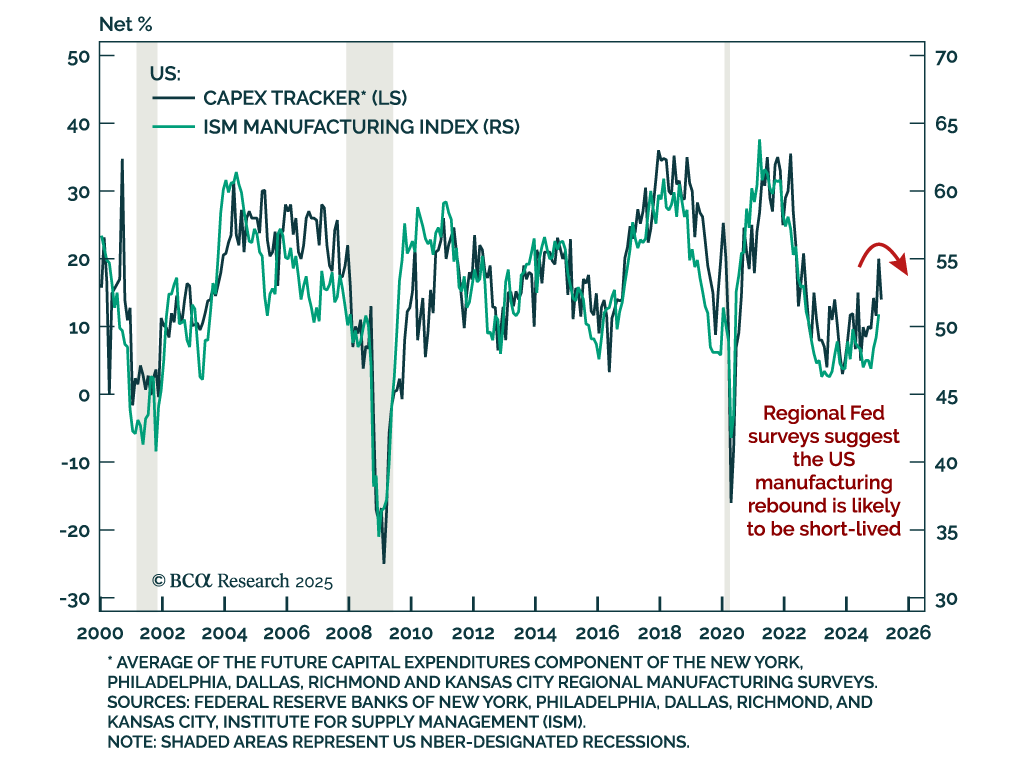
The February Dallas Fed Manufacturing index missed estimates, contracting at -8.3 vs. expanding at 14.1 in January. The underlying details of the report were quite poor, with current and future measures of activity broadly ticking down after increasing since…

US growth has slowed in recent weeks. This can be seen in the weaker data on retail sales, consumer confidence, services PMIs, and a swath of housing releases (notably starts, existing home sales, homebuilder confidence, and stock prices). It can also be seen in the decline in GDP tracking estimates. The Atlanta Fed's GDPNow model projects growth of 2.3% in Q1, down from a peak of 3.9% on February 3. The Citi US Economic Surprise Index has also dipped into negative territory.
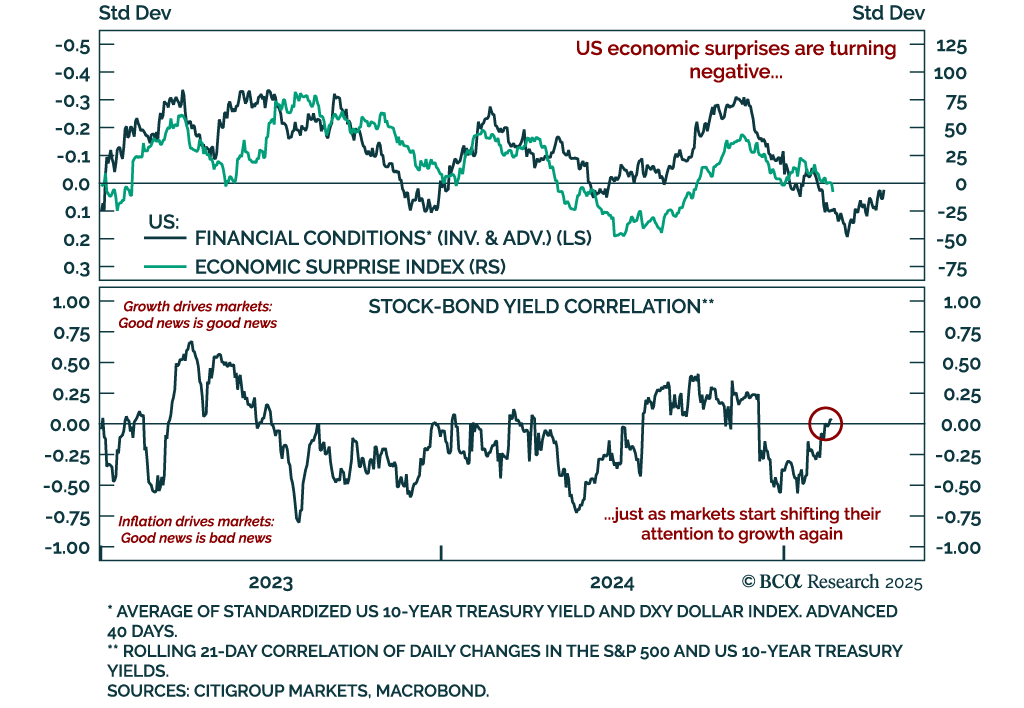
Two of our favorite indicators recently sent important signals. The first one, the short-term stock-bond yield correlation, recently drifted back to neutral territory after being negative. The correlation had been negative since December, reflecting increased…
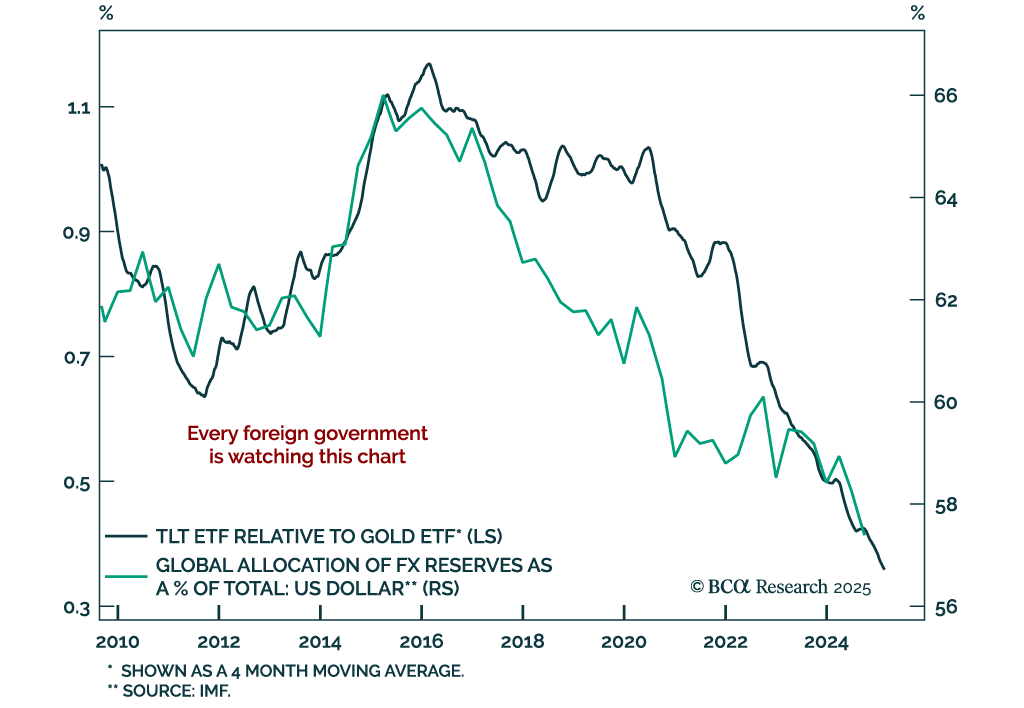
Our Chart Of The Week comes from Chester Ntonifor, Chief Strategist for our Foreign Exchange and Global Fixed Income Strategy services. A big macro trade over the last few years has been to shun US Treasuries, in favor of gold. The key driver has been a…

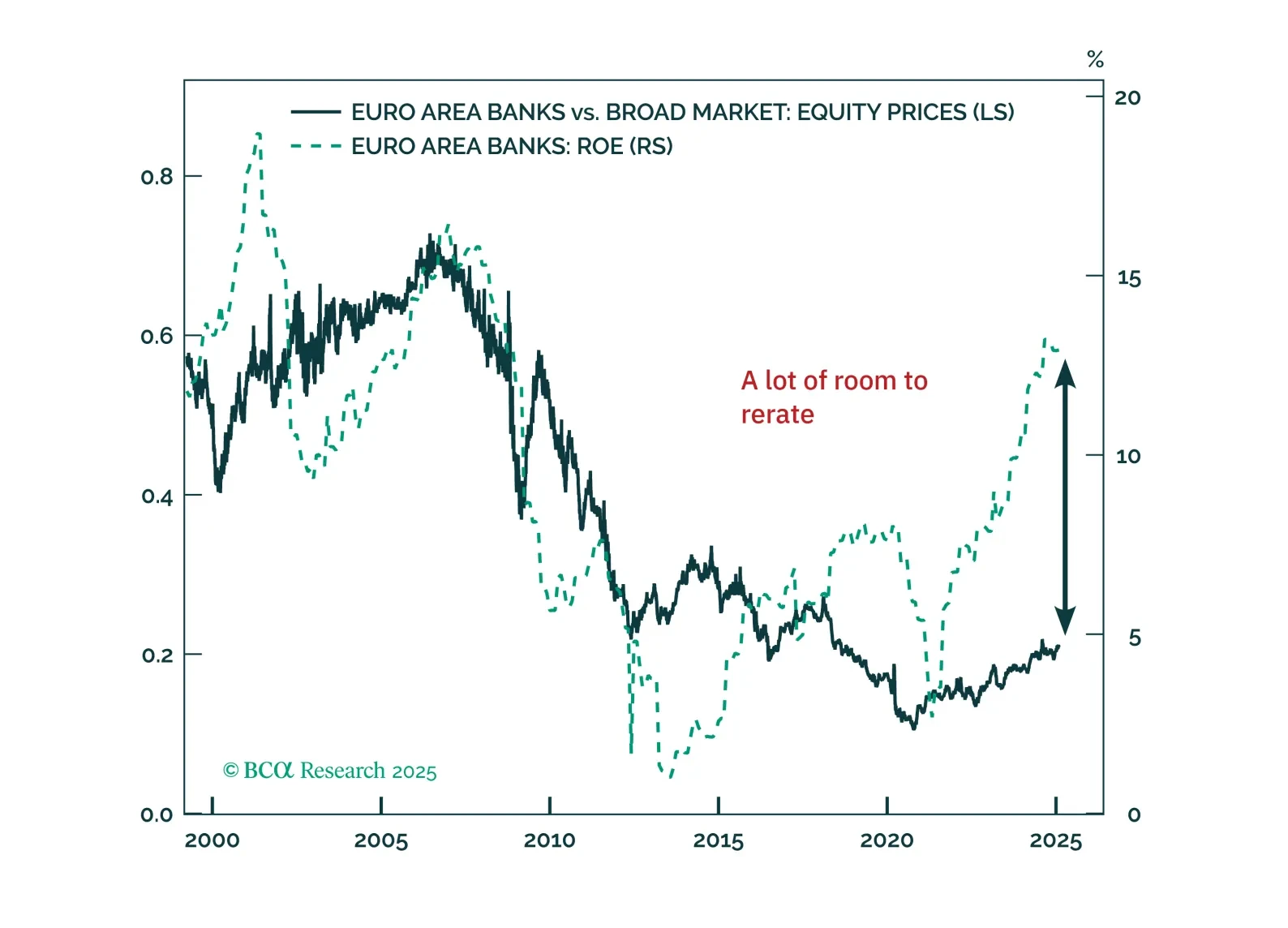
Eurozone banks have quietly outpaced the Magnificent 7—can they keep winning? With strong balance sheets, rising profitability, and structural tailwinds, European lenders still offer value despite short-term risks. Meanwhile, German equities continue to defy expectations, but is a near-term pullback on the horizon?

This week, our three screeners cover equity plays in European Defense, Chinese Tech, and “Boring Stocks”. 
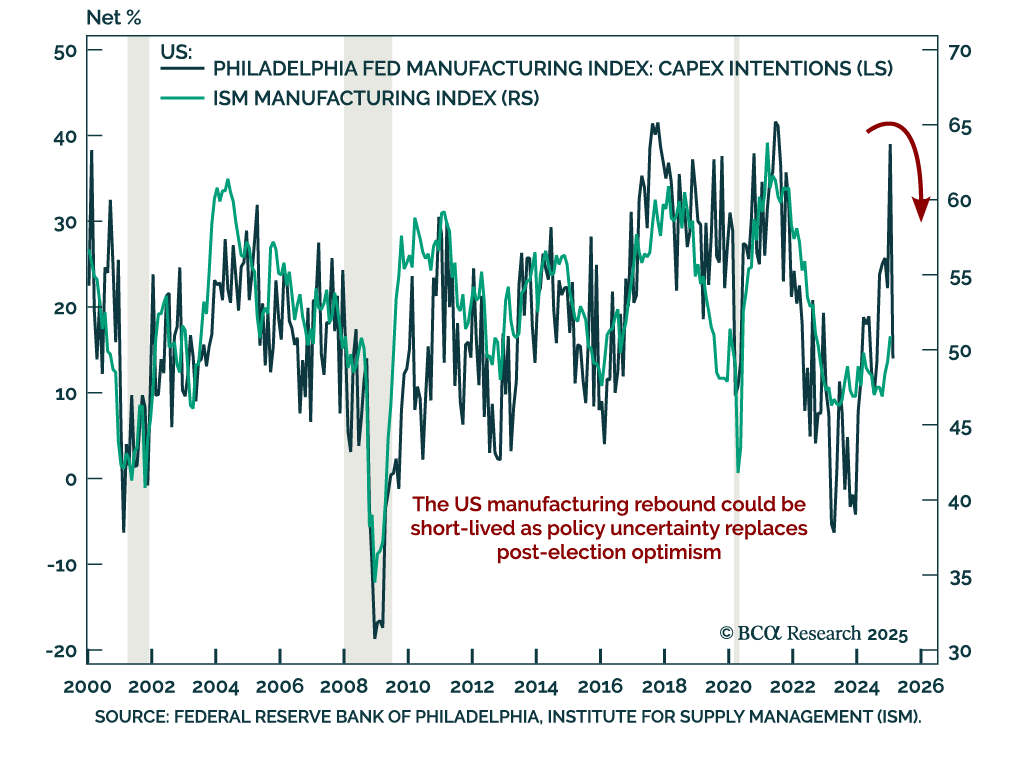
The February Philadelphia Fed Manufacturing index beat expectations, but retreated to 18.1 from last month’s lofty 44.3 reading. All activity subcomponents pulled back, except for delivery times. The Philly Fed index is volatile even in normal times, and…
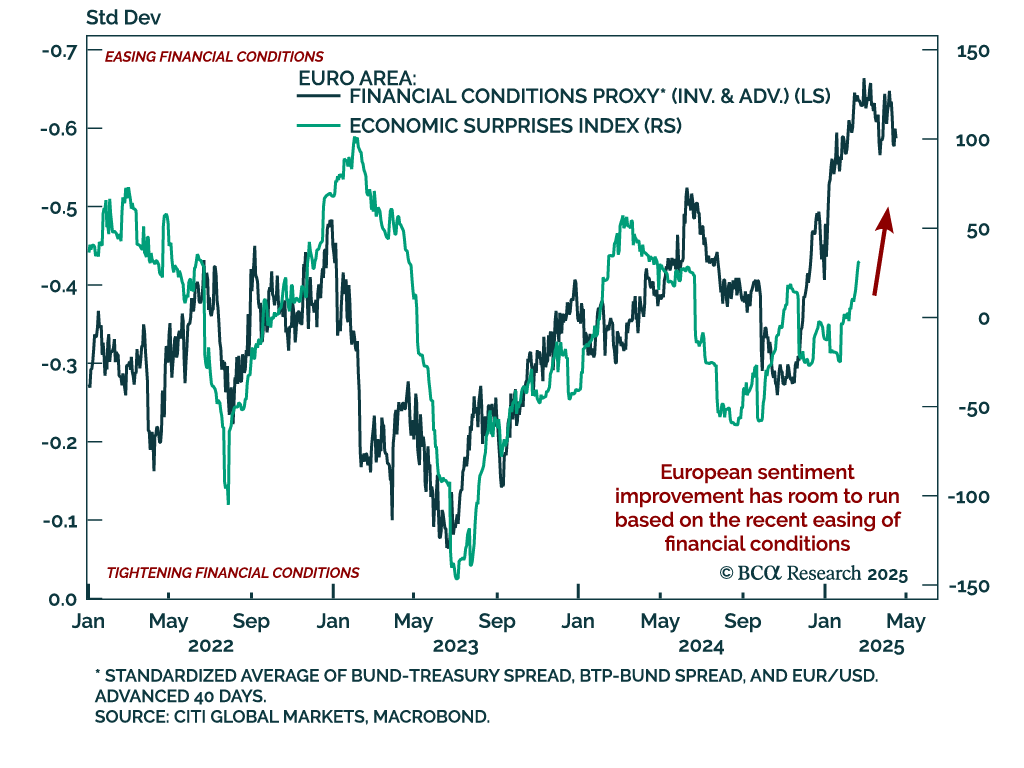
A nascent theme in the latest data is the broad improvement in European sentiment. The February Sentix and ZEW surveys both improved, and flash estimates for European consumer confidence beat estimates, ticking up to -13.6%. Confidence remains low, but…