Skip to main content

Sovereign Debt

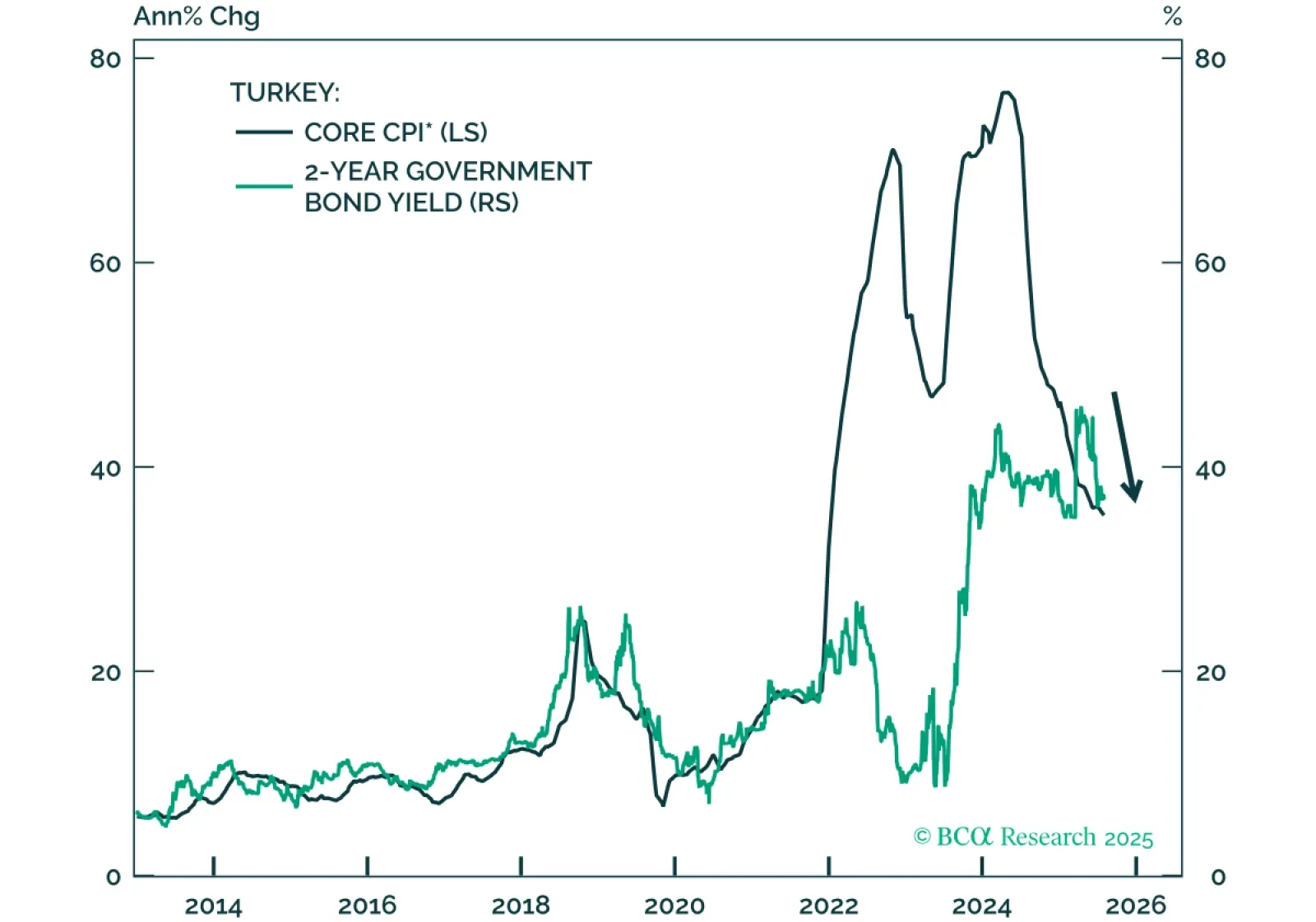
Turkey’s financial policymakers have pursued a disciplined and restrictive policy mix so far, delivering high real interest rates and curbing fiscal expansion even as the economy slows. This commitment to inflation control has paved the way for a pronounced decline in price pressures, prompting BCA’s Emerging Markets Strategy team to upgrade Turkish domestic bonds to overweight in its EM domestic bond portfolio. Similarly, Moody’s has recently upgraded Turkey’s credit rating and outlook. The lagged effects of the restrictive stance are now increasingly evident: real bank lending rates hover near 30%, real domestic demand growth is decelerating, and fiscal expenditure increases are barely keeping pace with inflation. Collectively, these conditions point to further disinflation and declining bond yields in the coming quarters (Chart 1).From an FX strategy perspective, the Turkish lira (TRY) presents a less precarious profile than many fear and what the forward markets currently imply.First, the current account deficit has narrowed considerably in recent years. As tight policy weighs on domestic demand, it will further curb goods imports and keep the current account deficit in check (Chart 2). This improvement should offset much of the expected export contraction due to slowing demand from the European manufacturing sector, reducing pressures on the lira from external balances. Second, the combination of receding inflation and very high nominal yields creates a compelling environment to attract sizable foreign portfolio flows into local currency debt. With foreign ownership of Turkish domestic government bonds currently low by historical standards, there’s significant room for new inflows (Chart 3). As such, the TRY depreciation over the next year will likely fall well short of the 26% pace currently implied by forward markets vis-à-vis the USD. Historically, periods of falling inflation have coincided with slower lira depreciation (Chart 4). A weaker trade-weighted US dollar could reinforce this trend, further curbing pressure on the currency. In this context, short-end local currency bonds are becoming increasingly attractive to global investors.Bottom Line: Falling inflation and a narrow current account deficit in Turkey have historically gone hand-in-hand with a less vulnerable currency. This time should be no different: the pace of the lira’s depreciation against the US dollar will likely ease in the coming months.
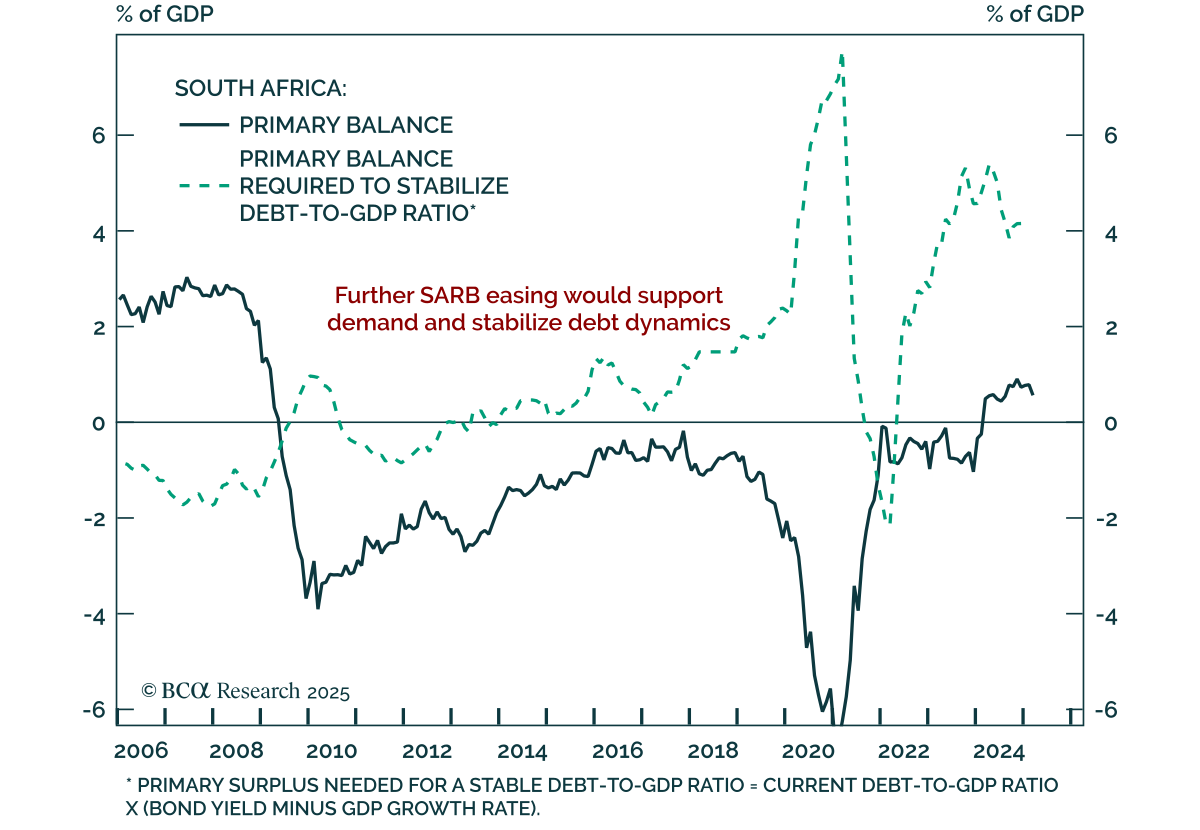
The SARB cut rates by 25 bps to 7.00%; our EM strategists expect further easing and recommends short ZAR exposure. Real interest rates remain elevated, and high borrowing costs are intensifying debt sustainability concerns, with 10-year yields far above…
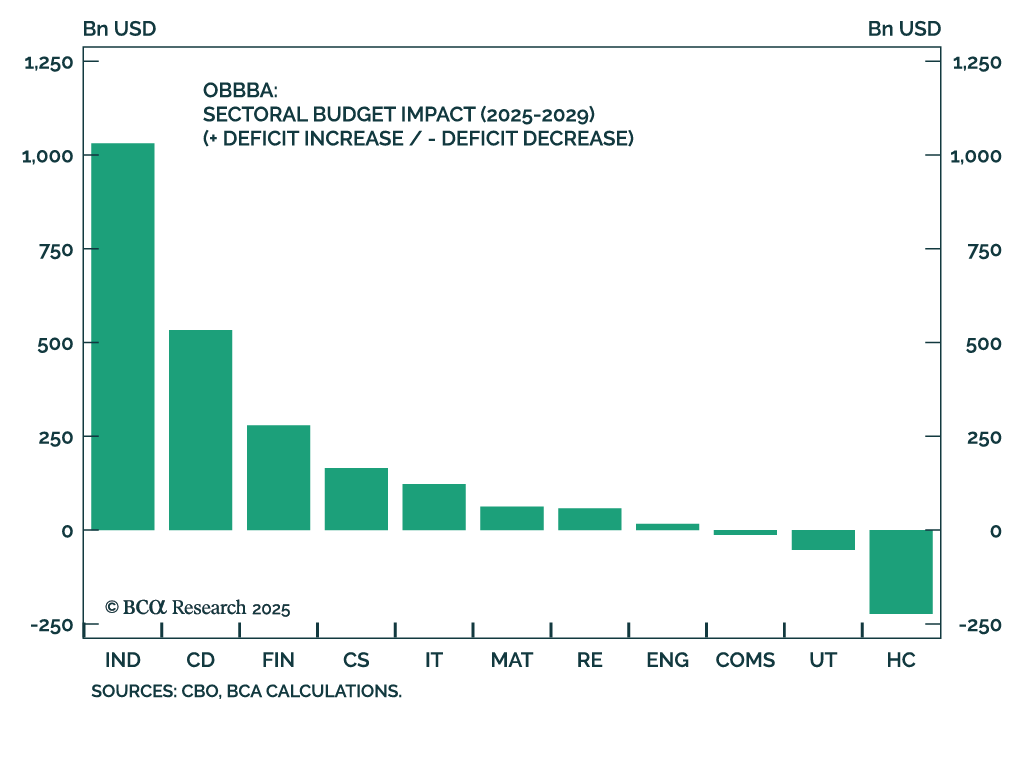
Our Geopolitical and Equity Analyzer teams recommend a Value and Quality-focused equity basket in Industrials, Financials, and Consumer Discretionary to capture OBBBA-driven upside. These sectors are the primary beneficiaries of the newly passed stimulus…
Special Report

Despite macro headwinds, the OBBBA clearly favors Industrials, Financials, and Consumer Discretionary equity sectors. A carefully constructed, factor-aware basket in these sectors is well positioned to outperform in a fiscal-driven, uncertain environment. 
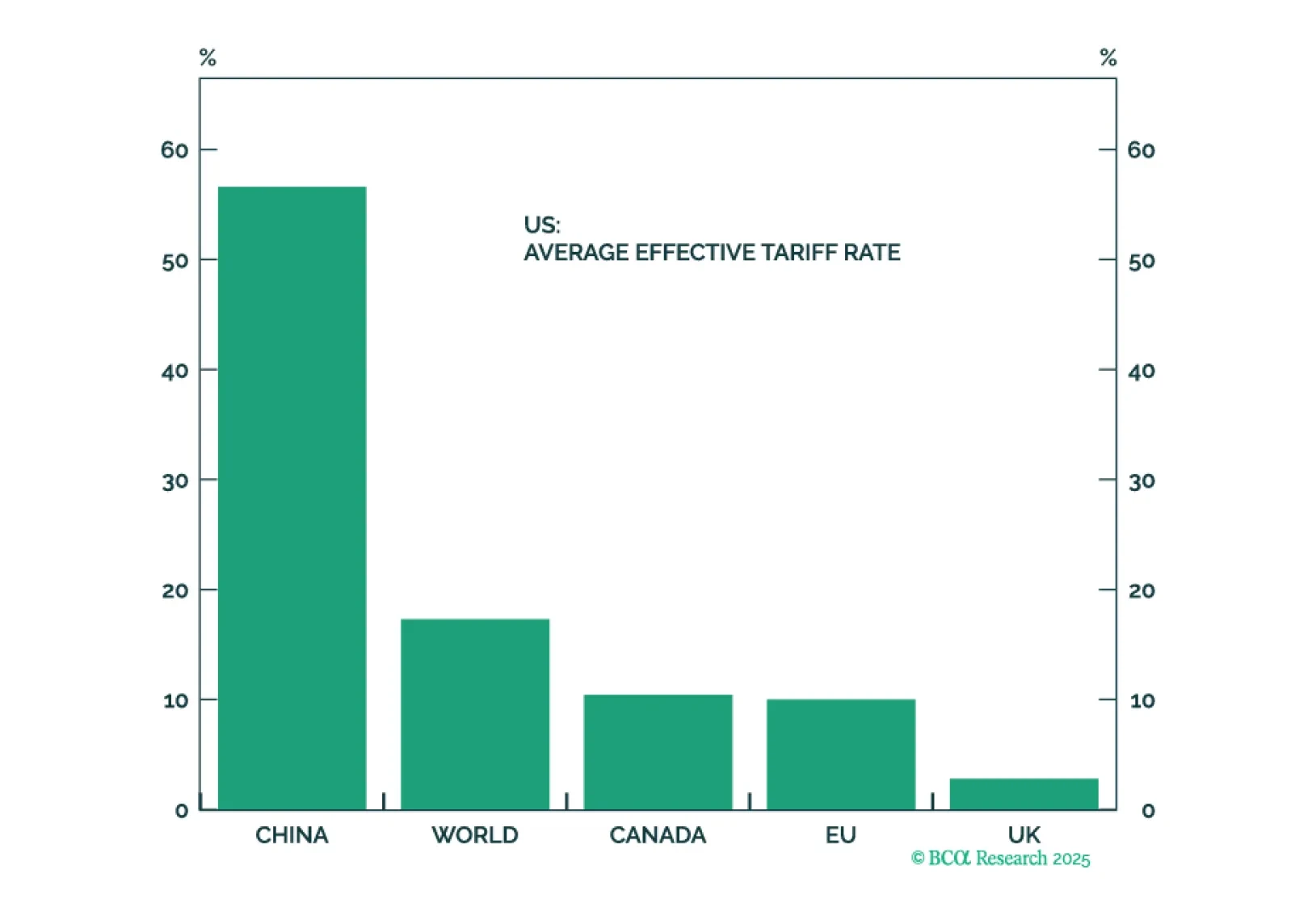
Acute geopolitical risks, like a massive oil shock, may be abating. But structural geopolitical risk remains high and could upset a blithe market. Cyclical economic risks are underrated as the US slows down and China continues to stumble. Investors should book some profits in anticipation of tariff implementation and a downturn in hard economic data.
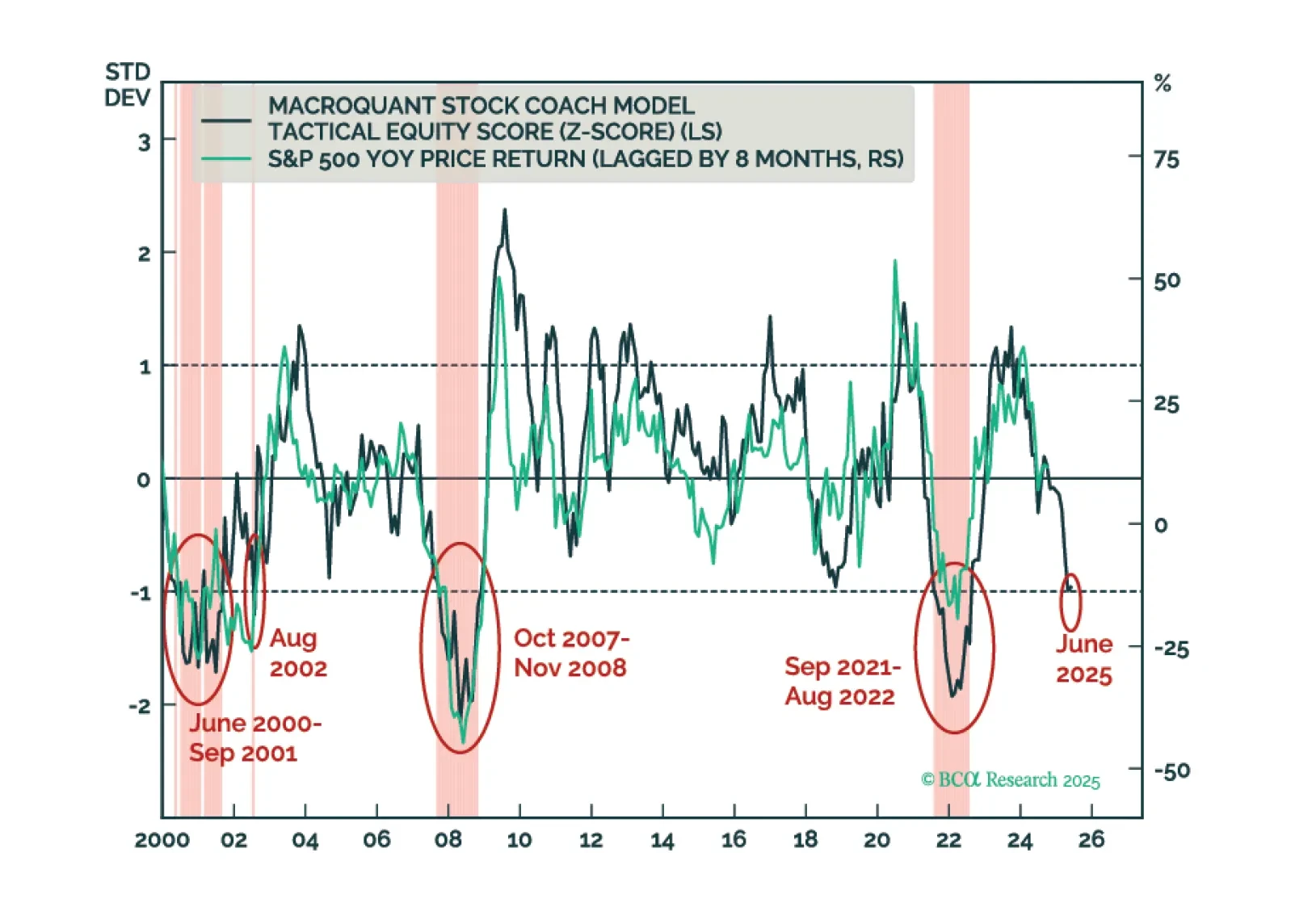
Investors should modestly underweight equities in their portfolios and look to turn more aggressively defensive once the whites of the recession’s eyes are visible. We think that will happen within the next few months.
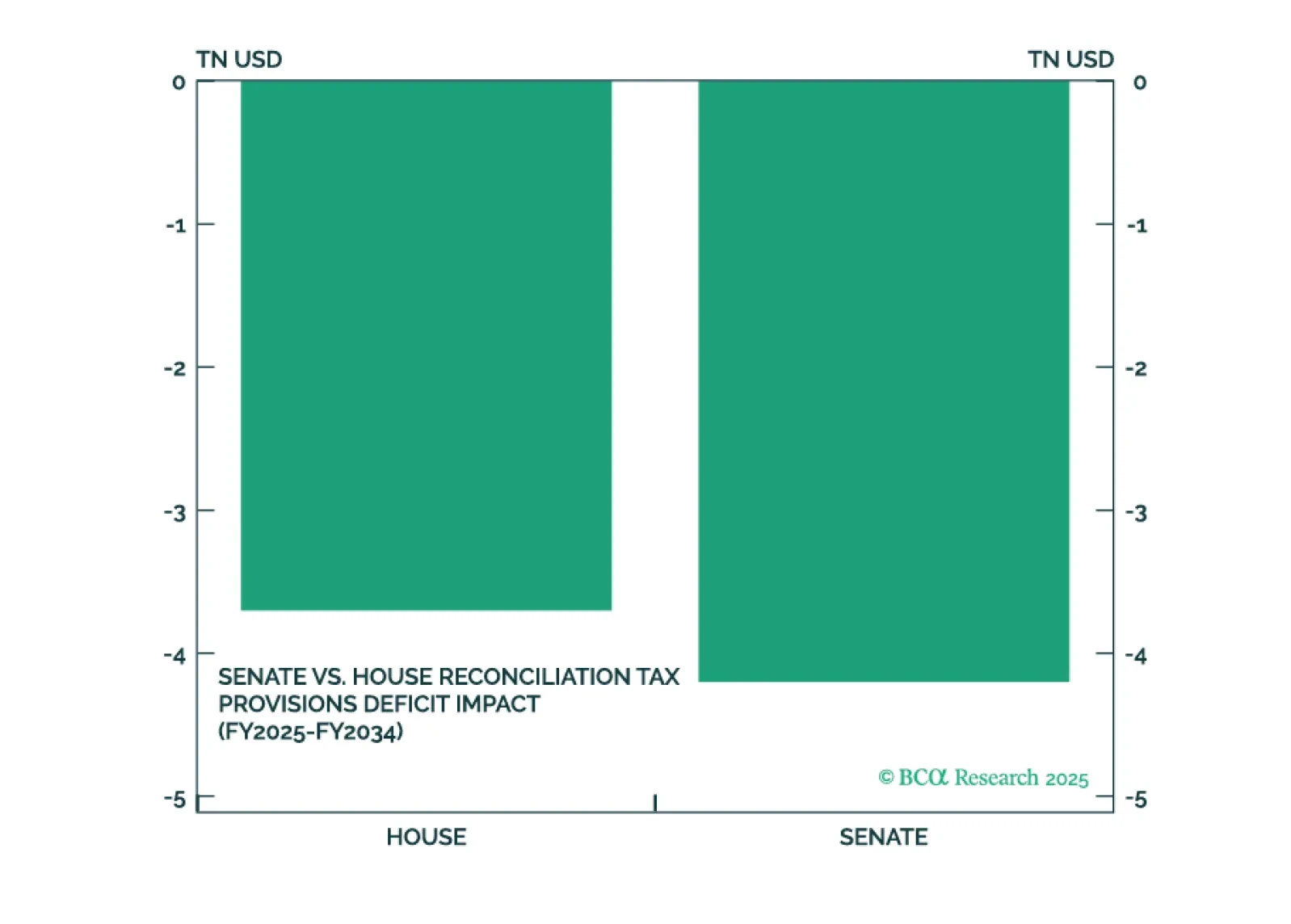
President Trump’s big beautiful bill will pass but faces near-term hurdles and will not tighten the government’s belt. It will combine with renewed tariff implementation to generate near-term risk for both the bond and stock market. The Iran crisis fizzled, saving Trump from a major oil shock that could have derailed his second term.
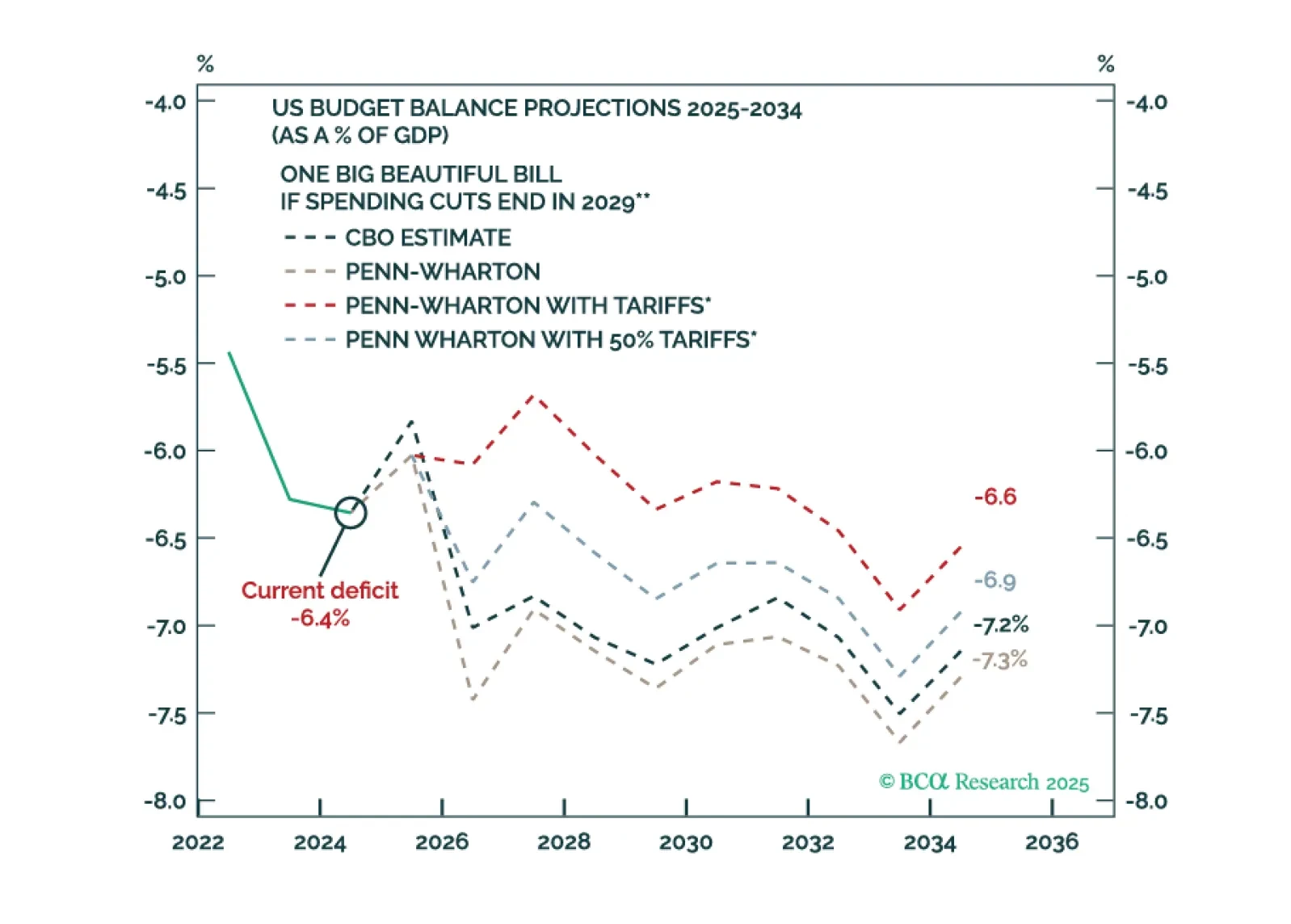
Bond market volatility will spike again in the near term. The Fed is committed to an easing cycle yet the Trump administration’s signature fiscal policy action will stimulate the economy. Tariffs are supposed to keep the budget deficit contained but they are inflationary. 
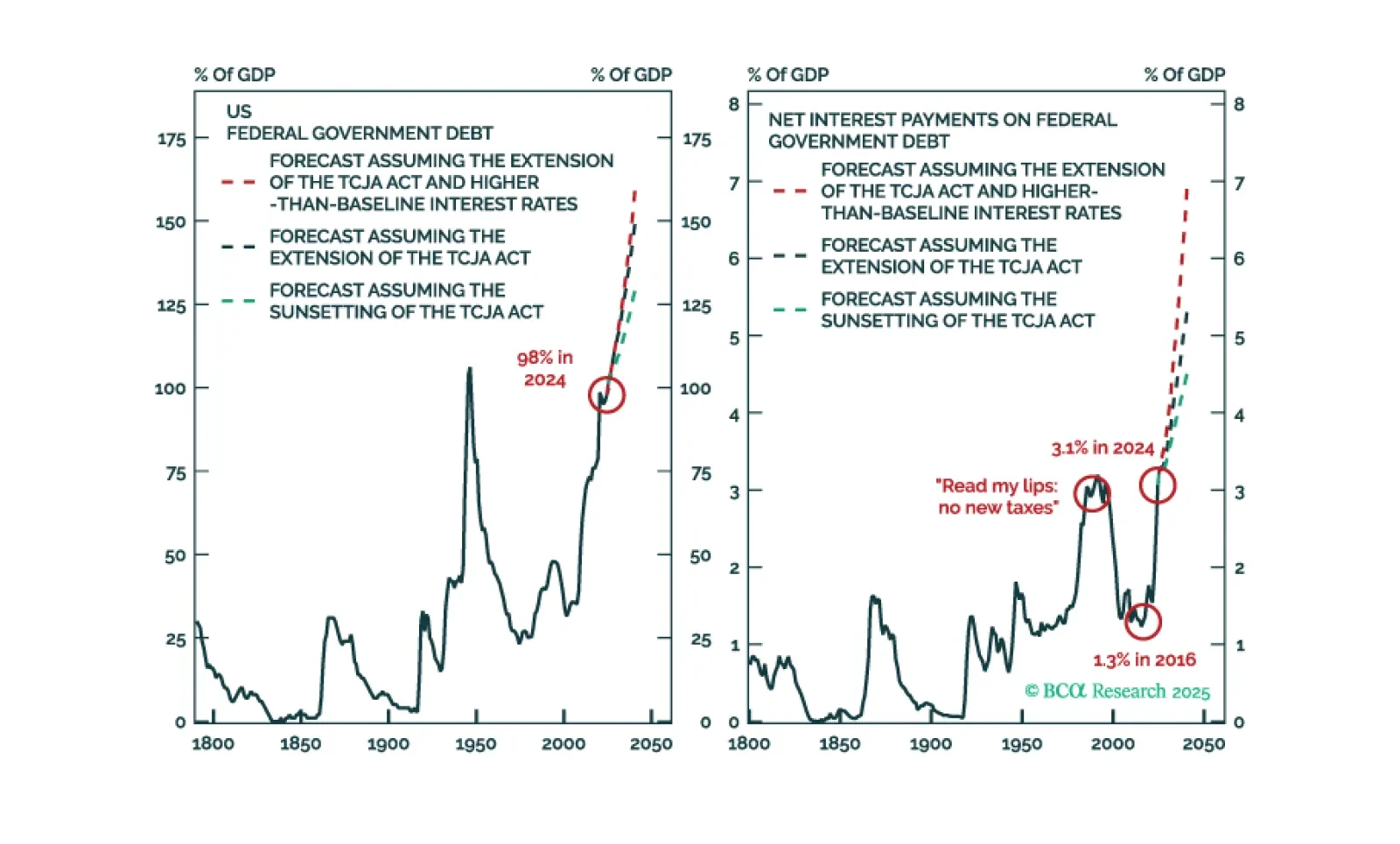
Rising bond yields may present an even greater danger to the global economy than the trade war. With equity valuations no longer discounting much economic risk, investors should position themselves defensively.
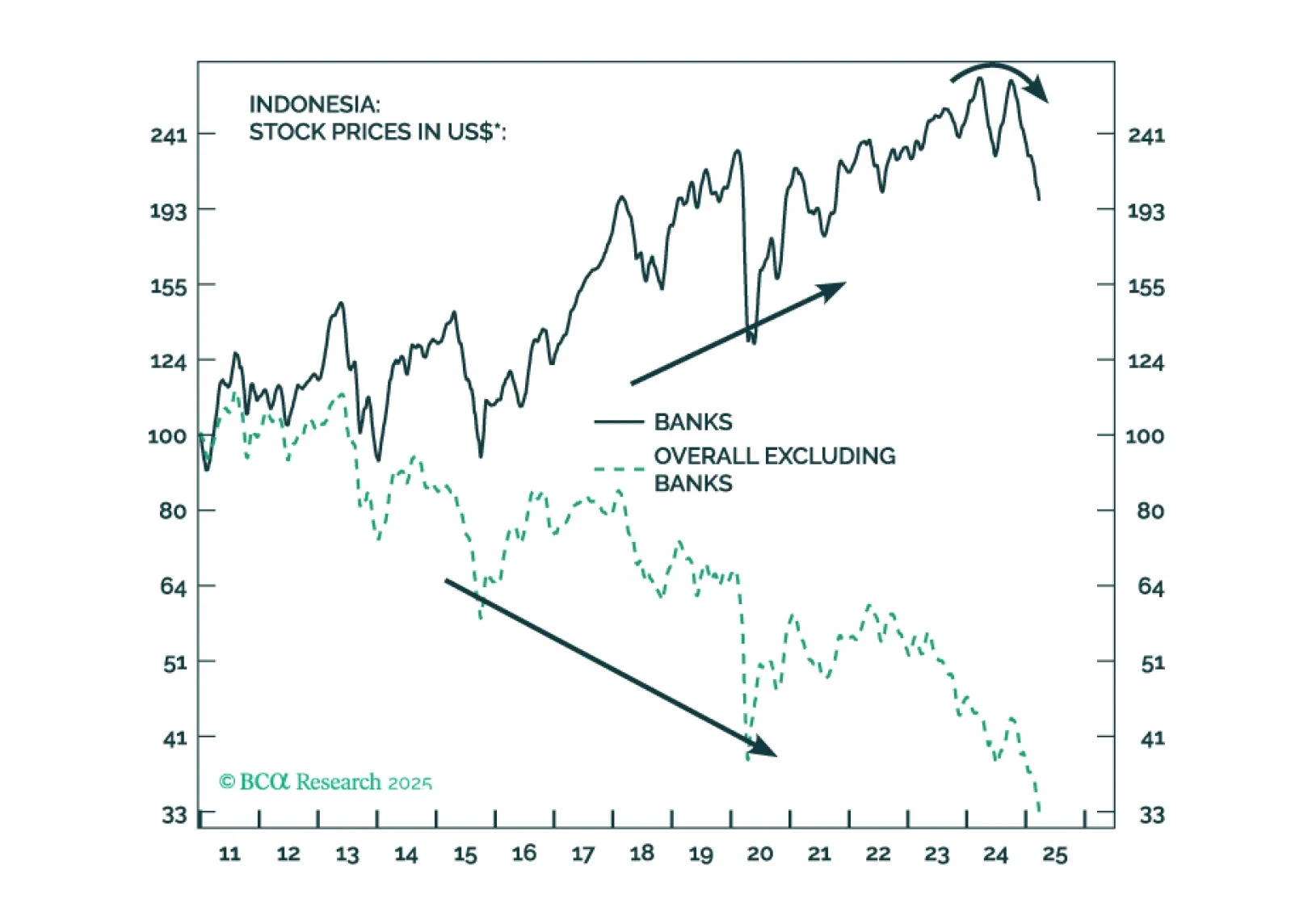
There is an ongoing regime shift in Indonesia: SOEs will be used to drive economic growth. Bank loans will accelerate, but their profit margins will shrink. Despite higher nominal growth, Indonesian equity prices in US dollar terms will not see a sustainable bull market. Downside risks to currency and upside risks to domestic bond yields have also increased.