GeoMacro
A blend of geopolitics and macro, synthesizing the new and old macro to generate alpha and identify the beta through probability-weighted market views.
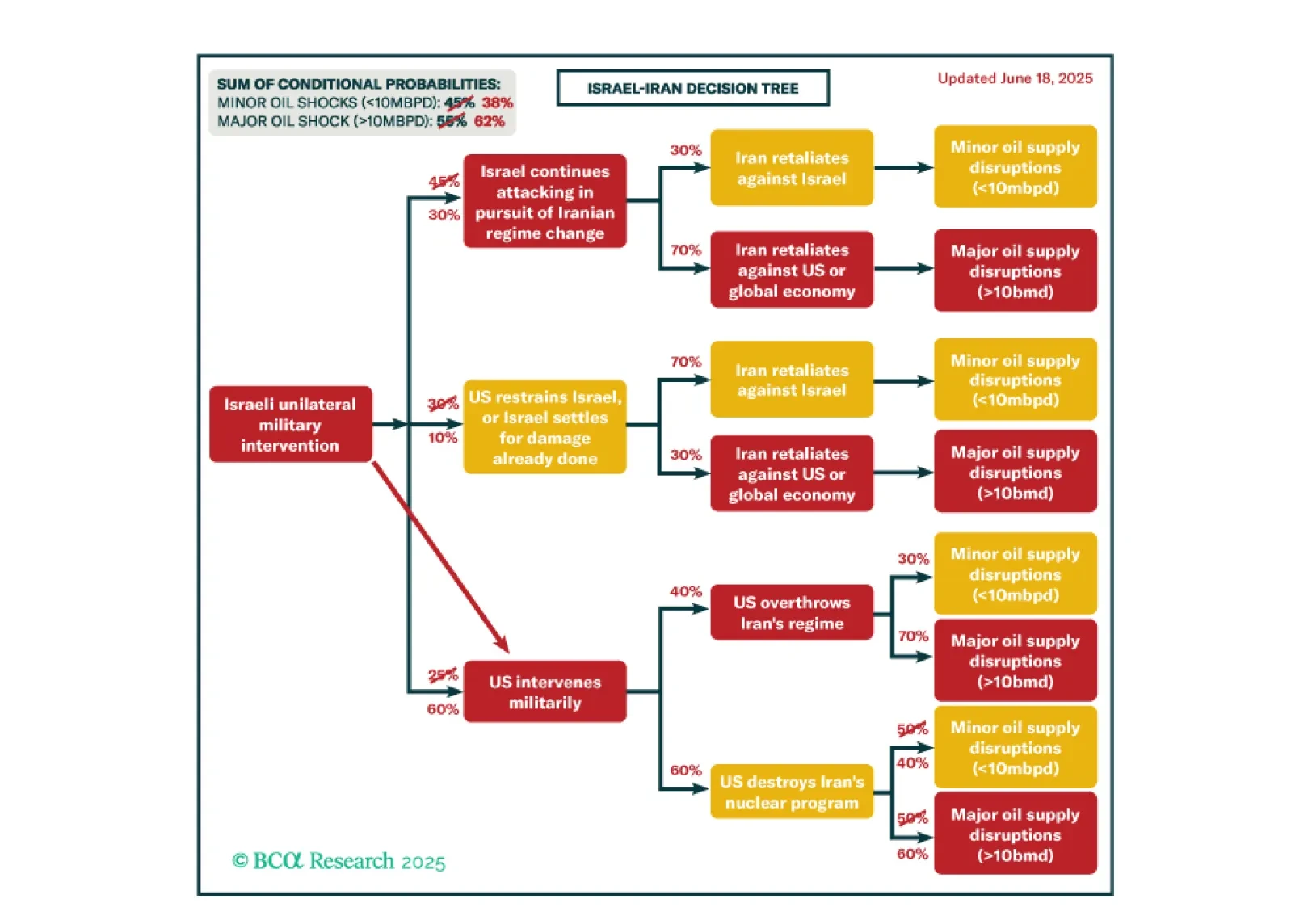
Even if Iran tries to revive talks, the US has an irresistible opportunity to dismantle its nuclear program. Tactically, investors should favor Treasuries over the S&P, defensive sectors over cyclicals, energy stocks over cyclicals, and US stocks over European stocks in the near term.
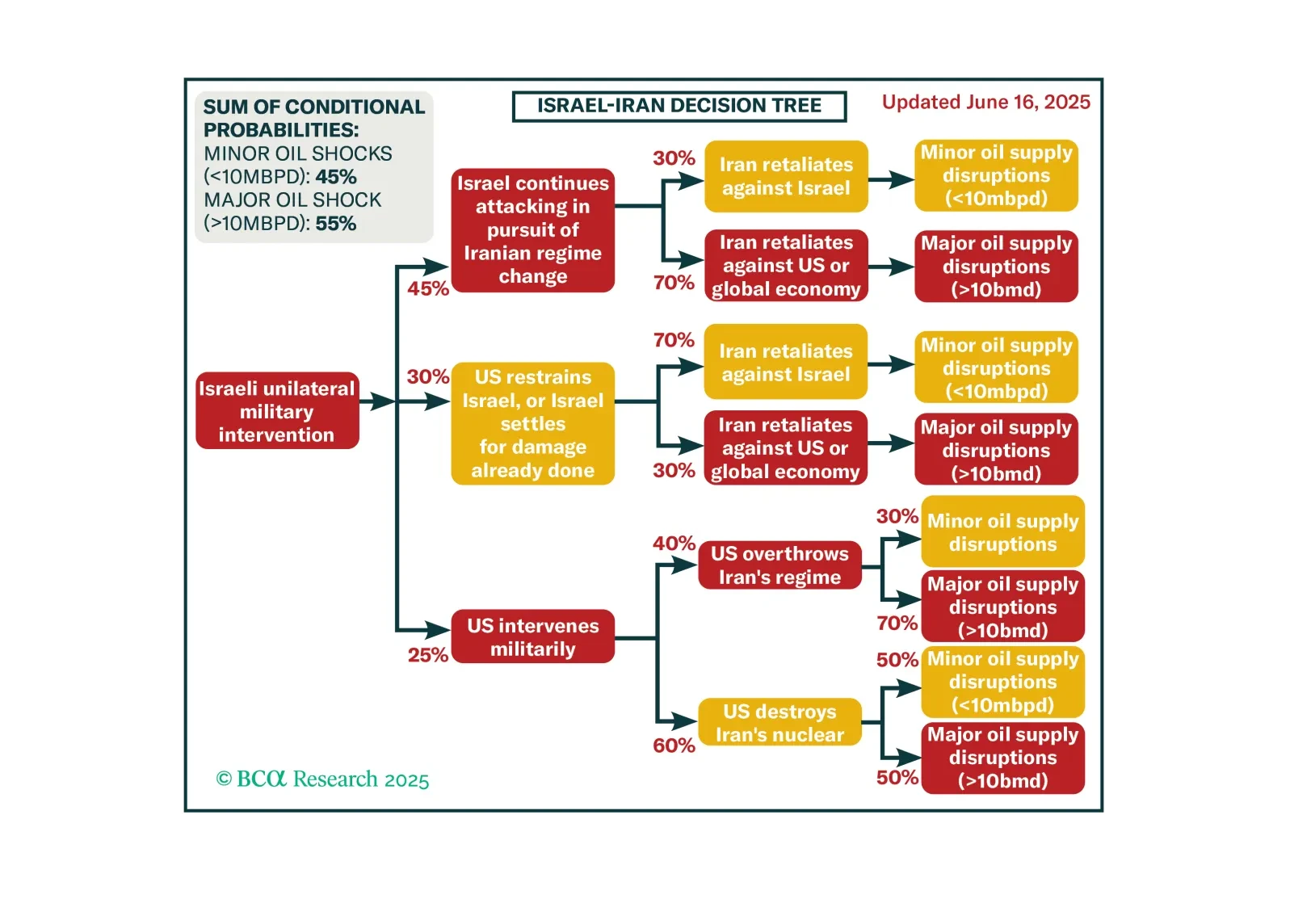
Israel’s attacks on Iran will continue until Iran is forced to strike regional oil supply to get the US to restrain Israel. That may not work. Investors should prepare for a broader economic impact of the conflict.

It has been three days since Israel started its air campaign against Iran. We now have greater visibility into Israel’s targeting, as well as Iran’s retaliation. Israel’s air force has struck almost every single Iranian nuclear program facility, government buildings, research centers, and – most importantly – energy facilities. Most of these targets are expected, but the attacks against Iran’s energy facilities are concerning as they suggest that Tehran may have casus belli to strike back at the energy facilities strewn around the Persian Gulf.

The conflict between Iran and Israel continues. There will be ample time to update our views on the specifics of the kinetic action. Thus far, Iranian retaliation has been confined to Israel, which according to our hierarchy of potential responses, is the least market relevant.

An intriguing dichotomy is emerging in how the US government has responded to Israel’s attack against Iran. First, following the attack, Secretary of State Marco Rubio issued a terse statement denying US involvement.
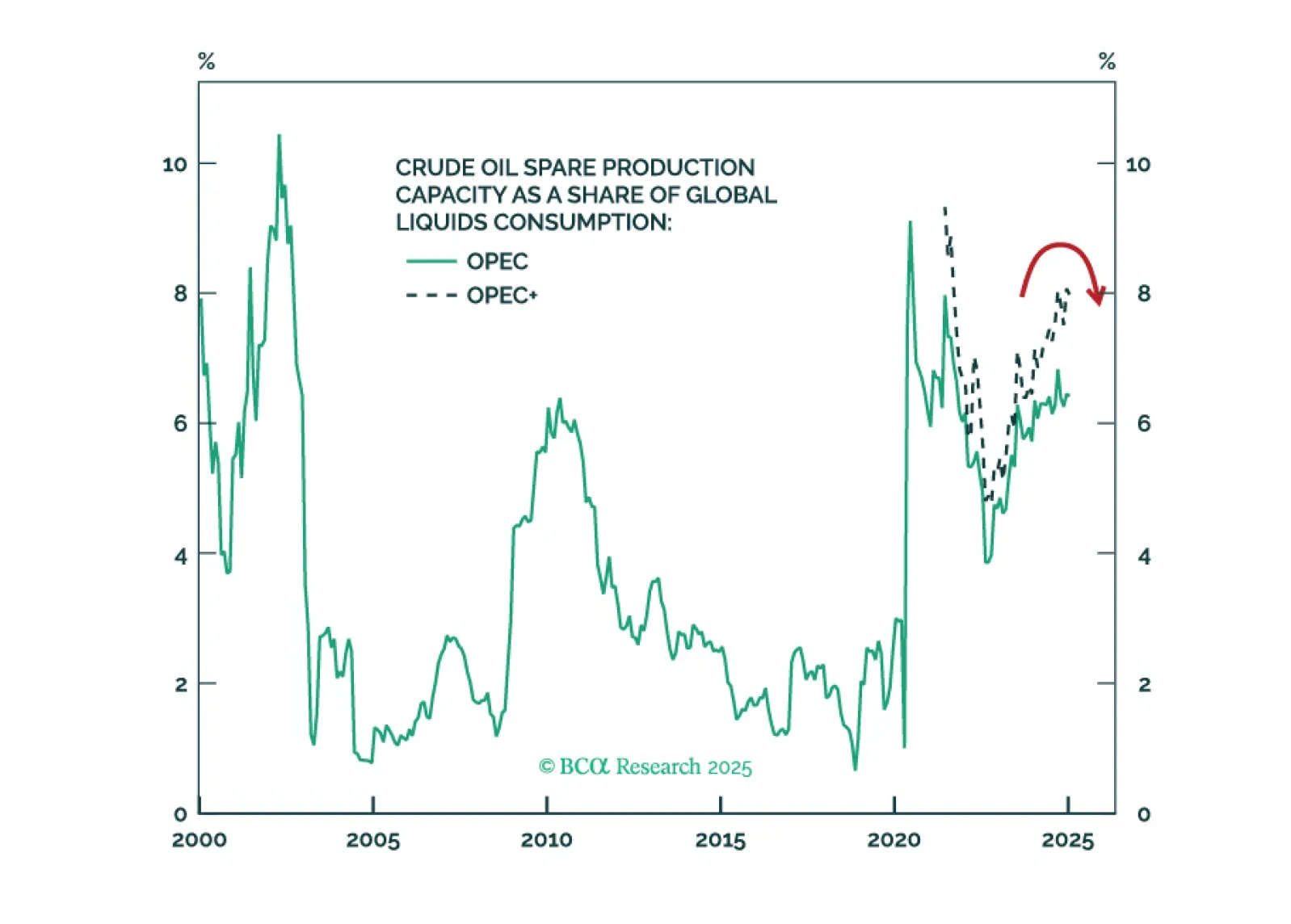
Investors should hold gold, build up some cash, tactically overweight US equities relative to global, and prepare for at least minor oil supply shocks – possibly major shocks – as the Israel-Iran war escalates.

Israel has taken unilateral action against Iran on June 12. According to the media reports, the following are the key developments: Israel has attacked multiple targets across Iran, including in the capital Tehran. Israeli Prime Minister Benjamin Netanyahu has stated that the Operation Rising Lion would “continue for as many days as it takes to remove” the alleged Iranian nuclear threat. The US has stated that it did not participate in the attack, calling Israel’s action unilateral.
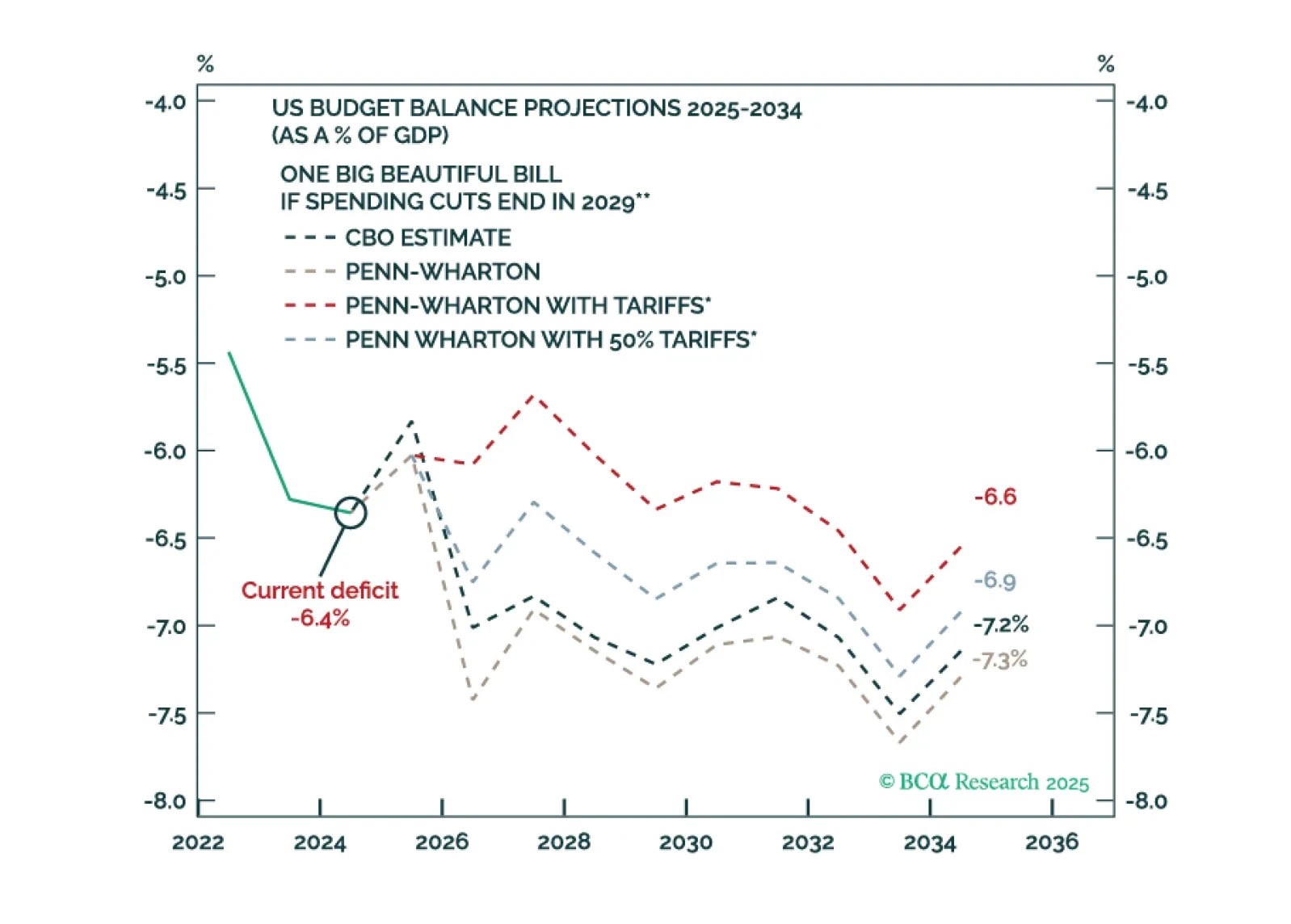
Bond market volatility will spike again in the near term. The Fed is committed to an easing cycle yet the Trump administration’s signature fiscal policy action will stimulate the economy. Tariffs are supposed to keep the budget deficit contained but they are inflationary.
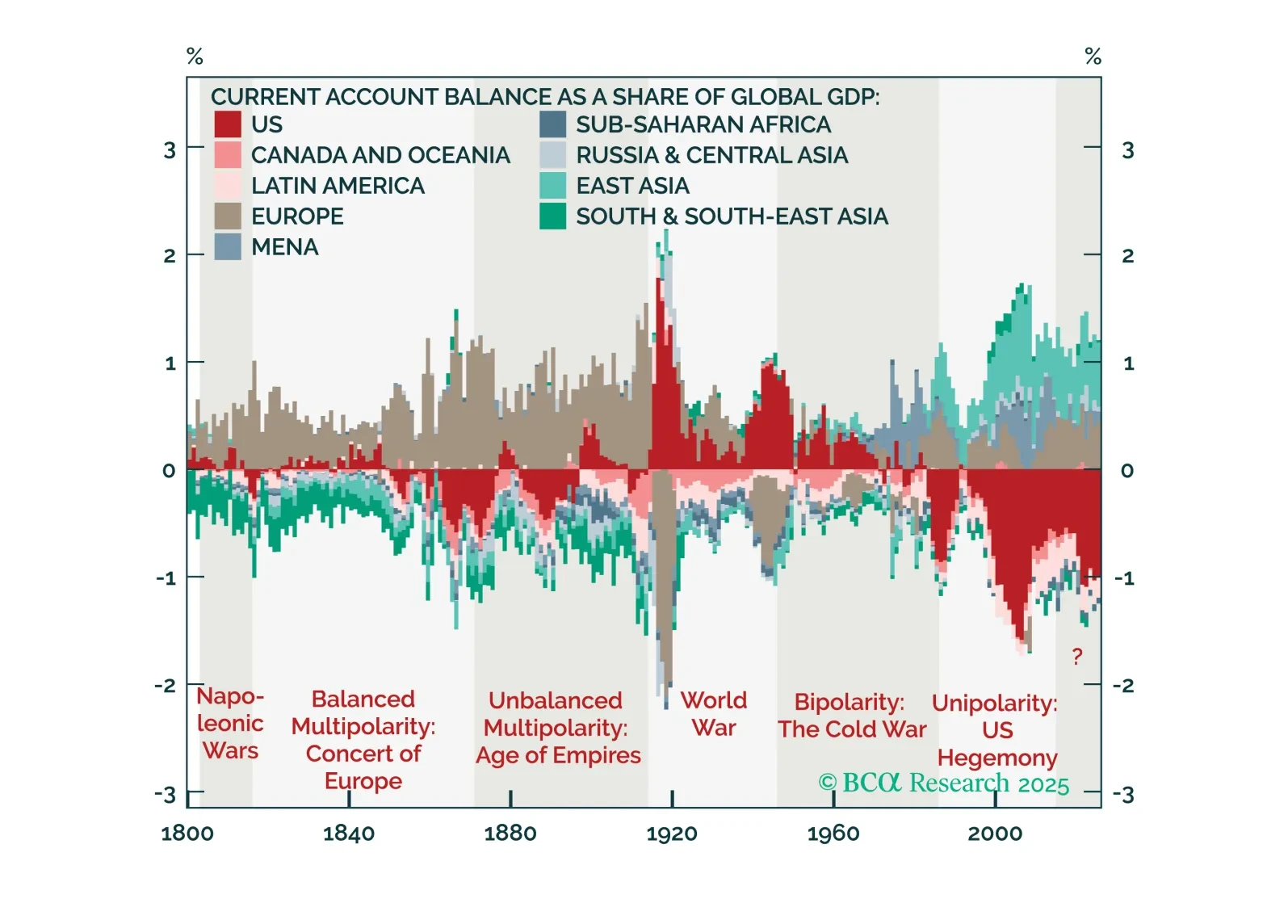
This month, we flip the order of our chartpack. We focus on the secular/long-term first. Both because we think that we have something profound to say and because we believe that our tactical call has very little new value-add. We remain convinced, as we have been for over a year, that President Trump is not willing to upend decades of US trade policy.