 GeoMacro | Tactical Risks & Opportunities
Near-term geopolitical analysis, focused on the 0-3 month horizon. Publication frequency shaped by urgent global events.
When the fog of war is thick investors need hard facts and data to cut through the uncertainty. Unfortunately, when it comes to physical commodities, publicly available macro data obscures the reality of moving molecules around the world. Thankfully, we at BCA Research have spent the past eight decades building relationships with clients who do all sorts of things for a living. These folks may rely on us for help with the macro context, but they are all experts in their own subsets of the financial industry.
President Trump offered to deescalate the conflict in the Middle East on March 23. In a series of wide-ranging comments, President Trump said that regime change had already been achieved, that negotiations with Tehran were progressing, and that he was pausing his threat to target Iranian energy infrastructure for five days.
The war in the Persian Gulf has achieved a temporary balance thanks to the Cold War-era Mutual Assured Destruction (MAD) logic. After Israel attacked Iran’s South Pars natural gas field, Tehran retaliated across the region against energy infrastructure. Specifically, Iran’s attack against Qatar’s Ras Laffan natural gas field has taken approximately 2-3% of global LNG offline for up to the next three years.
The market narrative around the Gulf conflict rests on three flawed myths: the UAE is not “finished,” Iran cannot close Hormuz indefinitely, and the war is not fundamentally about China.
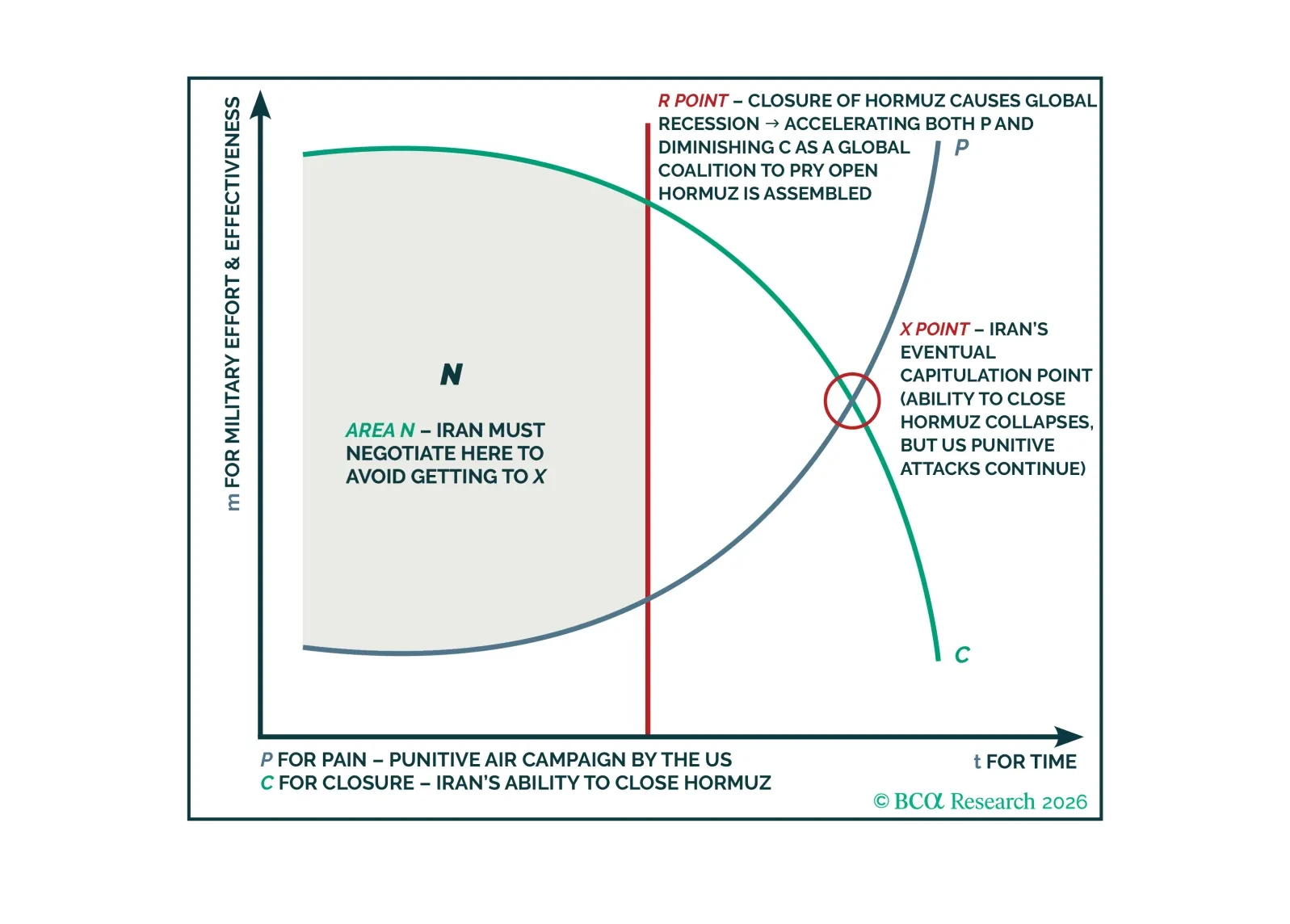
Our March 13 tactical insight into the ongoing Third Gulf War has incited a lot of client feedback.
The conflict in Iran has entered the “post-Trump taco zone” where it is now all about Tehran’s reaction function.
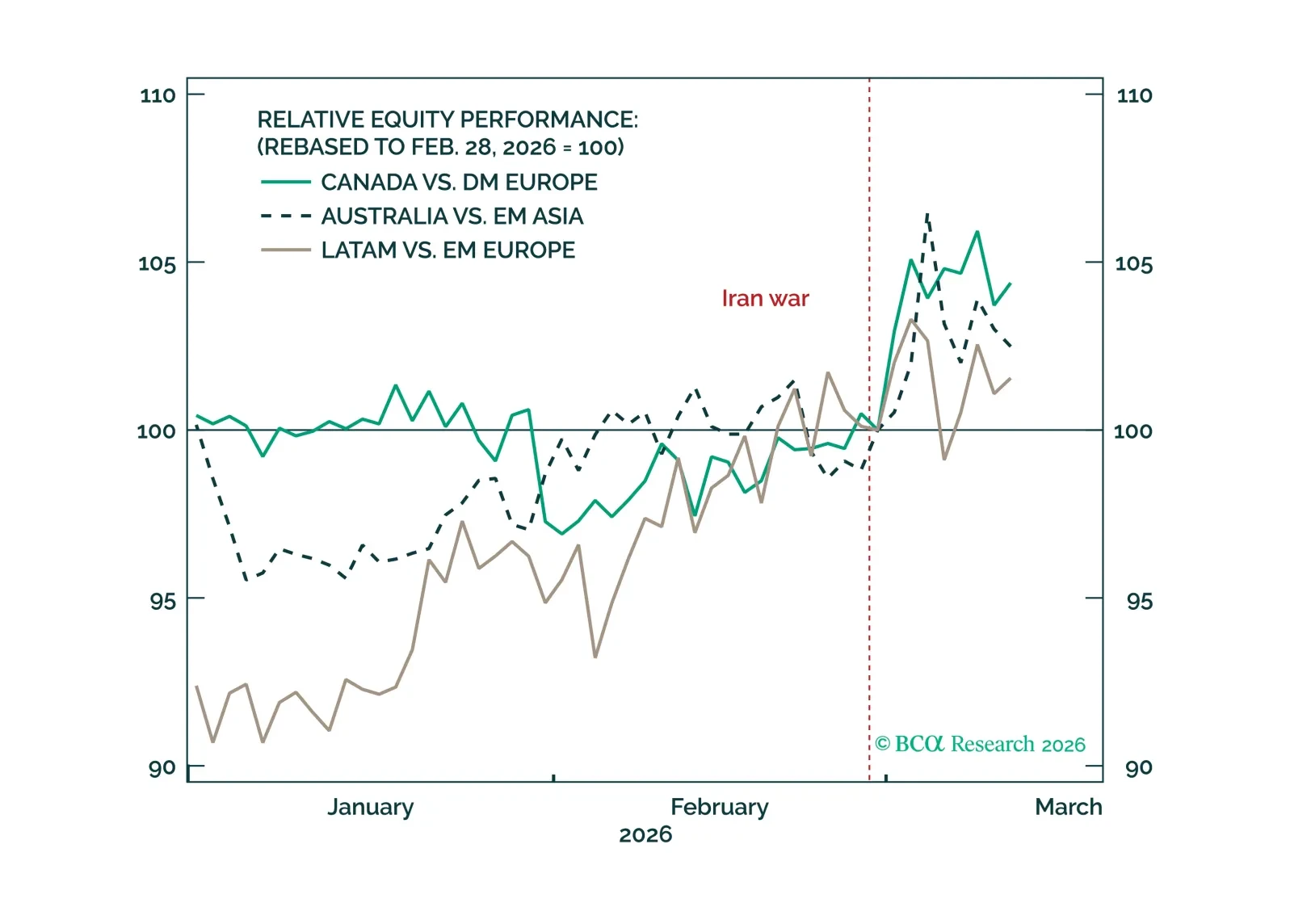
Regional geopolitical risk is rising for Europe, EM Asia, and South Asia. We adjust our regional risk matrix accordingly.
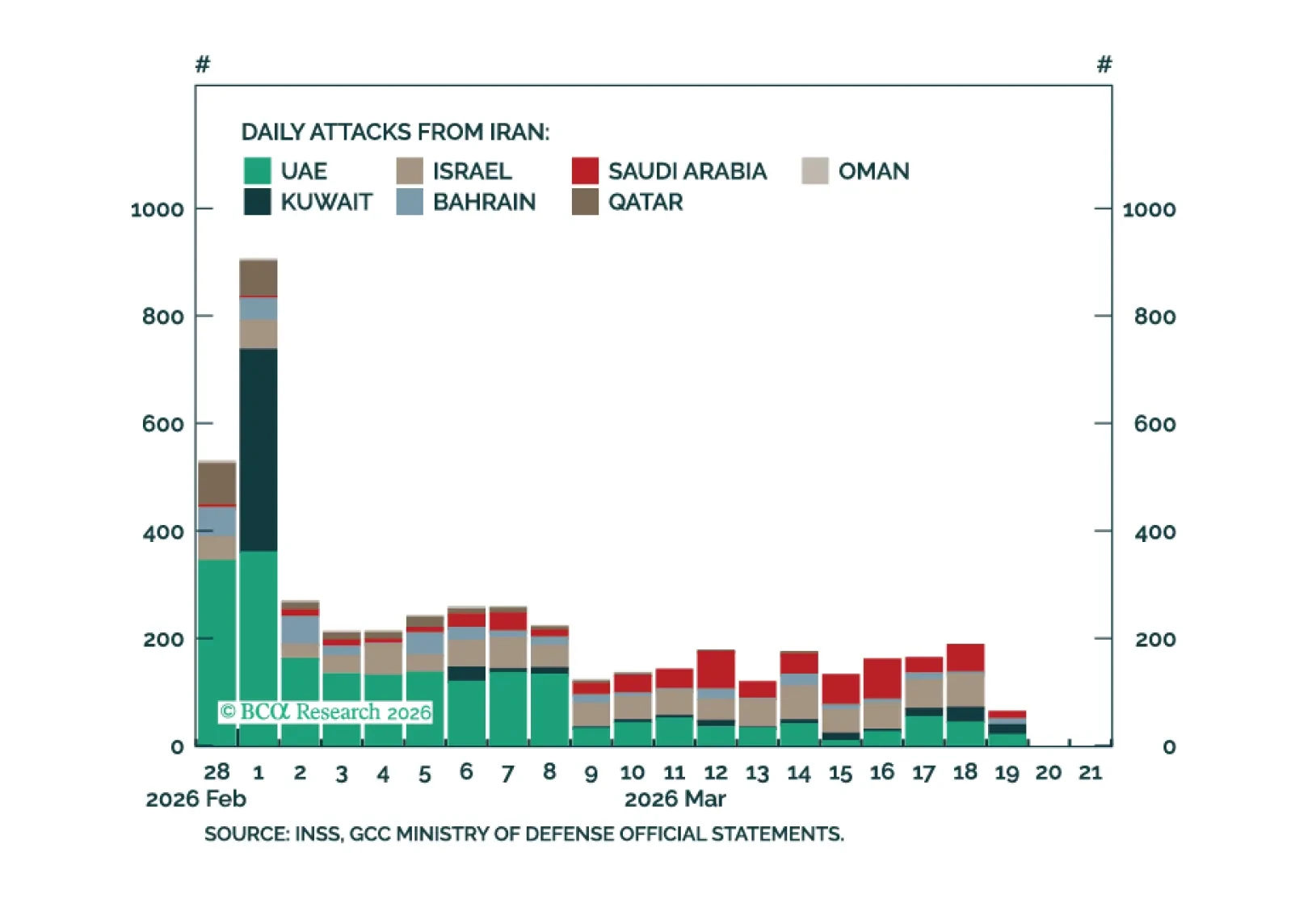
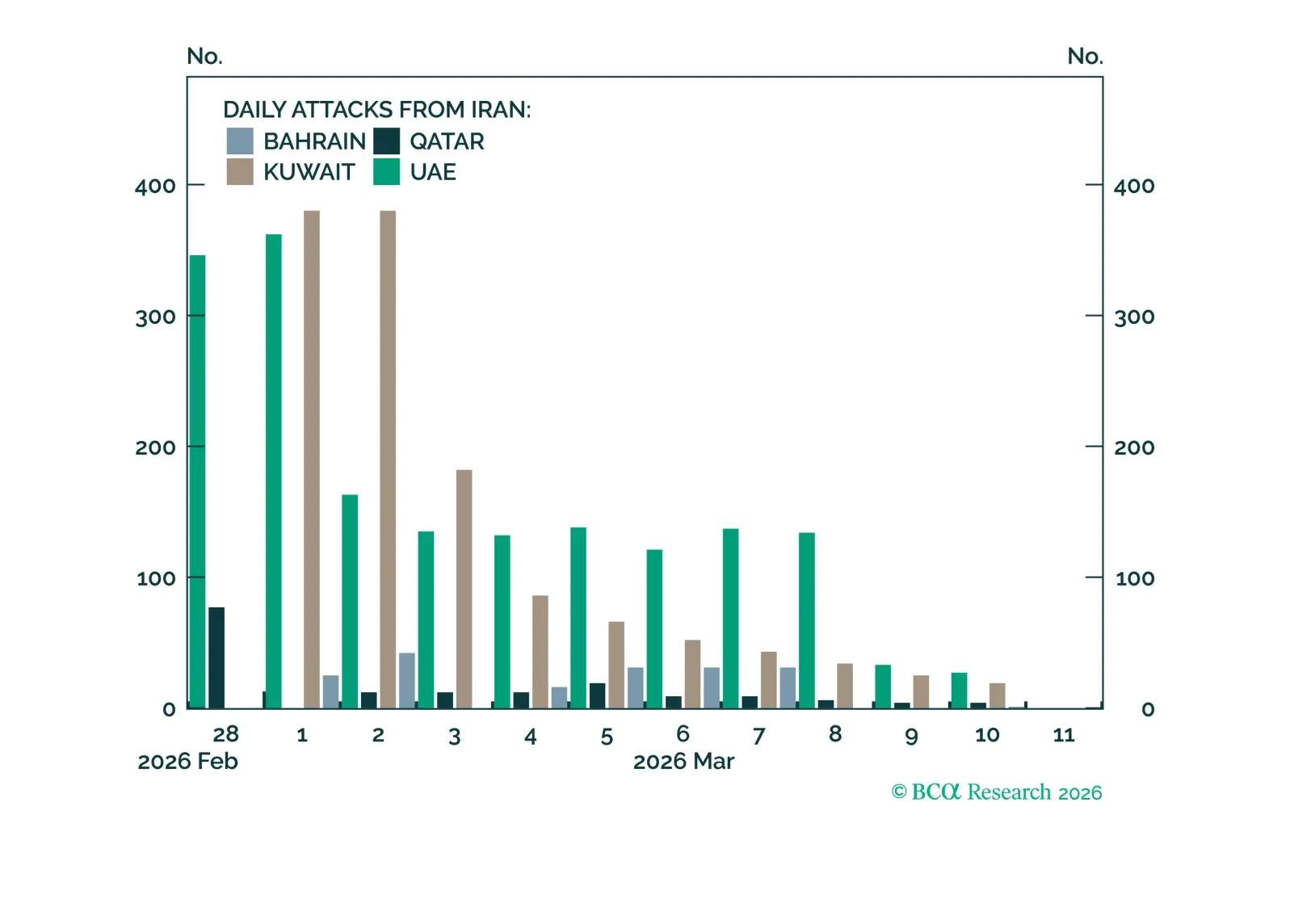
Drone and ballistic missile attacks were slowing, as of March 11. Air traffic in the region was also slowly recovering, as the pace of attacks declined. Warning, however: Reports from US CENTCOM and the IDF claim that Iran still has around 40% to 50% of its stockpile of missiles and launchers. Attacks are continuing, even though at a reduced tempo.
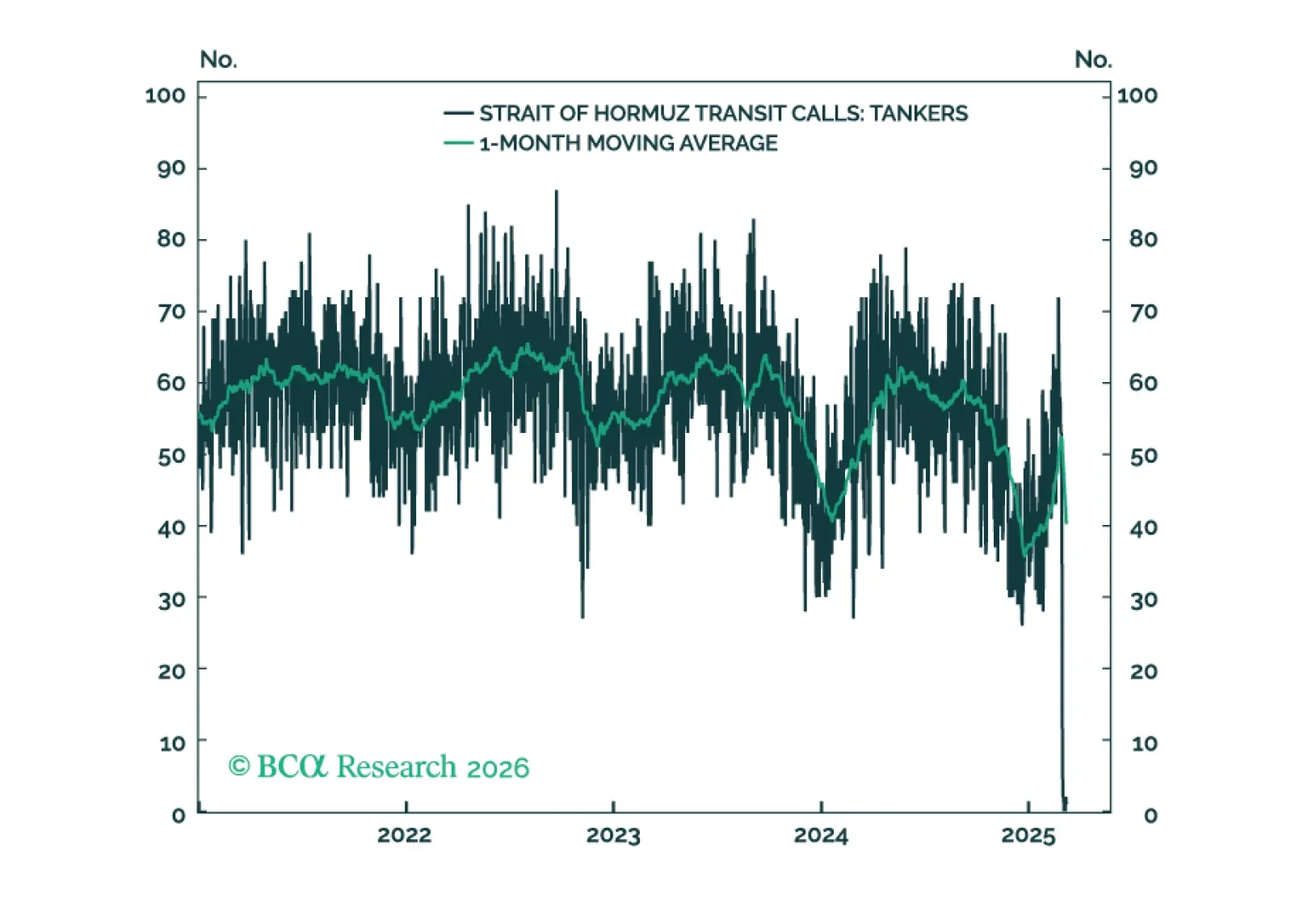
With all eyes on the Strait of Hormuz, BCA Research has created a dashboard of data for your convenience.

China's slowdown coincides with at least a minor global oil shock – a combination we have long feared.