Skip to main content
Explore CoreMacro

CoreMacro | Thematic Reports

Deep-dive special reports, exploring the investment themes that will shape markets over the medium-to-long term.  Typically published twice a month.
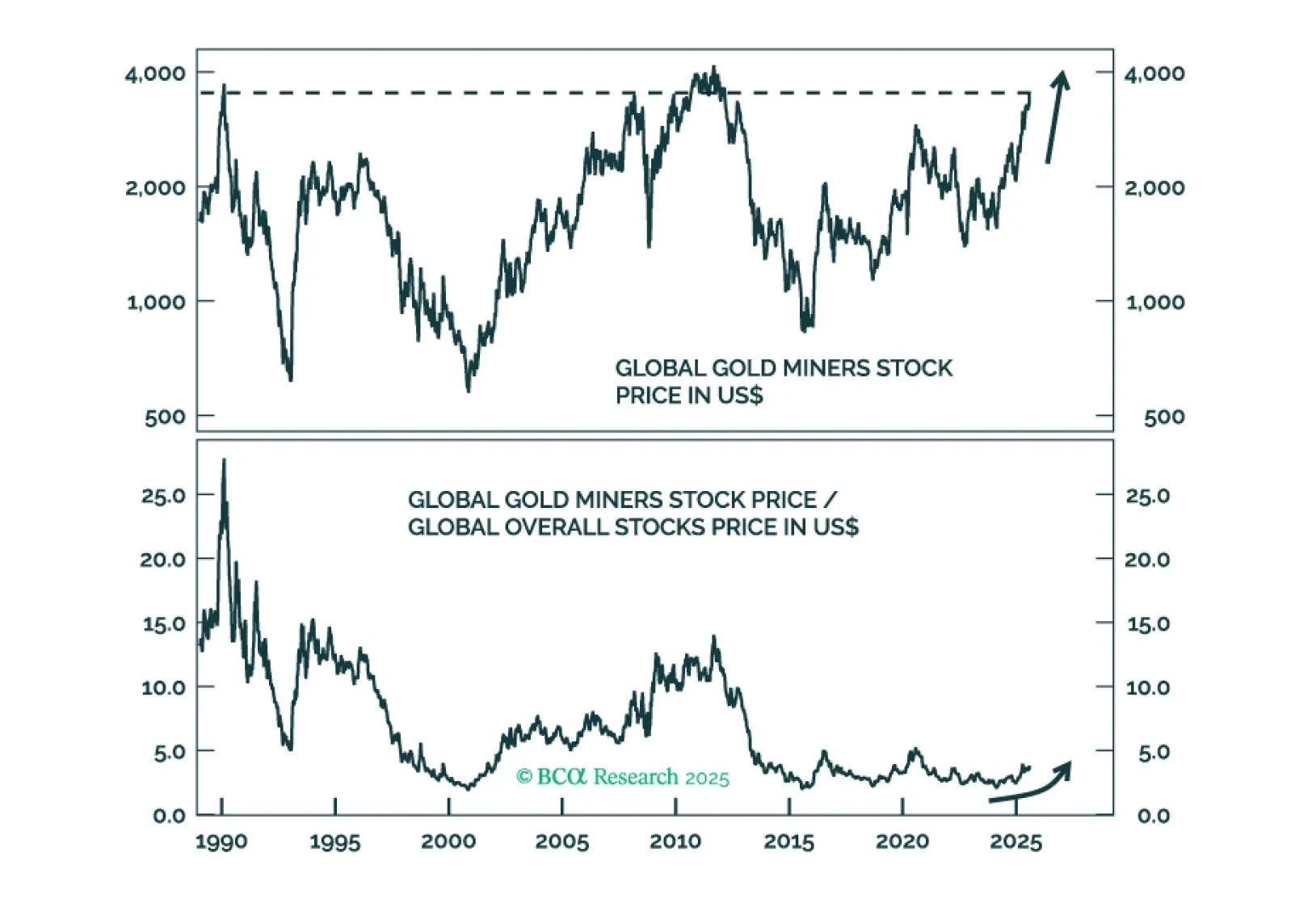
Special Report The fact that the yellow metal’s rally has defied headwinds from key cyclical drivers suggests that the bull market is structural, not cyclical. Buy gold and gold mining stocks in absolute and relative terms.
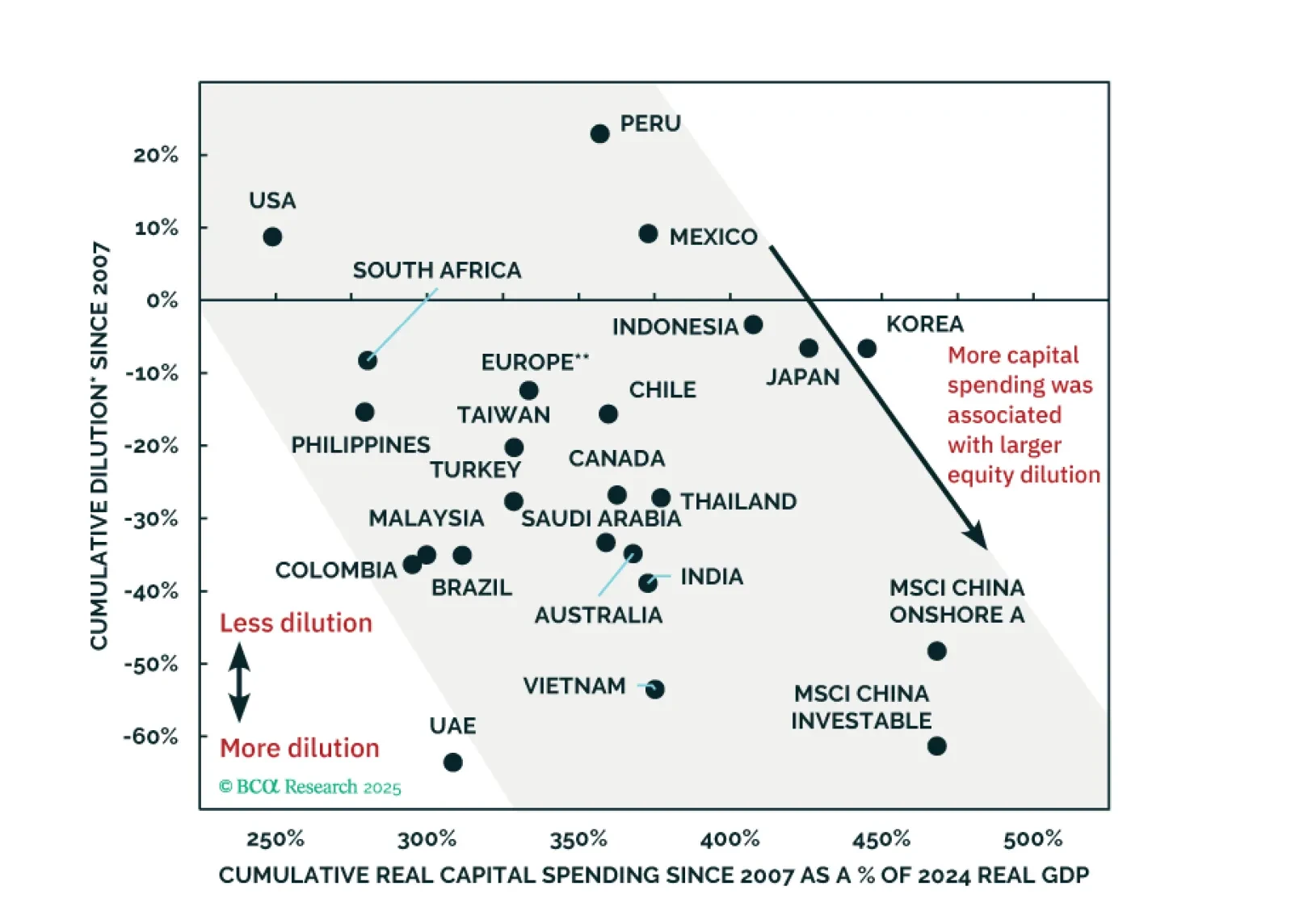
Special Report Economic growth and rapid expansions do not always translate into higher EPS and shareholder returns. One of the key reasons is dilution. We offer a typology of dilution: (1) “offensive”, (2) “defensive”, (3) corporate governance-linked, and (4) idiosyncratic cases.
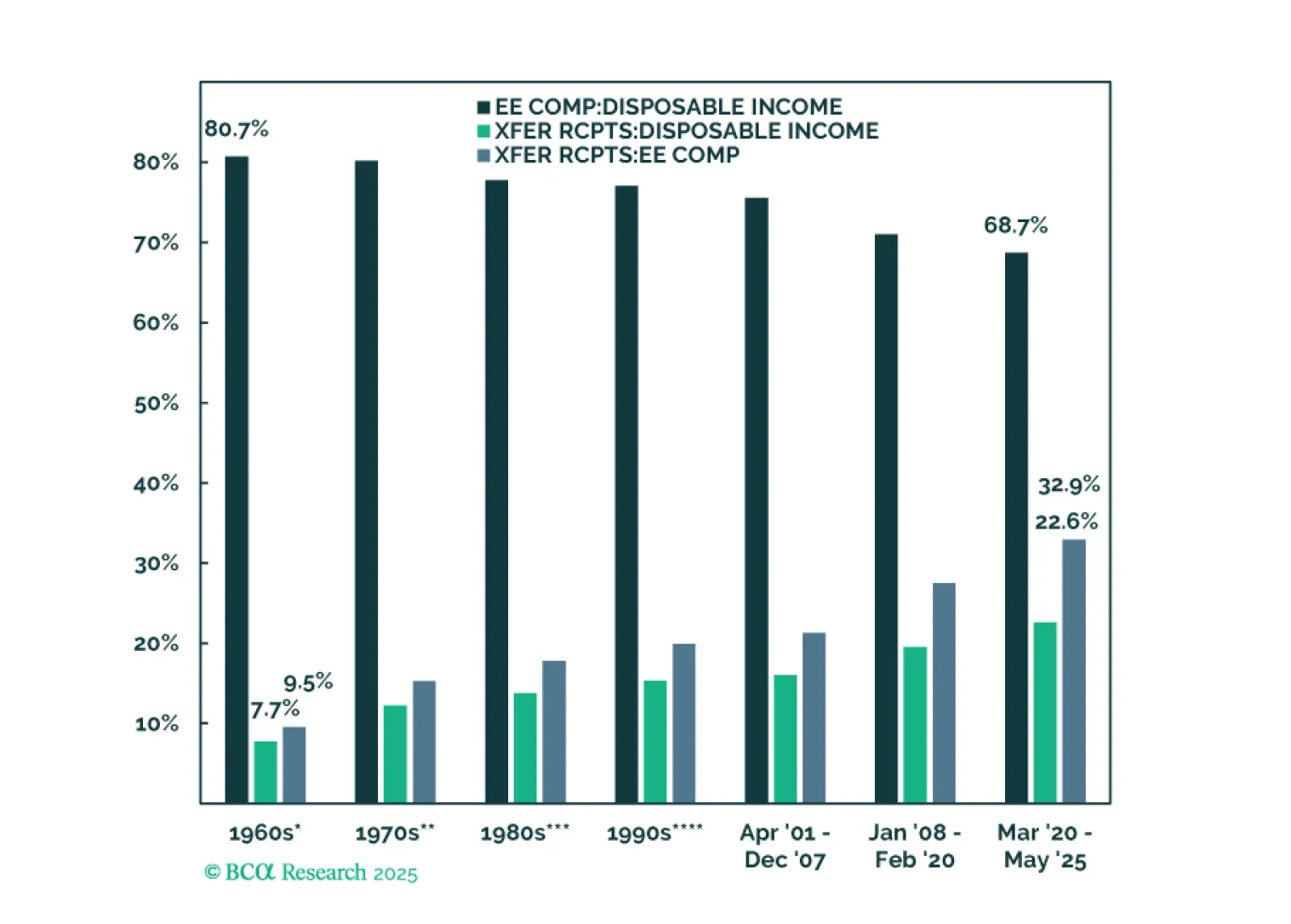
Special Report Our Special Report is a graphical comparison of the consumer’s position in the current cycle to every cycle from 1960 forward. The bad news is that disposable income is increasingly reliant on government transfers and the labor market is softening. The good news is that the balance sheets of households in the lower half of the wealth distribution have improved a lot.
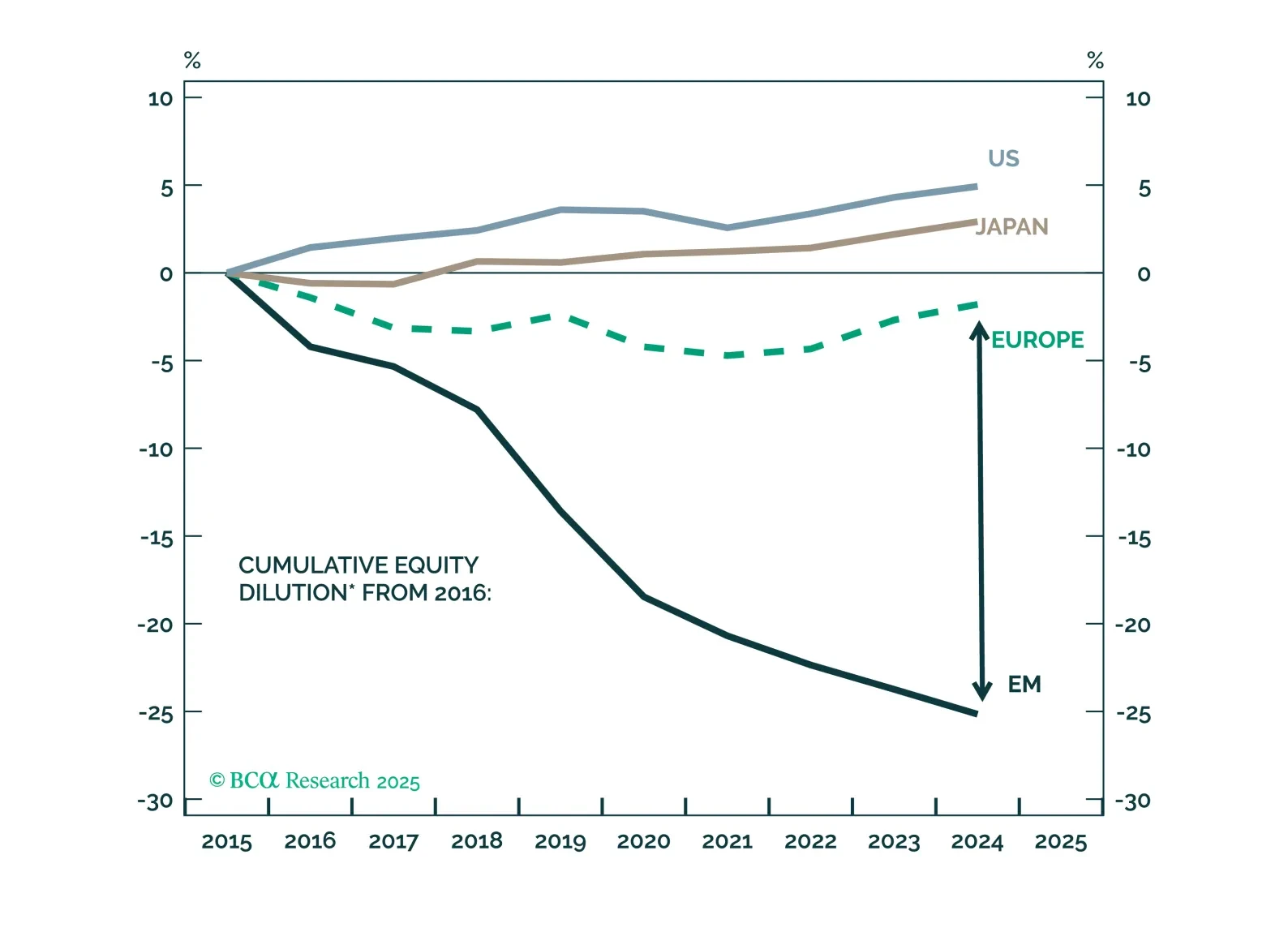
Special Report Dilution is one of the two main reasons why EM EPS has been much weaker than EM GDP and EM non-diluted profits. We calculate “pure” dilution – adjusted for companies’ inclusion and exclusion from the stock index – for various bourses around the world. To our knowledge, this is the first time this analysis has been conducted.
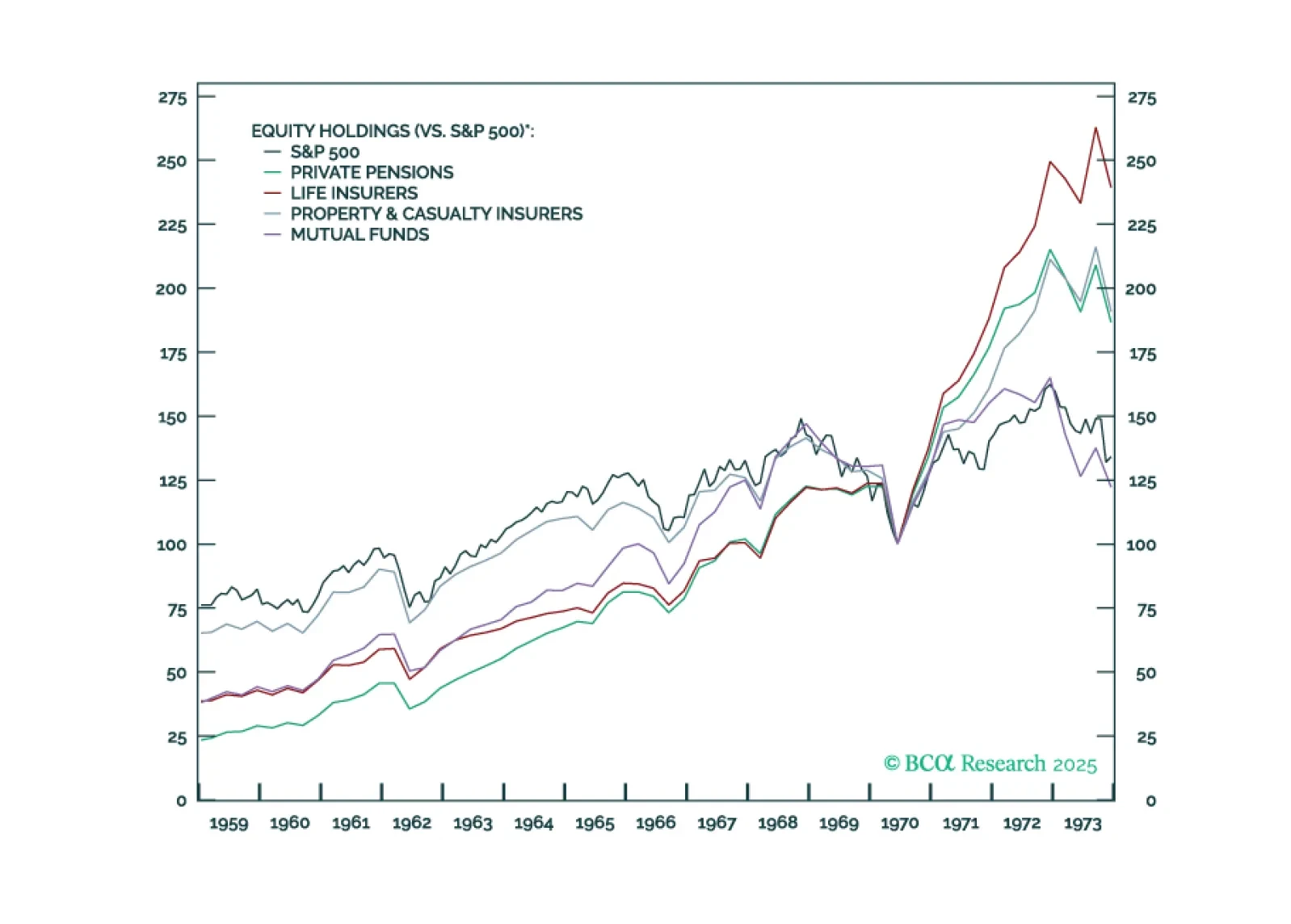
Special Report At the beginning of the 1970s, investors flocked to a select group of growth stocks loosely known as the Nifty Fifty. These companies’ earnings growth was considered so dependable that they were touted as “one-decision” stocks that a shareholder would never have to sell.
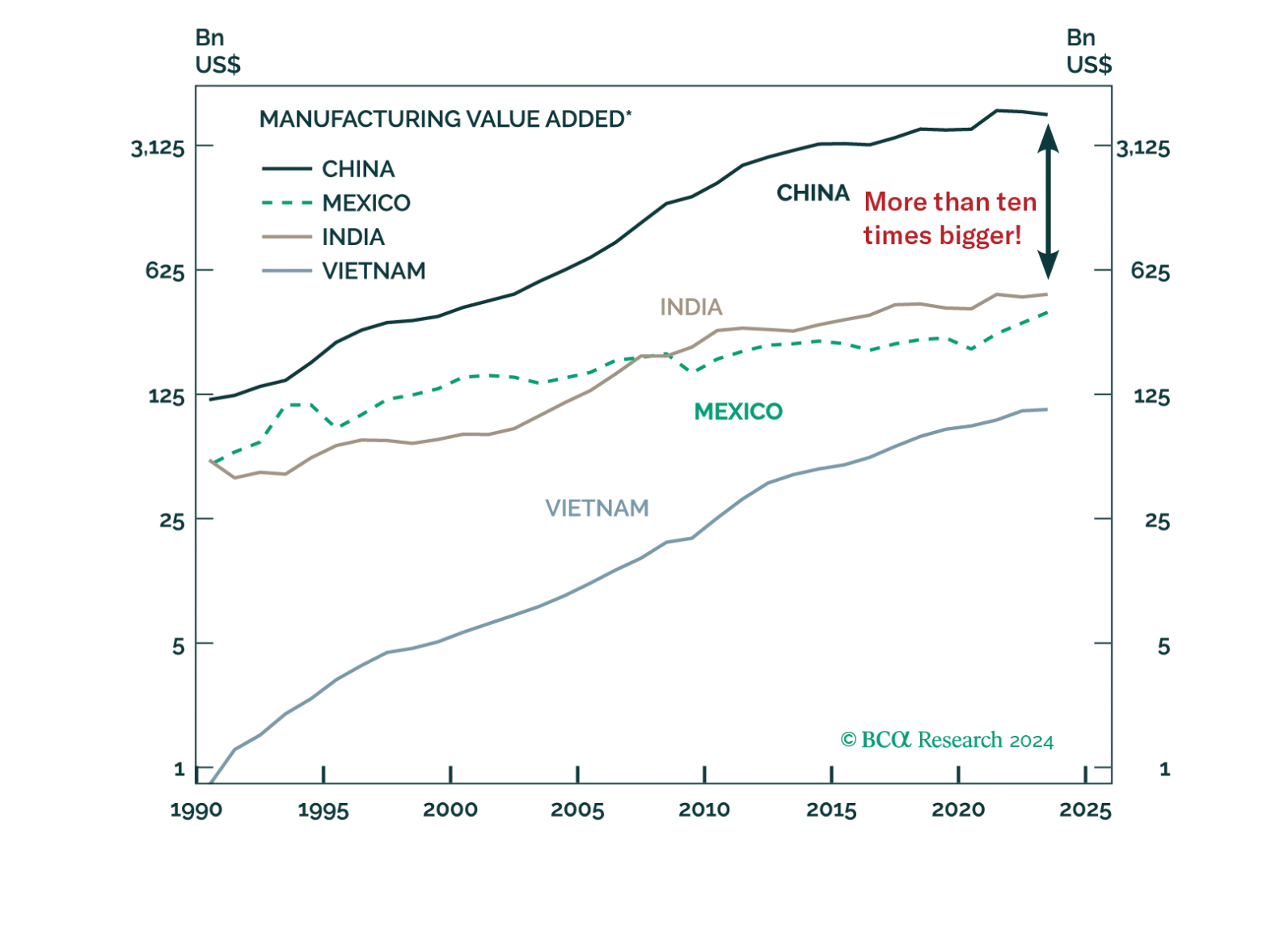
Special Report Multinationals are attempting to expand their supply chains beyond China, but the relocation process has been slower than expected. In the coming years, however, geopolitical tensions, changes in China’s business environment, and rising competition from Chinese producers could accelerate multinationals' departure from China.
Special Report Workers have a cyclical wind at their backs as labor demand exceeds supply, but a wage-price spiral is no more than a remote possibility. The structural backdrop has turned significantly against them since the last bout of high inflation 40-plus years ago and they are no longer price makers.
The kinked supply framework helps explain why US inflation rose so suddenly shortly after the pandemic began and why the economy is likely to experience a benign disinflation over the next six months.

Special Report