War/Conflict
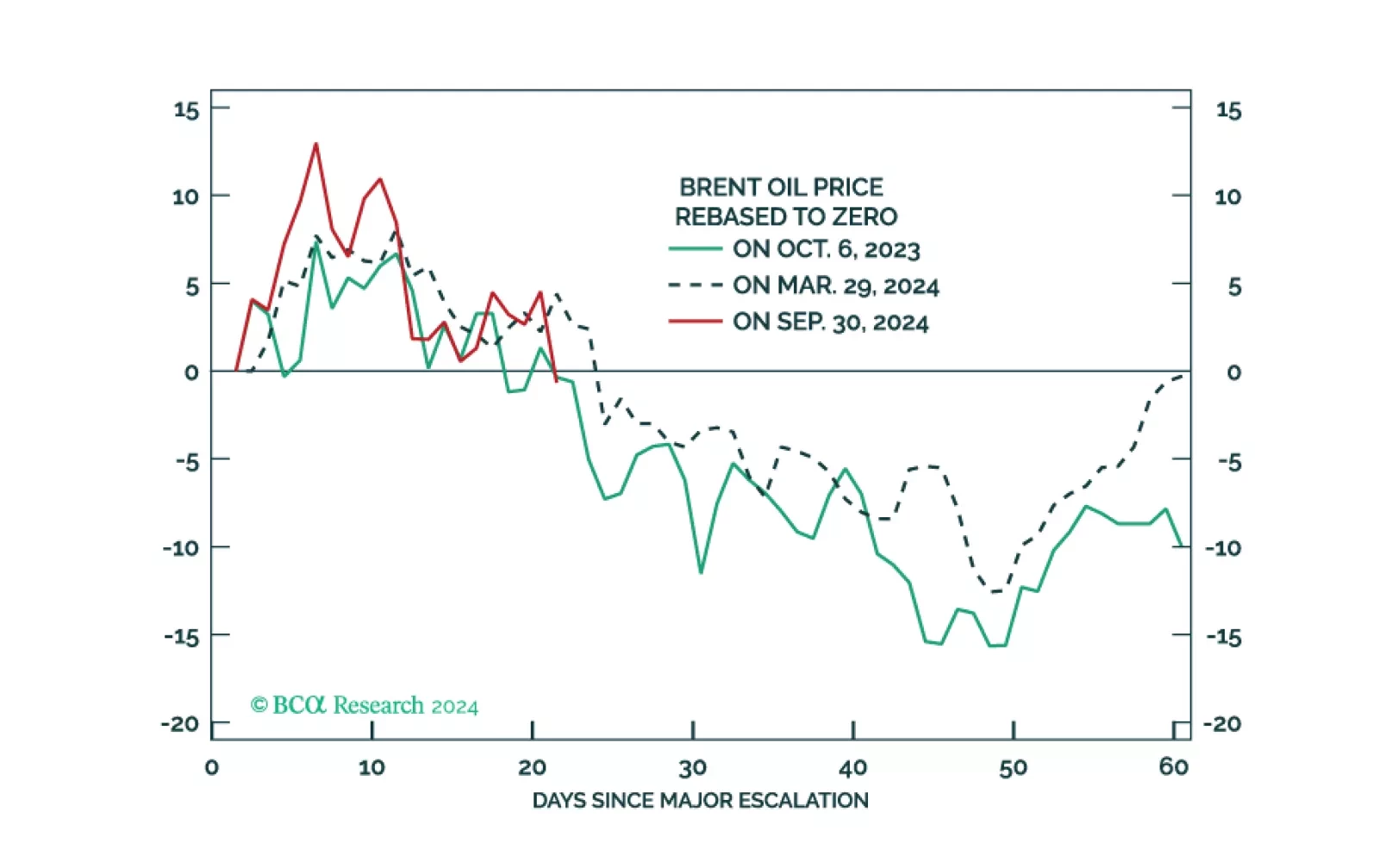
The global political system is destabilizing and the US will turn more hawkish in foreign policy, trade policy, or both, regardless of the election outcome. Tactically go long the dollar.

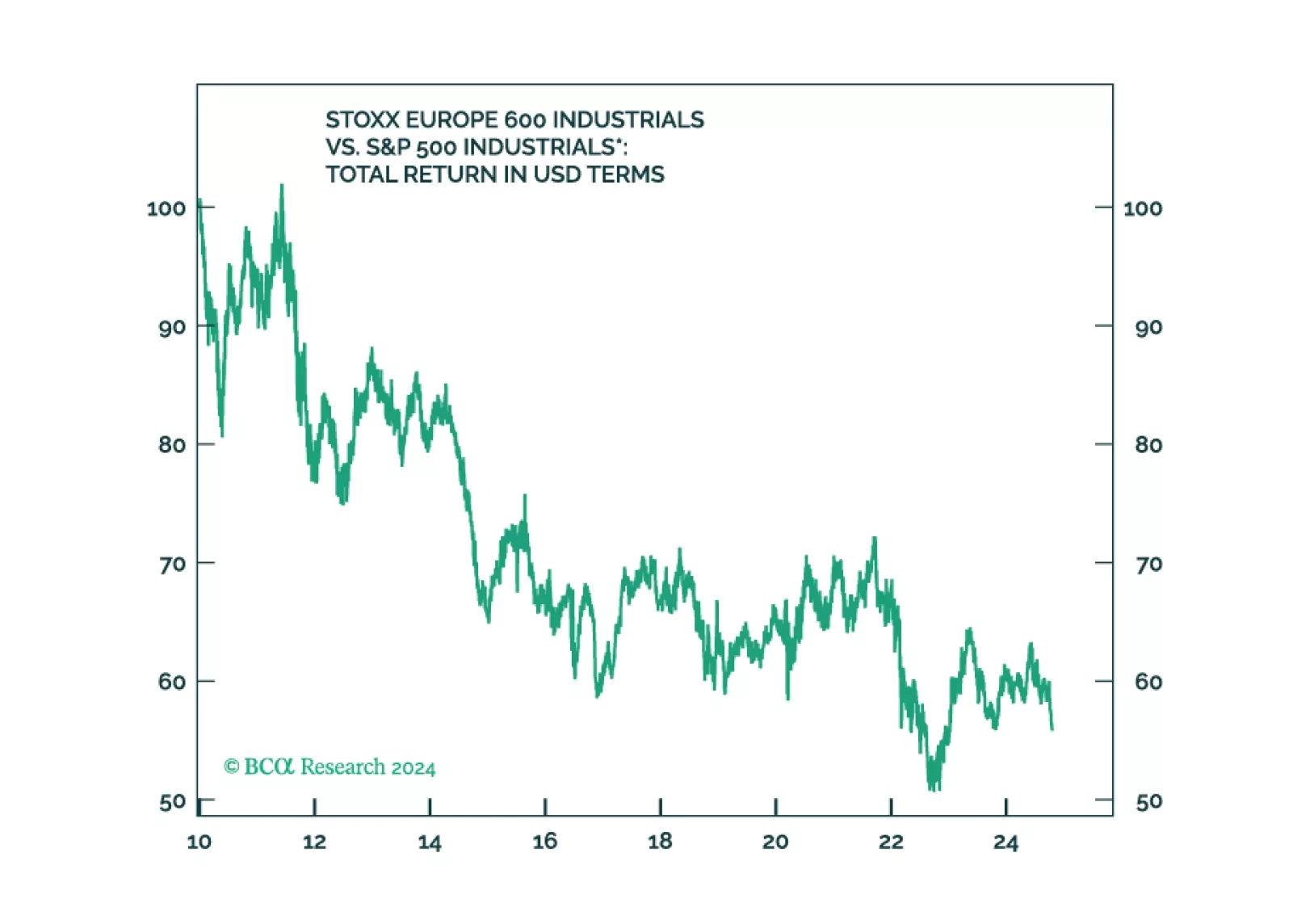
In this Special Report, Marko Papic, Chief Strategist of BCA Research’s GeoMacro Strategy, and Mathieu Savary, Chief Strategist of BCA Research’s European Investment Strategy, together argue that the conflict in Ukraine is already frozen, already losing support in the West, and is likely to taper off over the course of 2025. However, there is no easy alpha left to harvest from that conclusion, the market has already moved on. Some long-term investment opportunities remain in broad European assets.
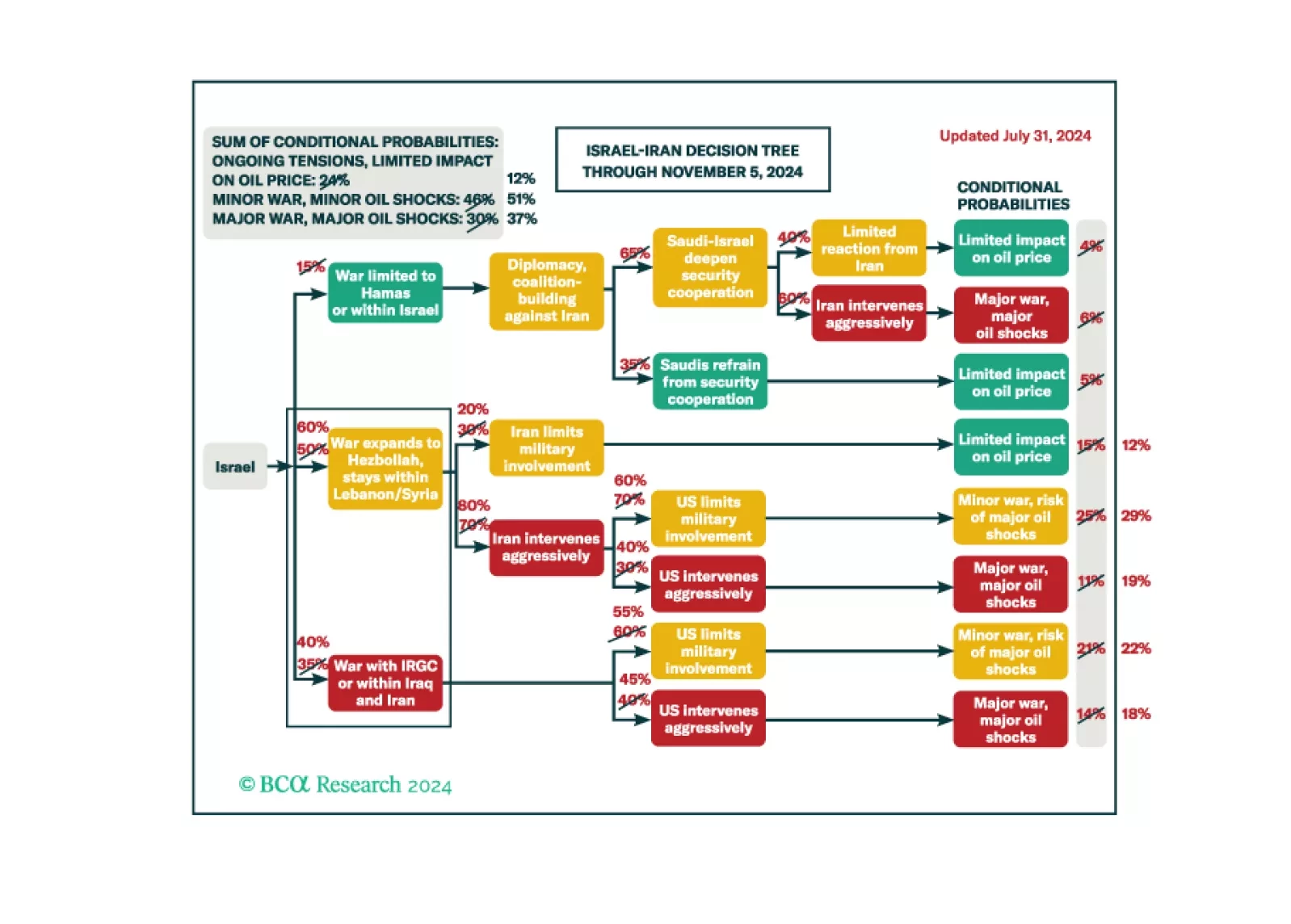
We maintain 37% odds of a major recessionary oil shock, 51% odds of minor shocks, and 12% odds of no shocks.
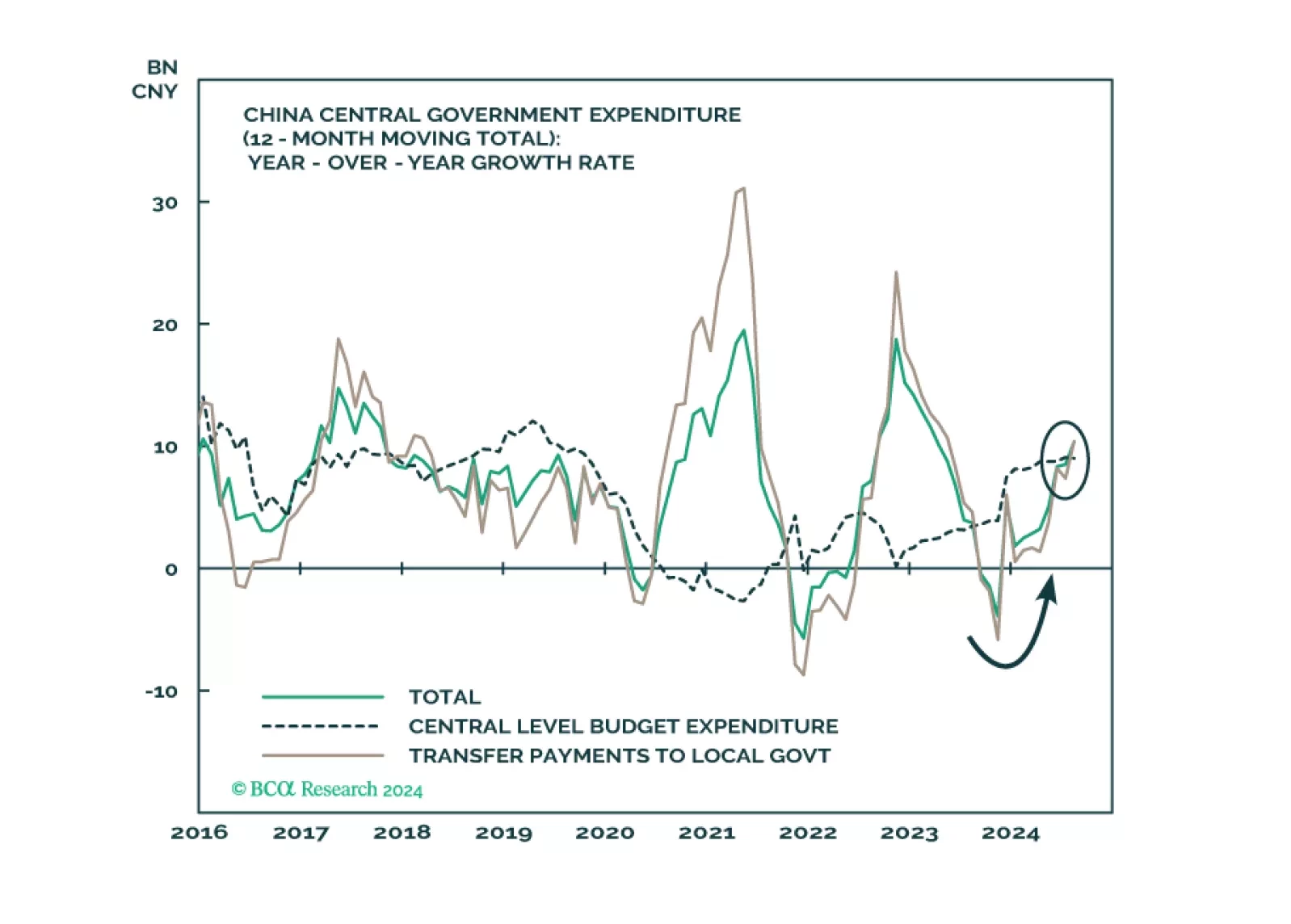
Markets are rallying on Fed rate cuts and China stimulus but there will also be October surprises ahead of the US election, which Trump could still win. Russia’s conflict with the West is escalating and the Middle East is destabilizing further. Investors should favor US bonds but they should add some risk in emerging markets in response to China’s policy turn.
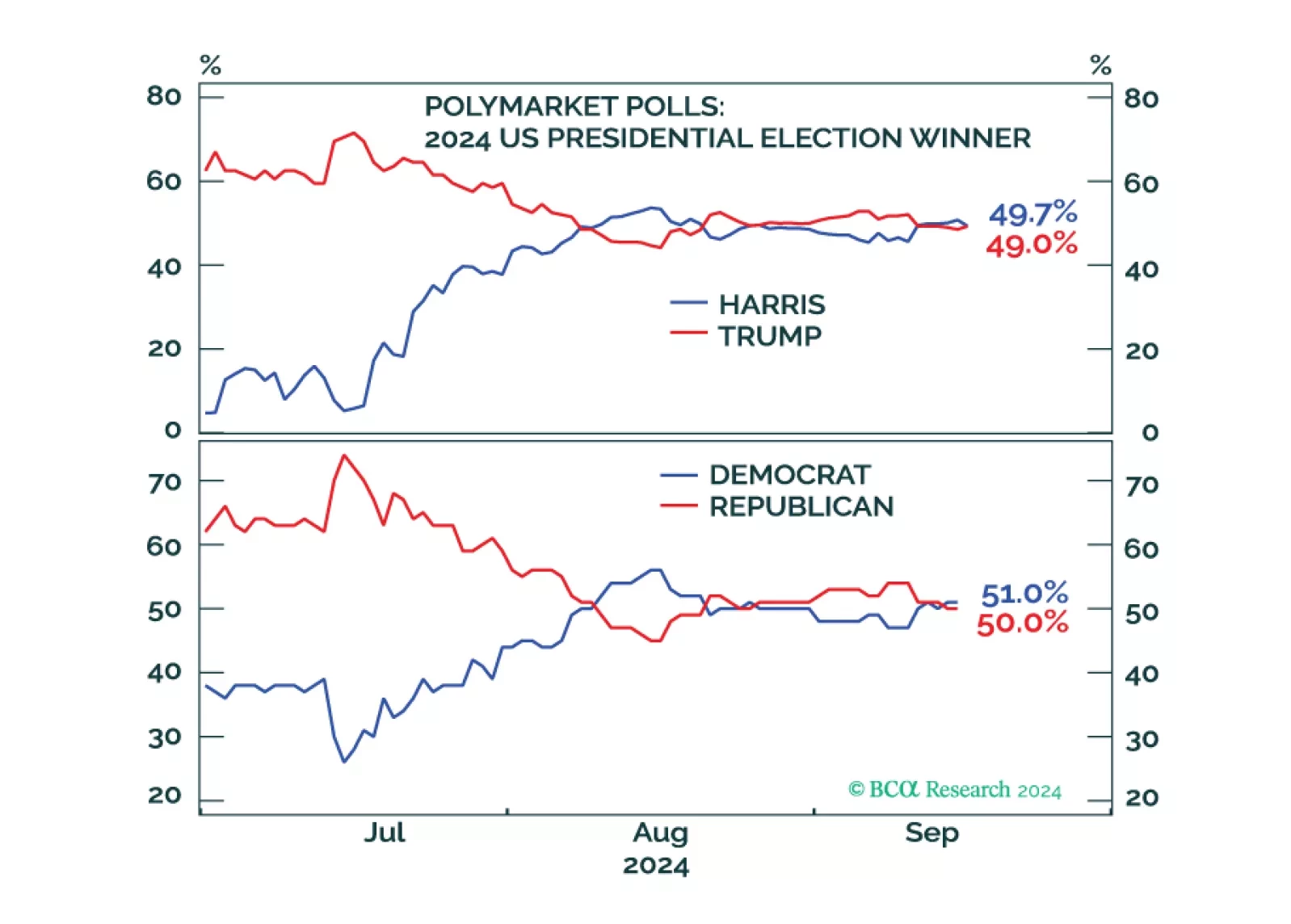
Investors should de-risk tactically in expectation of shocks and surprises ahead of the US election and an uncertain aftermath. Democratic victory with a gridlocked Congress is our base case but would bring minor tax hikes and nuclear brinksmanship with Russia. A Republican single-party sweep offers huge tax cuts but also a global trade war. Recession looms regardless.