Labor Market
Aggressive monetary tightening has always led to recession, although the timing is uncertain. The effects of high interest rates are starting to be felt. Investors should stay risk off and buy government bonds as a safe haven investment with carry.
In Section I, we note that the recent surge in long-maturity government bond yields is symptomatic of a sharp reduction in market expectations for a soft-landing economic outcome. This underscores that the US and other developed market economies are on an ultimately recessionary path. We also discuss why the S&P 500 is likely to fall to between 3300 and 3700 in a recessionary scenario, and how OPEC 2.0’s production cuts will, at a minimum, reduce the odds of pre-emptive rate cuts. In Section II, we revisit the economic outlook for Canada, looking for signs that one of the most indebted economies in the world is buckling under the weight of tight monetary policy. We do find evidence suggesting that mounting debt service is already impacting Canadian consumers, and we expect to see a continuation of weak/weakening consumer spending in Canada so long as the current stance of monetary policy is maintained.
In this Strategy Outlook, we present the major investment themes and views we see playing out for the rest of 2023 and beyond.
US fiscal, monetary, and foreign policies are unlikely to deliver any dovish surprises for investors in Q4, due to the impending government shutdown, persistent inflation, and instability among OPEC+ and China.
While we are sympathetic to the view that the Fed could temporarily achieve a soft landing, we are skeptical that it could stick that landing for very long. Stocks could strengthen into year-end, with small caps potentially leading the charge. But the rally will fizzle out next year as the global economy begins to sink into recession.
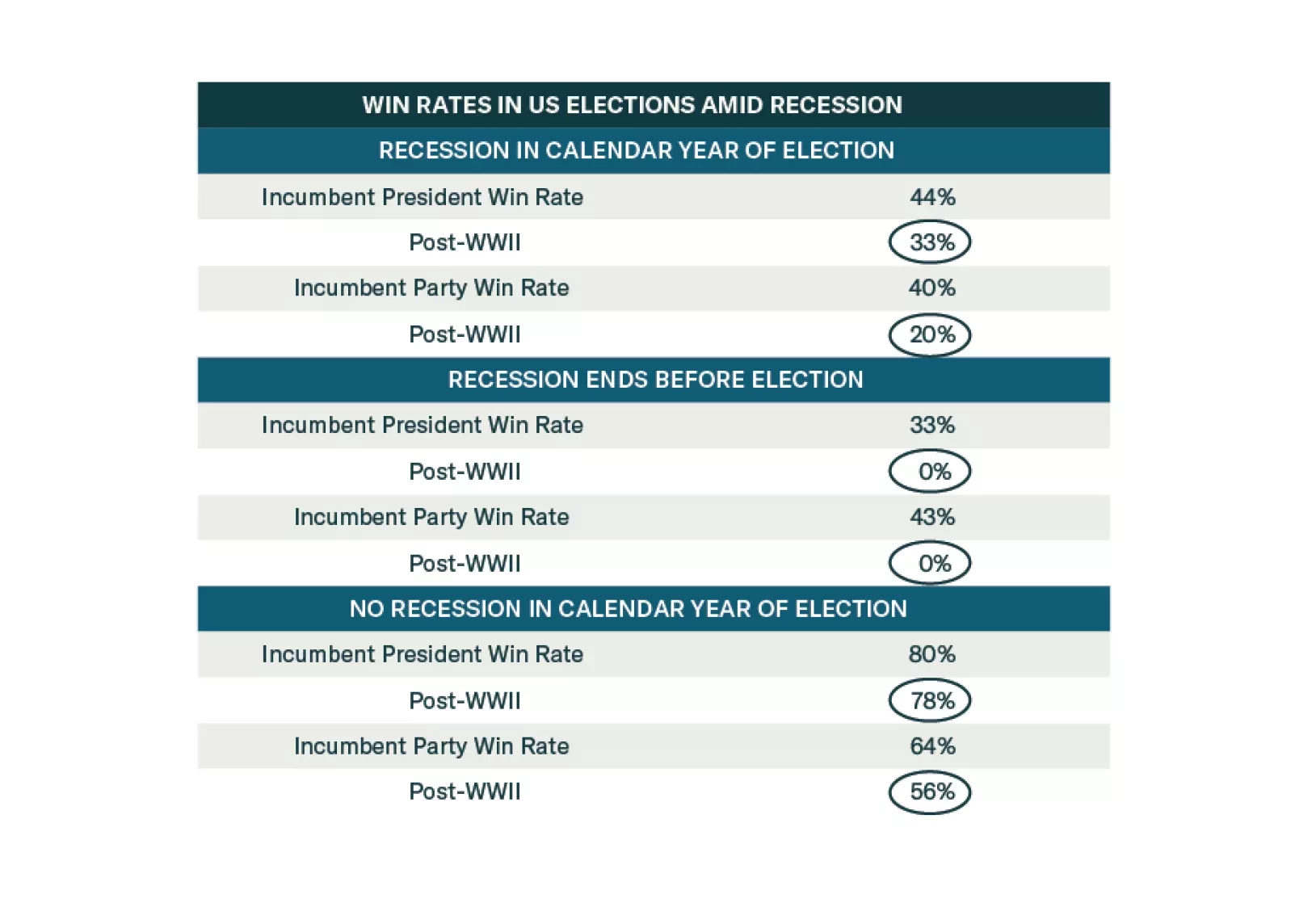
Stocks perform worse in presidential election years than average years, especially in the first half of the year, and especially if the ruling party ends up falling from power. Investors should take risk off the table until the unemployment rate peaks.