Economic Growth

Export dynamics from small open economies are bellwethers for global trade and recent export data out of Taiwan and South Korea suggested robust global growth momentum in March. In April, Singapore’s electronics exports, which are particularly sensitive to…
Investor and business sentiment continues to improve in the Eurozone. The ZEW Expectations series for the Eurozone (+3.1 to 47 in May) and Germany (+4.2 to 47.1, above expectations) strengthened to 27-month highs. Moreover, the spread between the expectations…
According to BCA Research’s Geopolitical Strategy service, Indian Prime Minister Modi is on track to be reelected for his third term, with the latest polls in April averaging 385 seats for the National Democratic Alliance, which includes his Bharatiya Janata…
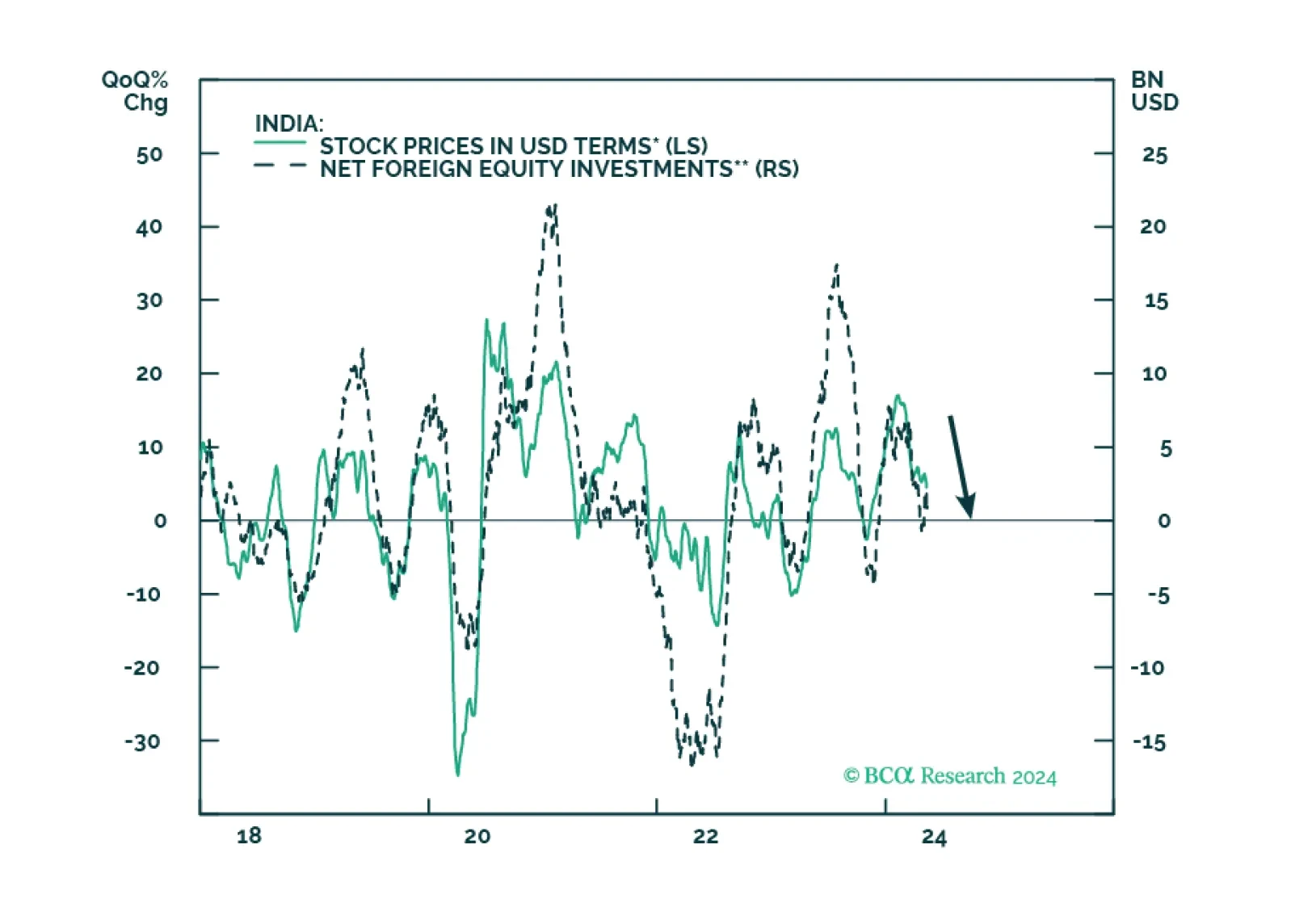
Modi and the BJP are at or near the peak of their political dominance, and their third term will be challenging as they must deal with harder reforms amidst a slowing domestic and global economic environment. In the long run, however, we remain constructive on India’s prospects, as its geopolitical and economic positioning are favorable and improving.
The Bank of Japan’s Economy Watchers Survey – a gauge of sentiment among business owners – disappointed in April. The Current Conditions and the Outlook indices deteriorated from 49.8 to 47.4 (20-month low) and from 51.2 to 48.5 (16-month low), below…
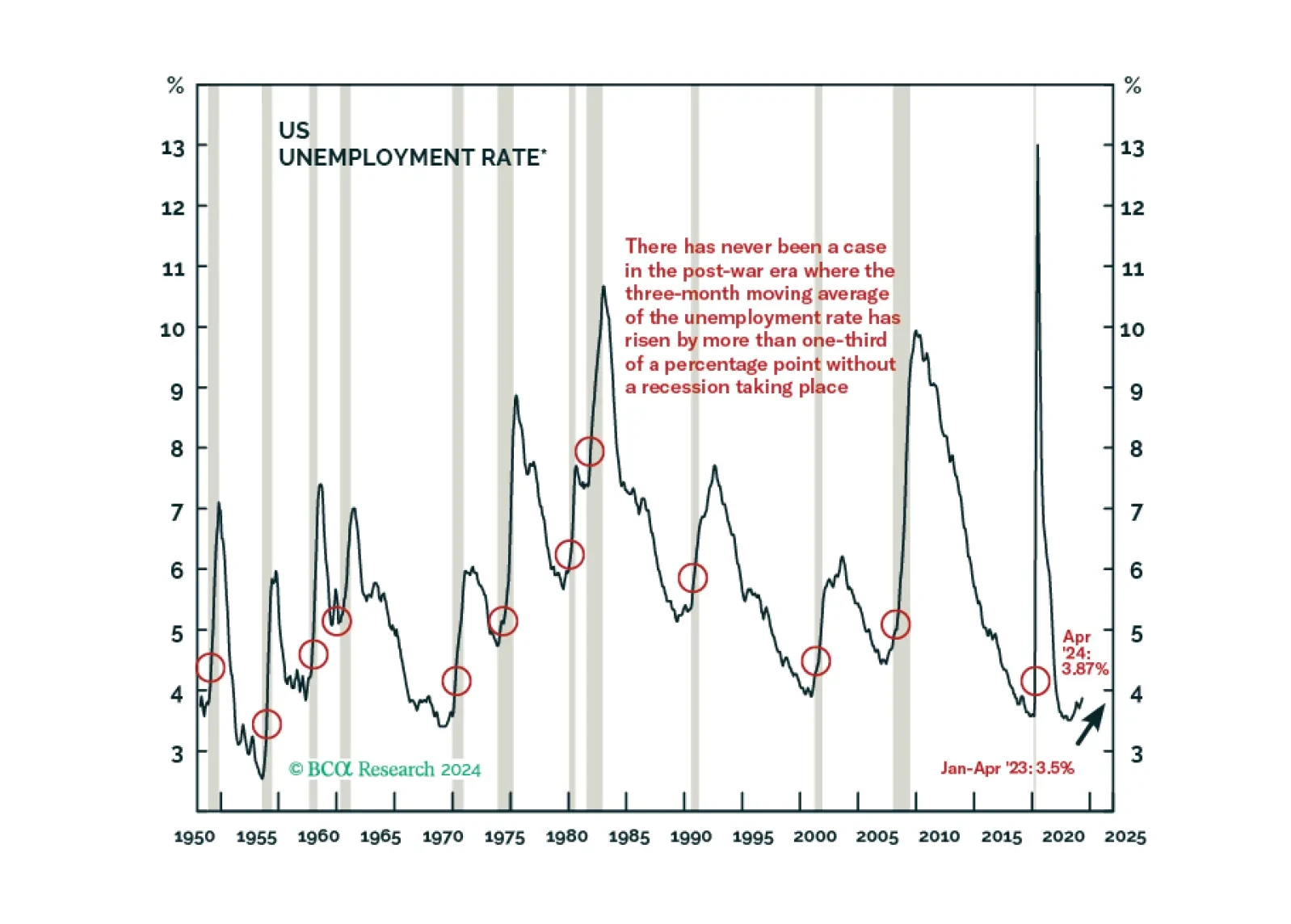
We marked the first X on our Equity Downgrade Checklist and the latest JOLTS, Employment Situation and SLOOS releases brought us closer to ticking some others. We remain tactically neutral on equities but expect that we will underweight them as excess savings are further depleted, leading labor market indicators continue to soften and consumer credit performance continues to fray.
Preliminary GDP estimates suggest that the UK economy started growing again in Q1, thus exiting a technical recession in the past two quarters. Q1 growth came in at 0.6%, improving from a 0.3% contraction last quarter, surpassing expectations of 0.4%. On a…
The idea that rising interest rates benefit value at the expense of growth has become consensus amongst market participants. The rationale is simple: Most of the cashflow that shareholders will receive from growth stocks are farther into the future than…
Upward growth revisions for China and India have led the IMF to recently upgrade its 2024 growth forecast for Asia to 4.5% from 4.2%. The regional growth forecast for 2025 remains unchanged at 4.3%. The IMF now expects the Chinese economy to grow at a 4.6%…
US initial jobless claims increased from 209 thousand last week to 231 thousand, surpassing expectations of 212 thousand. Moreover, continuing claims also surprised to the upside, increasing from 1.768 million to 1.785 million. Nearly half of the rise in the…