Economic Growth
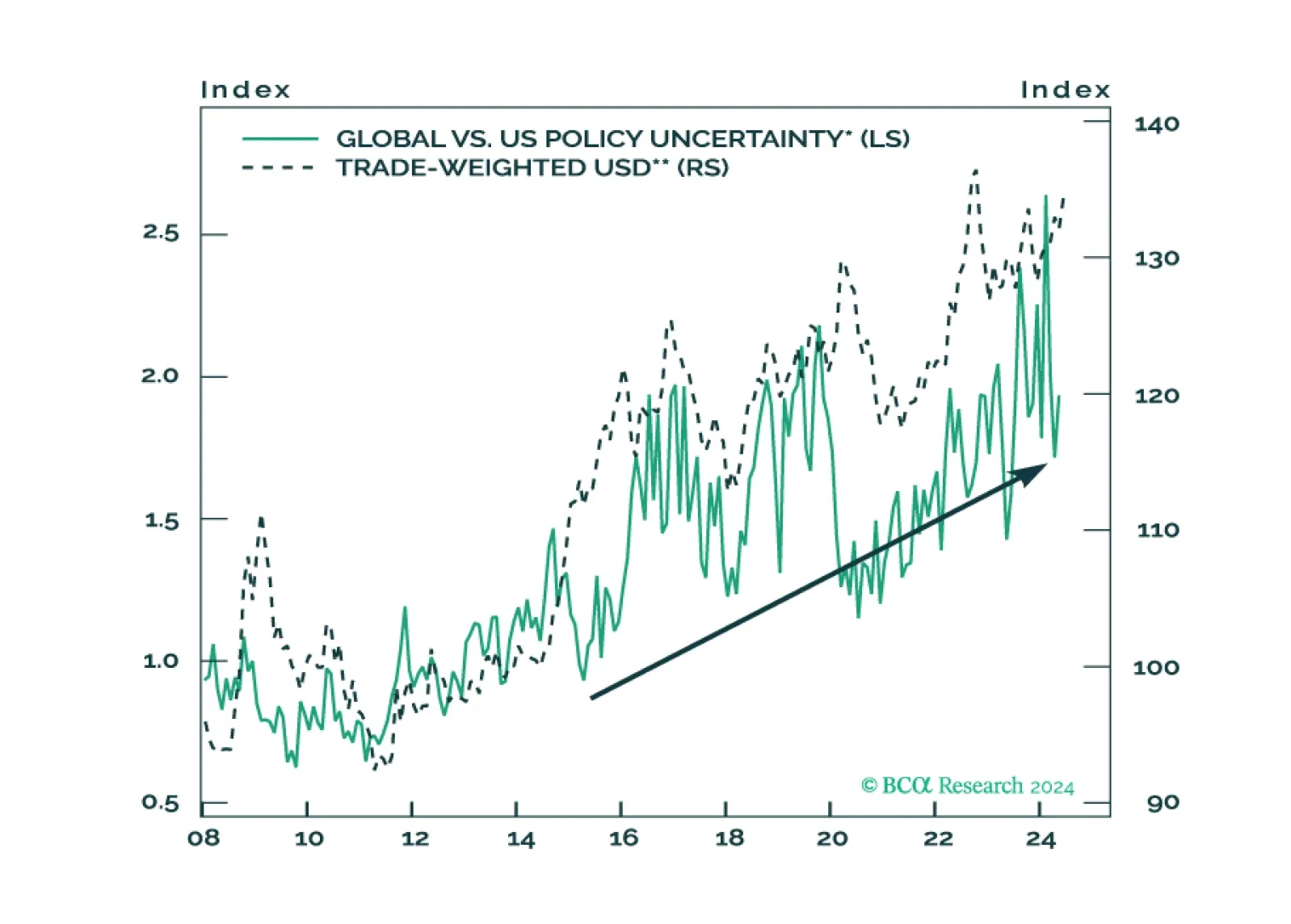
Investors should overweight US assets and de-risk their portfolios in anticipation of a major increase in policy uncertainty and geopolitical risk surrounding the US election and its global ramifications.

BCA Research has been writing extensively on how consumption fueled by excess savings has been propping up the US economy and prevented a recession in 2023. Now, many estimates of pandemic-era excess savings show that they have run out. While consumption is…
Way back in the 1970s and 1980s, before investment returns were assessed in relation to benchmarks and return of capital had the upper hand over return on capital, BCA researchers were invited to consider the following thought experiment: Imagine you live in…
The latest iteration of the Fed’s Beige Book, a compilation of qualitative input sourced from business and other organizational contacts in each of its twelve Districts, was released Wednesday afternoon. The Beige Book precedes FOMC meetings by two weeks and…
GeoMacro’s monthly Beta Report will typically perform deep dives into the most pressing macro topics of the moment. For its debut, however, it turns the microscope on its own process, explaining the team’s framework and how investors can best incorporate its…
China's real GDP growth decelerated to 4.7% y/y in Q2, down from 5.3% in Q1 and below the consensus forecast of 5.1%. Domestic demand weakened, with retail sales growth sliding to 2% y/y in June, down from 3.7% in the previous month. Our China Strategists…

The real threat to European equities is growth, not political risk. How low will Eurozone earnings fall during the coming recession and how much will equities decline in response?
Subdued demand for credit among Chinese private-sector businesses and households persisted through June. The stock of outstanding bank loans grew by 8.3% year-on-year, marking the slowest pace since records began in 2003. Additionally, bond issuance from…
After having peaked in mid-April, Citigroup’s global economic surprise index has been in negative territory for the past few weeks. The sub-zero reading indicates that economic data have been surprising to the downside and signals deteriorating economic…
According to BCA Research’s Global Investment Strategy service, investors are overstating the degree to which bond yields will rise under a Trump presidency. For one thing, the team expects the US to fall into recession by the end of 2024 or early 2025. A…