BCA Indicators/Model
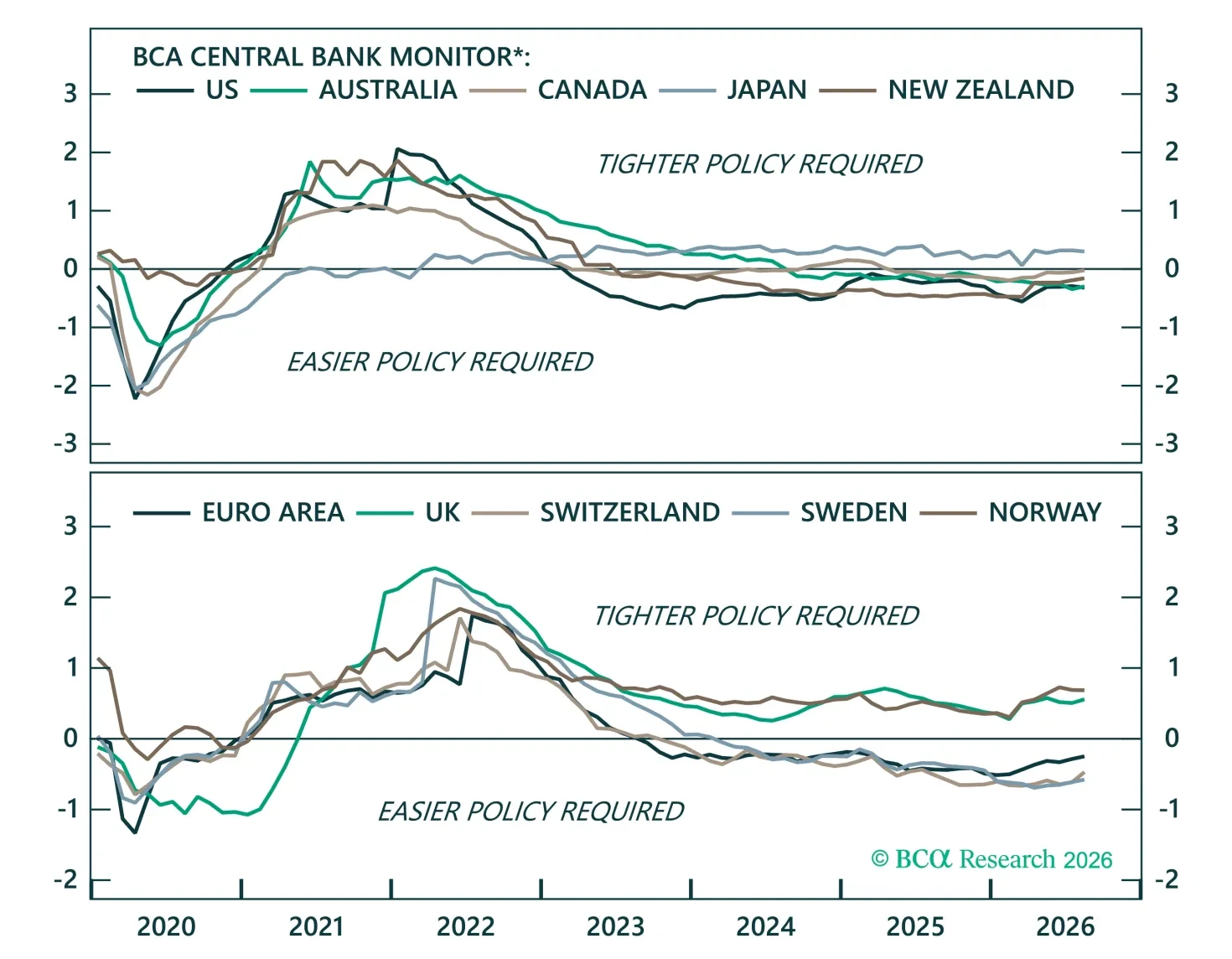
Central banks have begun a mild tightening cycle as elevated energy prices raise concerns about second-round inflation effects. We use BCA’s Central Bank Monitors to test whether hawkish market pricing is justified and identify tactical opportunities across global bond and currency markets.
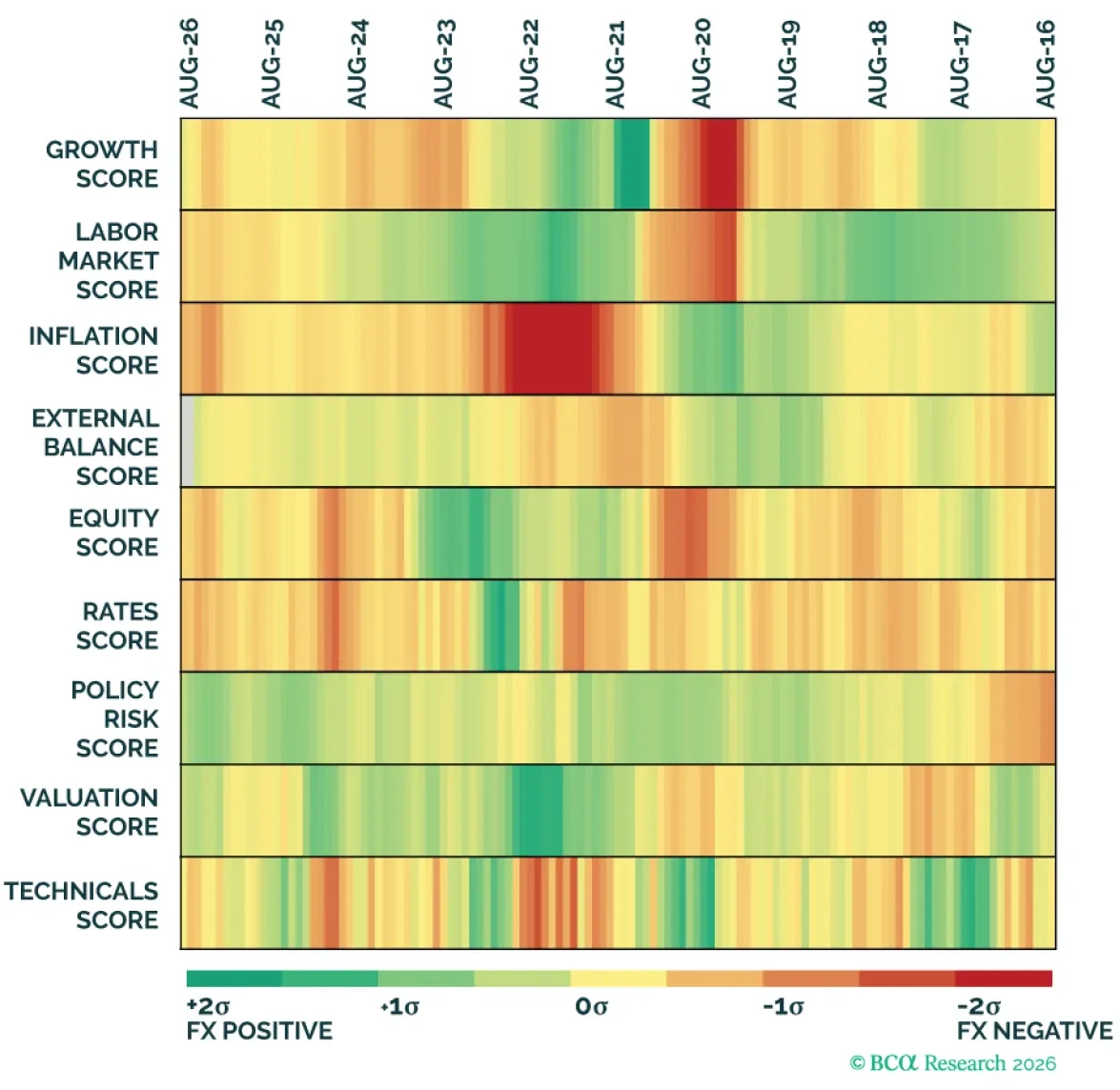
Foreign exchange markets are shaped by a wide range of macro influences. The sheer breadth of relevant information makes systematically assessing where a currency stands at any point in time a challenging analytical task. We introduce an FX scorecard that condenses the full range of data into nine thematic scores, providing a clear visual snapshot of a currency's position and how it's evolving.
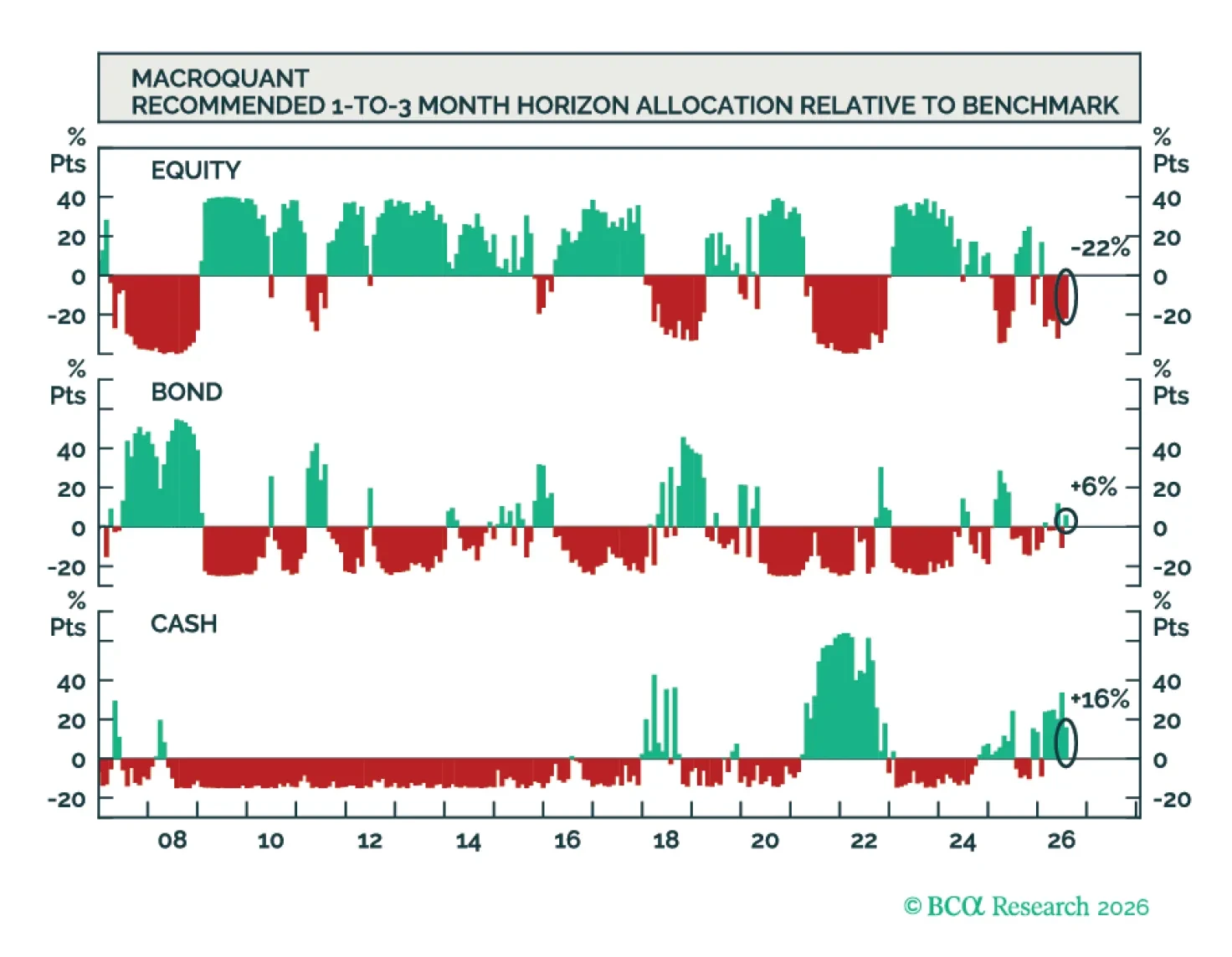
MacroQuant recommends a slight underweight position in equities, counterbalanced by a slight overweight to bonds, and a significant overweight to cash. The model is positive on the US dollar, modestly negative on gold, and bullish on copper and oil.
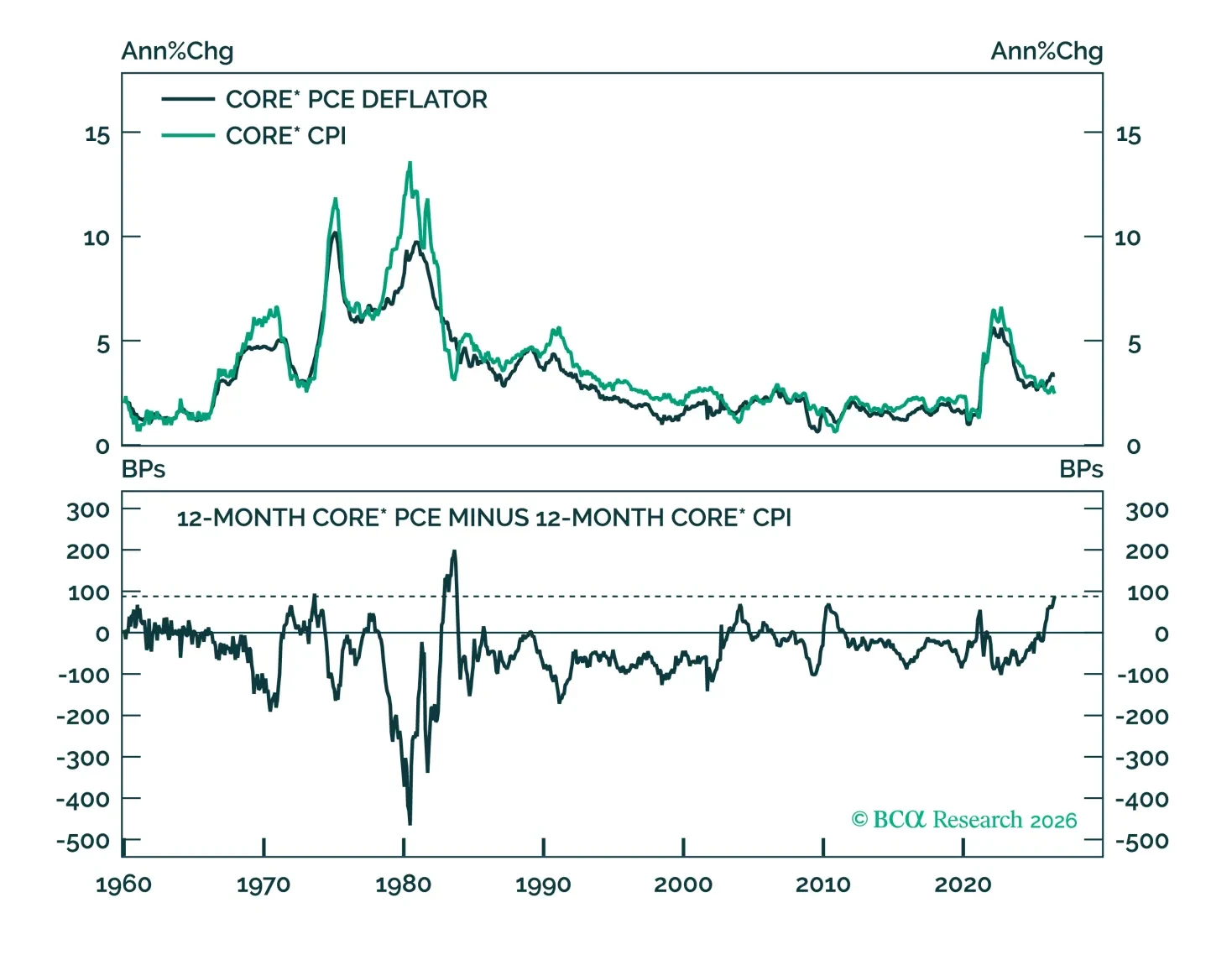
The PCE/CPI gap is an increasingly important factor driving the near-term outlook for Fed policy. We discuss the drivers of that gap and conclude that it’s likely to narrow in the coming months.
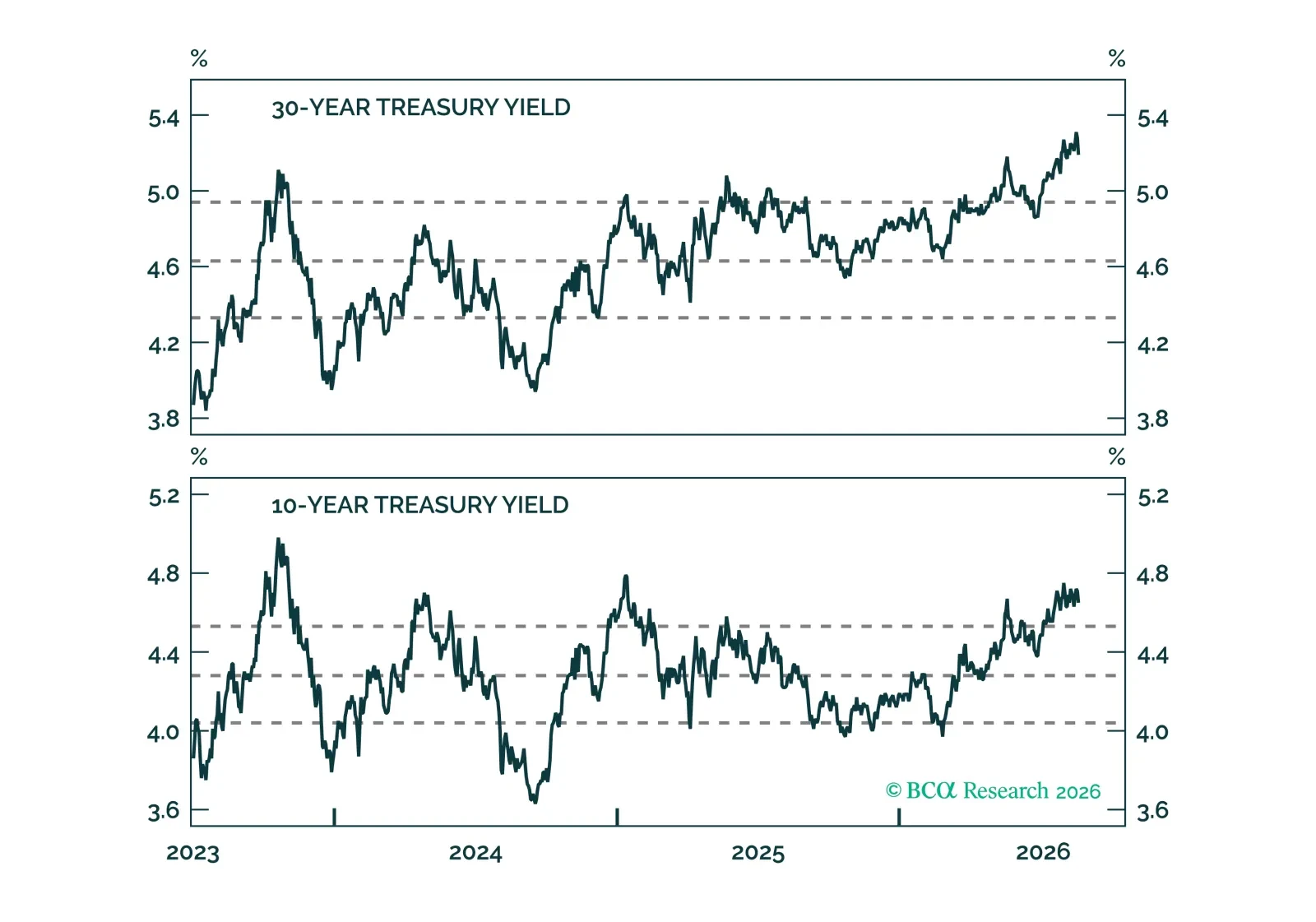
Despite recent increases, long-maturity Treasury yields are roughly consistent with fundamental fair value. We see limited value in long duration plays.
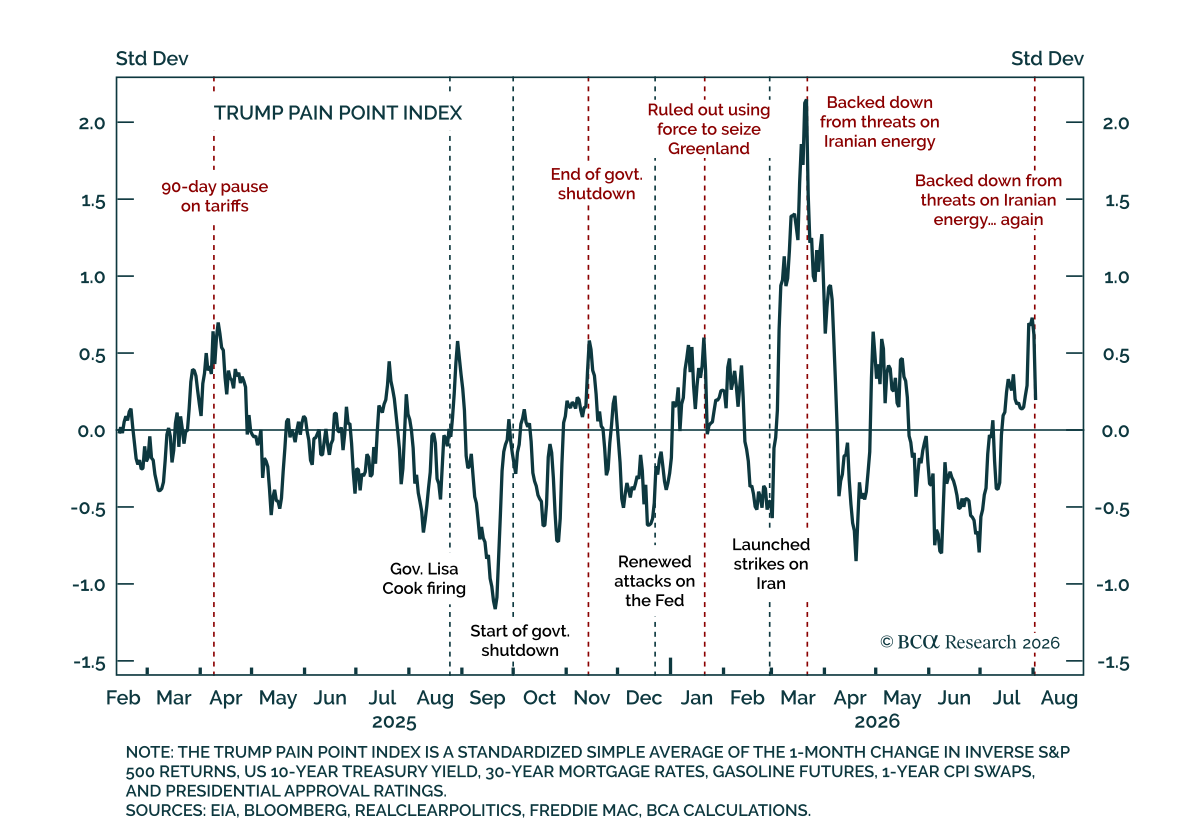

MacroQuant recommends a slight underweight position in equities, and favors a below-benchmark duration stance in fixed-income portfolios. The model is very positive on the US dollar, neutral on gold, constructive on copper, and very bullish on oil.
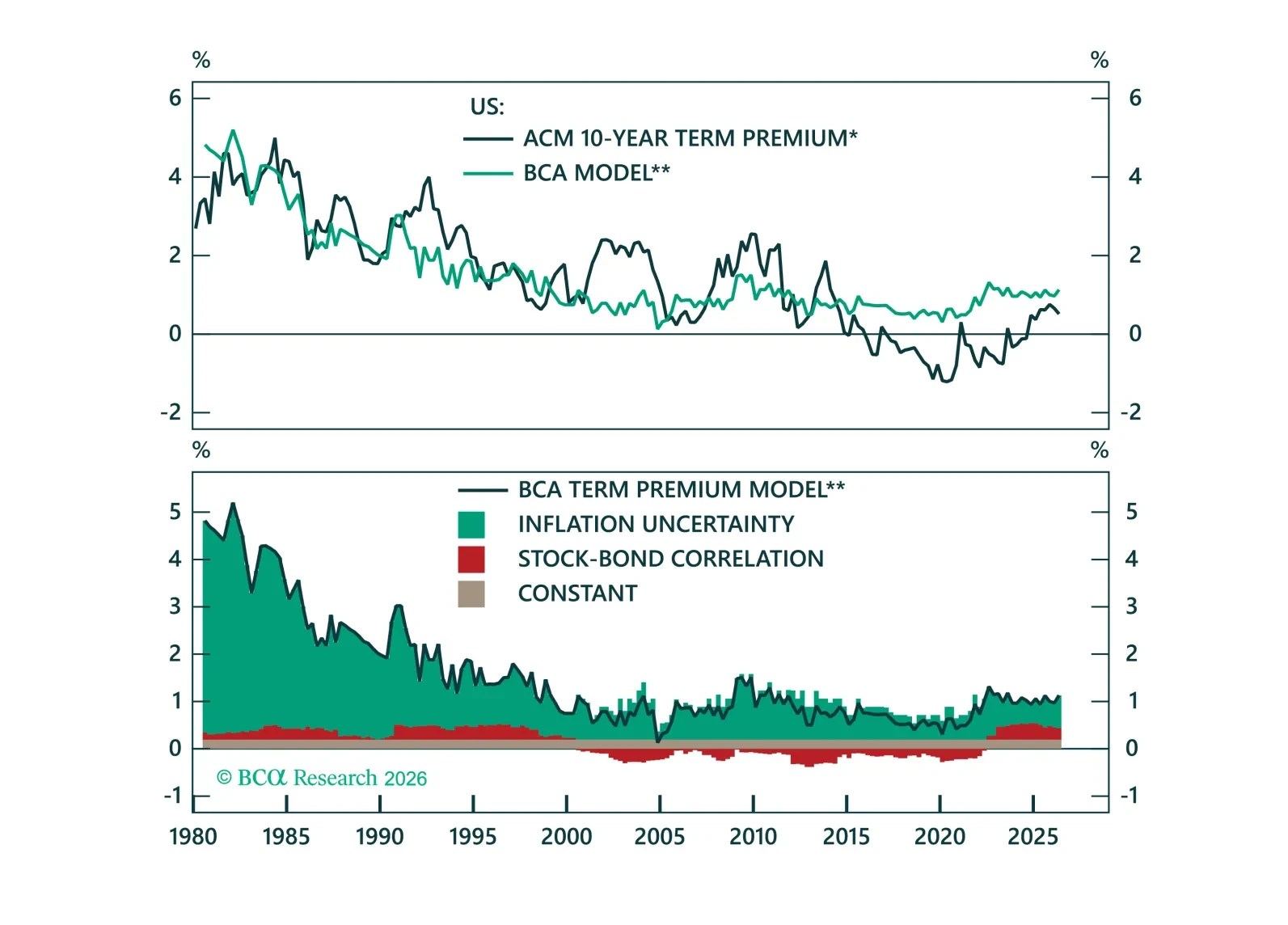
Rising term premium is often read as a fiscal warning sign. We show the real driver is monetary policy uncertainty, and what the implications are for global term premia going forward.
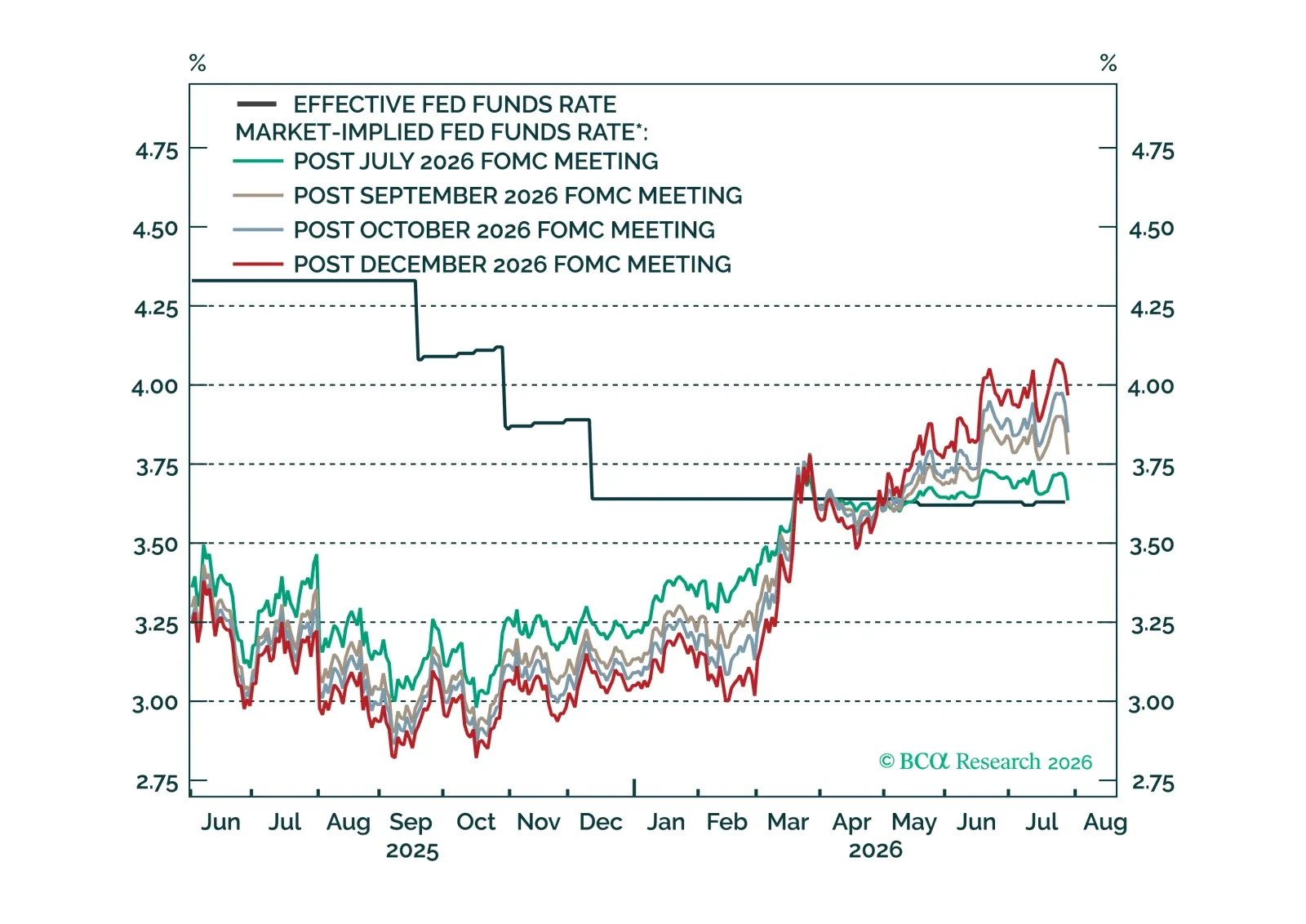
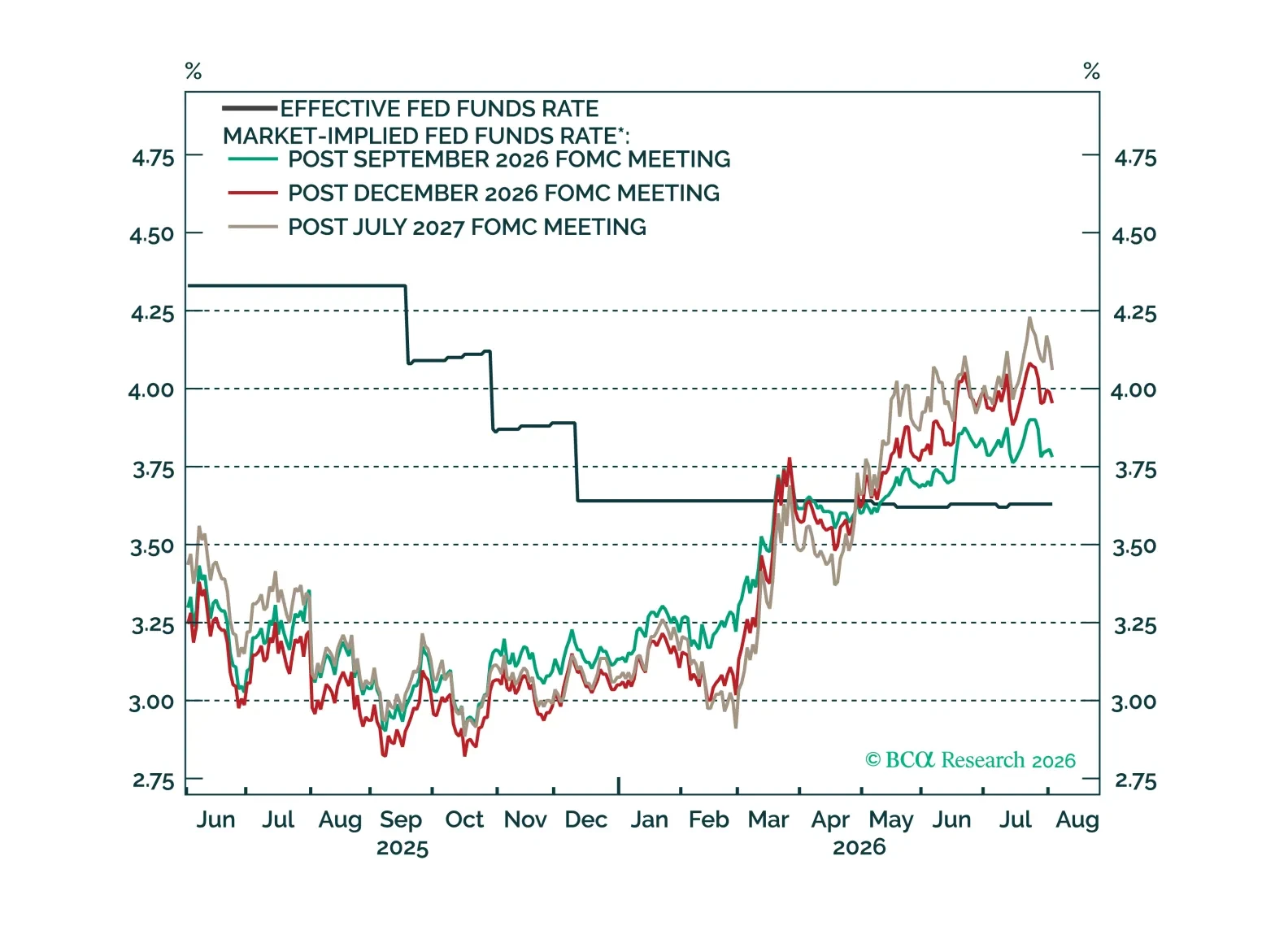
Despite today’s hold, the bar for a rate hike in September remains low and contingent on the next two core CPI reports.