War/Conflict
Close oil trades tactically, but beware lingering economic costs of the Iran war this year.
It is too soon to sell the rip in oil or buy the dip in stocks. Stick with risk-off trades for now.
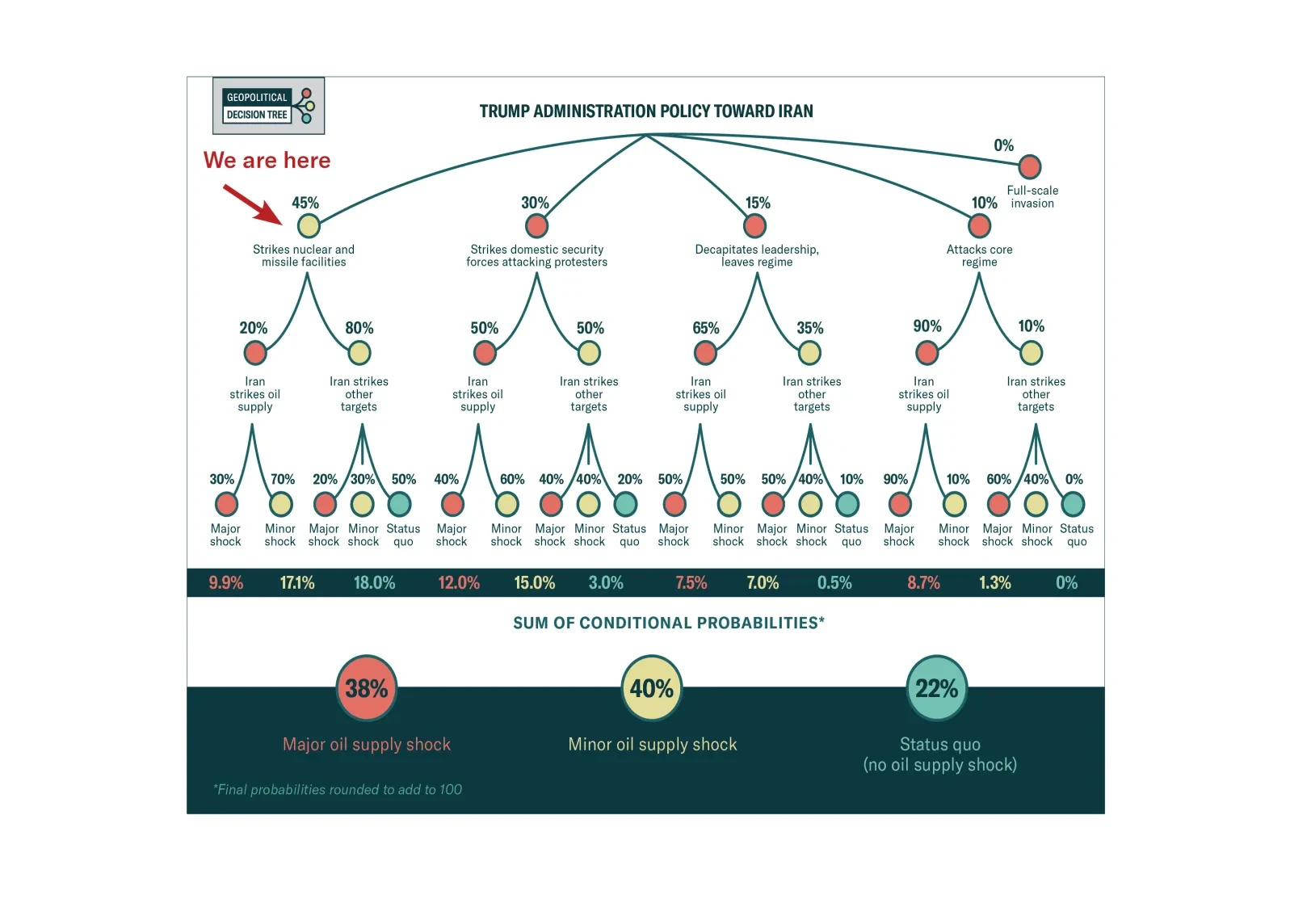
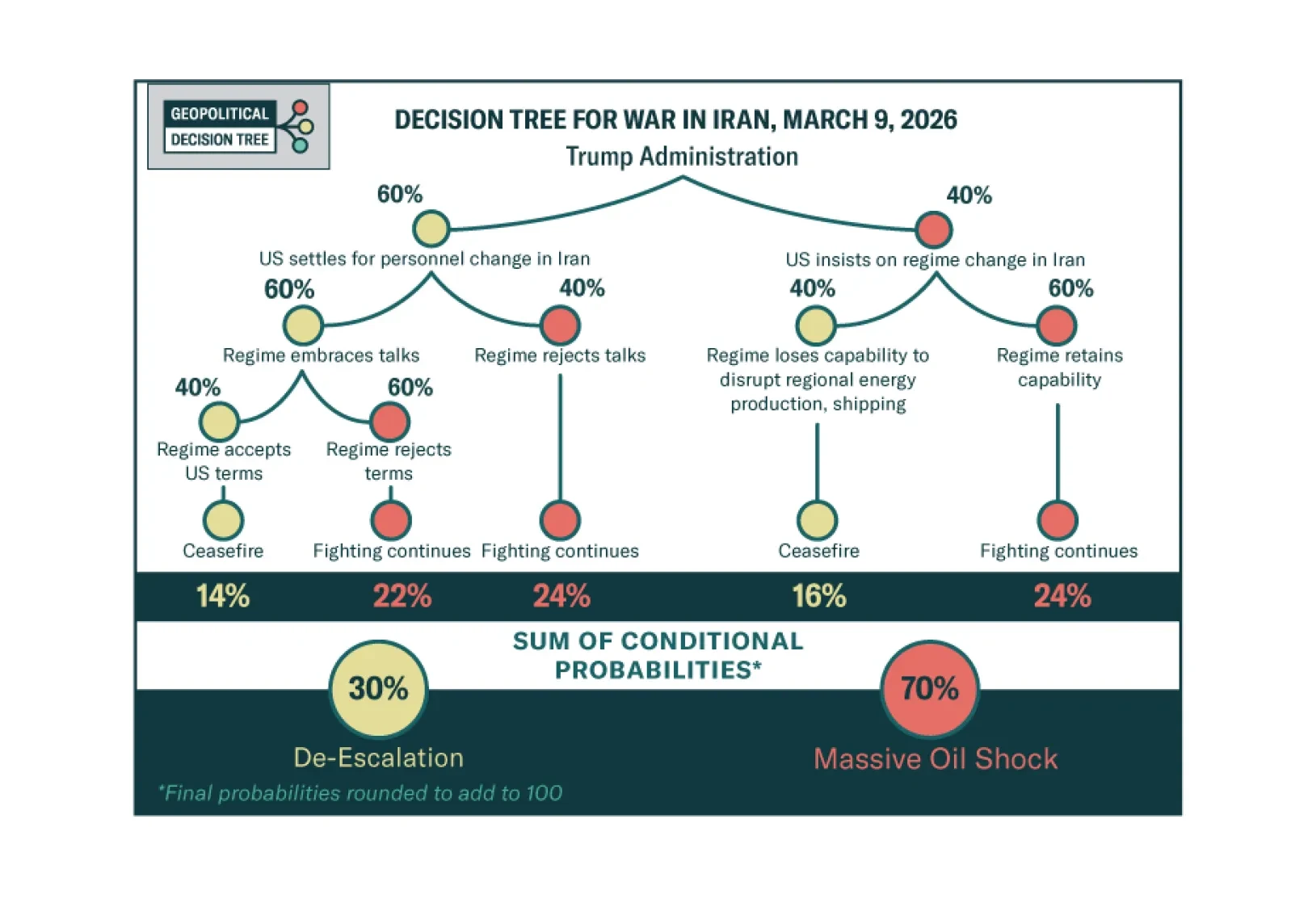
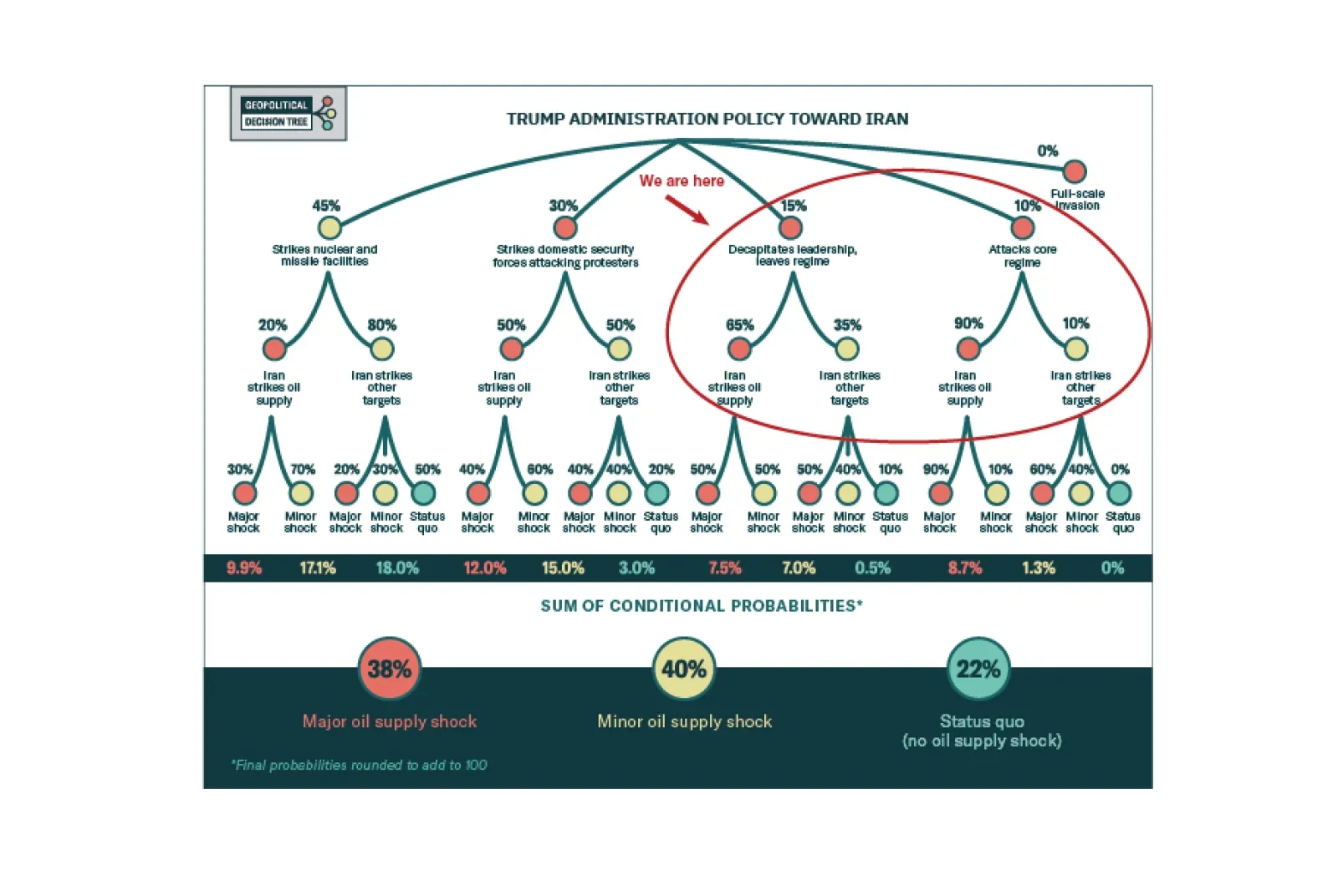
The US is likely to take significant military action in Iran, justifying our 40% risk of a major oil shock. Tactically go long Brent crude.
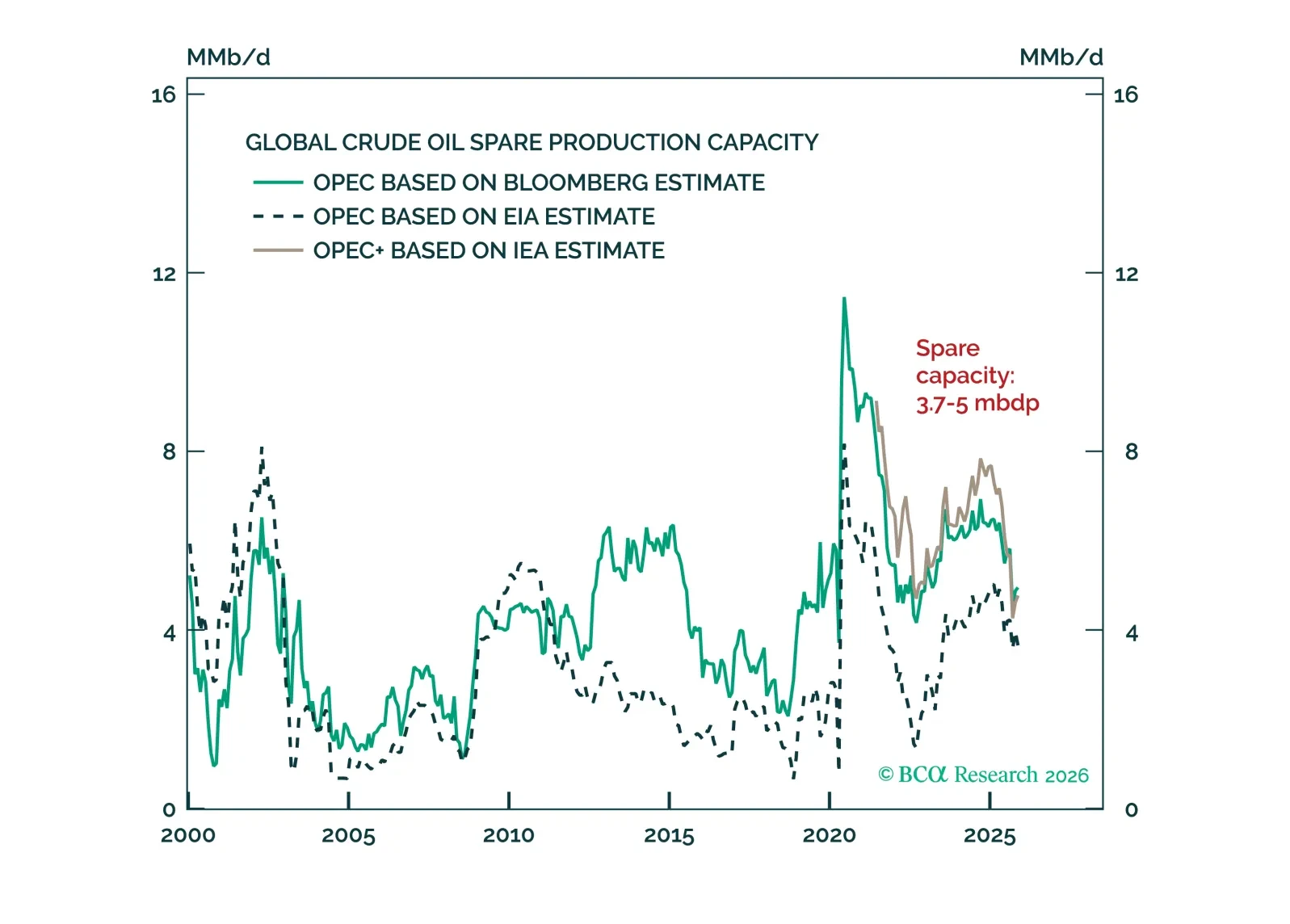
Our top five "Black Swan" risks this year are familiar but all too realistic in the current climate. Investors should stay overweight US equities and EM-ex-China until some hurdles are cleared.
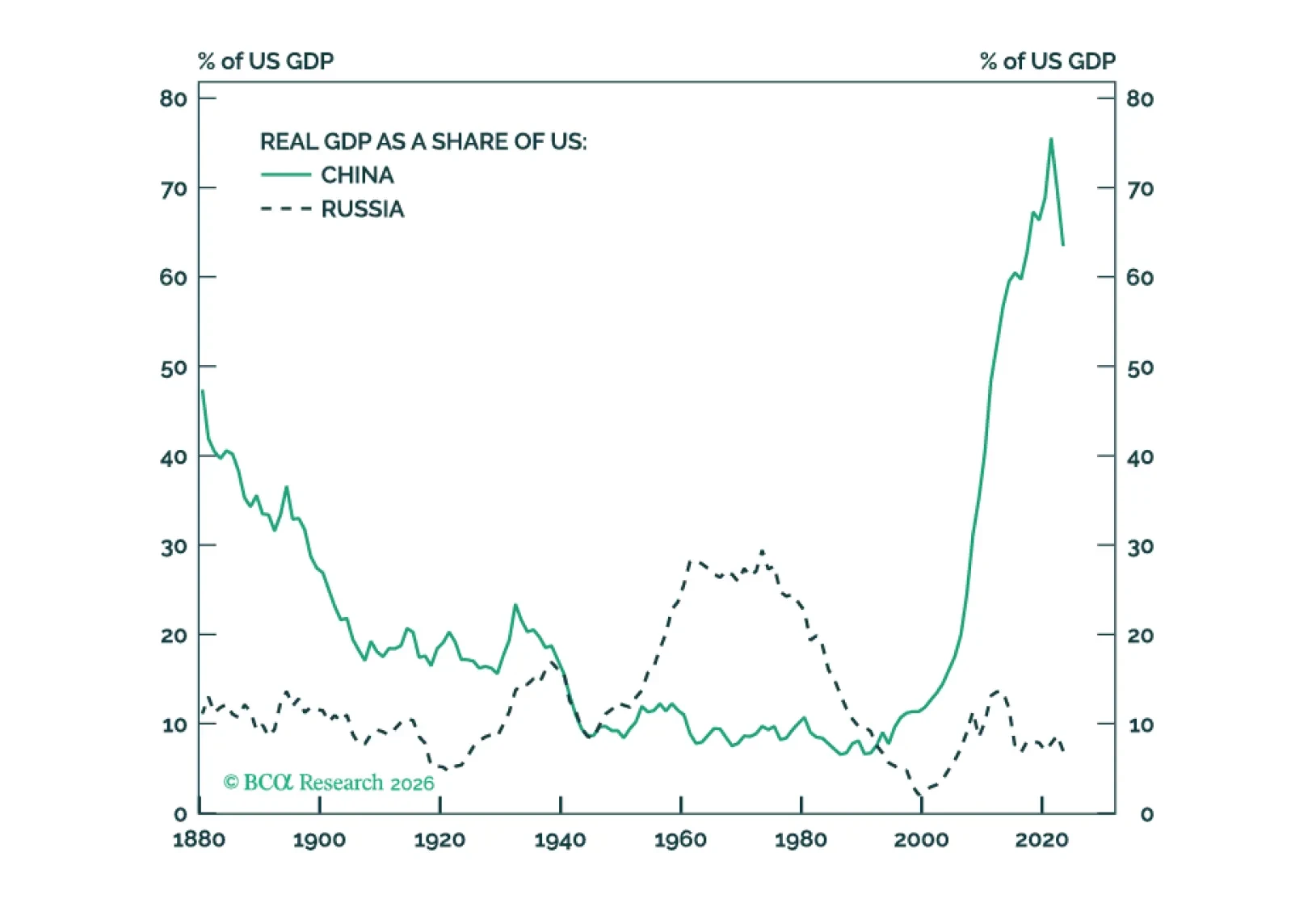
After 250 years, the USA is still the biggest thing happening in the world. But it faces huge challenges in the coming decades from socioeconomic imbalances and strategic competition.
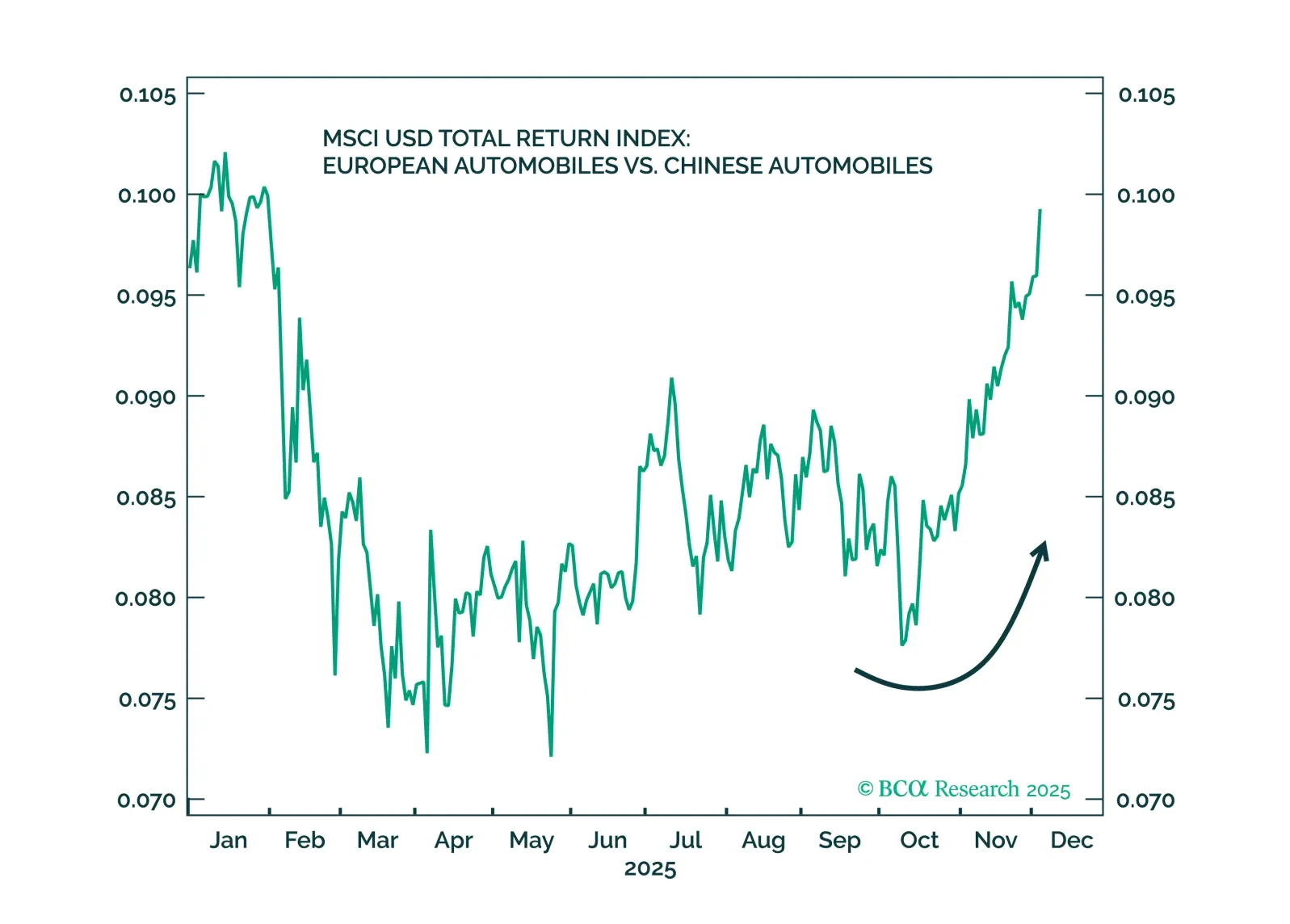
We got Trump's tariff shock and backtracking correct and predicted Israel's attack on Iran. But we missed the China rally — and there is still no Ukraine ceasefire.
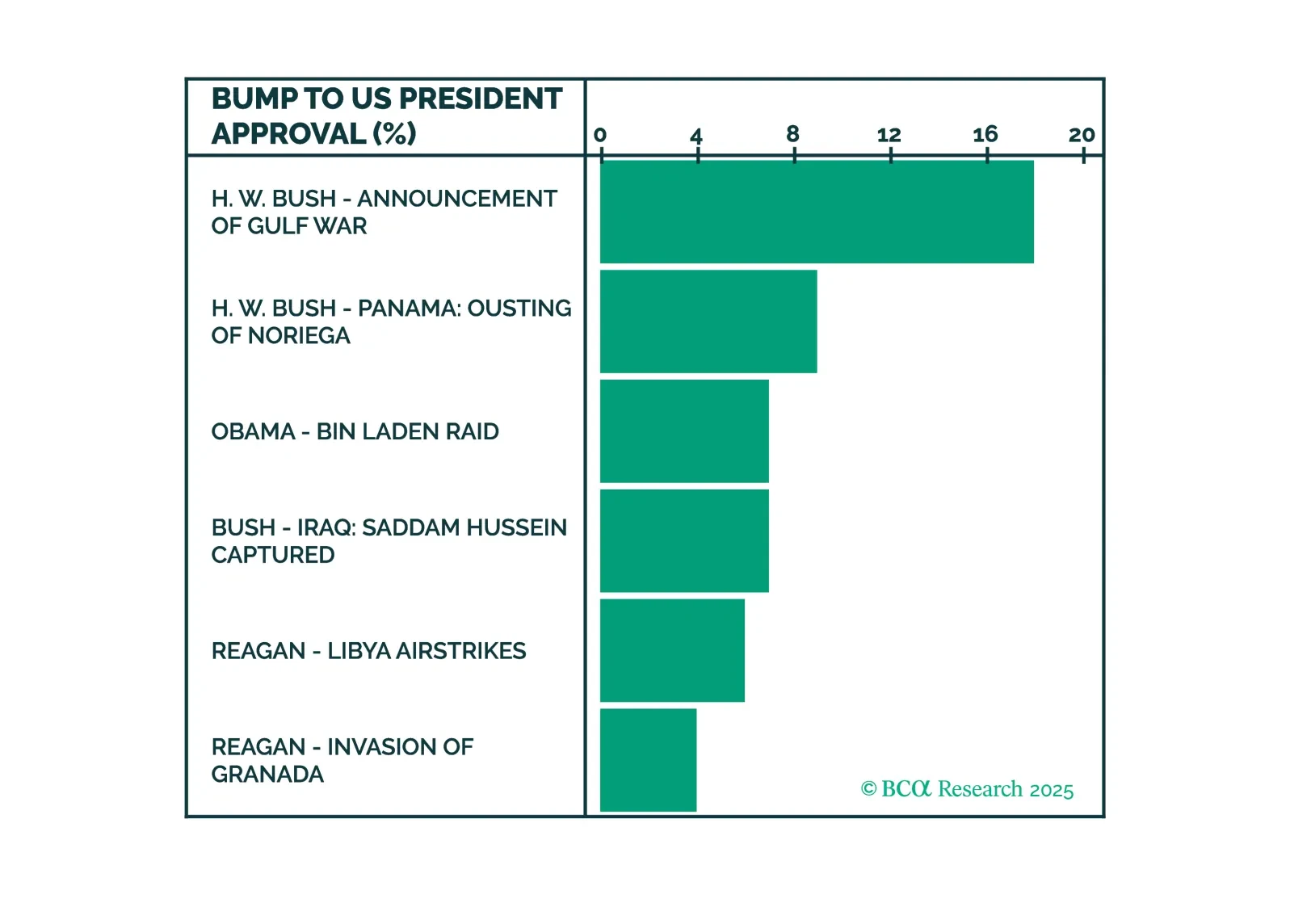
US intervention will likely force out Maduro from Venezuela and reopen the economy. This could increase Venezuelan crude production in the long run, a modestly bearish outcome for oil markets over cyclical and structural horizons.
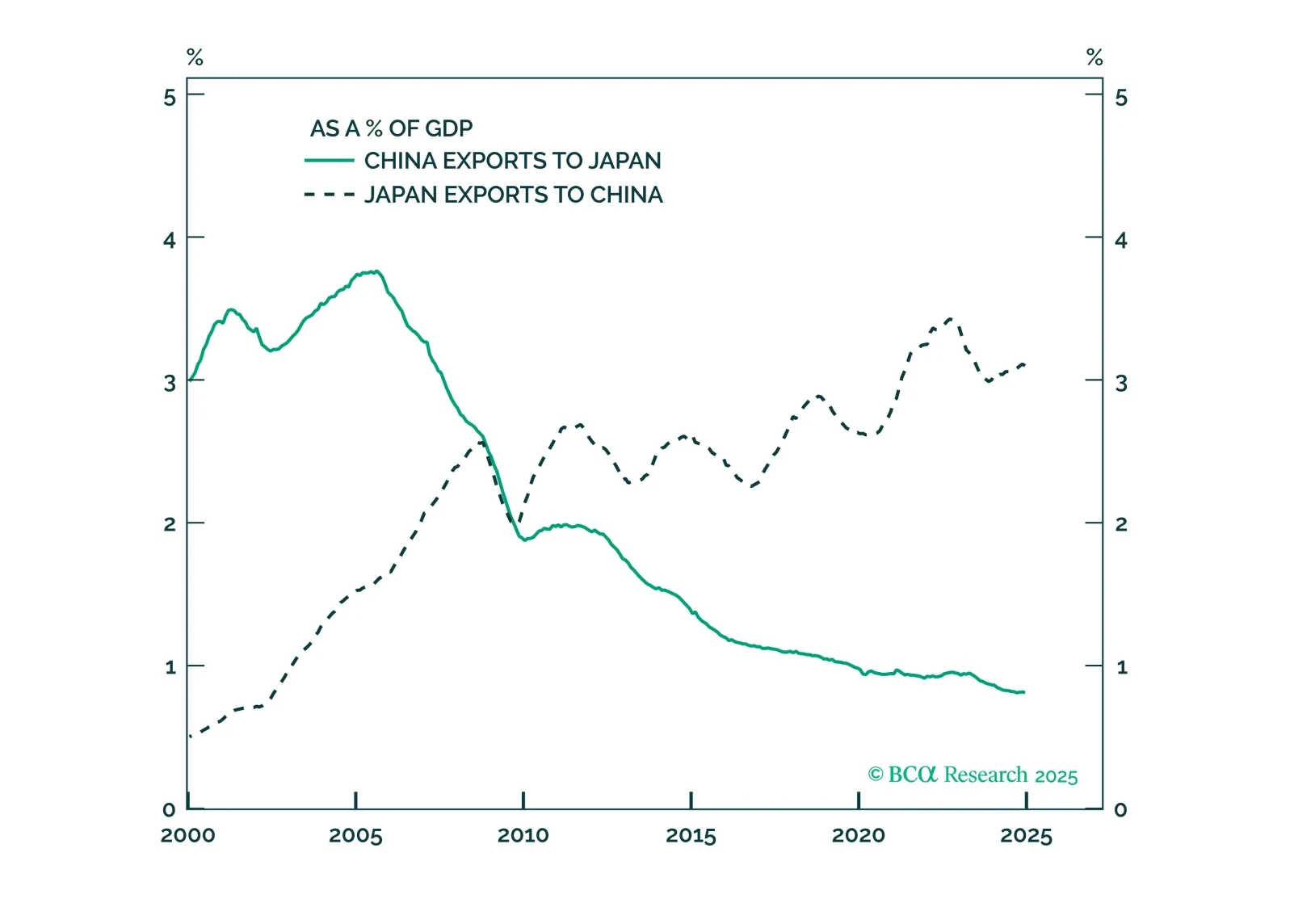
US talks with Russia and China coincide with rising EU-Russia and Japan-China tensions. Stay overweight US assets and long Japanese yen.
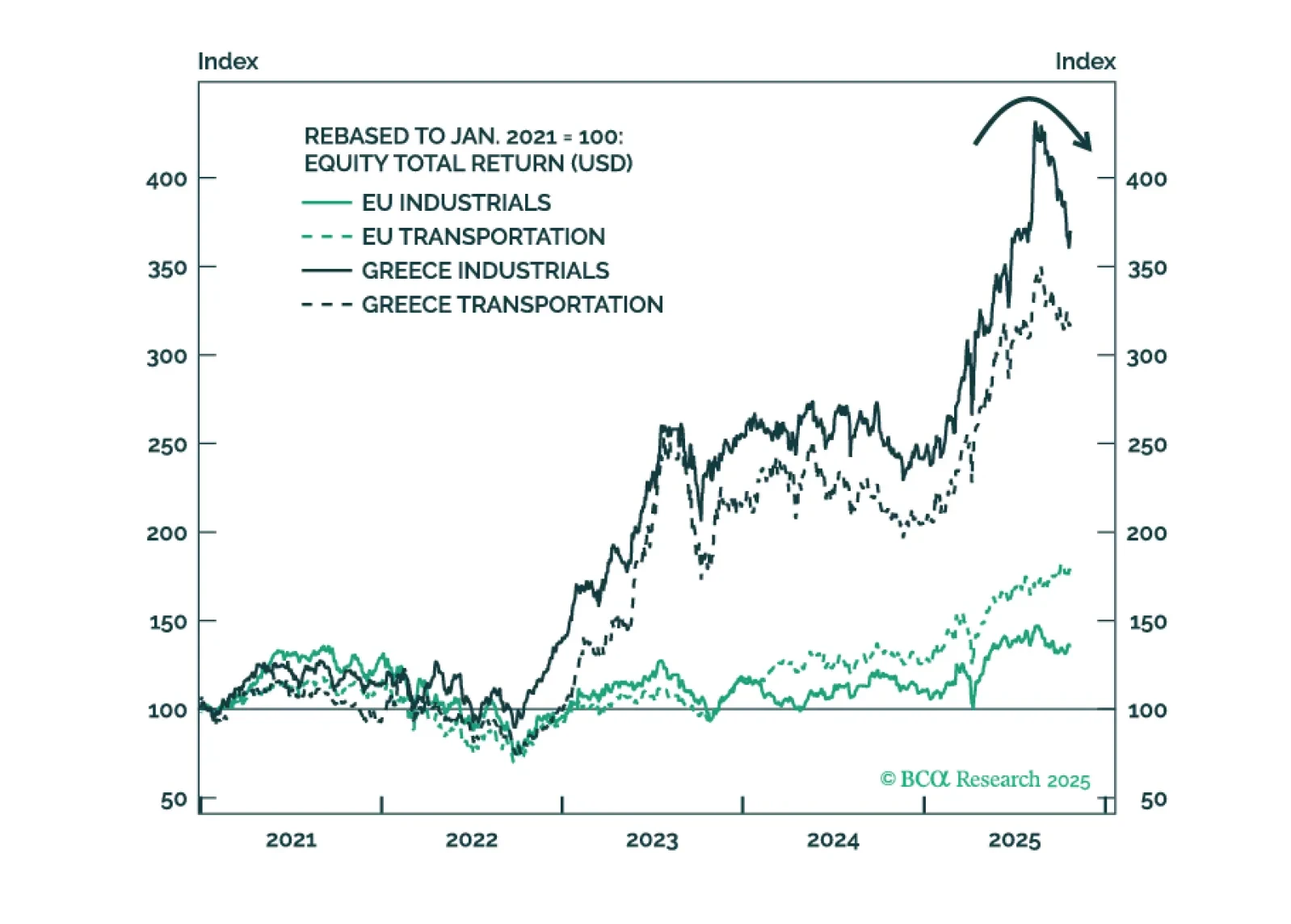
Reduce risk exposure in the very near term as President Trump's ceasefire effort falters, Russia tensions spike, and US-China trade prospects suffer.