Sorry, you need to enable JavaScript to visit this website.
Skip to main content

United States

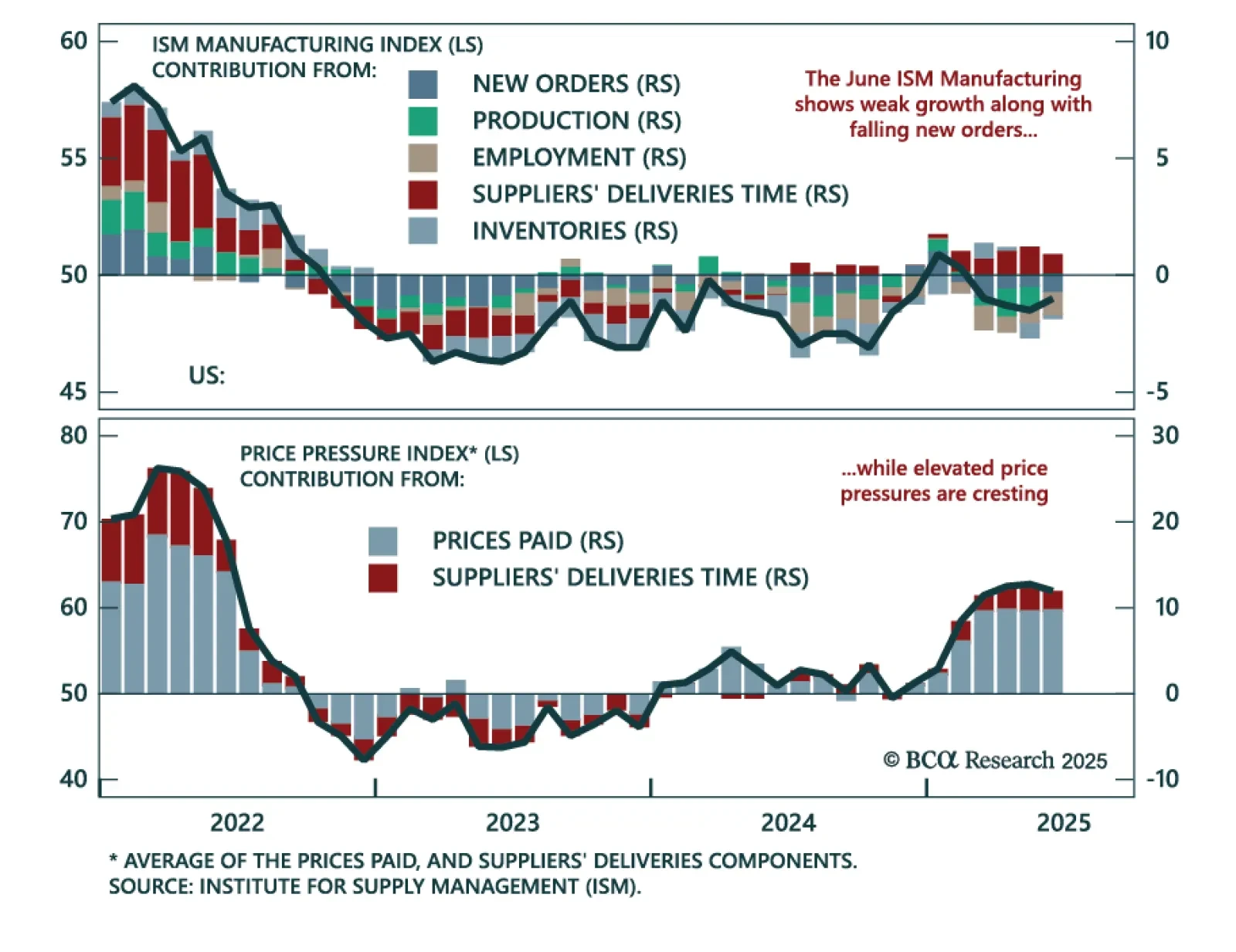
The June ISM points to sluggish US manufacturing and reinforces long duration positioning amid peaking price pressures. The index rose modestly to 49.0 from 48.5 in May, with the rebound driven by slightly higher production and slower supplier deliveries due…

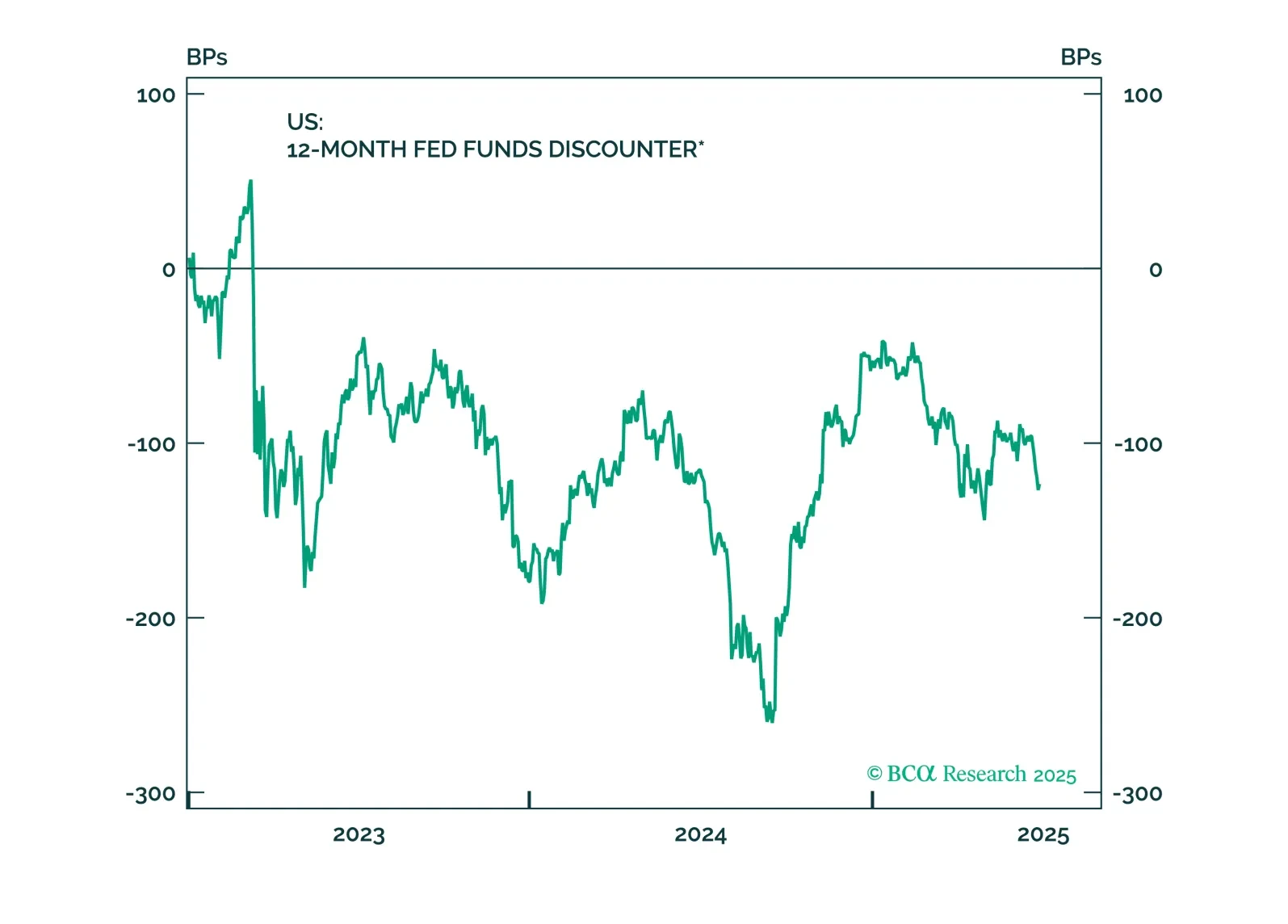
Monetary policy is about to become a powerful tailwind to the already bullish brew that includes Trump’s repeated step-downs from a global trade war, irrelevant geopolitical risks in the Middle East, and a fiscal policy that is no longer as alarming to the bond markets as the raft of campaign promises appears to be. Investors should hesitate to get overly bearish either bonds or stocks. However, we remain uber USD bears. 

Regional Fed surveys confirm sluggish US manufacturing and tame inflation, supporting long duration positioning outside the US. The June Dallas Fed Manufacturing survey missed expectations, rising to -12.7 from -15.3, still deep in contraction. New orders…
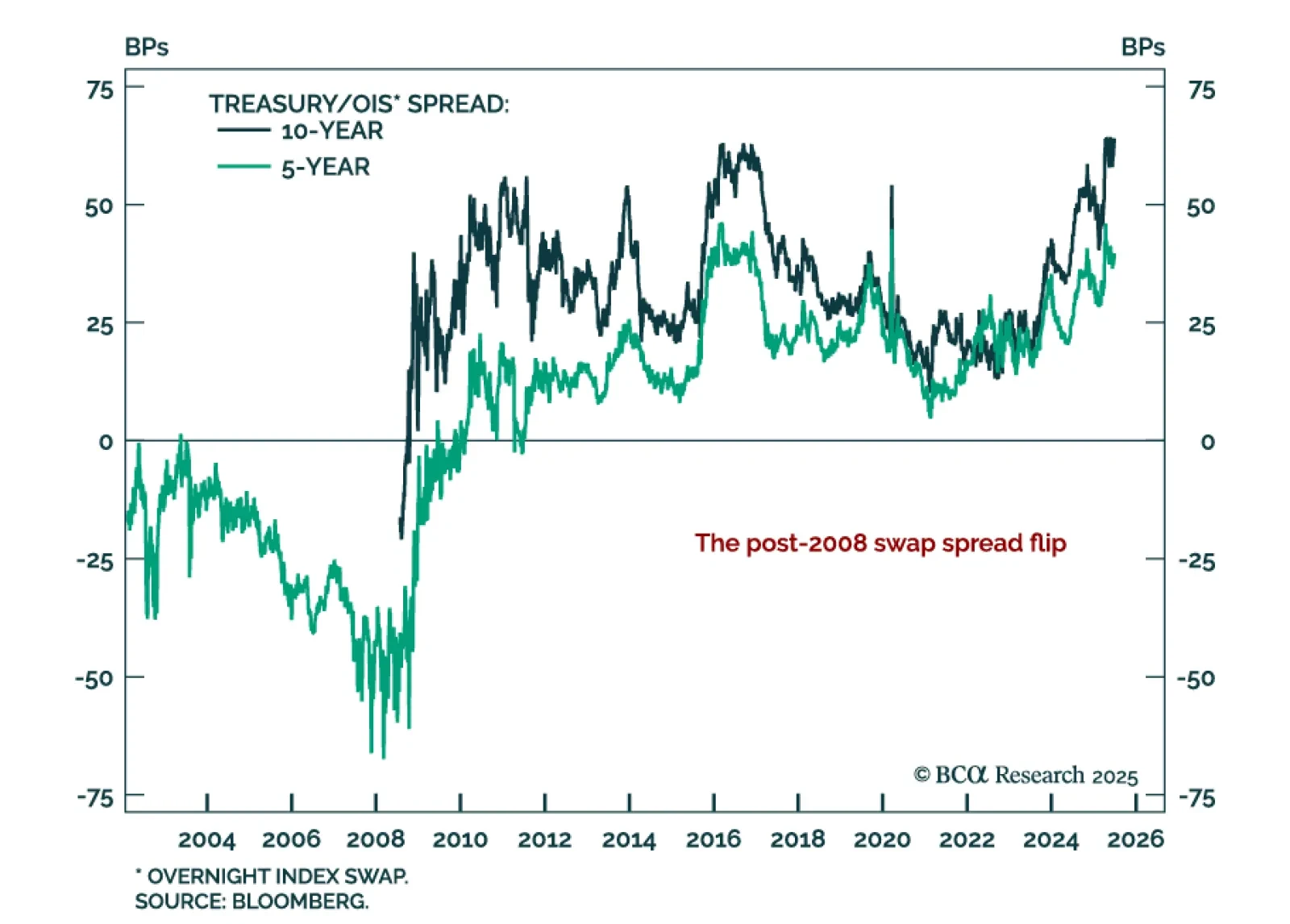
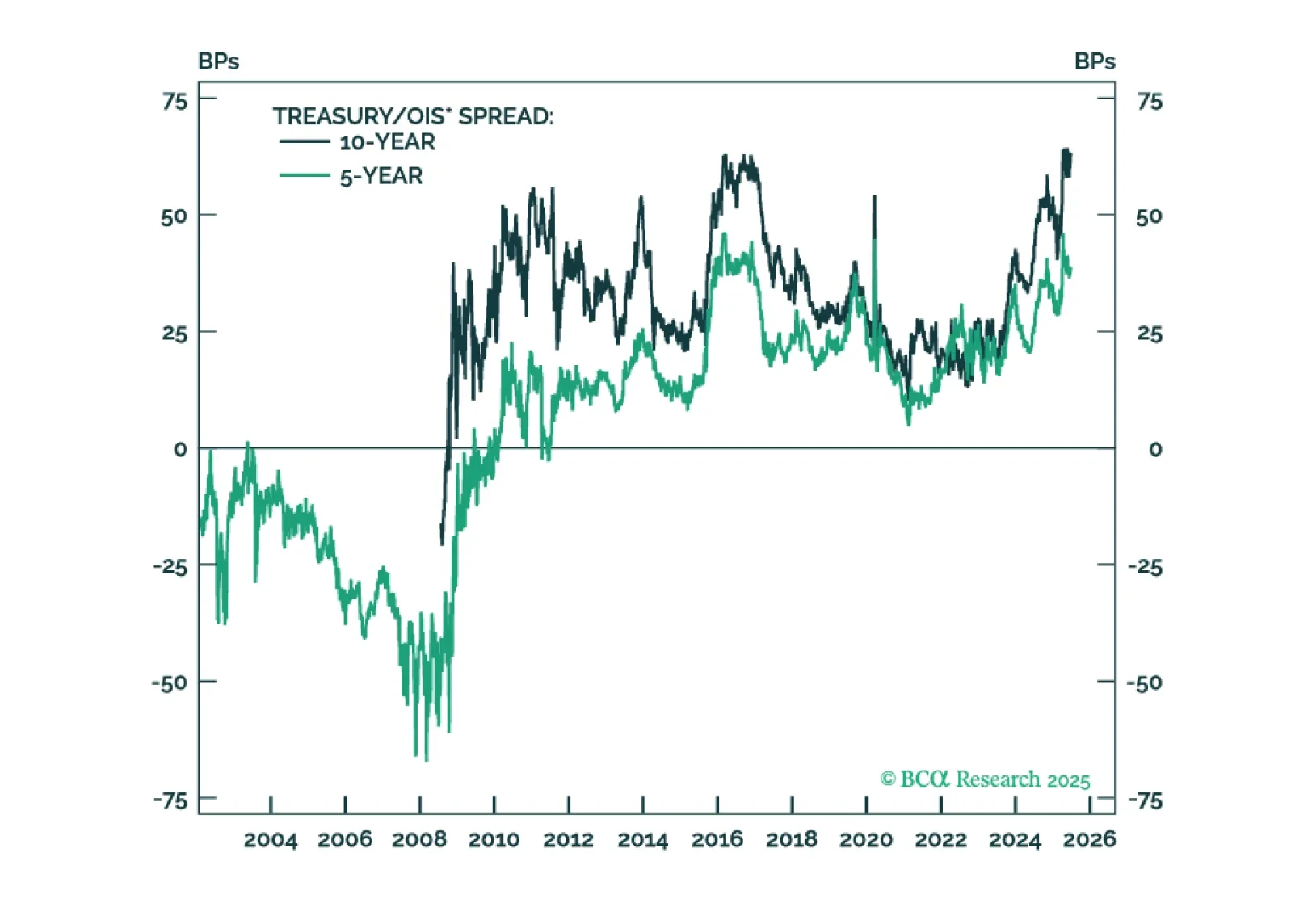
Pay Attention To Swap Spreads Pay…
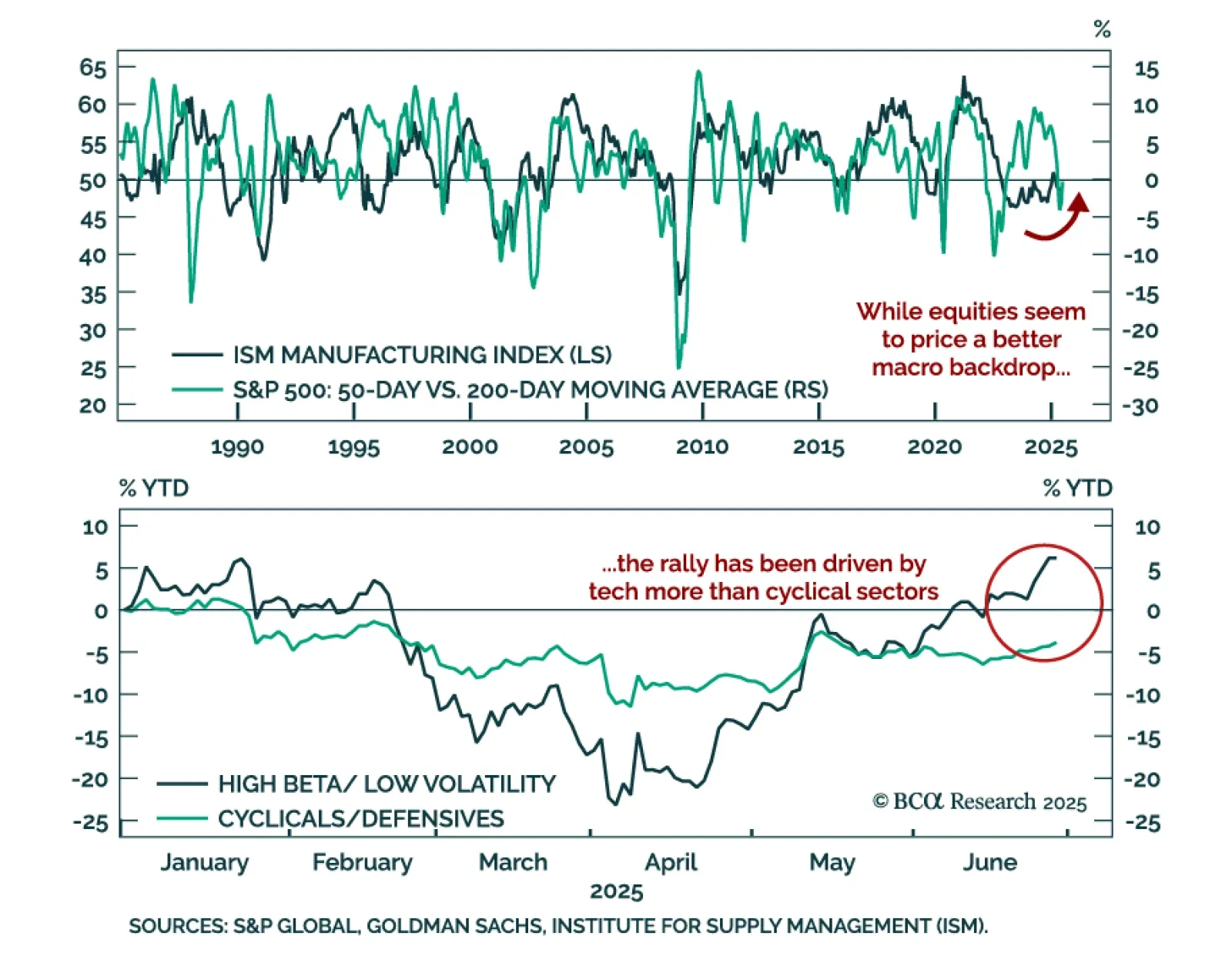
Tech-led momentum is driving the S&P 500 to new highs despite weak growth and rising cyclical risks. The rally has accelerated following a de-escalation in geopolitical tensions and ongoing hopes for positive trade developments. Momentum signals confirm…

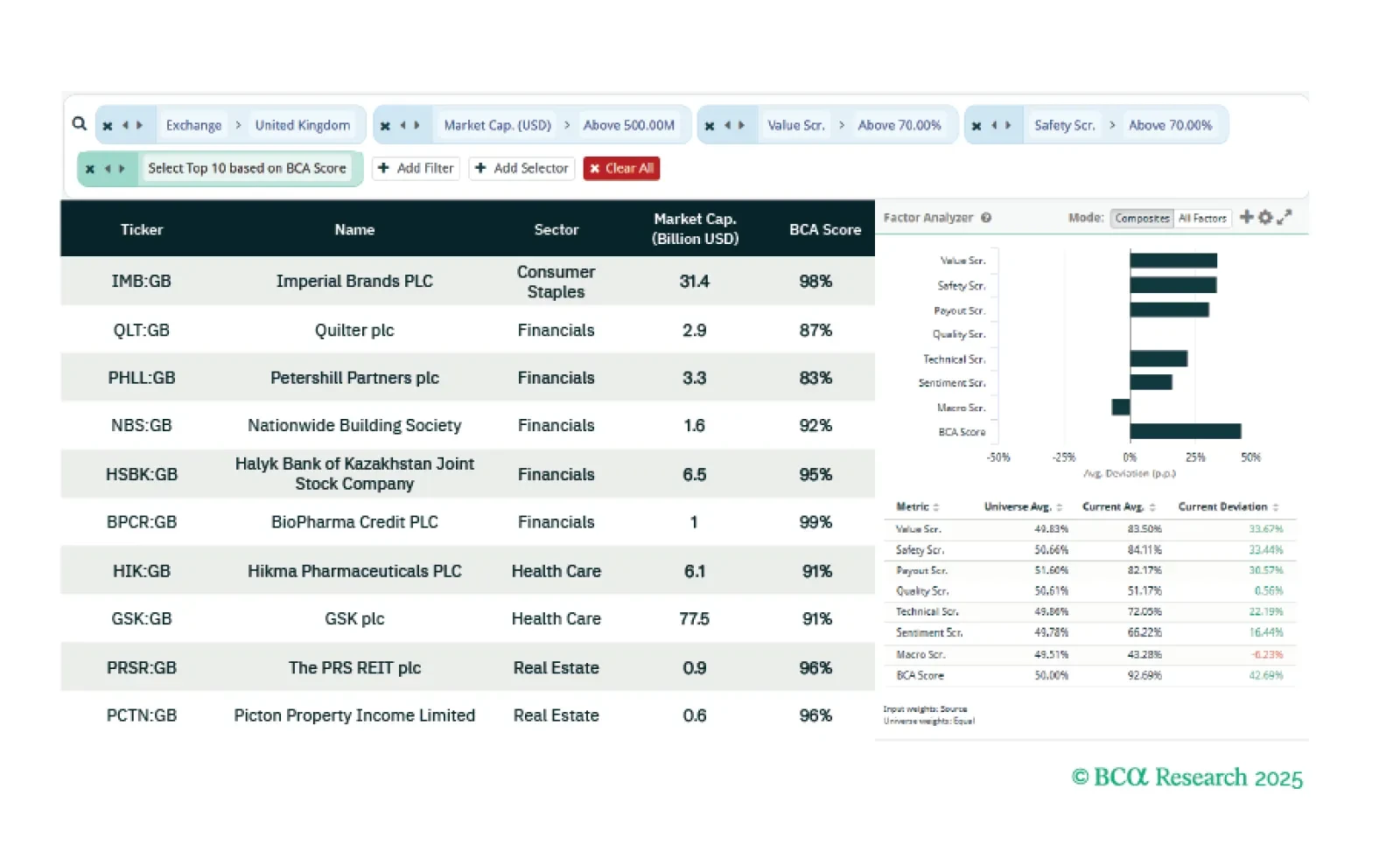
This week our three screeners explore: UK stocks that are cheap and offer a geopolitical hedge; French stocks that are sensitive to China; and US Value and dividend paying stocks. 
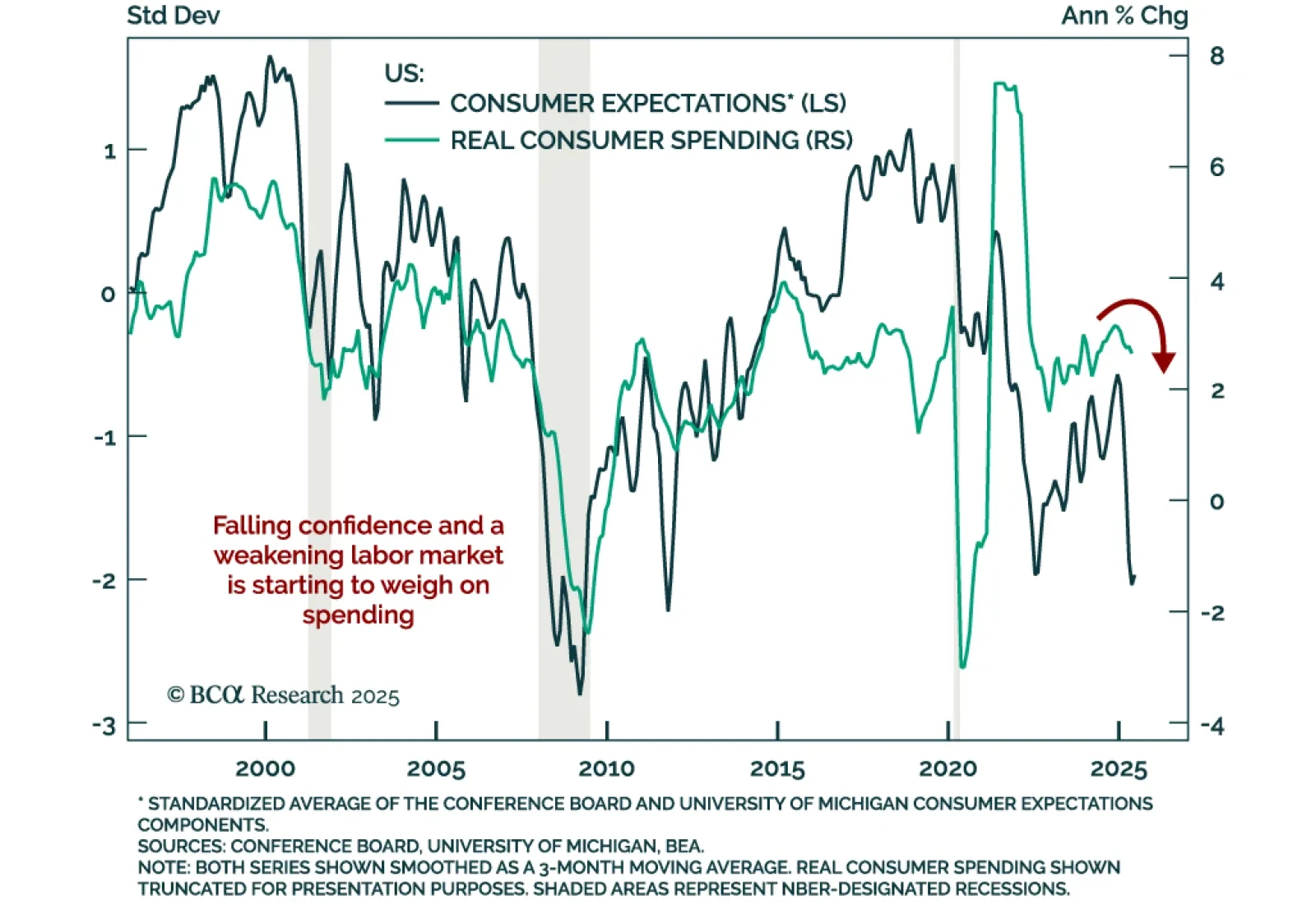
Weak consumption data and deteriorating labor market signals reinforce our defensive stance. The May US Personal Income & Outlays report showed real personal spending declining 0.3% m/m, missing expectations, while core PCE inflation came in slightly…
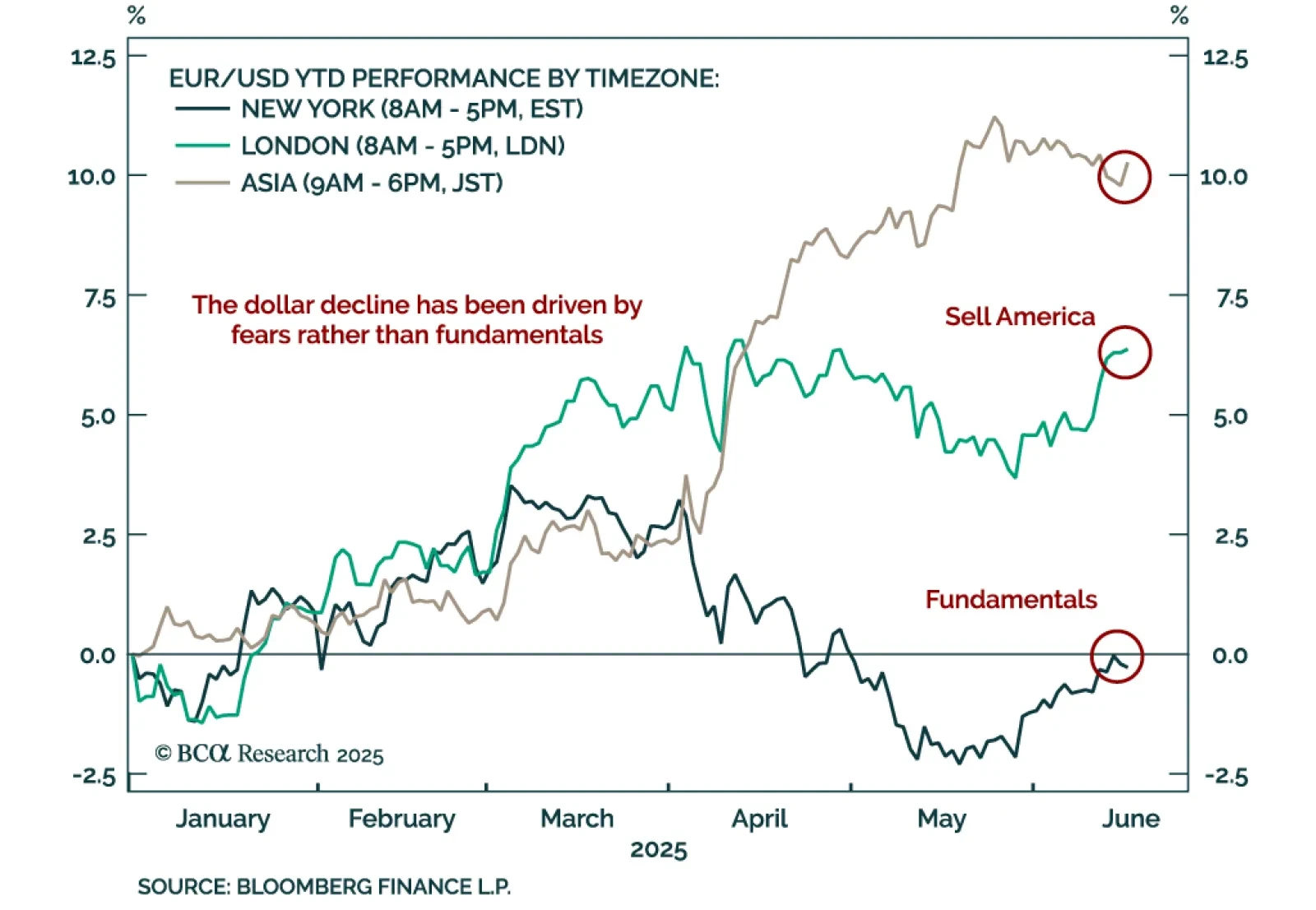
Foreign investors are selling US assets. Our Chart Of The Week comes from Juan Correa, Chief Global Asset Allocation Strategist. Splitting cumulative year-to-date EUR/USD returns by trading session reveals a clear pattern: The dollar weakens during…

The Treasury/OIS spread has exerted notable upward pressure on Treasury yields during the past year, but the factors driving the spread are now turning more favorable.
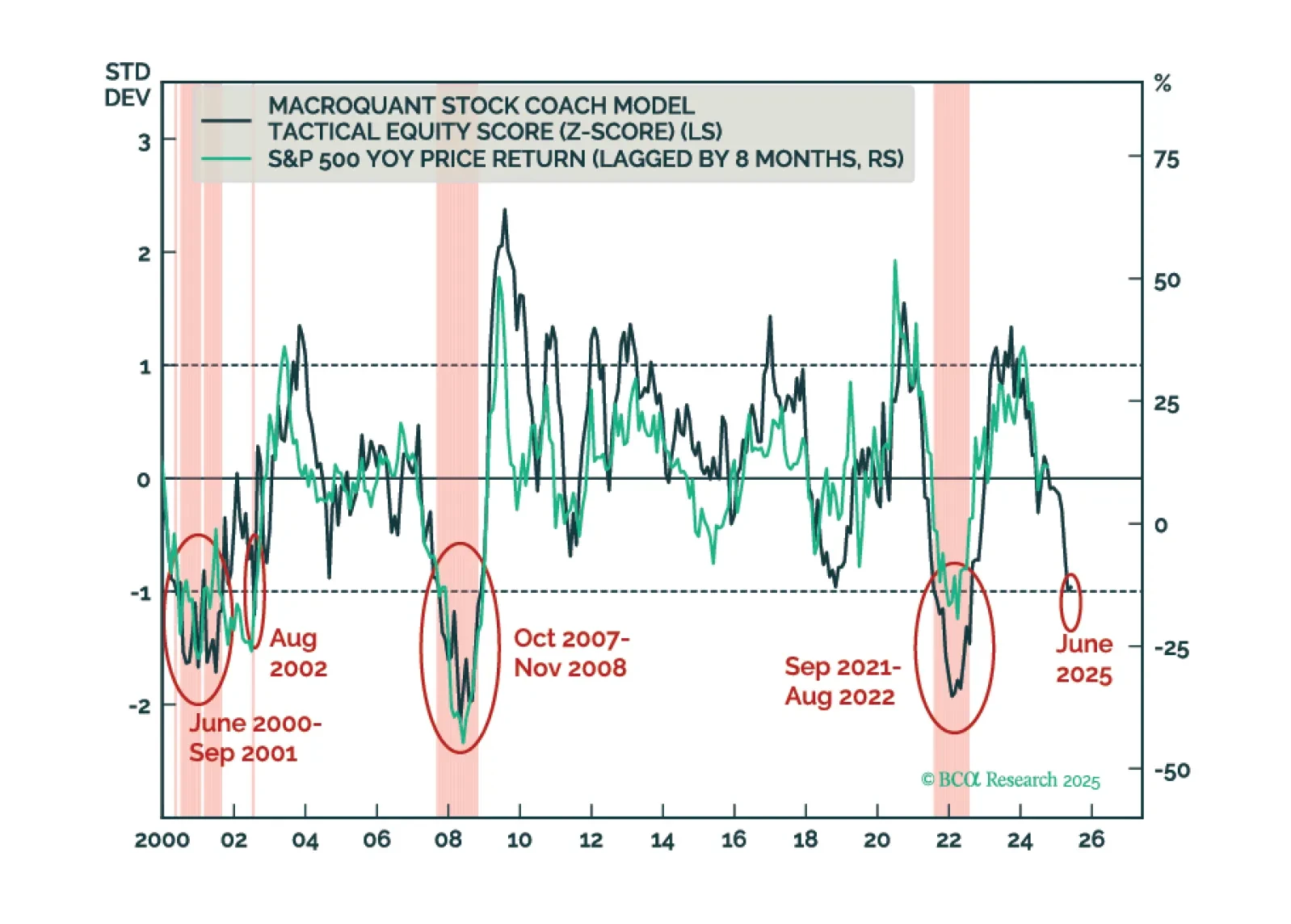
Investors should modestly underweight equities in their portfolios and look to turn more aggressively defensive once the whites of the recession’s eyes are visible. We think that will happen within the next few months.