Sorry, you need to enable JavaScript to visit this website.
Skip to main content

Policy

Section II of this month’s Bank Credit Analyst report is a guest piece written by Martin Barnes, which we are making available to all clients. Martin, who retired from BCA Research as Chief Economist in 2021 after a long and illustrious career, expresses his personal views about the long-run outlook for inflation. He argues that the multi-decade disinflationary era is over, which will bring significant challenges for both policymakers and investors.

In a guest authorship of Section I, Doug Peta presents a synthesis of the recent views expressed in our US Investment Strategy and Bank Credit Analyst reports. Doug underscores that excess savings are unlikely to support US consumer spending beyond the middle of next year, which argues for conservative investment positioning on a 6-12 month time horizon. Additionally, this month’s Section II is a guest piece written by Martin Barnes, who retired from BCA Research as Chief Economist in 2021 after a long and illustrious career. Martin expresses his personal views about the long-run outlook for inflation and argues that the multi-decade disinflationary era is over – which will bring significant challenges for both policymakers and investors.

Section II of this month’s Bank Credit Analyst report is a guest piece written by Martin Barnes, which we are making available to all clients. Martin, who retired from BCA Research as Chief Economist in 2021 after a long and illustrious career, expresses his personal views about the long-run outlook for inflation. He argues that the multi-decade disinflationary era is over, which will bring significant challenges for both policymakers and investors.

The US Q3 GDP release delivered a positive signal about the US economy. Economic growth accelerated from 2.1% q/q to 4.9% q/q on an annualized basis – beating expectations of 4.5%. A significant acceleration in consumption growth (from 0.8% to 4.0%) accounted…
As expected, the ECB kept policy on hold on Thursday. In a unanimous decision, it maintained the deposit rate at an all-time high of 4% following 10 consecutive increases. Ultimately, the tone of the communication was on the dovish side. True, the ECB…
Results of the October German IFO survey corroborate the positive signal from the latest ZEW survey. The headline Business Climate Index increased for the first time since April, rising from 85.8 to 86.9, above expectations of 86.0. This was driven by…
As expected, the Bank of Canada kept its target for the overnight rate unchanged at 5% for the second meeting in a row on Wednesday. The Bank cited clear evidence of the impact of elevated interest rates on demand — especially in durable and semi-durable…
The Atlanta Fed's Home Ownership Affordability Monitor (HOAM) – which gauges a median-income households' ability to absorb annual costs related to owning a median-priced home – dropped to a fresh record low in August. At 67.3, the index is significantly below…

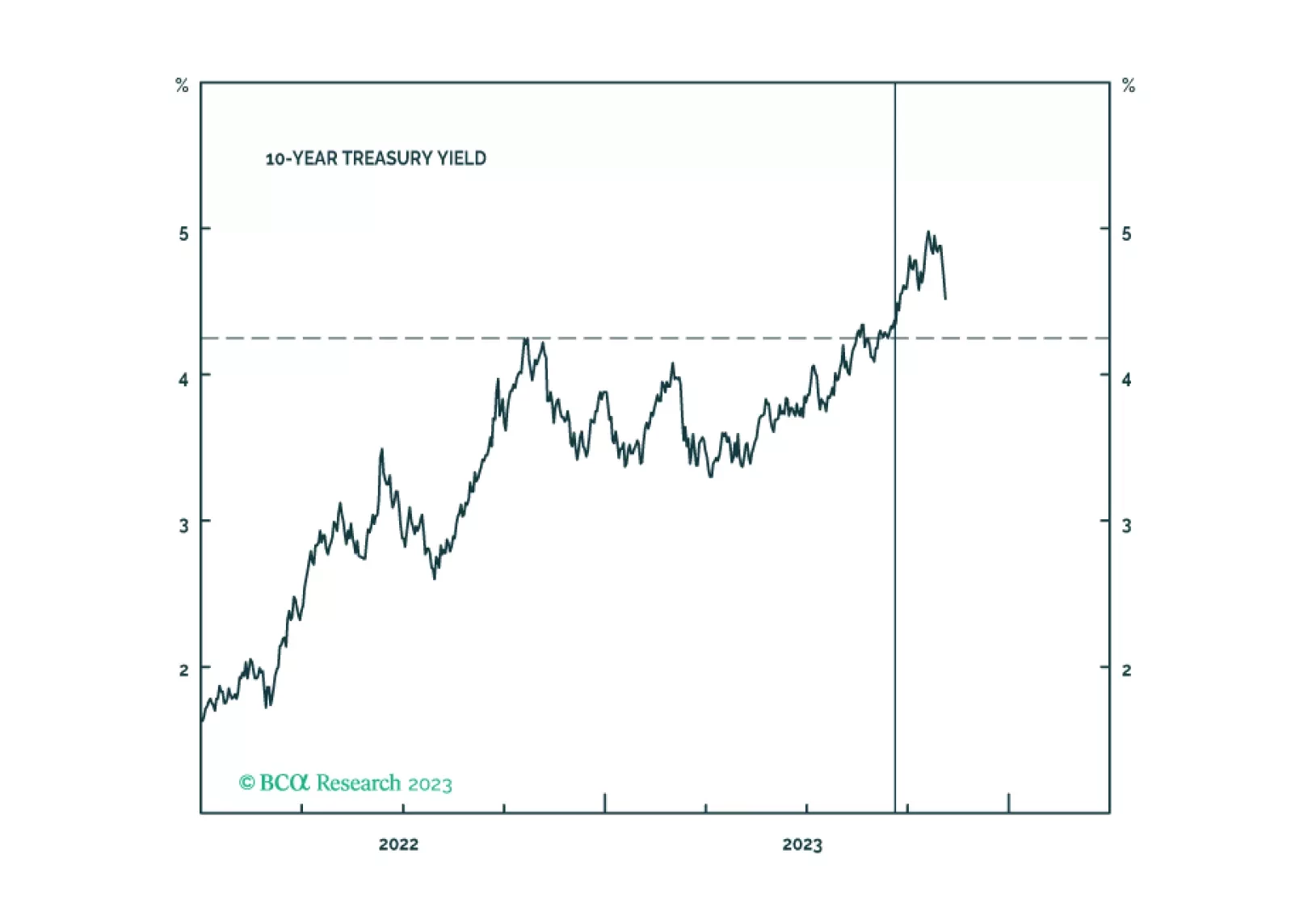
This week’s report contains an update on the Treasury curve’s recent bear-steepening trend and a look at different measures of long-maturity Treasury valuation.

In this Special Report, we introduce two strategies that use our Central Bank Monitors for global fixed income country allocations and currency trades. We find that using the Monitors in country selection helps improve the performance of a developed markets government bond portfolio. The CBMs can also help substantially minimize the drawdowns on a standard FX carry strategy.