Sorry, you need to enable JavaScript to visit this website.
Skip to main content

Oil

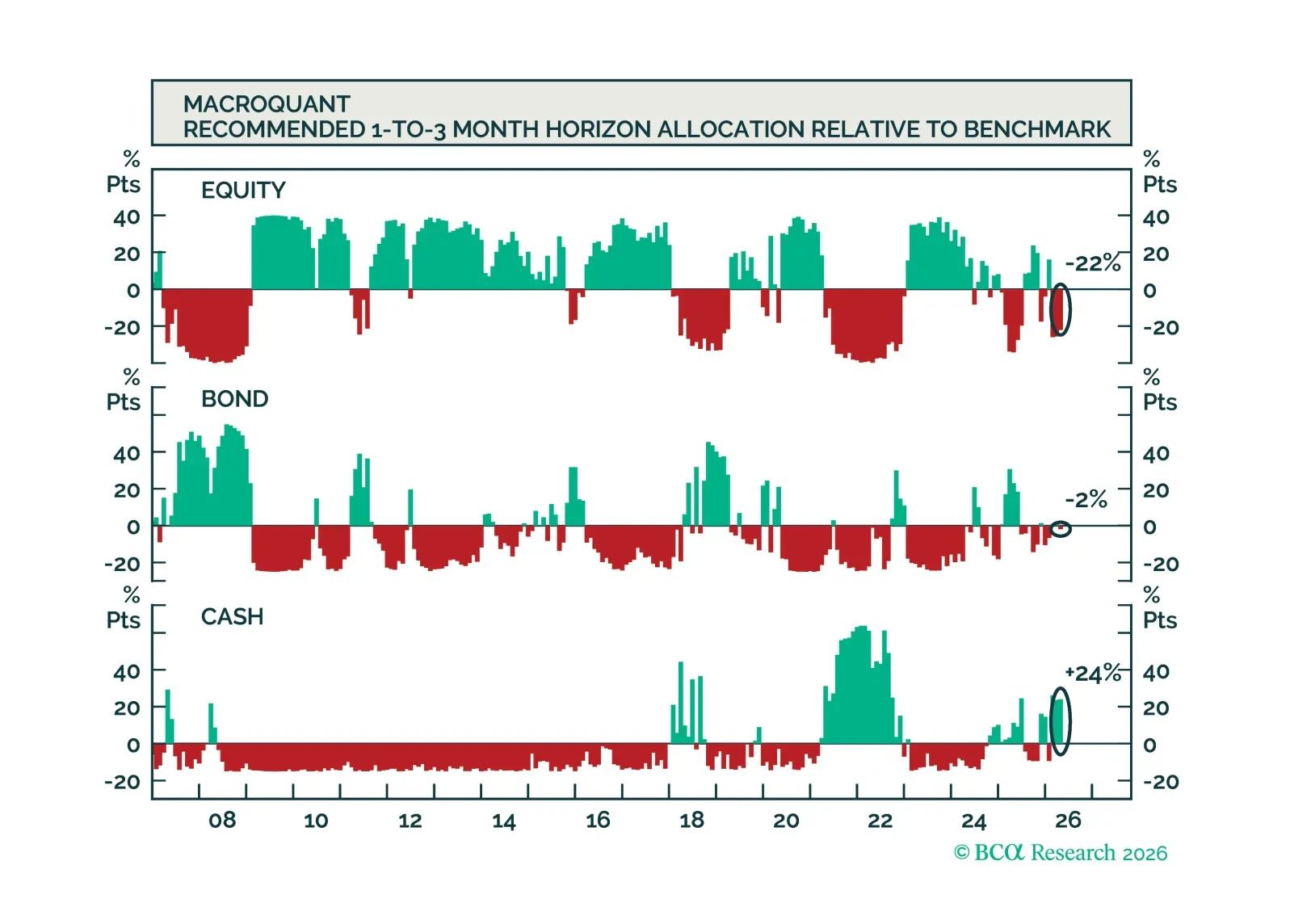
MacroQuant recommends a slight underweight position in equities, favors a below-benchmark duration stance in fixed-income portfolios, is very positive on the US dollar, downgrades gold to underweight, upgrades copper to overweight, and remains very bullish on oil.
A 60-day ceasefire extension would buy the global economy some time, but it would not resolve the underlying supply problem. Oil prices and bond yields fell while equities rallied Tuesday morning after Trump announced…

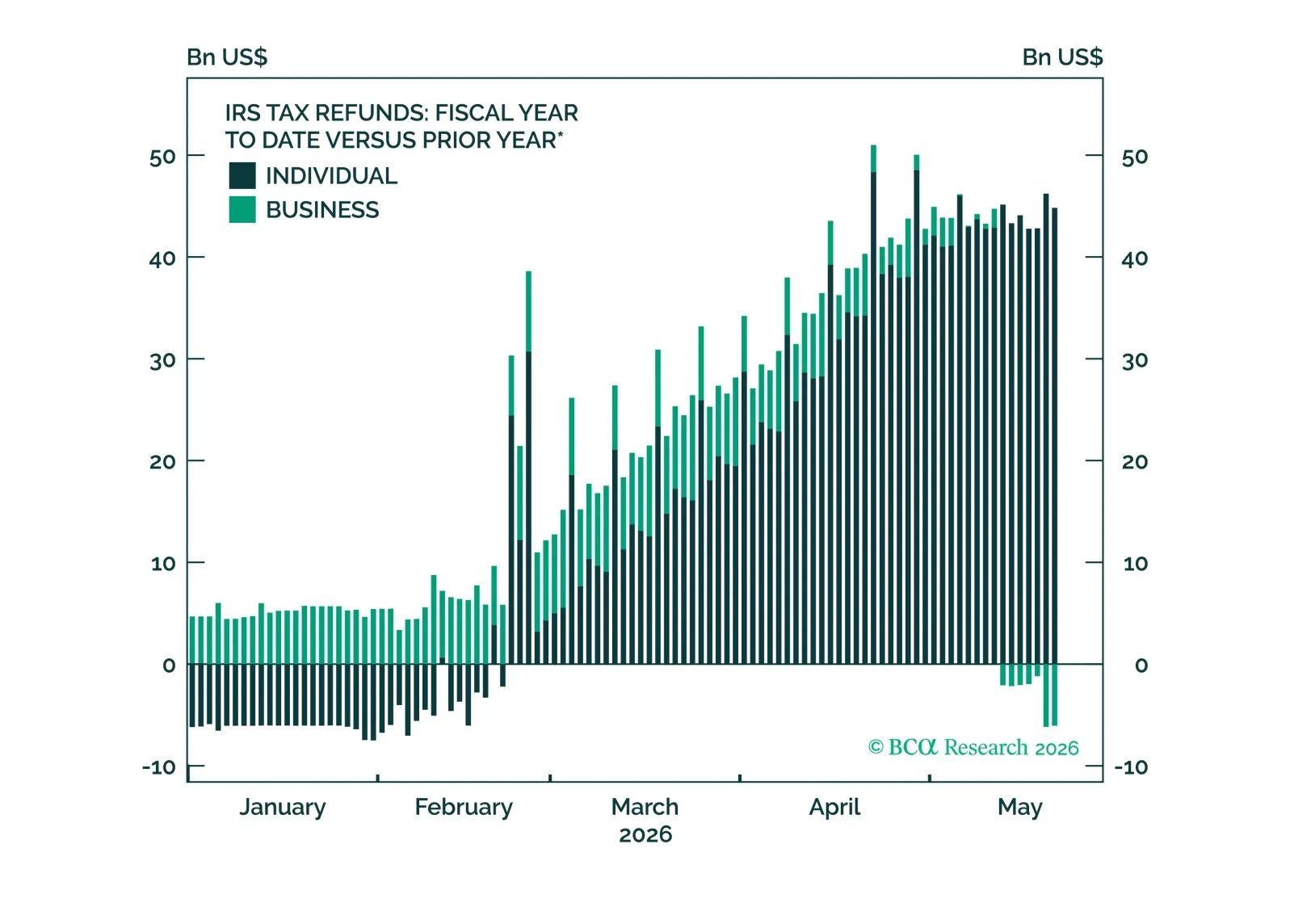
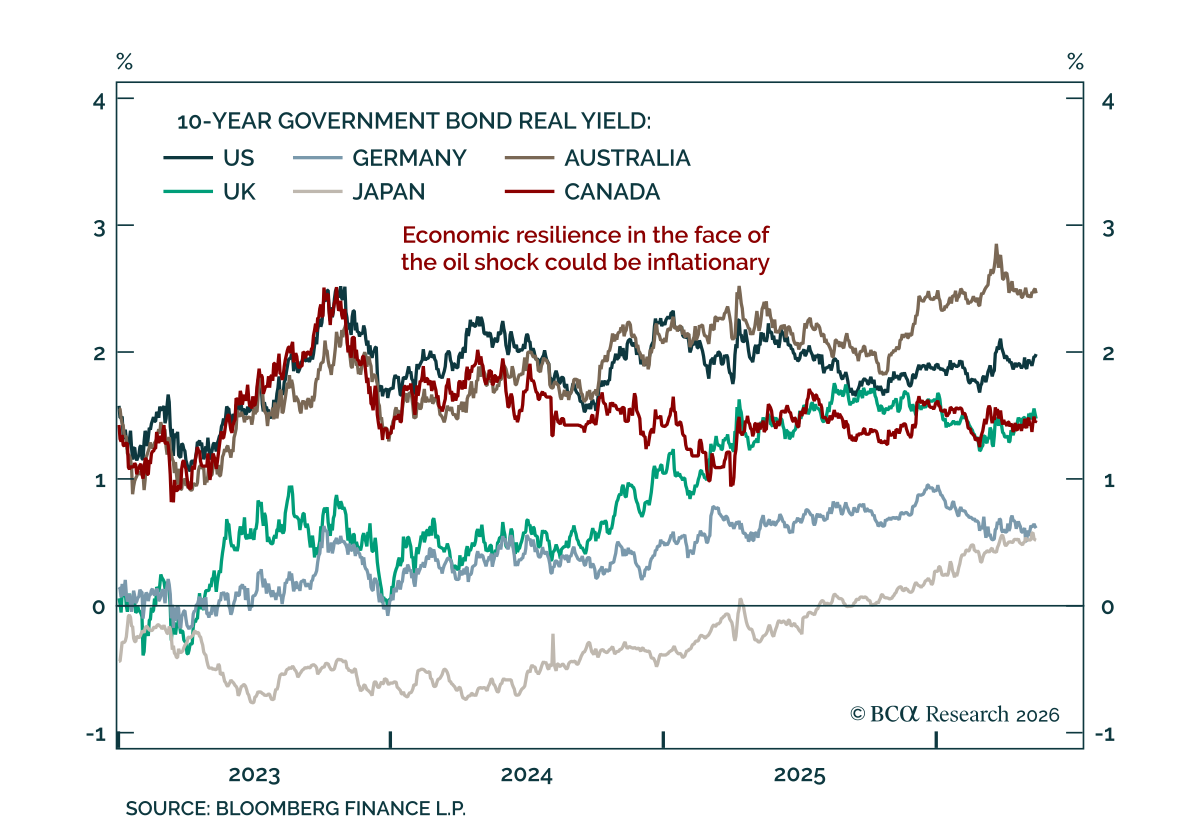
Against the earnings-versus-everything-else market backdrop, stellar earnings are easily outweighing elevated oil prices, rising yields and the increased probability that the Fed may hike rates before the year is out. US allocators should remain invested in equities.
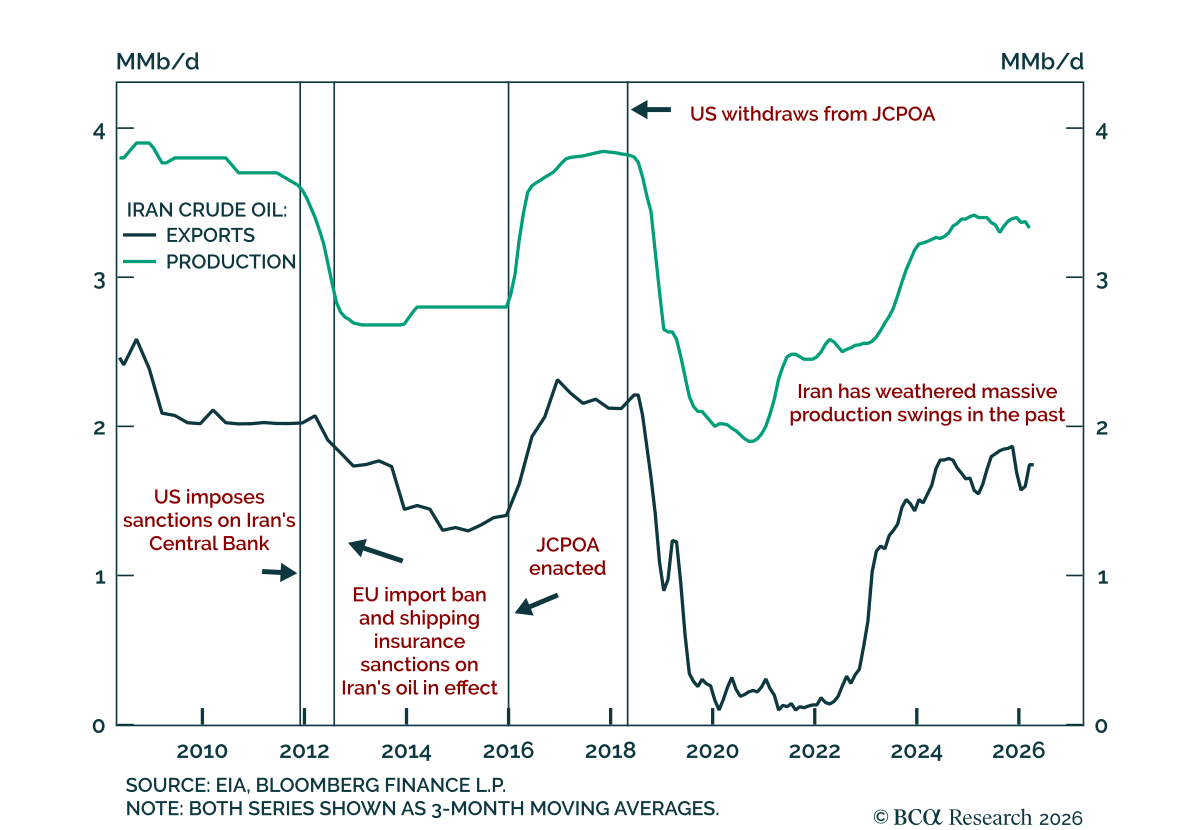
Our Commodity strategists expect oil prices to move higher as de-escalation hopes fade and Strait of Hormuz supply risks reassert themselves. Recent volatility reflect headline-driven uncertainty, with markets swinging between prospects of an imminent Strait…
We stay tactically open to further risk-asset upside, especially if Hormuz improves, but recognize that the 6-12 month setup is becoming more dangerous. Our monthly BCA Views Meeting centered on the tension between near-term resilience and medium-term…

Hopes for an imminent Middle East de-escalation have capped oil prices in recent weeks, but that restraint may soon fade.
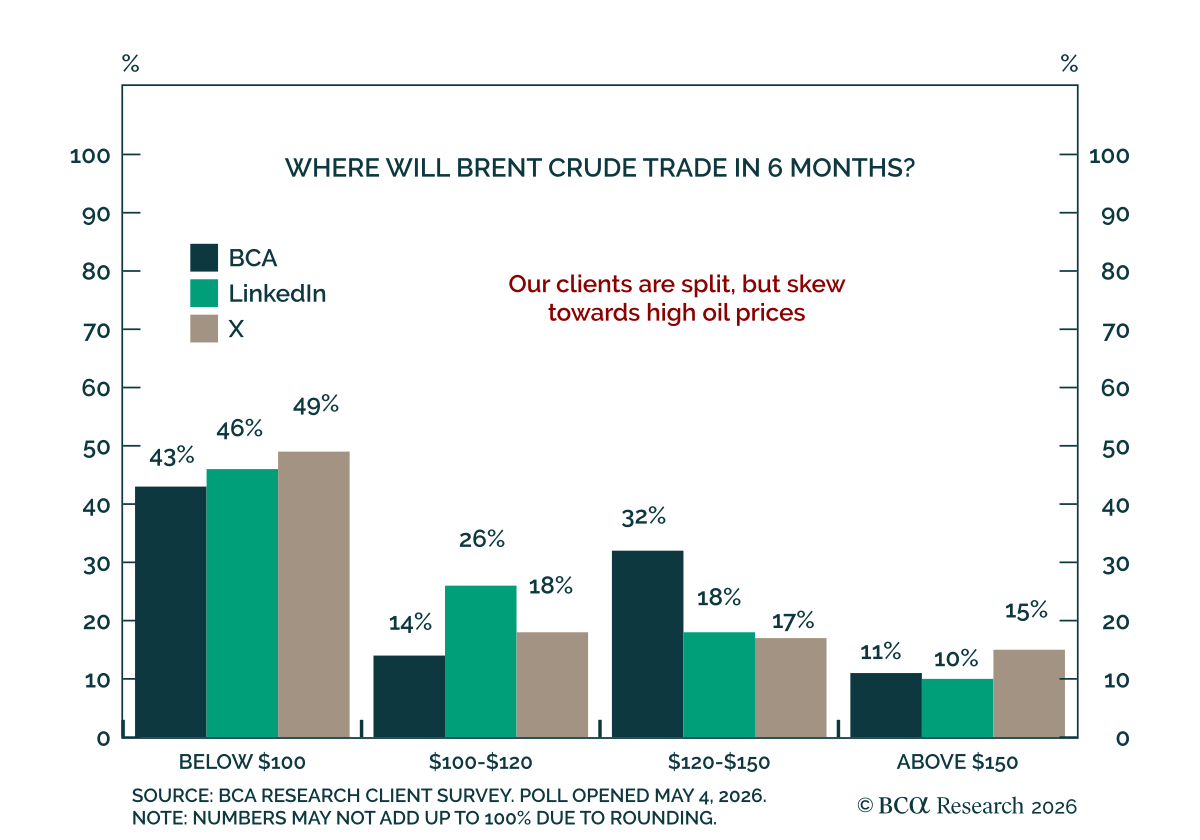
Our clients are split on whether Brent will be below $100 in 6 months. In last week's poll, we asked where Brent crude will trade in 6 months. 43% of BCA clients expect sub-$100/bbl prices, while 32% see Brent in the $120–$150 range, 14% in $100–$120,…
The Bank of England’s latest Monetary Policy Report offers a clean framework for thinking through an oil shock and the appropriate policy response. The first channel is the direct effect of higher energy prices on inflation such as higher gas and utilities…

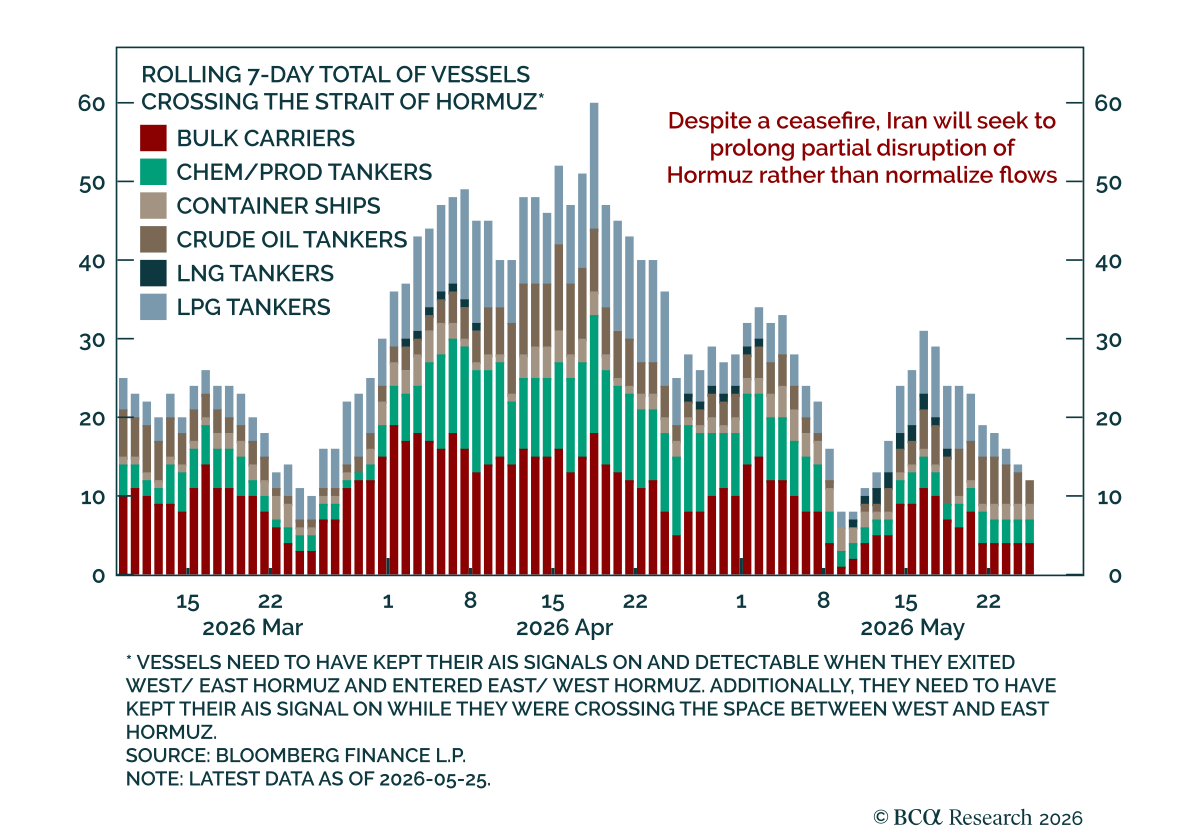
The global economy has weathered the oil shock reasonably well so far. However, the risk of a recession will increase meaningfully if the Strait of Hormuz remains closed into June.
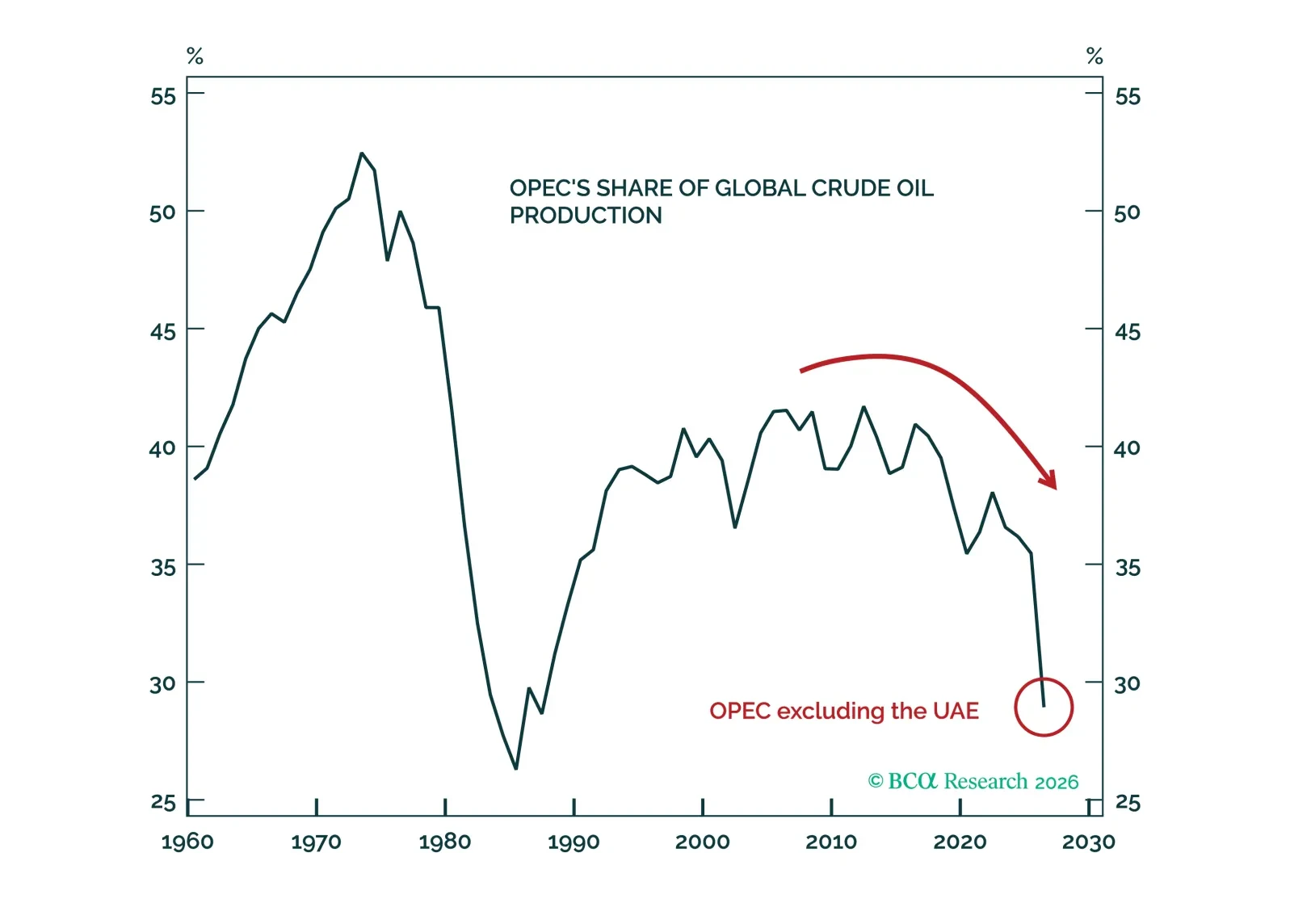
The UAE’s exit from OPEC is unlikely to impact oil markets in 2026. Over the longer term, however, the emergence of an “anti-OPEC club” of producers favoring unconstrained oil output growth would create a headwind to crude prices and weaken the price floor that OPEC seeks to defend.