Inflation/Deflation

The 10-year US Treasury yield briefly moved above 5% earlier this week before dipping back down. While we can’t rule out another jump back above 5% in the coming weeks, the recent bond selloff has created a good deal of long-run value in US Treasuries. In the…
The European Commission's preliminary release for Consumer Confidence painted a murky picture for consumer sentiment on Monday. The headline print of -17.9 was largely unchanged from the previous month's print of -17.8, but beat expectations of -18.3.…
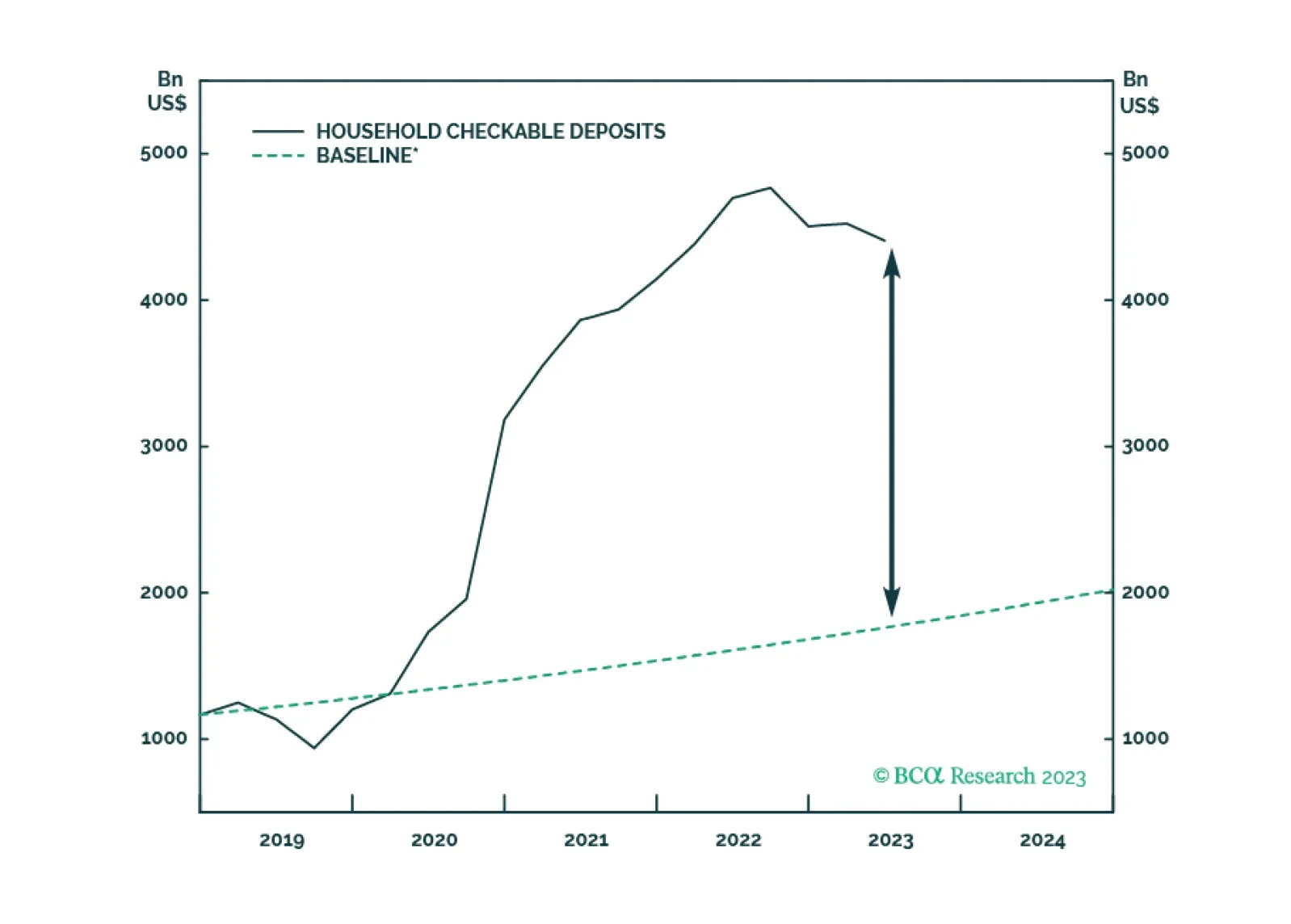
The biggest banks report that consumer credit card delinquencies still have yet to get back to pre-COVID levels and other credit performance indicators, leading and lagging, remain solid. There is still a great deal of cash sloshing around the banking system, though consumption has clearly slowed. We reiterate our view that a recession is coming, but not before the year is out.
German producer prices declined by a new record 14.7% y/y in September, broadly in line with expectations of -14.1% y/y and a steeper pace of contraction than August's -12.6% y/y. Meanwhile, the monthly rate of change returned to contraction (-0.2% m/m)…
According to BCA Research's Global Investment Strategy service, the global economy will stay buoyant over the next few quarters but will then sour as the lagged effects of higher interest rates and tighter bank lending standards work their way through the…
The Conference Board's Leading Economic Index's 0.7% m/m decline in September sent a weaker-than-anticipated signal about the outlook for the US economy. It fell below anticipations that the pace of decline would remain unchanged at -0.4% m/m and marks the…
Fed Chair Jay Powell's speech at the Economic Club of New York on Thursday corroborates the signal from other recent Fedspeak that policymakers may not need to hike rates again. He highlighted that although inflation is still too high, price pressures are…
BCA Research’s Global Fixed Income Strategy service is maintaining a tactical neutral duration stance to begin Q4. The team believes the risk/reward on US Treasuries has improved substantially after latest backup in yields, with the market now discounting the…
The data releases this week in the UK were disappointing for those that have been looking for a major downshift in UK inflation – most importantly, the Bank of England (BoE). The CPI report for September came in above expectations at 0.5% month-on-month and…
According to BCA Research’s Counterpoint service, a fundamental question for investors is, will central banks fail to exorcise the pandemic’s lingering inflationary shock, just as they failed to exorcise the inflationary shock that came from the collapse of…