Europe
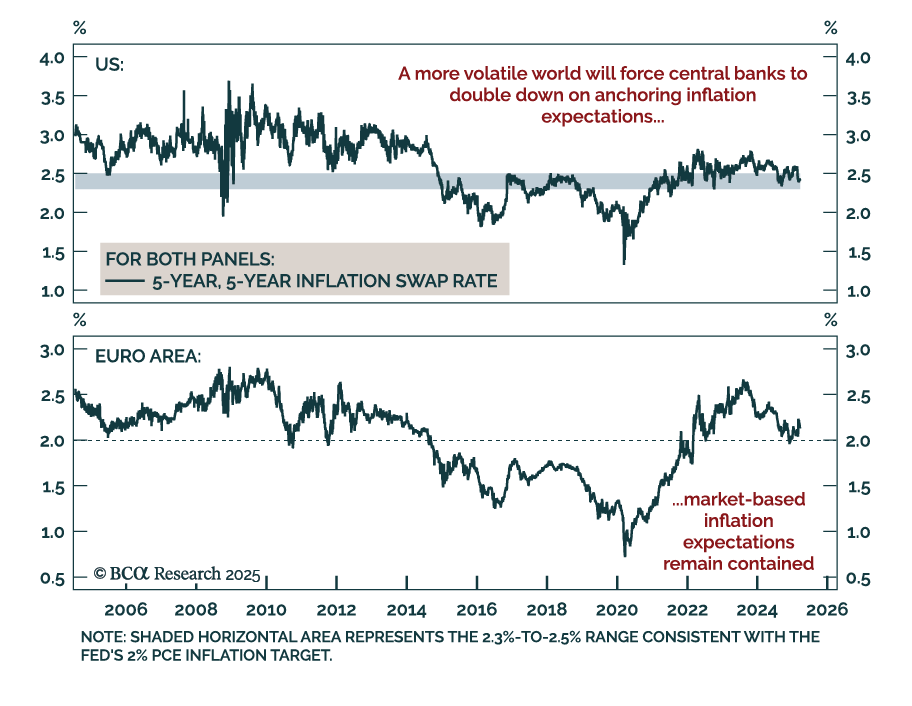
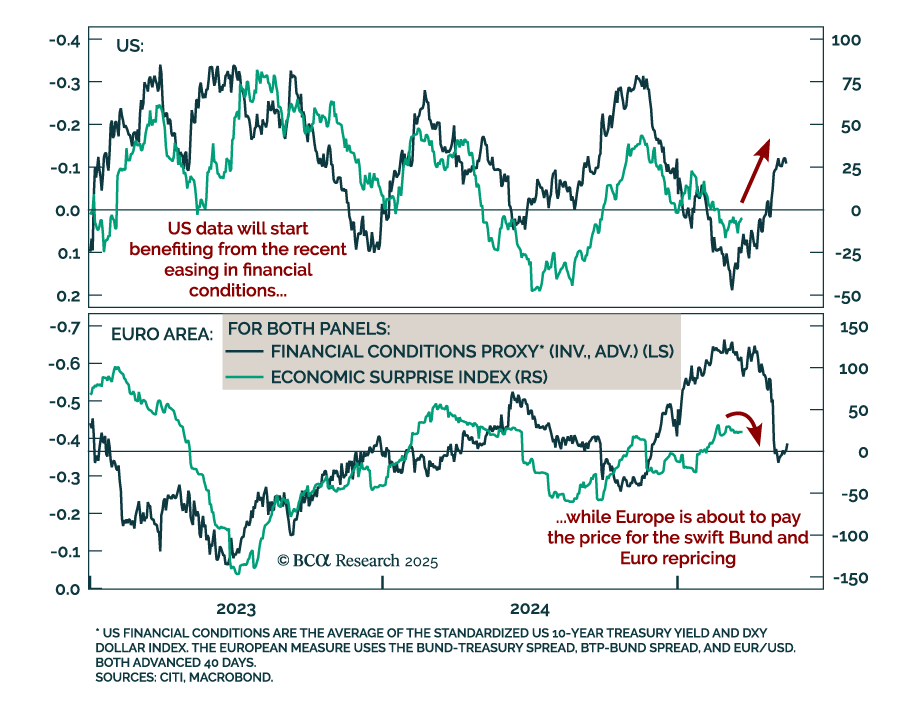
The ECB cut rates as expected, but rising yields and a stronger euro are tightening financial conditions just as fiscal policy shifts the macro landscape. With more rate cuts ahead and market positioning stretched, we outline the key risks, investment opportunities, and our updated call on the ECB’s terminal rate. Read our full report for actionable insights.
US stock market outperformance has been driven entirely by the 0.0002 percent of US superstar companies. But this superstar outperformance is based on two highly questionable assumptions: that all productivity gains from the generative-AI revolution will go into corporate profits; and specifically, into the profits of the Web 2.0 superstars which will morph into the generative-AI superstars. As these assumptions become undermined in the coming quarters, relative performance will reverse, starkly. On a structural horizon, stay maximum overweight Europe versus the US. Plus: time to go underweight global financials (IXG).
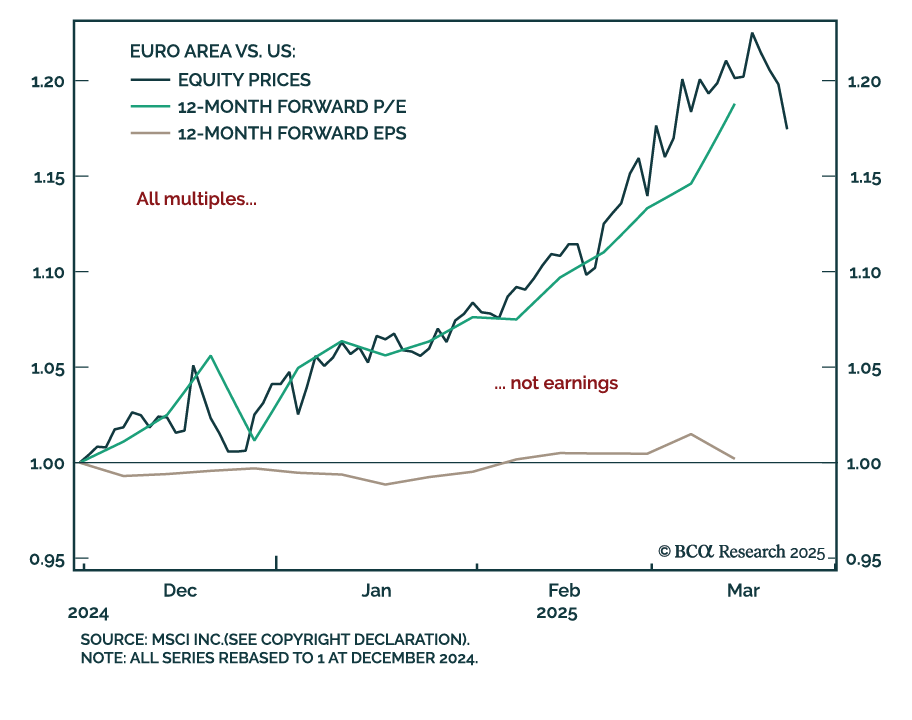
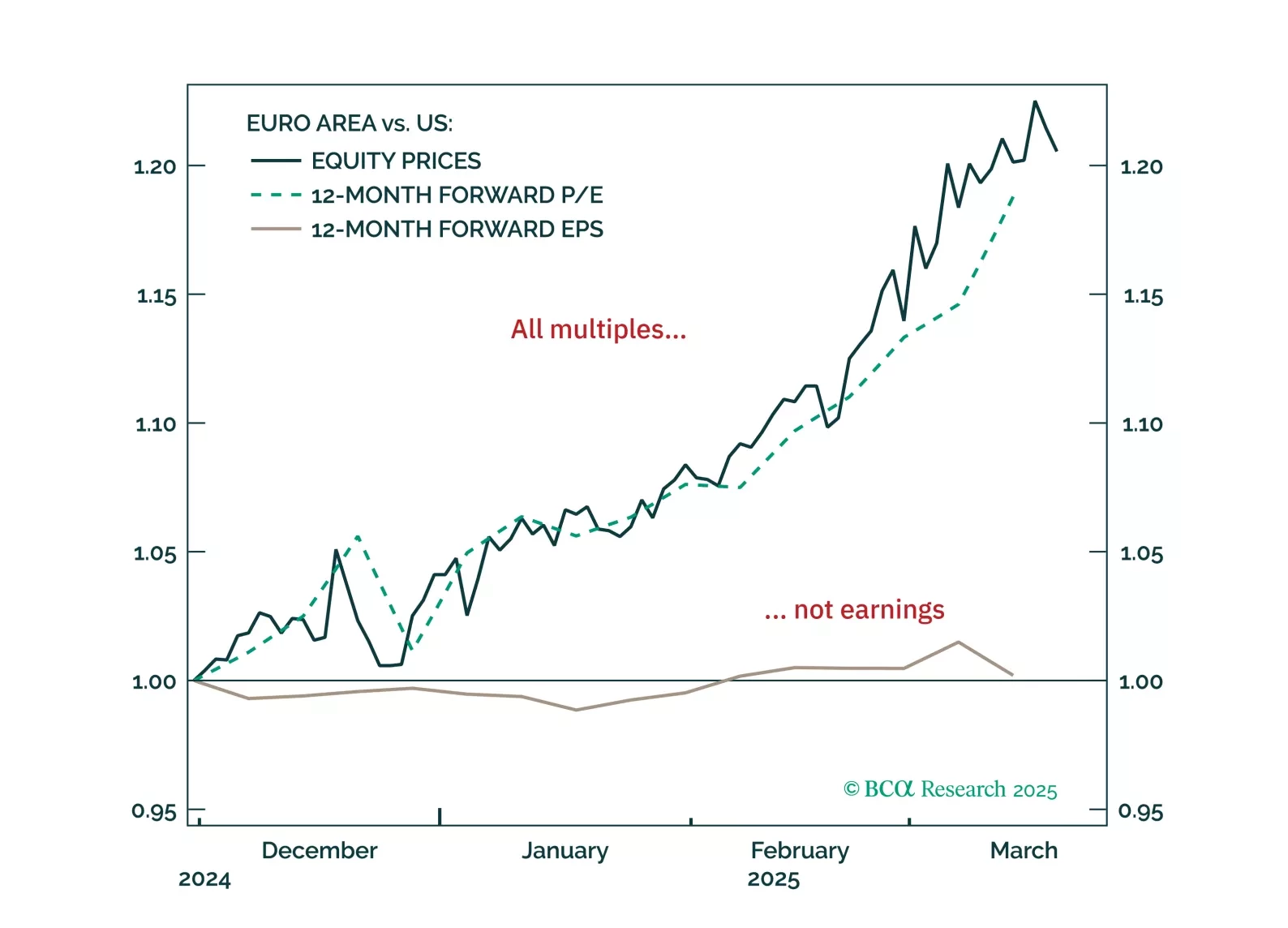
Investors see Europe as a museum: A continent stuck in the past, with no ability to innovate, much less generate profits. But is this view accurate? In this report we argue that the structural headwinds to European profitability are a thing of the past. Political change and improving sentiment are also a tailwind for Europe. Meanwhile, in the US, economic uncertainty brought about by Trump’s policies have reversed the surge in animal spirits that followed the election. All of this is happening within the context of weakening growth. We upgrade European equities from neutral to overweight and downgrade US equities from neutral to underweight.
Europe’s resilience to global liquidity deterioration isn’t a fluke—it signals a structural shift. Our latest report explains why the decline in precautionary money demand marks the end of Europe’s liquidity trap and what it means for investors.
This week, our three screeners cover equity plays in European Banks, US Financials, And US Stocks that are “Grave Diggers”.