Developed Countries
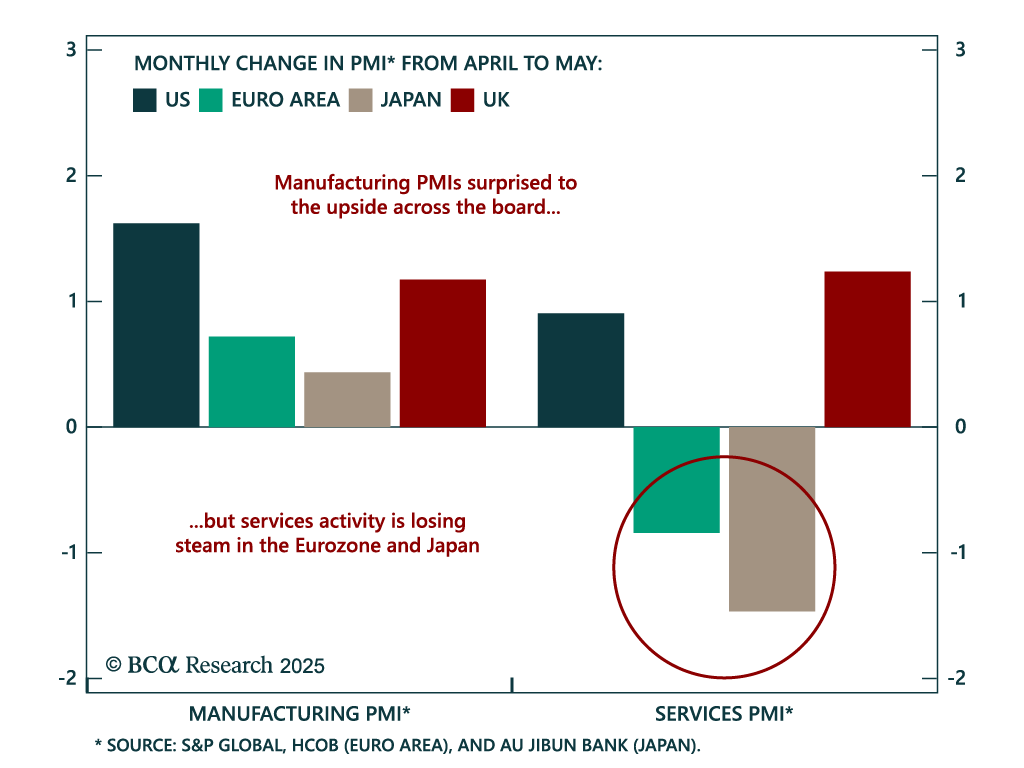
May PMIs confirm the improvement in confidence due to fewer concerns about US tariffs. Manufacturing flash PMI numbers showed resilience. The services activity PMI is more of a mixed bag.The US composite index beat estimates, increasing to 52.1 from 50.6,…
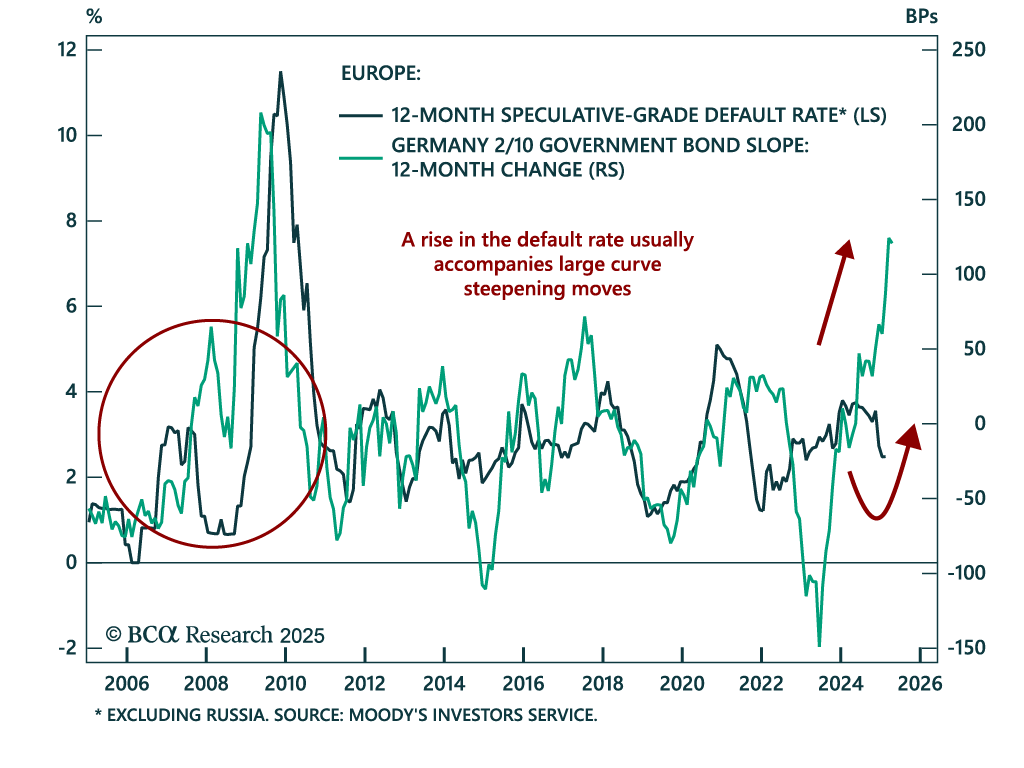
European corporate bond spreads have more room to narrow in the near term, but their next big leg is up. After a significant widening in option-adjusted spreads caused by stagflation fears in the US and “Liberation Day,” European spreads continue narrowing as…
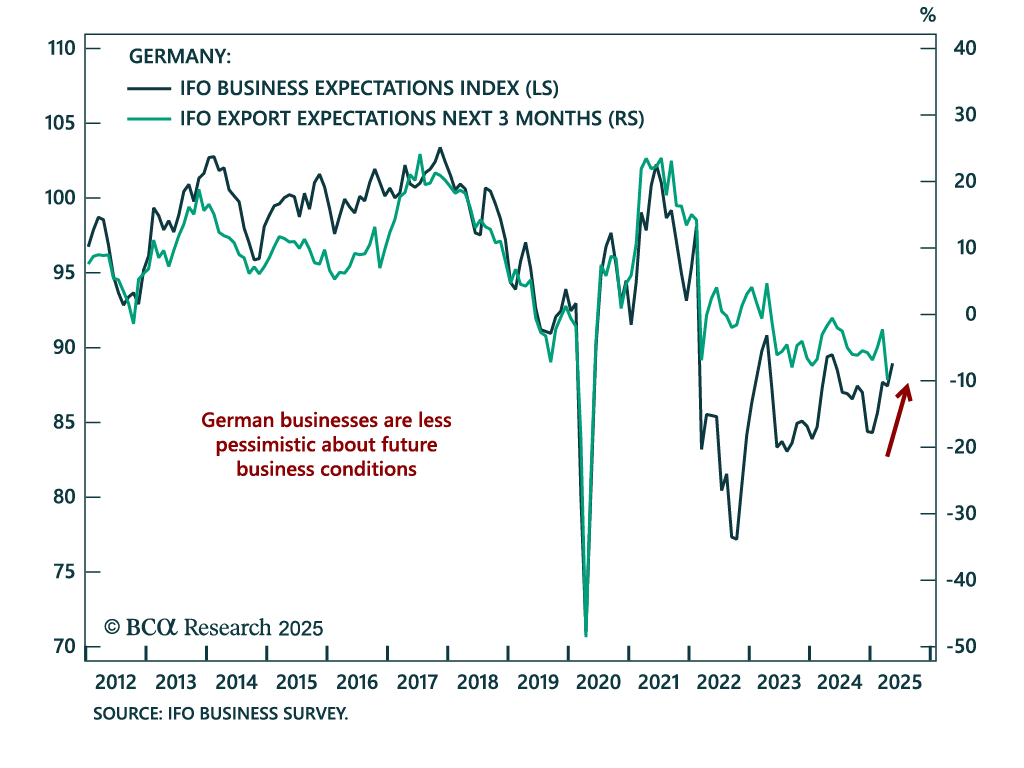
Business sentiment improved slightly in May, corroborating the message from other soft-data indicators of Eurozone business activity, which remain weak but are not plummeting. The increase in the future expectations index to 88.9 from 87.4 a month earlier…

Right now, the major stock and bond markets are more ‘anti-fragile’ than fragile, and the Joshi rule recession indicators signal that a US recession is not imminent. This justifies a neutral, or default, tactical weighting to both stocks and bonds until a major market does become fragile, or until recession risk elevates. The one major price trend that is fragile is the 65-day selloff in the US dollar, which justifies a tactical overweighting to the dollar.
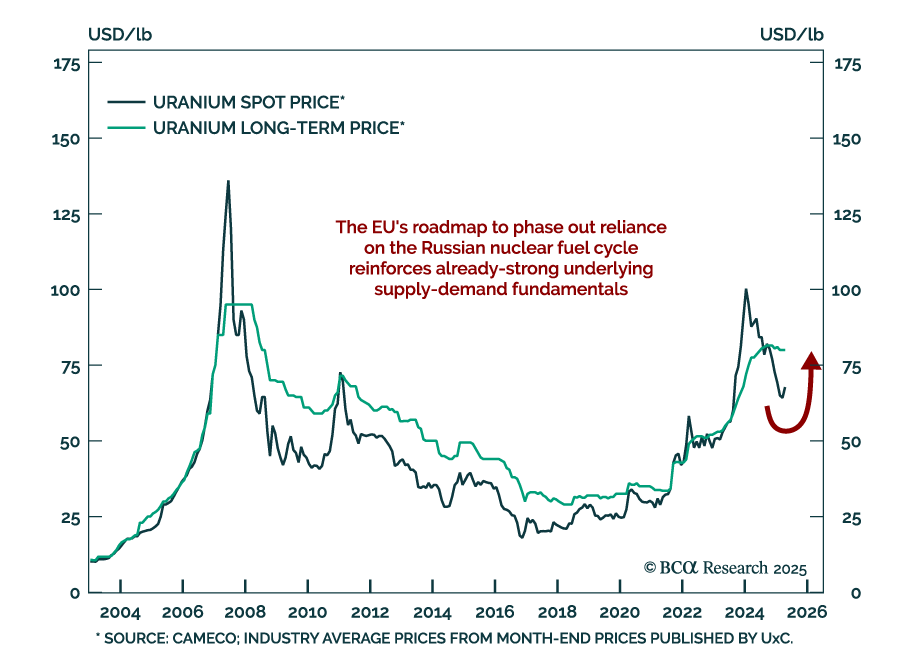
Uranium spot prices may have found a floor after falling to $64/lb from a $107/lb peak in February last year. This drawdown has been unexpected considering the strength of the underlying supply-demand fundamentals for uranium. The momentum remains positive.…
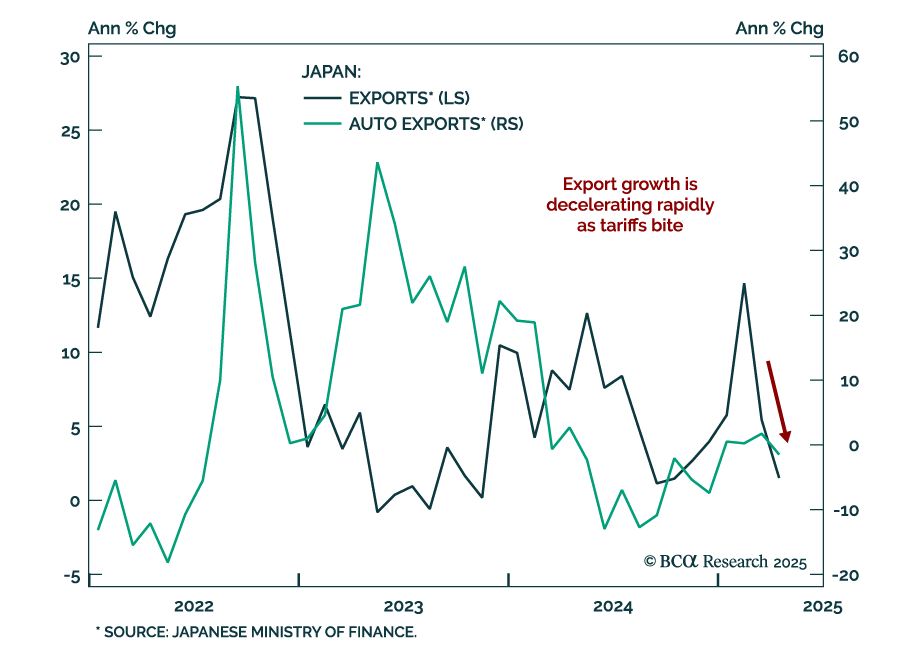
Japan’s export growth slowed materially in April as shipments to the US, Japan’s largest export destination, fell 1.8% from a year earlier. Japan has yet to make a trade deal with the US. Japanese export growth slowed to 2% from 4% in March, which aligns with…
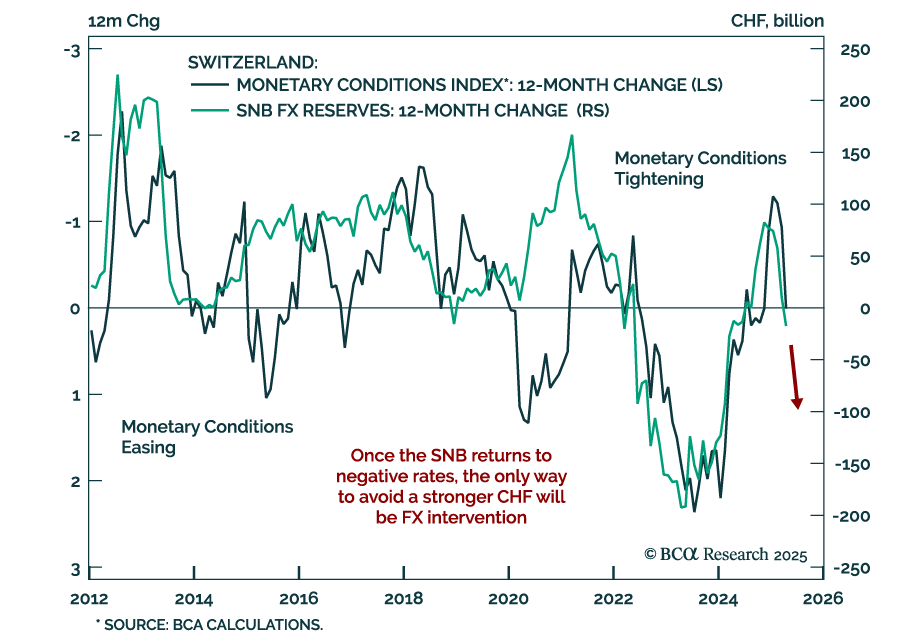
Swiss National Bank will have to resort to negative interest rates and FX intervention before year-end. Swiss inflation fell to 0% year-over-year in April, or the lower end of the SNB’s 0%-2% target range, and the continued strength in the Swiss Franc fuels…
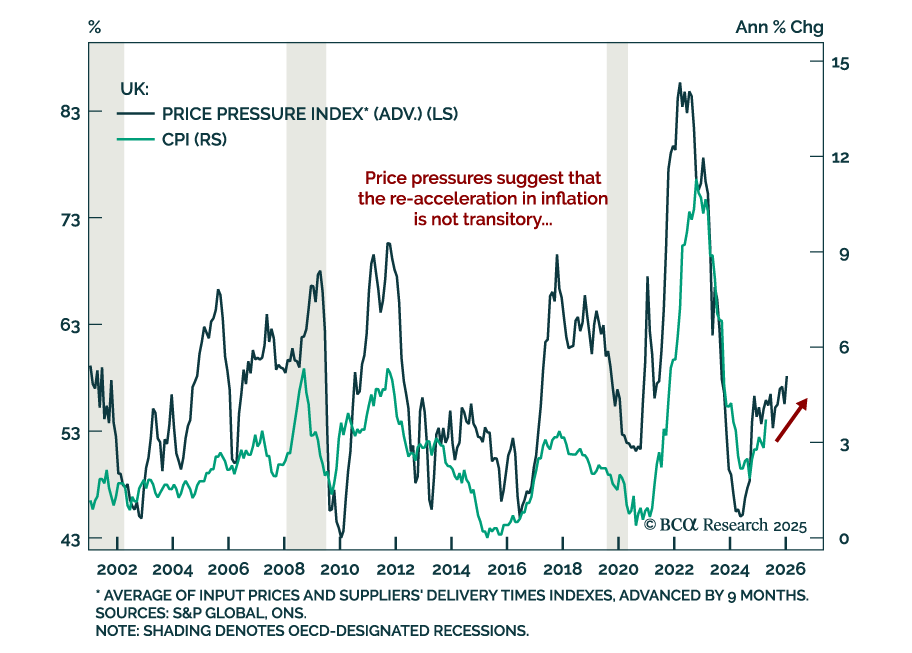
UK inflation surprised to the upside in April. Headline inflation rose to a 15-month high of 3.5%, from 2.6% the month before. Core inflation also surprised above estimates, printing 3.8% vs. 3.4% in March. Services inflation climbed to 5.4% from 4.7%. Higher…
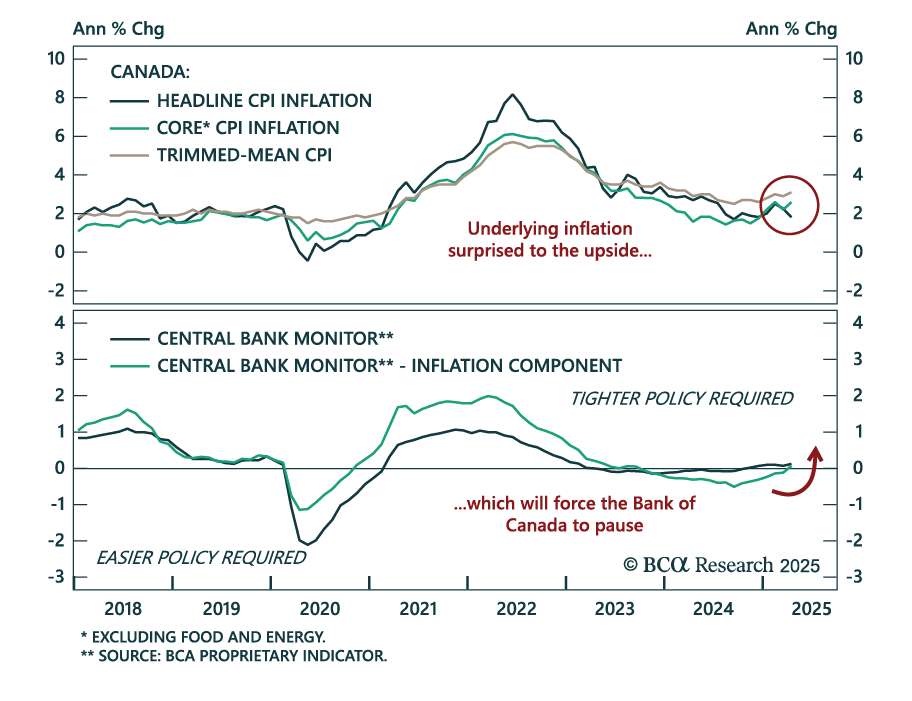
Although Canada’s headline CPI slowed to 1.7% y/y from 2.3% on Tuesday, most measures of underlying inflation surprised to the upside, thus raising the likelihood that the Bank of Canada (BoC) will stay put at its next meeting in three weeks. The material…
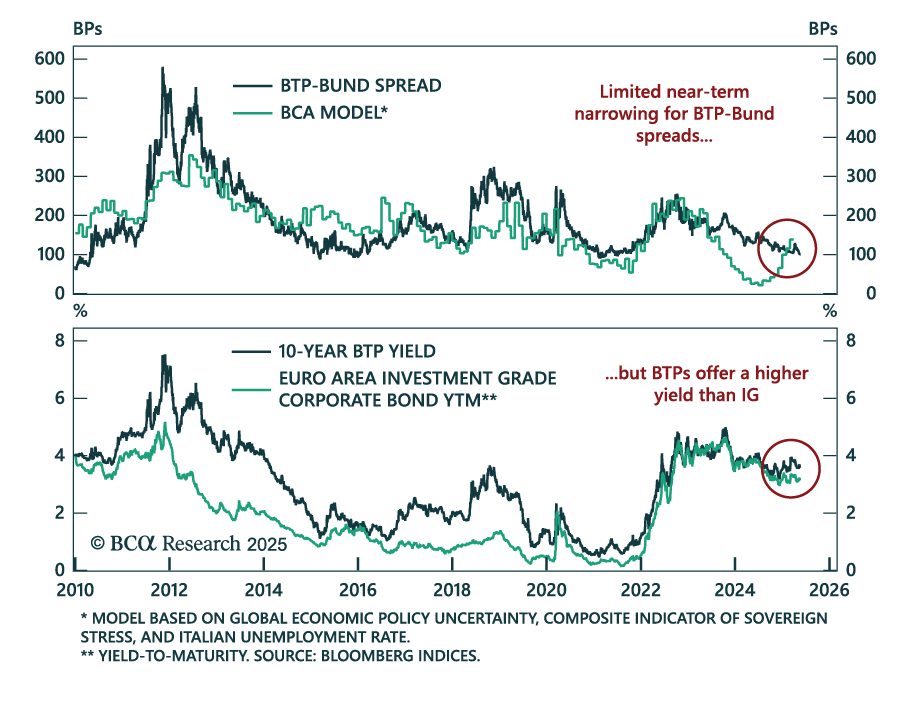
The European bond market is pricing in a more optimistic outlook. The BTP-Bund spreads have narrowed 30bps since April 9 and are now within reach of their pre-Ukraine war level. BCA’s European strategists do not share this optimism, at least not in the near…