Sorry, you need to enable JavaScript to visit this website.
Skip to main content

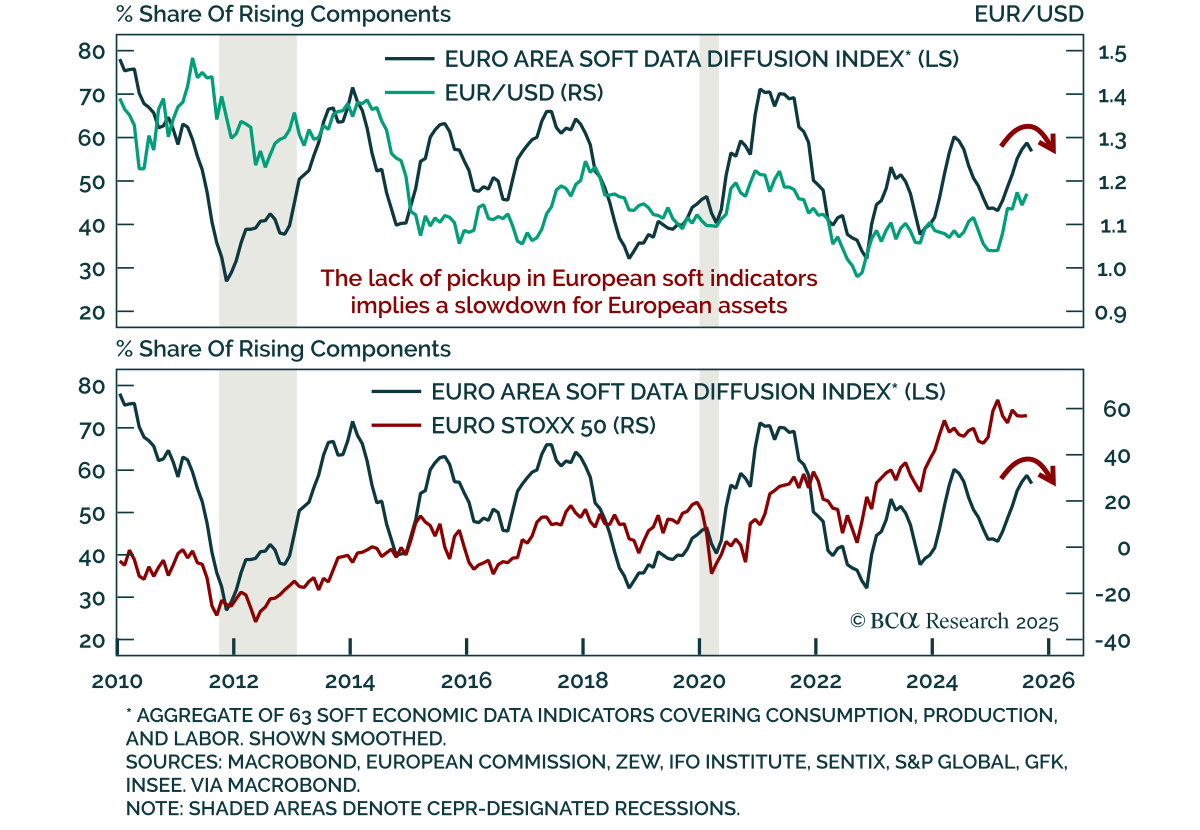
 The rebound in Eurozone sentiment is encouraging but headwinds persist, justifying a defensive stance on European assets. The May ZEW expectations index jumped to 11.6 from -18.5 in the Eurozone, with Germany’s gauge also rising to…
 Markets remain indifferent to soft data, but hard labor data still matters; a rise in jobless claims would offer a chance to extend duration. Survey-based indicators have collapsed, while hard data has held up, partly thanks to front…
Special Report Short-term pain from Trump-related concessions, fiscal tightening amid a US and Mexican slowdown, and rising labor slack will weigh further on Mexican assets. But long-run, policy direction will capitalize on the nearshoring trend…
Special Report It may take several months for the tariff shock and policy uncertainty to filter through the real economy, but survey-based data are already sending a warning. Equities have priced in a lot of good news, and investors are too…
The Fed held rates steady this afternoon, and the timing of its next move will be dictated by whether the tariff shock to inflation is transitory or more long lasting.
Hard aggregate macro data series remain solid, but surveys of businesses and consumers continue to worsen and the list of consumer-facing companies lowering earnings estimates gets longer by the week. We believe surging equities are…
 April’s Eurozone inflation data supports BCA’s bullish Bund stance and cautious view on EUR/USD. Headline HICP inflation held steady at 2.2% y/y while core ticked up to 2.7% from 2.4%. Services inflation rebounded to 3.9%,…
This year’s corporate bond sell off has hit high-yield more than investment grade, and high-yield spreads have turned relatively more attractive as a result.
 The Q1 US GDP contraction and inflation dynamics reinforce our defensive asset allocation. GDP missed estimates and contracted -0.3% annualized, led by a sharp slowdown in net exports. Consumption slid to 1.8% from 4.0%, reflecting…
US Treasuries typically outperform both equities and global government bonds during downturns. Recent political shifts could lessen that outperformance this cycle, but we doubt it will disappear completely.