Climate Change
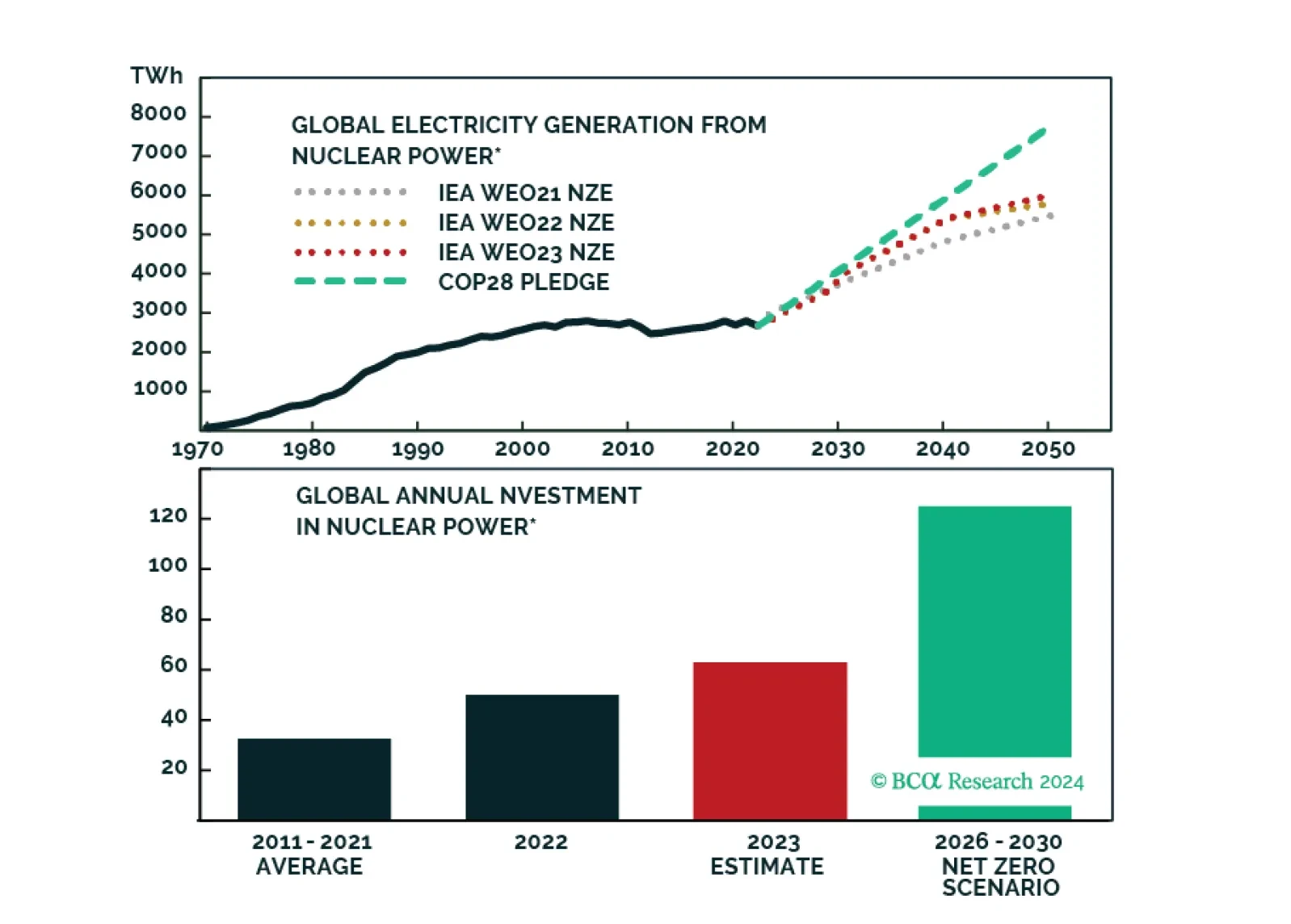
BCA Research presents a limited monthly special series about the Nuclear Renaissance.
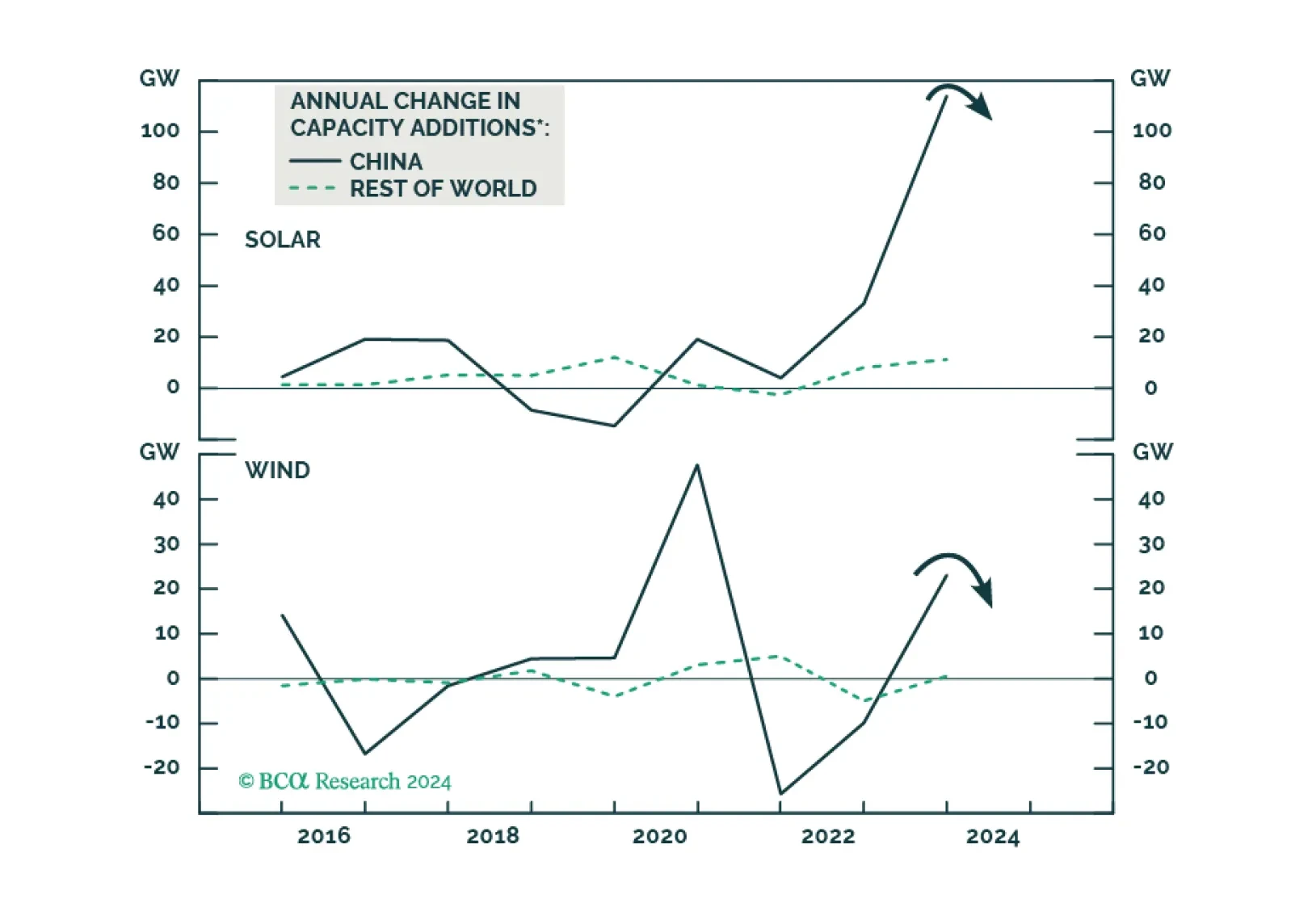
The global green energy rush faces mounting headwinds. Additional global solar and wind capacity installations will have considerable growth reduction this year. Copper prices did not drop much in 2023 due to surging demand from green power build-up. Green power will be less positive for copper demand in 2024 than in 2023. We expect more downside in global renewable energy stocks.

The EU’s transition to a carbon tax launched this week via its Carbon Border Adjustment Mechanics (CBAM) will lead to higher inflation in the medium term (3 – 5 years out), and will stoke consumer (i.e., voter) antipathy if it becomes effective in 2026. As a result, the tax will be watered down. Food and energy prices are particularly at risk, as imported fertilizers, and electricity-generation and -transmission components made from steel and aluminum are affected by the CBAM. We remain long oil, gas and metals equity exposure via the XOP, XME and COMT ETFs. We also remain long gold to hedge inflation.

Carbon credits as an asset class are becoming increasingly investable. Given that the structural bull case for this asset class is compelling, strategic investors should long carbon credits. However tactical investors should book profits or consider merits of a short position, since prices are likely to correct over the next 12-24 months.
Global oil demand growth is tracking with our estimate of ~ 1.8mm b/d for this year. Supply discipline is being maintained by OPEC 2.0, where the core (KSA and the UAE) and Russia have reduced production by ~ 240k b/d yoy in 1H23. In addition, KSA extended its unilateral production cut of 1mm b/d from July into August. We expect inventory draws in 2H23 as supply stays below demand. Our Brent forecast remains unchanged at $92/bbl this year, and $120/bbl next year. We remain long the COMT and XOP ETFs.
Markets continue to be tossed to and fro by central-bank policy, and risks of higher commodity prices. These are due to fiscal stimulus and exogenous weather and war-related risk, which could send food and energy prices higher this winter. We remain long gold outright, energy and metals producers via the XOP, XME and PICK ETFs, direct commodity exposure via the COMT ETF, and futures exposure to backwardation in copper (long 4Q23 copper futures vs. short 4Q24 copper futures).
We are strategically bullish on the outlook of the energy sector. Domestic and external political constraints asserted themselves, restraining the most negative impulse against this sector by the Biden administration. Go long energy versus cyclicals (ex-tech).
The initial phase of the EU’s ambitious CBAM will launch 1 October and will begin collecting a carbon tax in 2026. Between now and then, it will be challenged as it attempts to put a price tag on CO2 emissions as imports cross the EU border. The CBAM will impart an inflationary bias in EU commodity and goods markets as 2026 draws near and importers have to secure EU ETS credits, the number of which, by design, will contract over time.
Innovative Tech will face macroeconomic headwinds in a new “higher for longer” interest regime. Yet, the long-term opportunity of the cohort is tremendous. Investors need to be judicious with the timing of adding new capital to these themes to bolster long-term returns.
What is the outlook for the European housing market amid rising mortgage rates and the energy crisis? Does housing represent a systemic risk? Can households weather the storm? And what are the opportunities, if any?