Sorry, you need to enable JavaScript to visit this website.
メインコンテンツにスキップ
メインコンテンツにスキップ

Inflation/Deflation

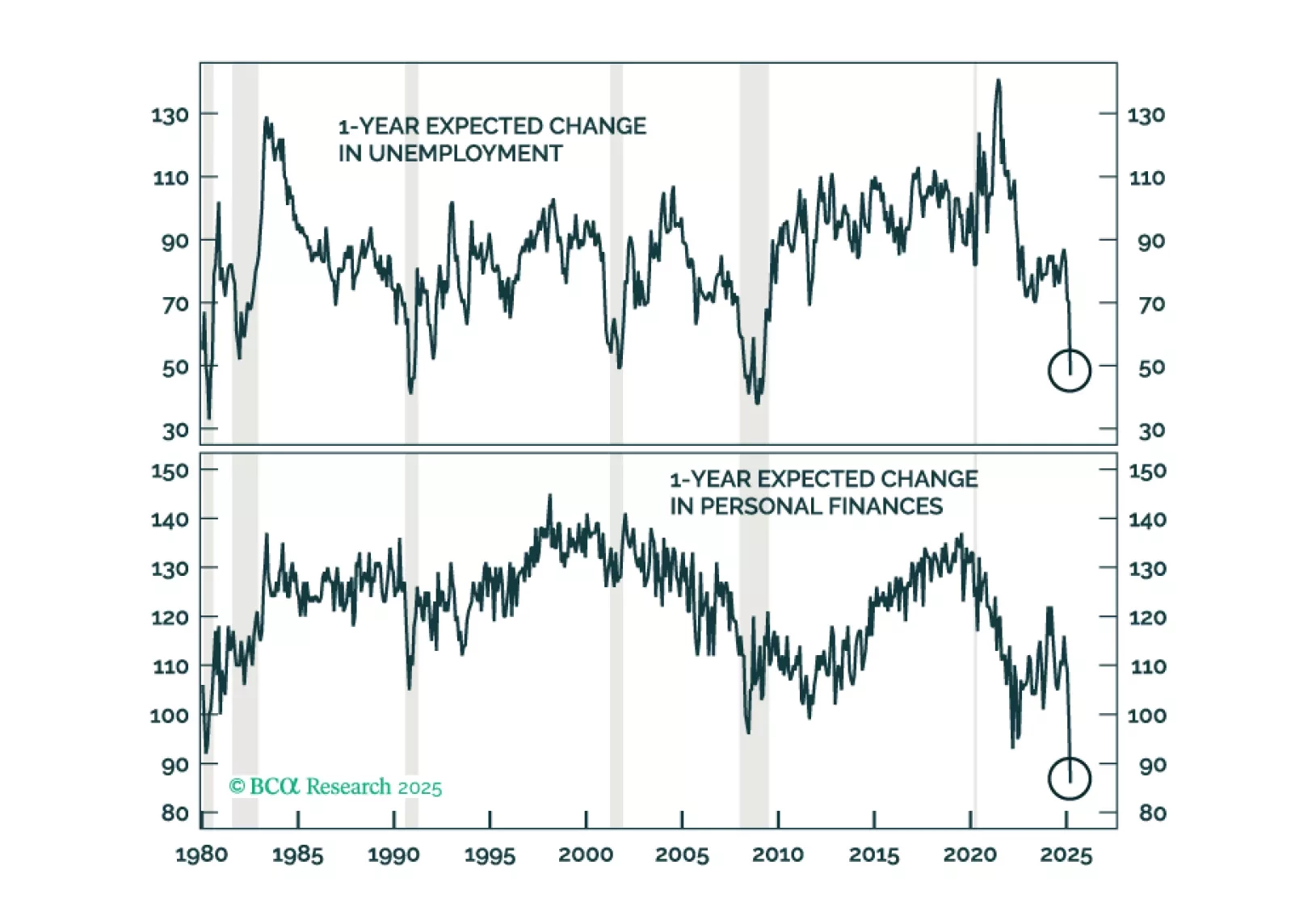
The sharp drop in consumer sentiment and rise in inflation expectations reinforce our defensive positioning and preference for long-duration bonds. The preliminary April University of Michigan Consumer Sentiment Index fell to 50.8 from 57.0 in March, missing…

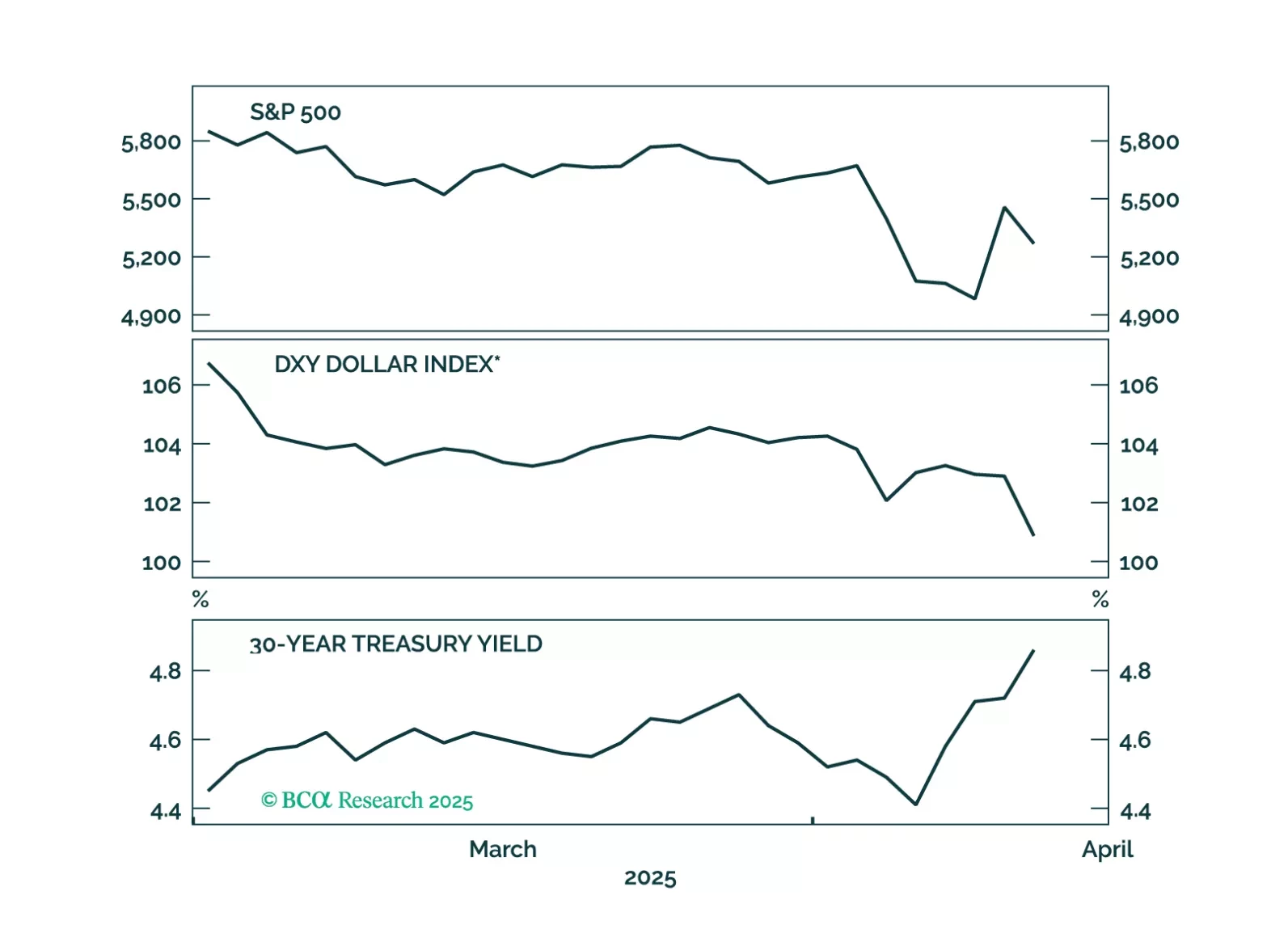
The combination of dollar weakness and rising US yields suggests global investors are questioning the safe-haven status of US Treasuries.
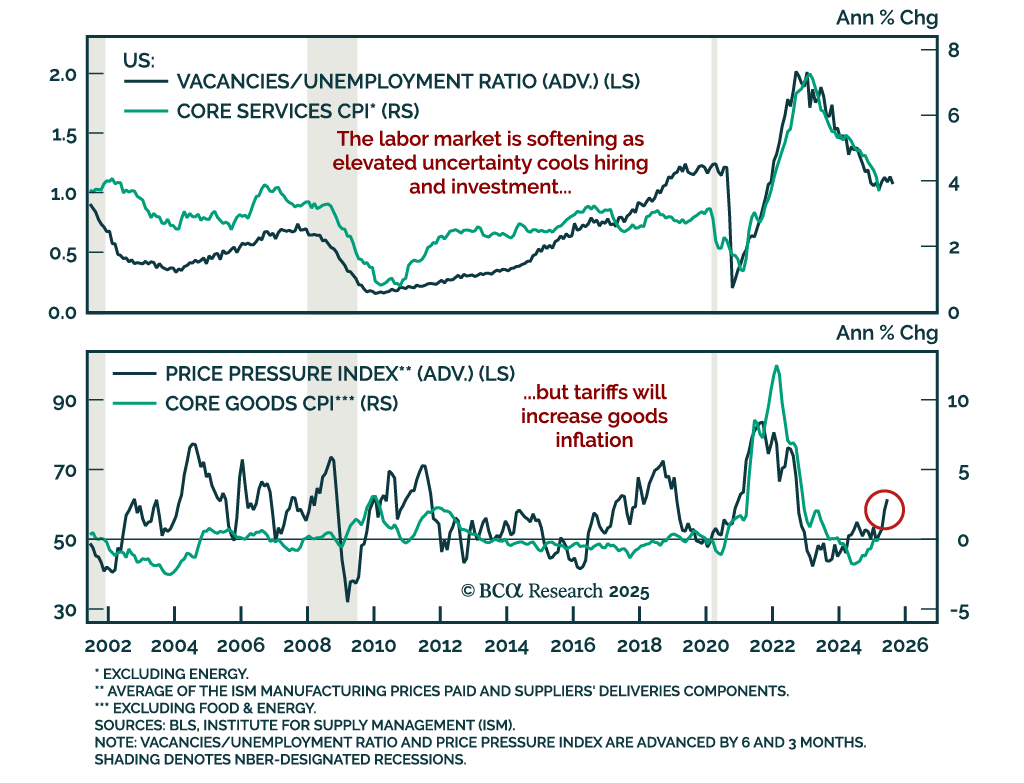
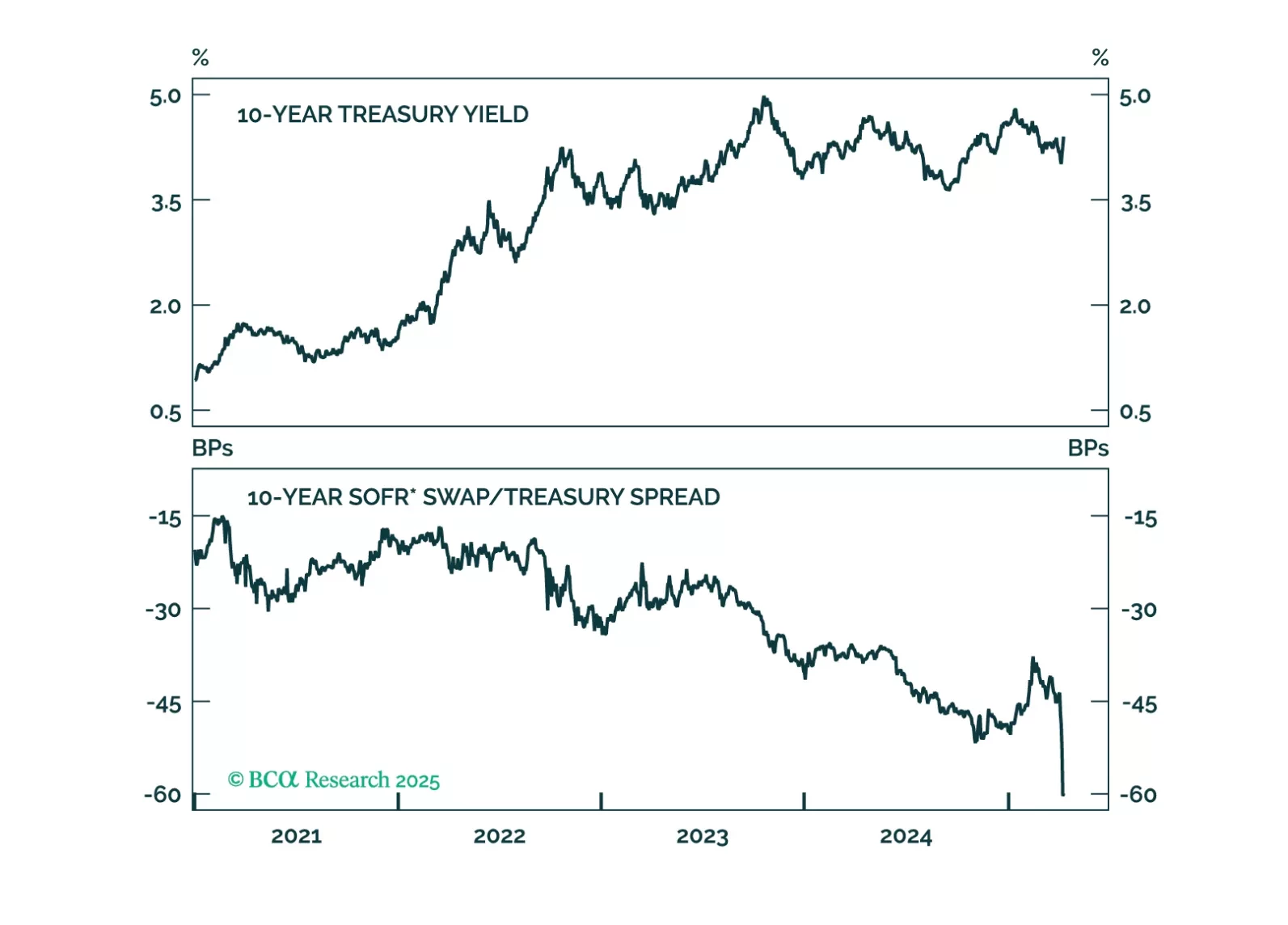
March’s cooler CPI print reinforces our defensive positioning as it points to softening growth that the Fed cannot address yet. Headline CPI came in at -0.1% m/m (2.4% y/y), and core rose just 0.1% m/m, slowing to 2.8% y/y from 3.1%. Core services inflation…

Our Portfolio Allocation Summary for April 2025.
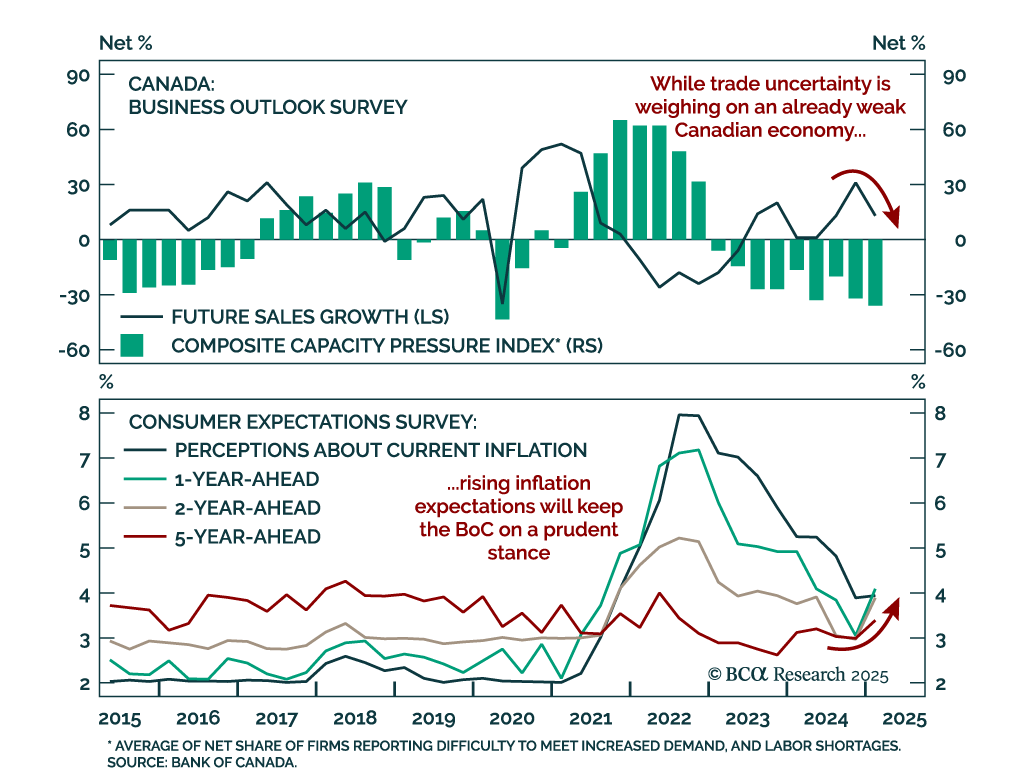
Canada’s difficult macro outlook is already priced, supporting a neutral stance on Canadian government bonds within a global fixed-income portfolio. We continue to recommend a small long CAD/USD position, where bad news is well priced and the reward-to-risk…

ポストCOVIDの景気拡大を支えた景気刺激策は5年を経て勢いを失い始め、経済は自然に発生する景気後退の方向に向かっていました。DOGEと多方面にわたる貿易戦争がそのタイムテーブルを前倒しした今、我々は改めてリスクオフの推奨を表明します。
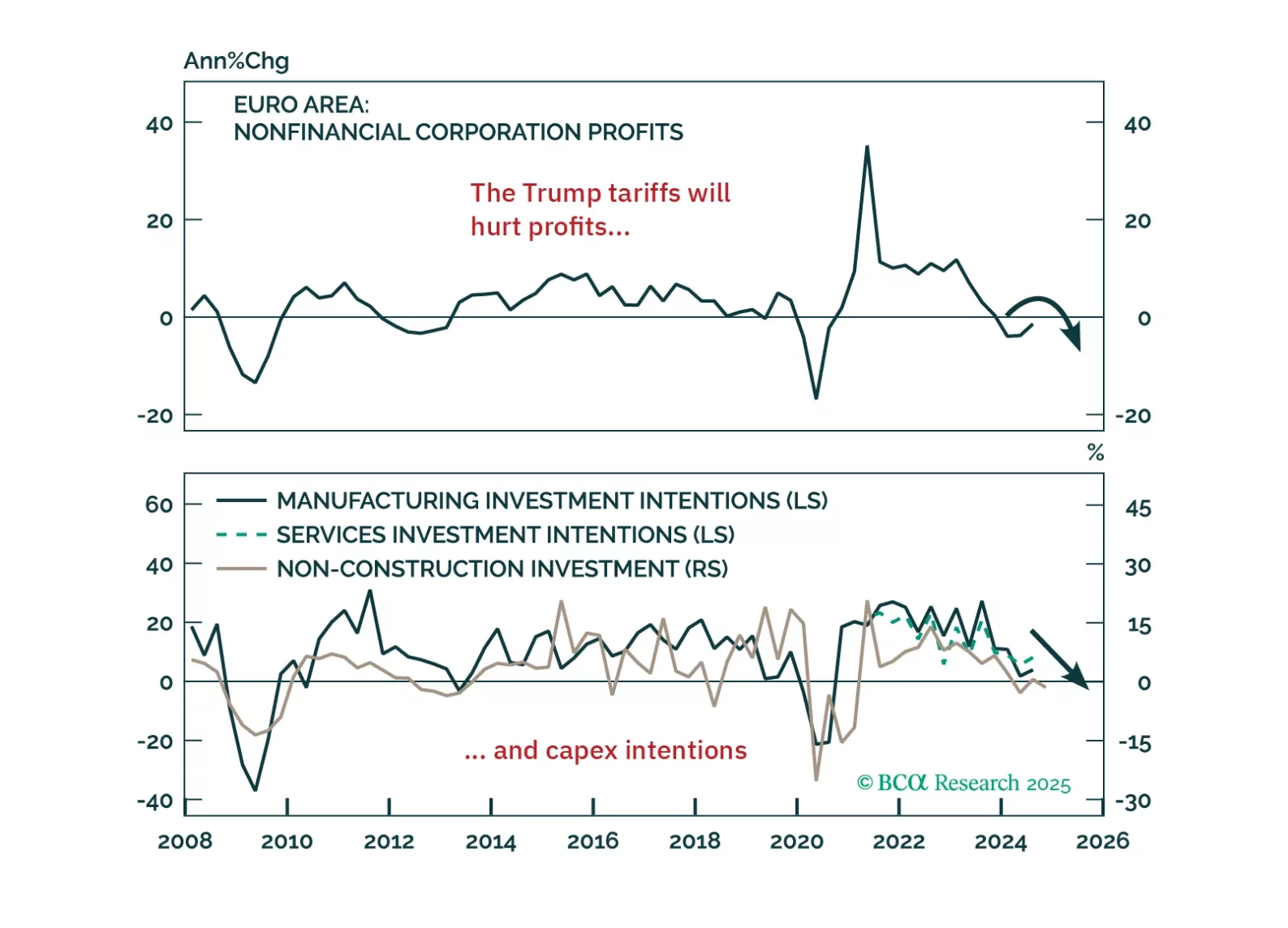
Trump’s tariff shock will push Europe into recession — but it’s also triggering a powerful integration response. In this report, we lay out the tactical case for staying defensive and the structural case for going long European assets when the dust settles.
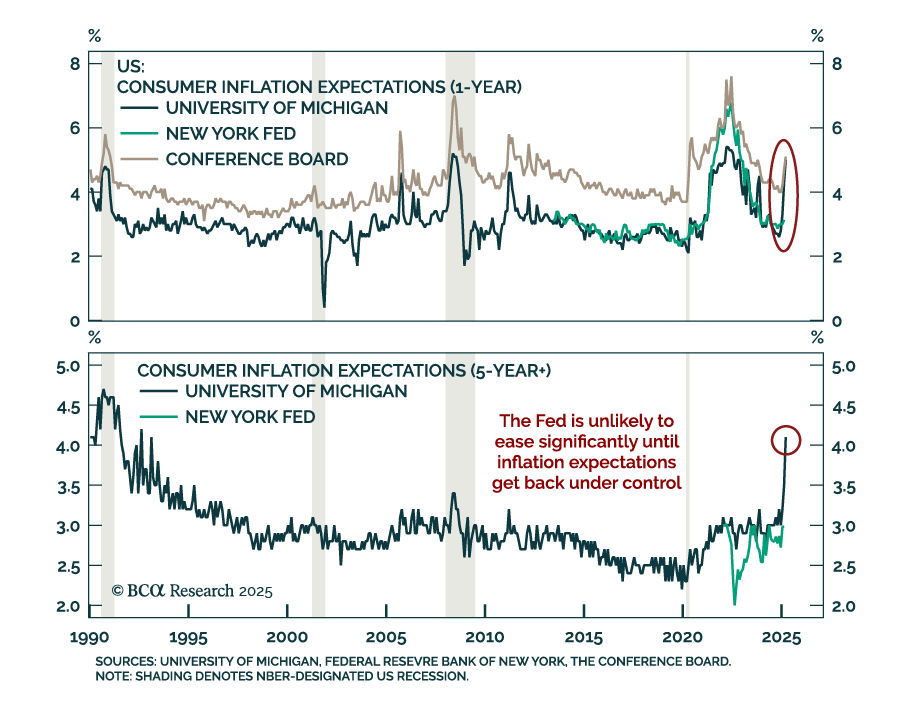
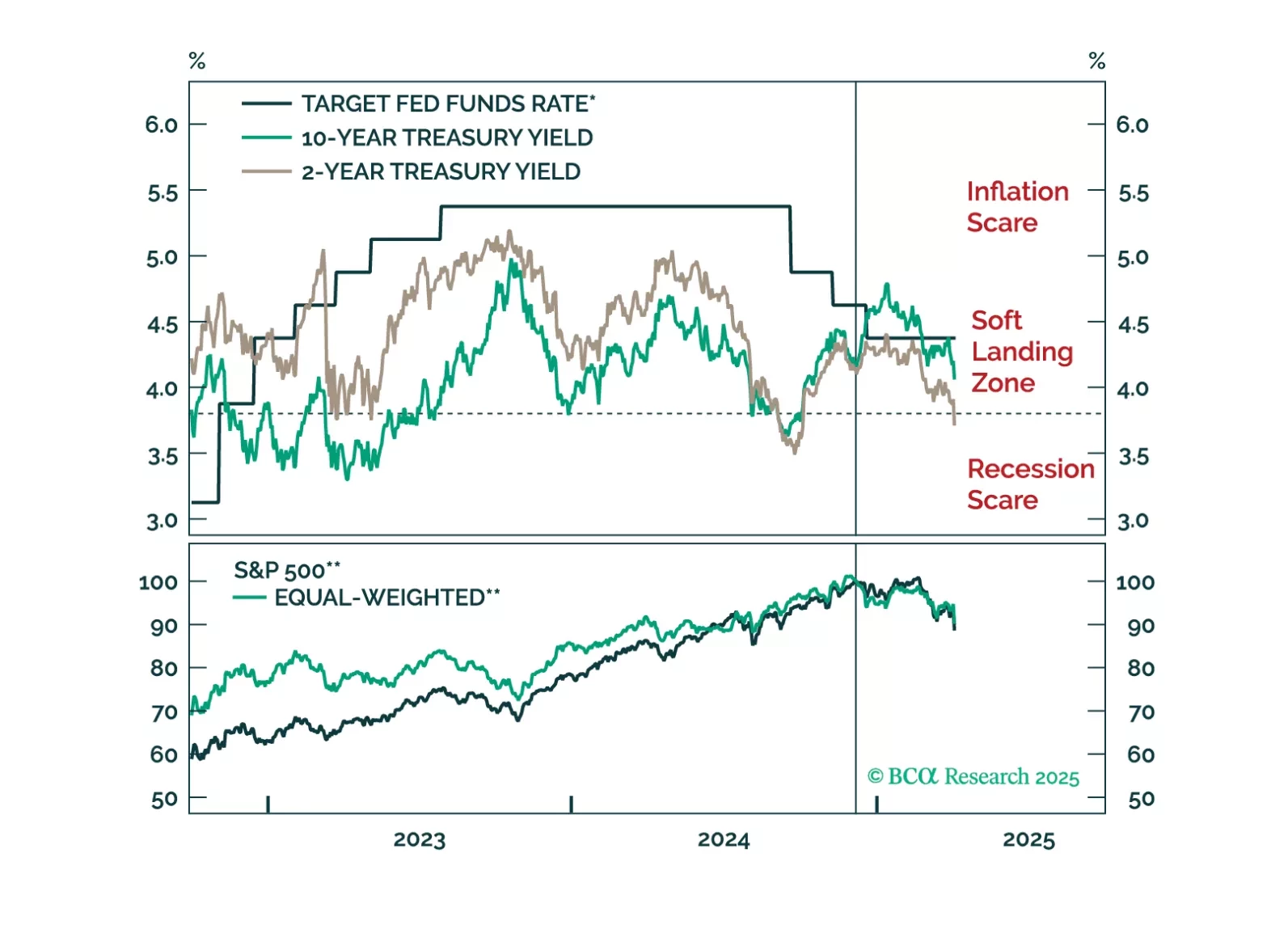
With both the Trump and Fed puts drifting lower, we reiterate our above-benchmark duration stance within a government bond overweight and favor Treasury curve steepeners. If the Trump put’s strike price is declining (See The Numbers), Friday’s remarks by Fed…
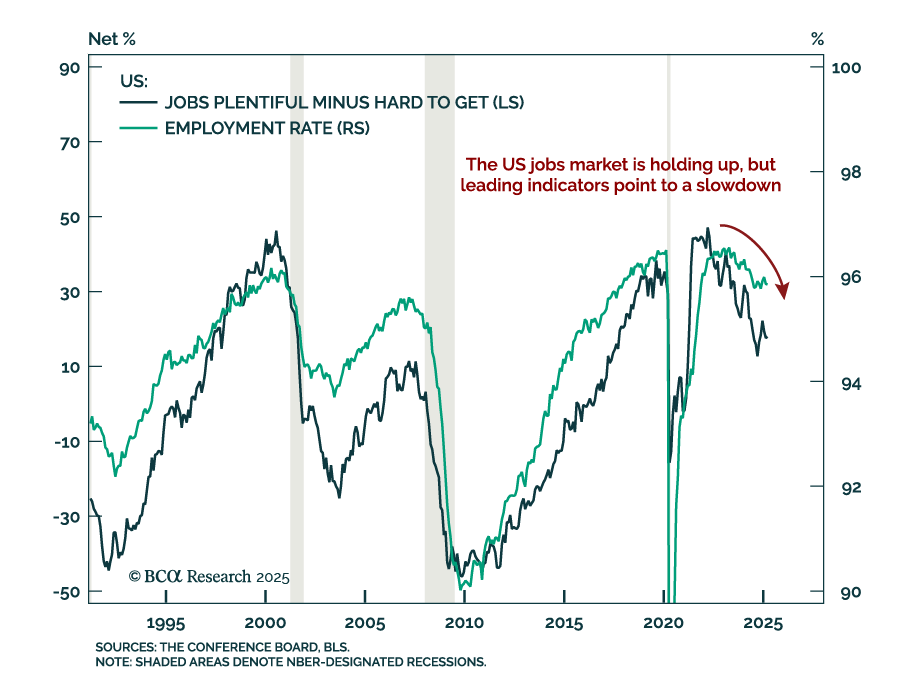
We reiterate our defensive global asset allocation, as risk assets face an asymmetric outlook whether growth slows or re-accelerates. The March US jobs report came in stronger than expected, with payrolls rising by 228k. However, the three-month moving…

The March employment report showed strong job growth, but the labor market remains in a fragile state and the demand shock from tariffs could be the catalyst that tips it over the edge into recession.