Sorry, you need to enable JavaScript to visit this website.
Skip to main content

Equities

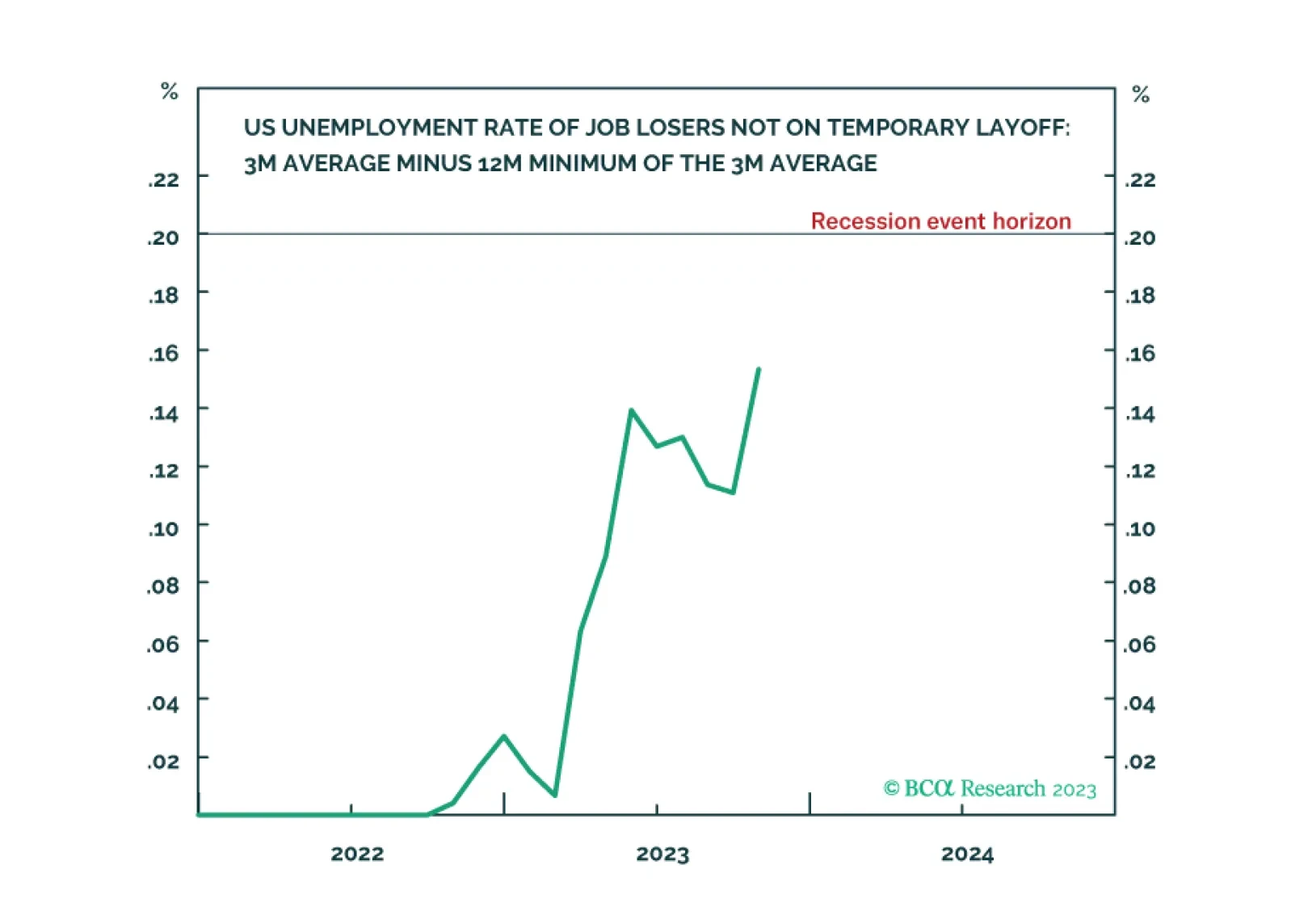
In Section I, we respond to the ongoing challenge to our view that the US economy is on a recessionary path. The available evidence overwhelmingly supports the notion that US monetary policy is tight, which argues against the “no landing” economic scenario. It also underscores that the recessionary clock is indeed ticking unless the monetary policy stance eases soon. The “soft landing” narrative remains improbable and may have been unduly boosted by artificially low inflation readings over the summer. Until concrete signs of the meaningful rate cuts emerge, we will continue to recommend that investors maintain defensive portfolio positions. In Section II, we review the “modern-day” Phillips Curve, and explain why it is unlikely that the Fed will see a sustainable return to its 2% target without a rise in the unemployment rate above NAIRU.

Stocks should continue to rally in the near term, but investors should prepare to turn more defensive towards the end of the year in advance of a recession in 2024.

US Q2 GDP growth was revised down from 2.4% to 2.1% on a quarterly annualized basis, only slightly above Q1 growth of 2.0%. Although consumption was revised up by 0.1 percentage points to 1.7%, business spending grew at a slower pace than initially reported…
Consensus expectations for the US economy were bleak at the start of the year. In hindsight, this pessimism was excessive: real GDP expanded in the first two quarters of the year (see Country Focus). Similarly, the US Conference Board’s Coincident Economic…
After having sold off in the first five months of the year, the performance of small-cap stocks improved in June and July with the S&P 600 index gaining 13.9% in those two months. A broadening of the US equity rally – which earlier in the year was…

The stock market’s pre-eminent growth sector is not US tech, it is French luxuries. No other sector can compare with French luxuries’ massive and sustained pricing power. The risk for French luxuries is not a China slowdown, the risk is that the structural increase in super-wealth comes to an end. If anything though, the coming disruption from generative AI will boost super-wealth. Ironically therefore, the best investment play on generative AI might be French luxuries.

The Eurozone's economy remains soft. Yesterday we highlighted that M3 money supply fell by 0.4% y/y in July, a rate unseen since 2010. This decline was driven by a slowdown in private sector bank lending, which confirms broad economic weakness. Notably, the…
In a recent report, BCA Research’s Global Asset Allocation service updated its long-term return assumptions for a wide range of public and private assets. While still lower than the historical returns, the team’s projected returns are slightly higher than…

Investors should underweight global equities and risk assets; overweight US stocks relative to global; and overweight defensive sectors versus cyclicals.

A global portfolio is likely to return only 5.3% a year over the next decade, compared to 6.7% in the past. Investors either need to lower their return expectations, or take more risk. Our total return methodology remains consistent with previous editions, with changes limited to the Alternatives section.