Developed Countries

The NFIB Small Business Optimism (SBO) index climbed from 90.5 to 91.5 in June, the highest print this year, topping consensus expectations of a softening to 90.2. On the surface, this appears to be good news. Indeed, small businesses are particularly…
US Core CPI inflation has decelerated considerably from its year-over-year peak of 6.6% in September 2022 to 3.4% in May and the consensus expects it remained at 3.4% in June. The year-over-year number has come down continuously, albeit fitfully, over the…
According to BCA Research’s Counterpoint service, the sharp underperformance of the French stock market over political uncertainty is irrational, given the CAC 40’s limited exposure to French domestic economics and politics. A third of the CAC 40’s market…
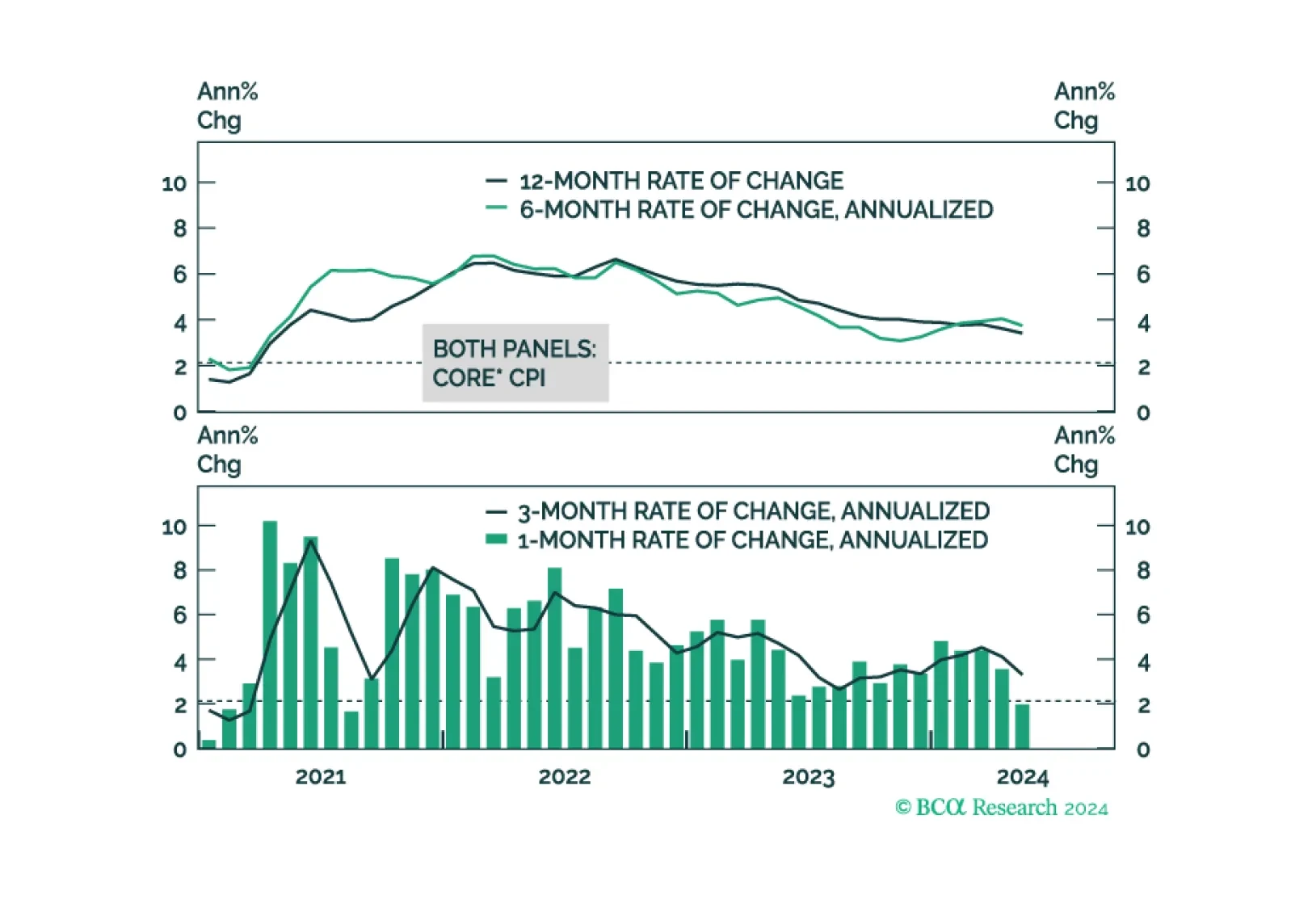
We consider the outlook for CPI inflation over the next 12 months. Our baseline forecast calls for core CPI to hit 2.40% during this timeframe and for headline CPI to fall between 1.74% and 2.49%.
Our US Investment strategists define excess savings as the difference between what households saved beginning in March 2020 and what they might have saved had the pandemic not occurred. To estimate the latter, they assumed that disposable income would have…
Our US Investment Strategy colleagues have kept a close eye on excess savings and their disposition since the CARES Act funds began to flow in the spring of 2020. Their conviction that the consensus failed to recognize the consumption potential inherent in…
Participants in the Philly Fed’s Survey of Professional Forecasters (SPF) assign a 26% probability to a contraction in US real GDP four quarters from now, down from their 44% peak probability in 2022. The unwieldy contraction-in-four-quarters wording makes…
According to BCA Research’s US Equity Strategy service, post-GFC US equity outperformance can be attributed to a perfect storm of advantageous policies and a human capital edge. The topic of American exceptionalism is hotly debated in the wake of the…
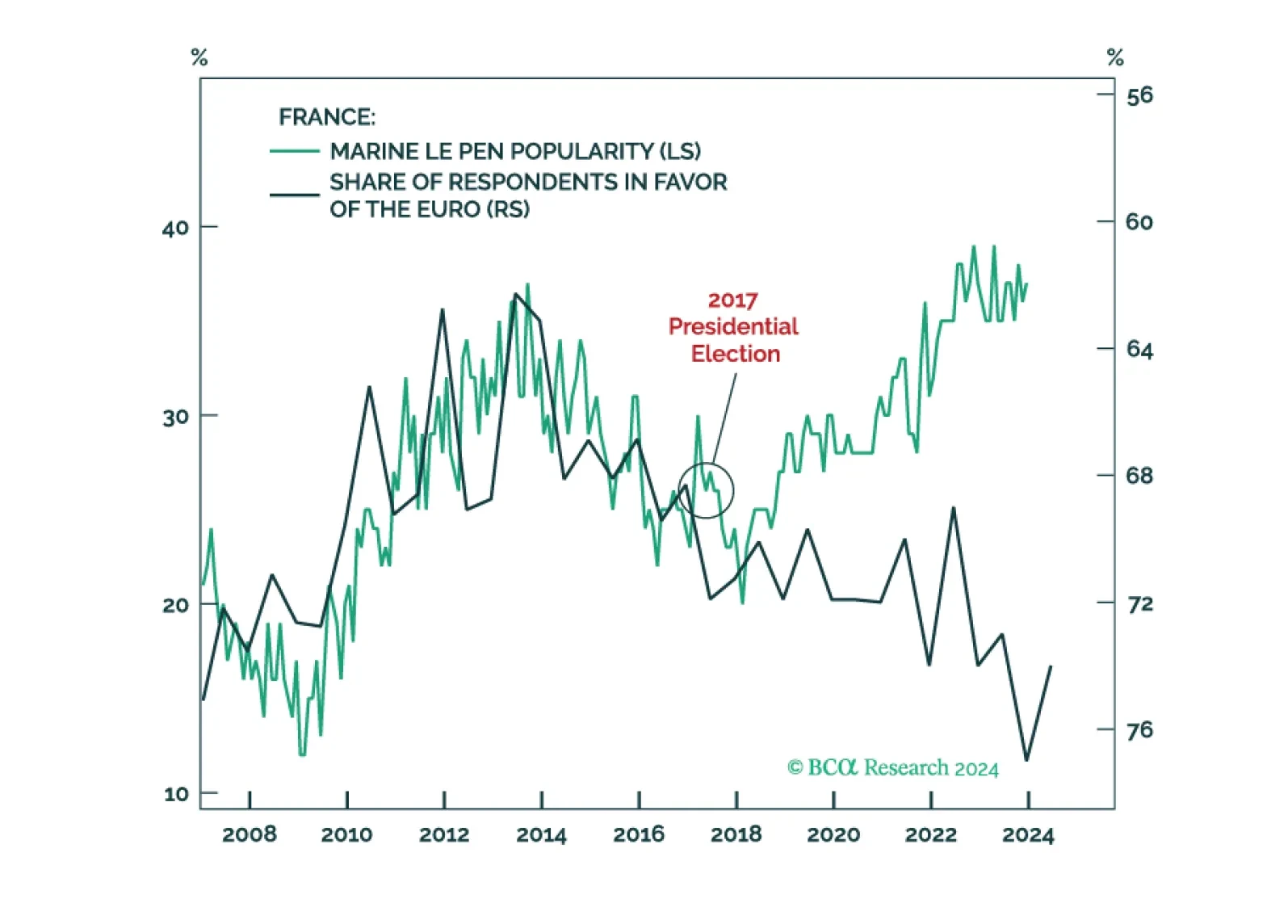
Investors in European sovereign bonds should find solace that continental voters are not turning away from support for EU integration. As such, populist parties are not really that “far” left or right. And as long as they want to maintain popular support, they will have to abide by the fiscal rules imposed by Brussels. No such supranational constraint exists in the U.S., the real risk for global bond operators.
Second-quarter earnings season unofficially kicks off before the open on Friday, when Citigroup (C), JPMorgan (JPM) and Wells Fargo (WFC) report their results for the June 30 quarter. Bank of America (BAC), the other commercial banking behemoth, will round…