Currencies
Turkey’s financial policymakers have pursued a disciplined and restrictive policy mix so far, delivering high real interest rates and curbing fiscal expansion even as the economy slows. This commitment to inflation control has paved the way for a pronounced decline in price pressures, prompting BCA’s Emerging Markets Strategy team to upgrade Turkish domestic bonds to overweight in its EM domestic bond portfolio. Similarly, Moody’s has recently upgraded Turkey’s credit rating and outlook. The lagged effects of the restrictive stance are now increasingly evident: real bank lending rates hover near 30%, real domestic demand growth is decelerating, and fiscal expenditure increases are barely keeping pace with inflation. Collectively, these conditions point to further disinflation and declining bond yields in the coming quarters (Chart 1).From an FX strategy perspective, the Turkish lira (TRY) presents a less precarious profile than many fear and what the forward markets currently imply.First, the current account deficit has narrowed considerably in recent years. As tight policy weighs on domestic demand, it will further curb goods imports and keep the current account deficit in check (Chart 2). This improvement should offset much of the expected export contraction due to slowing demand from the European manufacturing sector, reducing pressures on the lira from external balances. Second, the combination of receding inflation and very high nominal yields creates a compelling environment to attract sizable foreign portfolio flows into local currency debt. With foreign ownership of Turkish domestic government bonds currently low by historical standards, there’s significant room for new inflows (Chart 3). As such, the TRY depreciation over the next year will likely fall well short of the 26% pace currently implied by forward markets vis-à-vis the USD. Historically, periods of falling inflation have coincided with slower lira depreciation (Chart 4). A weaker trade-weighted US dollar could reinforce this trend, further curbing pressure on the currency. In this context, short-end local currency bonds are becoming increasingly attractive to global investors.Bottom Line: Falling inflation and a narrow current account deficit in Turkey have historically gone hand-in-hand with a less vulnerable currency. This time should be no different: the pace of the lira’s depreciation against the US dollar will likely ease in the coming months.
Our DM ex. US strategists see the yen entering a multi-year rally and recommend shorting EUR/JPY now while preparing to short USD/JPY as Fed cuts approach. The yen remains deeply undervalued across PPP, unit labor cost, and real trade-weighted metrics, near…
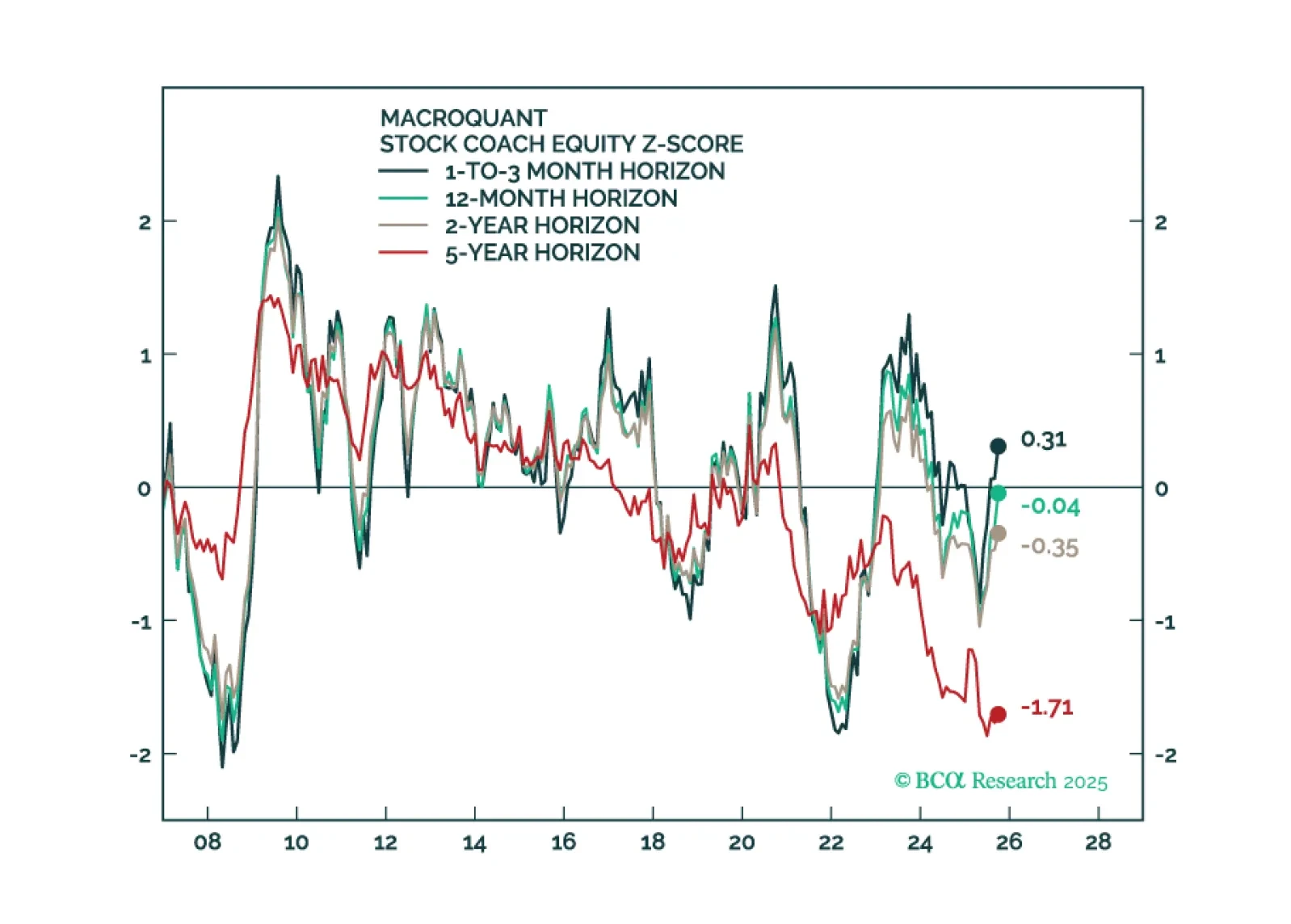
MacroQuant is recommending that equity investors keep their finger near the eject button but avoid pressing it for now. The model is warming up to the dollar again and sees scope for oil prices to rise.
The yen’s discount, surplus, and rising real rates line up for a multi-quarter surge. Find out why EUR/JPY is the first short and when USD/JPY follows.
BCA’s US Political strategists warn that Russia presents an immediate market risk, with near-term pullbacks offering potential buying opportunities. President Trump is pivoting toward ceasefires and trade deals, supported by approval ratings and electoral…
EUR/USD has broken below key support, and near-term risks justify a tactical bearish stance while longer-term investors should buy dips. The pair fell through its 50-day moving average, which, along with the 20-day, had provided steady support since…
The US-EU trade deal lifts uncertainty but imposes high tariffs, weighing on the EUR and supporting our long USD positioning. The agreement includes a 15% tariff on all EU exports to the US, including cars and potentially, pharmaceutical products,…
Our strategists recommend shorting EUR/JPY, citing stretched valuations and rising reversal risks. The cross has surged more than 6% since late May, triggering new short positions from the Counterpoint, European Investment Strategy, and Global Investment…
We apply a systematic approach to investing based on economic, inflation, and monetary policy surprises to the foreign exchange market. The signals from this framework are broadly consistent with the tactical views of our FX strategists, which anticipate a pause in the USD’s decline and a partial reversal of the recent euro strength.
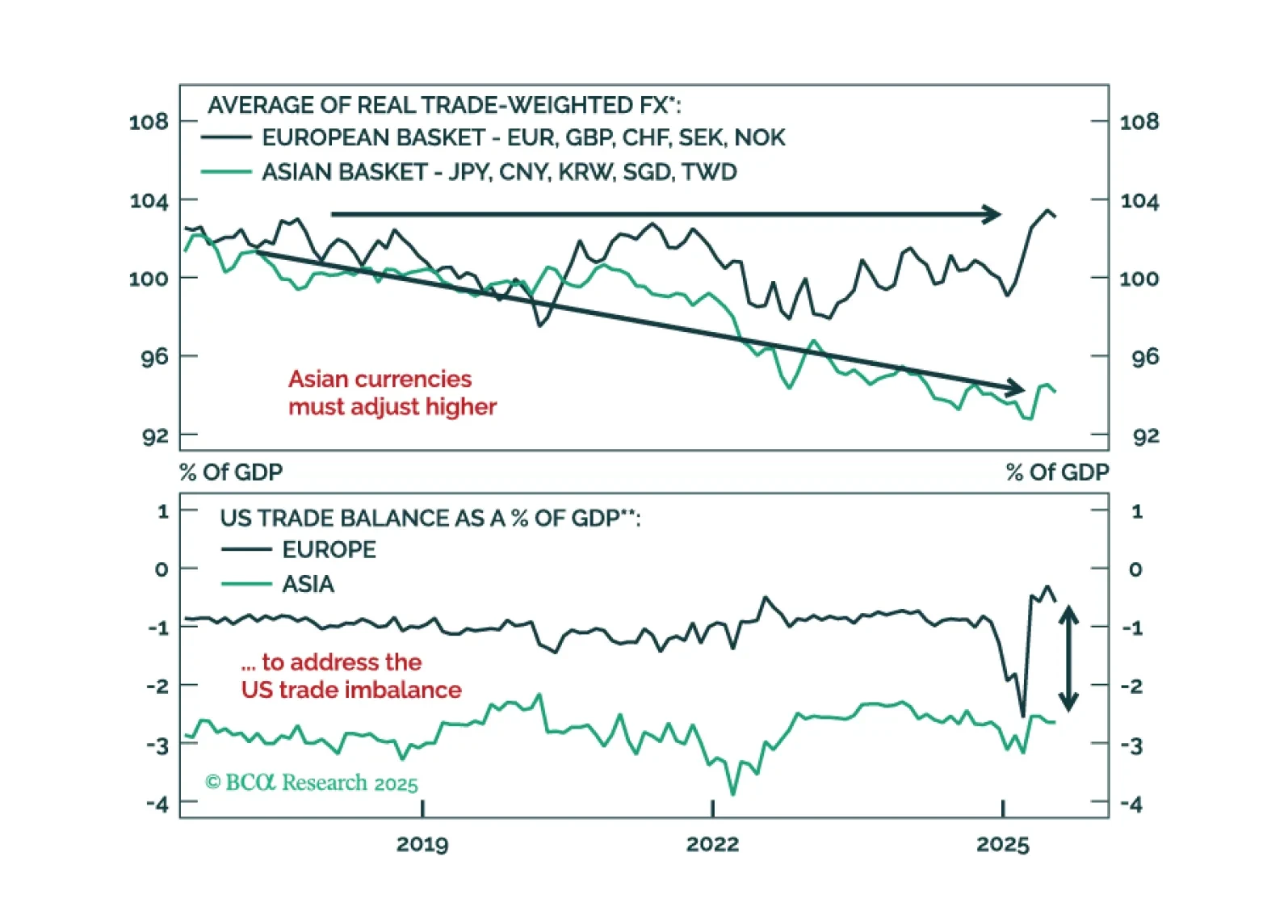
Rising US macro uncertainty and external imbalances are reinforcing euro strength and are supportive of a long-term bullish view on EUR/USD. Our Chart Of The Week comes from Mathieu Savary, Chief Strategist for Developed Markets ex US.Trump’s policy agenda is…