AI
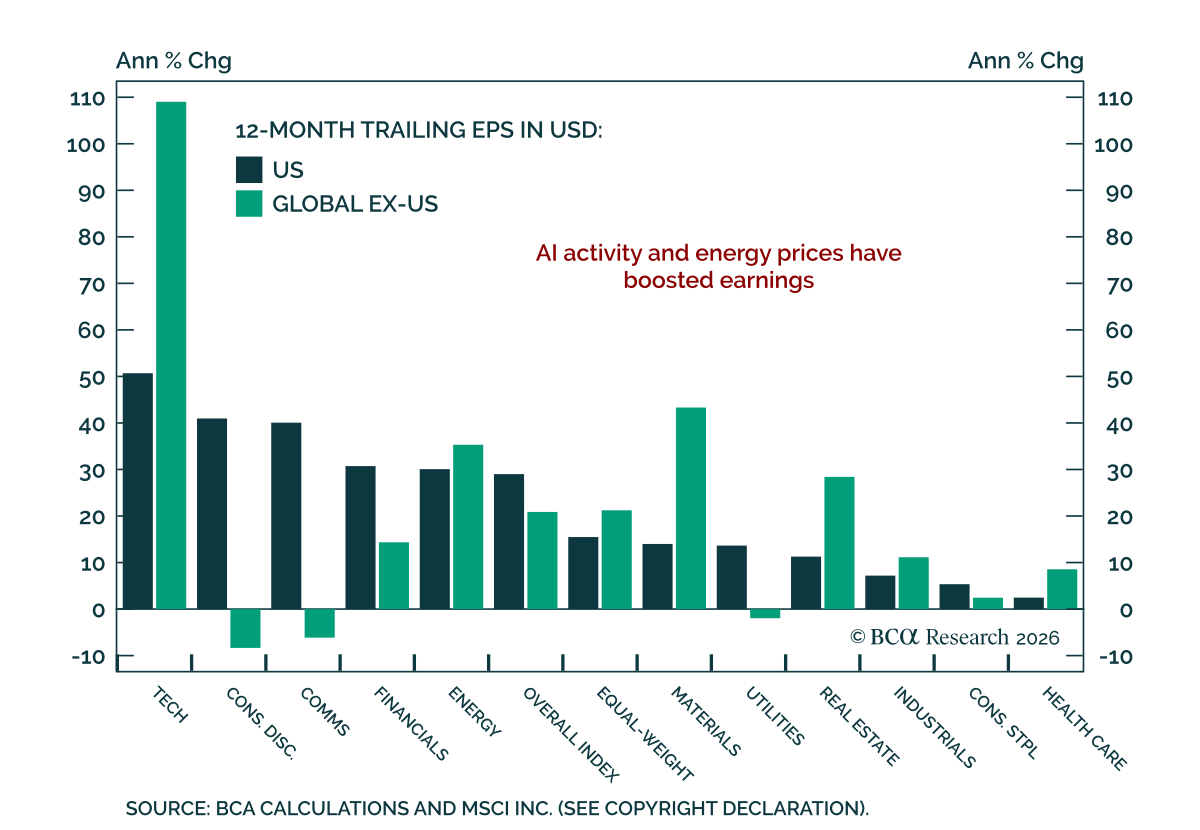
The US Q3 earnings season is about to begin. The stock market is priced for robust earnings growth over the coming year and will react poorly to any signs of tech-related earnings disappointment. A sector breakdown of US and global ex-US earnings growth over…
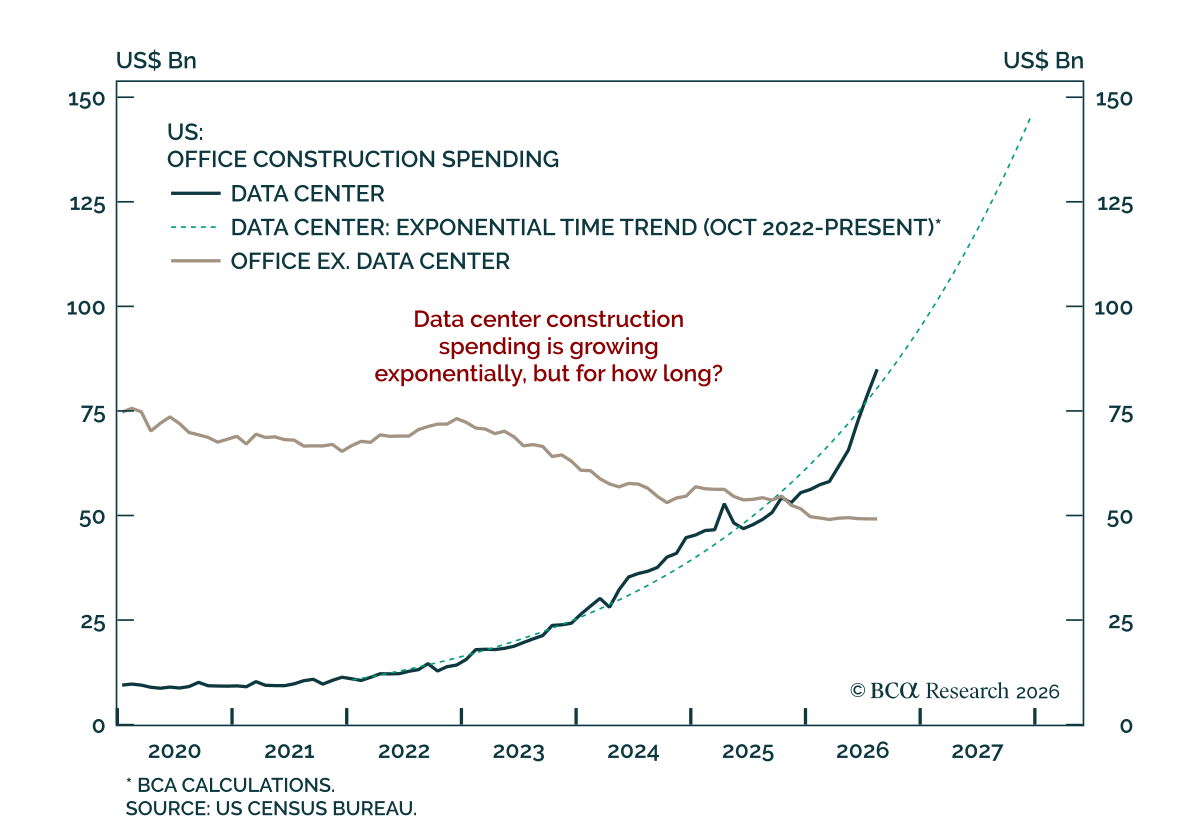
US data center construction is booming at an exponential rate, but cost and labor constraints could slow the pace of spending next year. Spending on data centers exceeded spending on general and financial office construction last year. Earlier this year it…
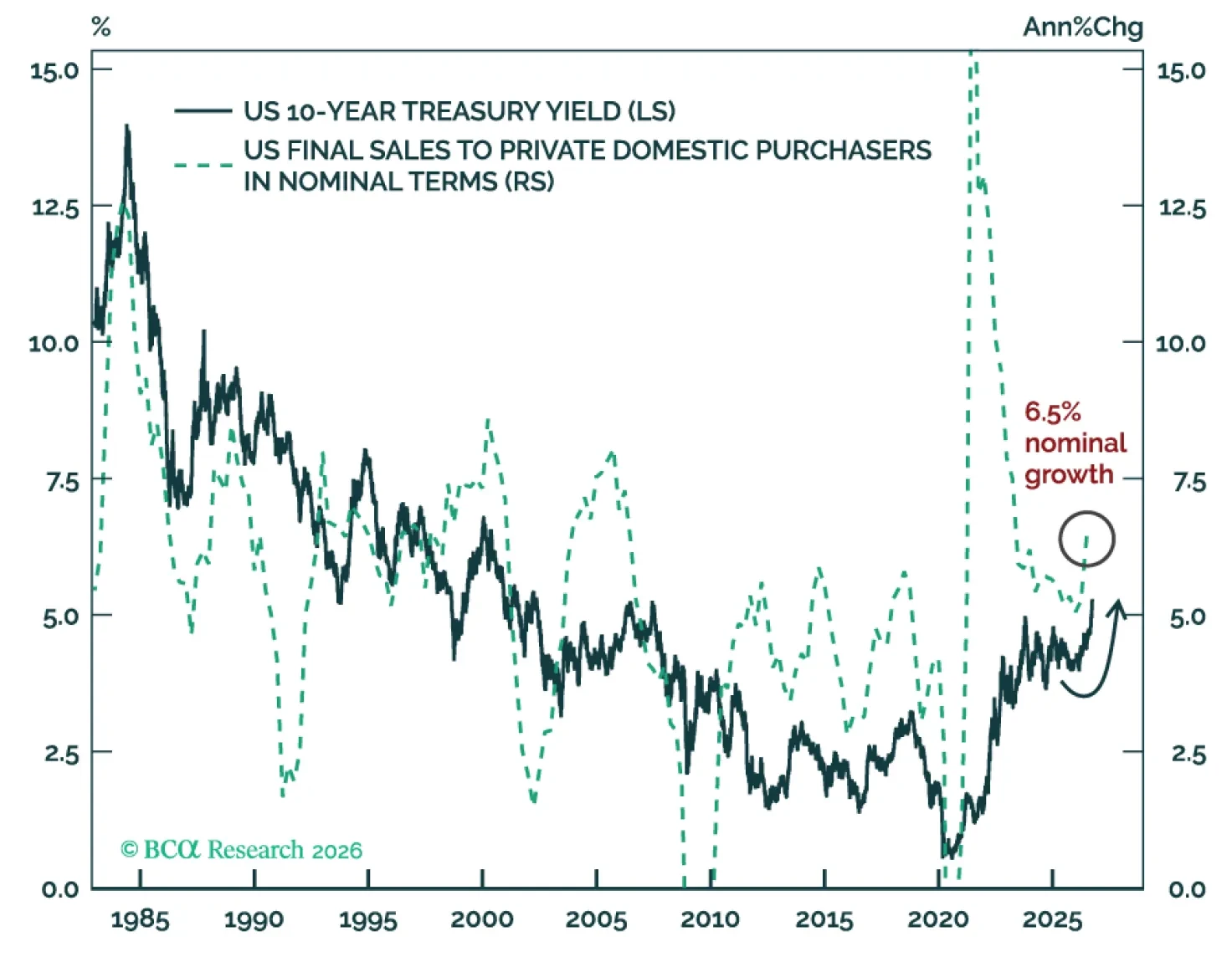
US bonds will likely continue selling off until tighter financial conditions – most plausibly a double-digit decline in the S&P 500 – cool nominal growth. Higher discount rates will threaten US equity valuations before earnings weaken. AI stocks will peak well ahead of AI capex. Remain downbeat on EM stocks.
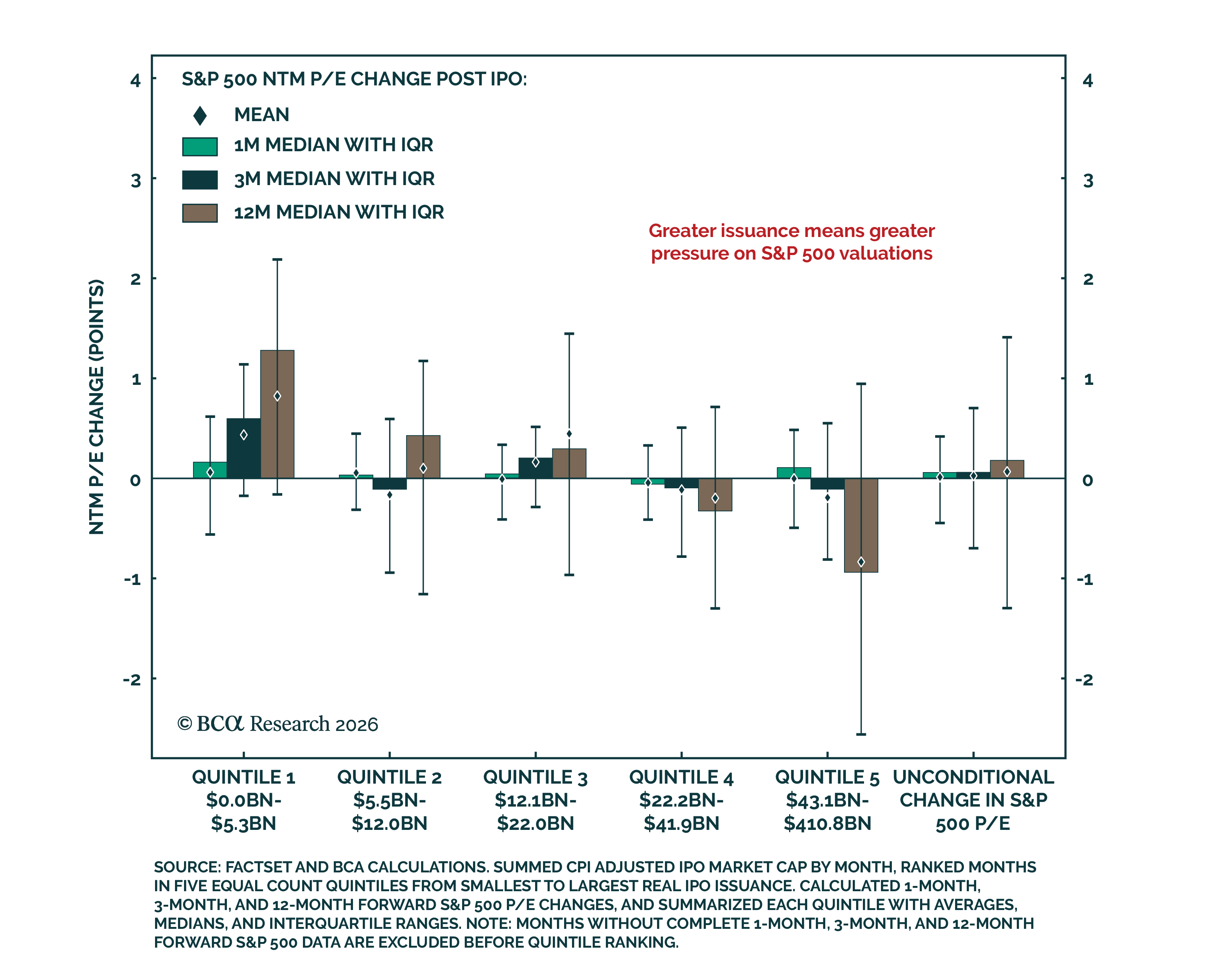
Our US Equity strategists expect the Anthropic and OpenAI listings to open a critical part of the AI story to public scrutiny, while adding to an issuance wave that has already weighed on S&P 500 multiples. IPO issuance is at a real-dollar record, though…
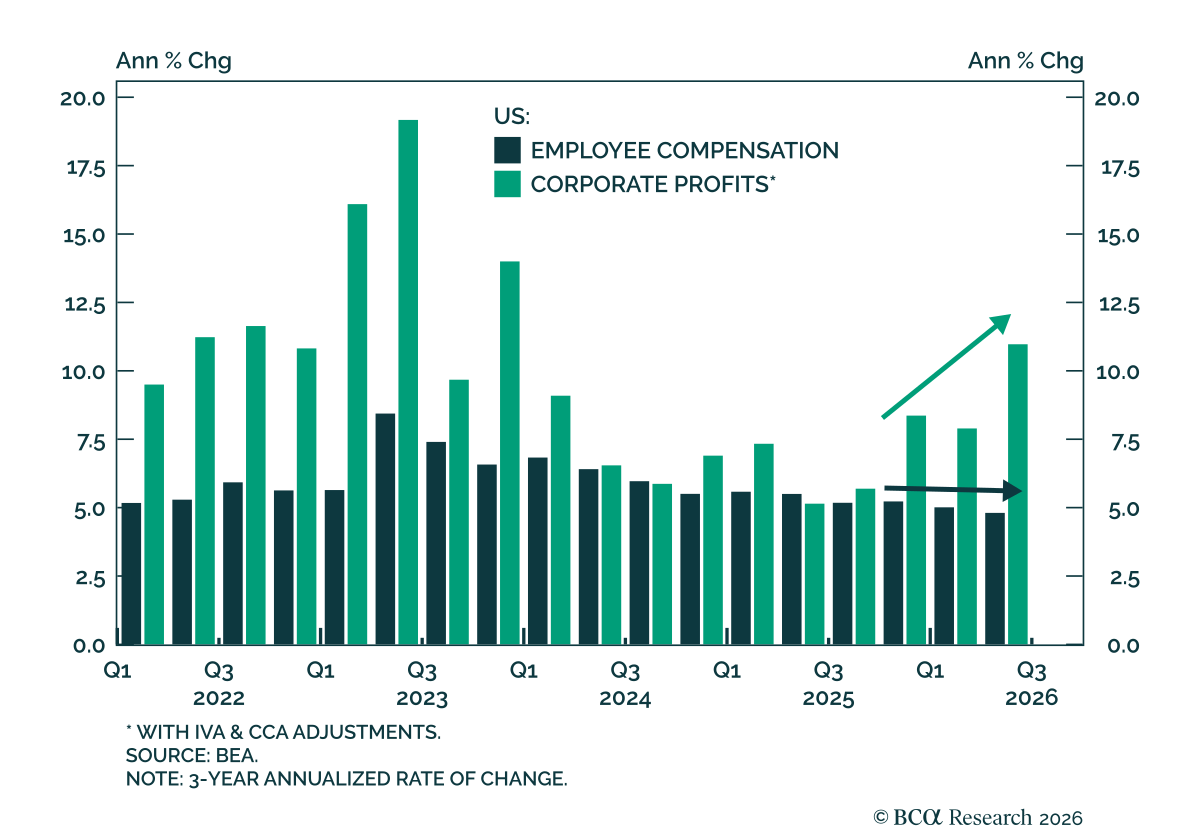
The US consumer is not benefitting from AI-related activity. Over the past 25 years, labor’s share of US national income has been in a structural decline. We have monitored cyclical developments in labor’s income share on BCA’s artificial intelligence…
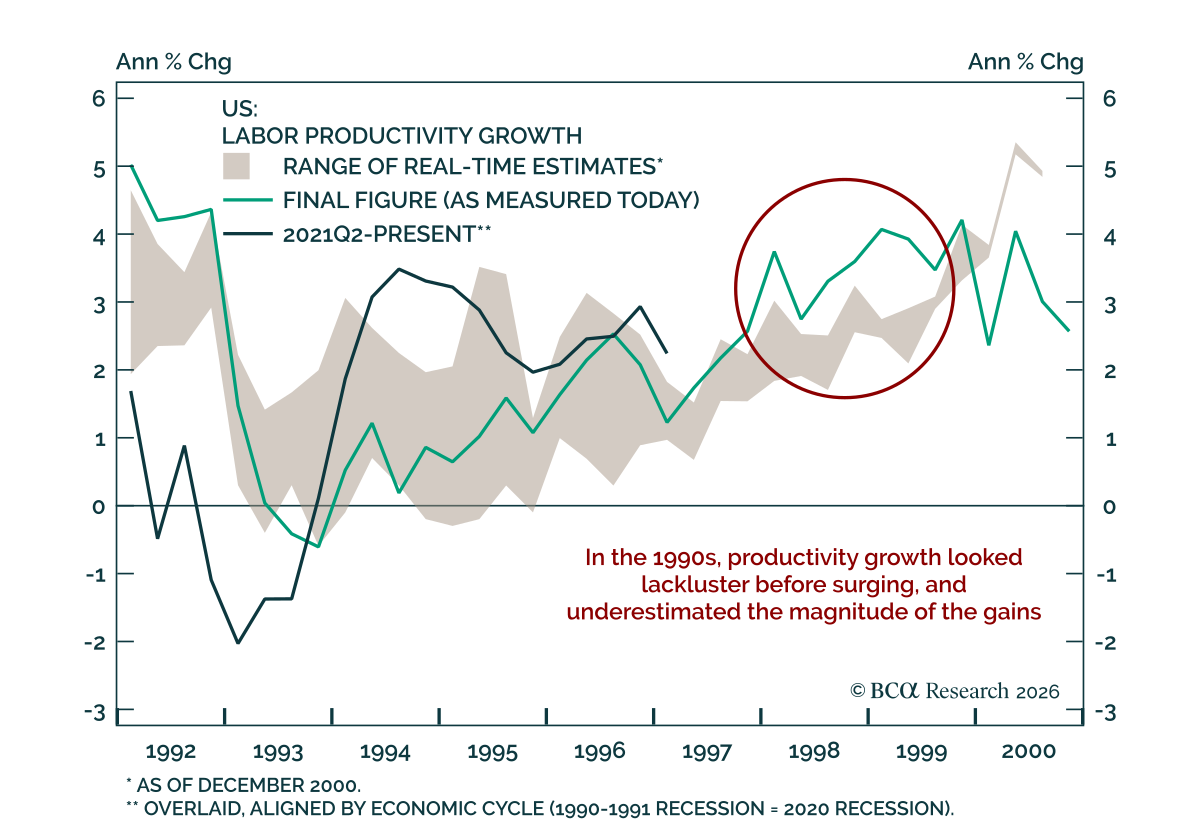
Investors should favor long-maturity government bonds if concrete signs of AI-related productivity gains emerge. Long-maturity government bond yields have risen substantially this year. The rise in energy prices since March has been the main driver, but…
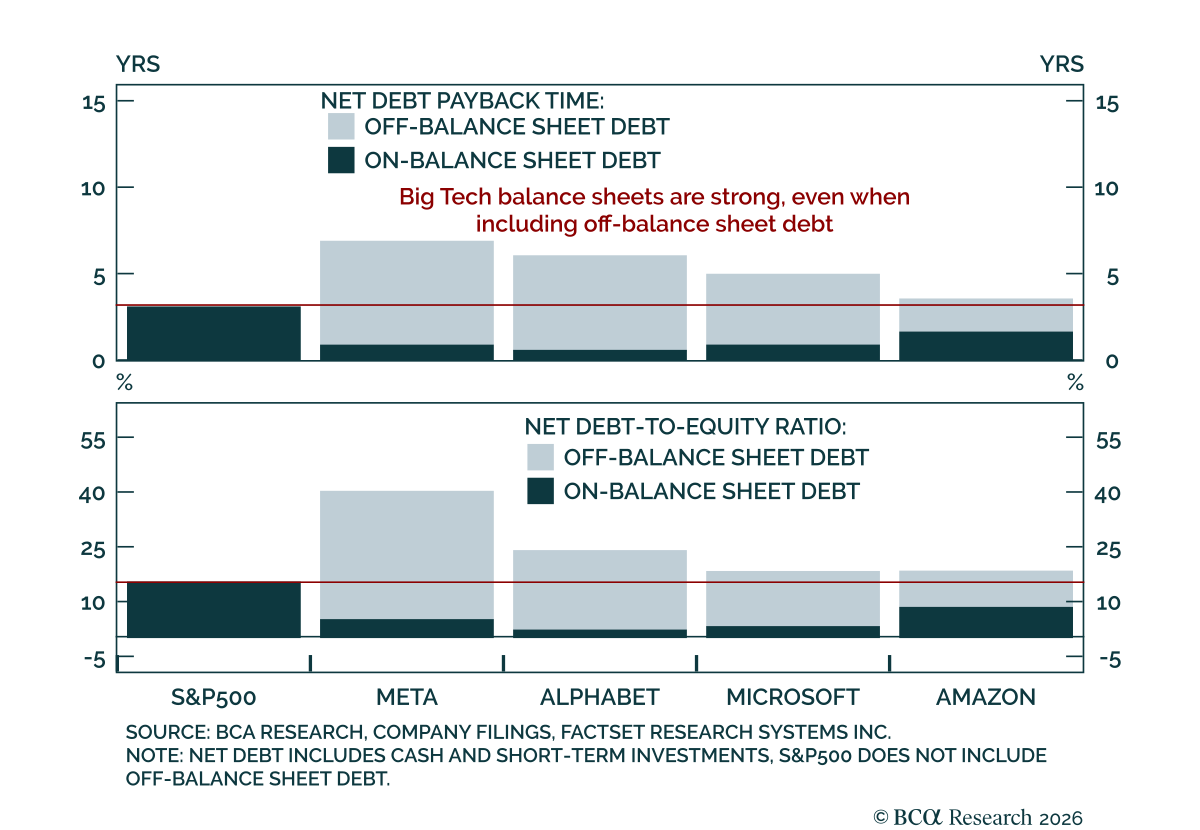
Our Private Markets & Alternatives strategists see the data center debt scare as overblown. Nerves around AI financing are rising, but our colleagues attribute most of the fear to GPU lending rather than to data centers themselves. Data centers are not GPUs:…
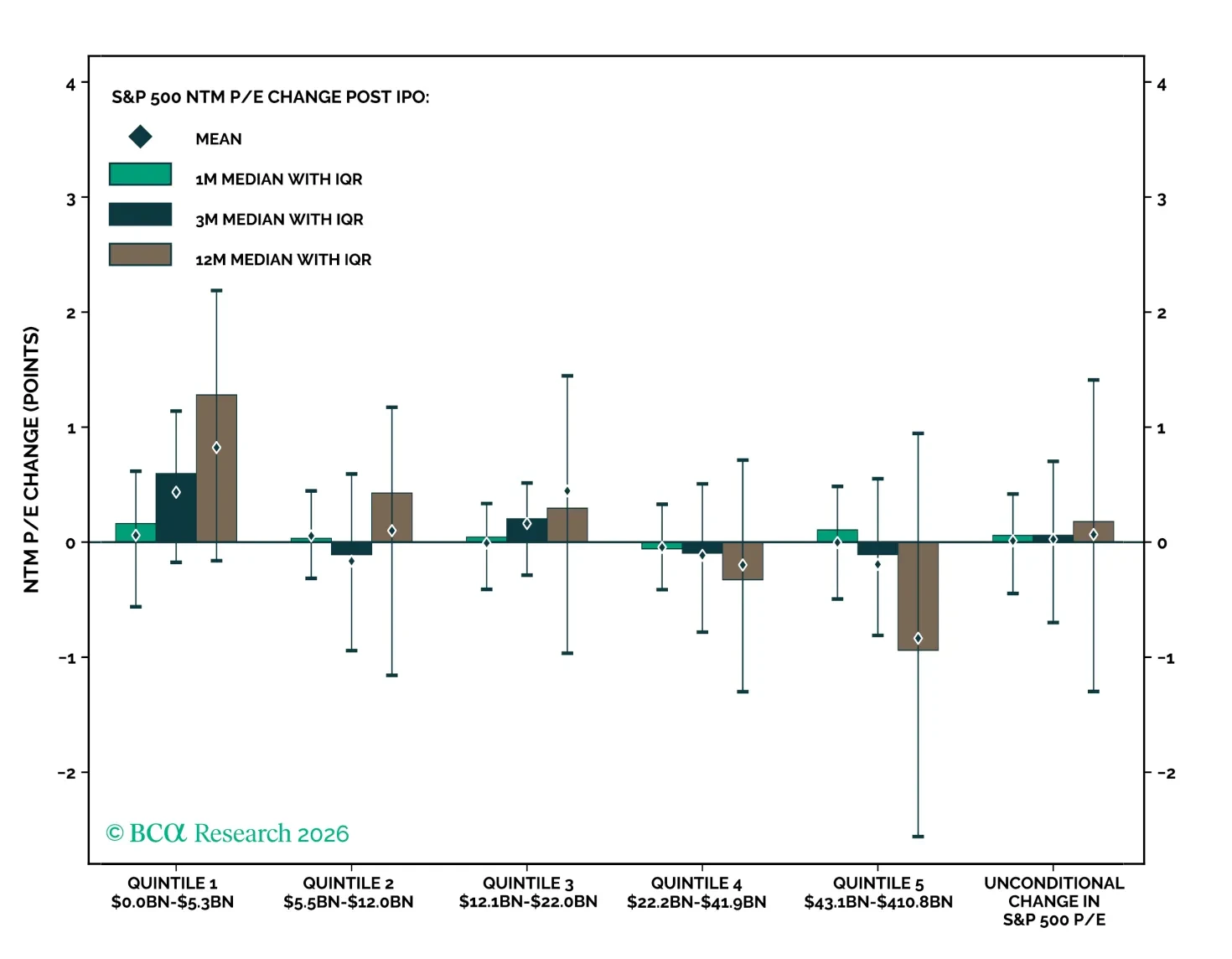
The IPO wave has arrived, dominated by SpaceX’s massive listing. Aftermarket performance has been weak, and elevated issuance is weighing on S&P 500 multiples, although some pressure is already priced. SpaceX remains only partly digested, while Anthropic and OpenAI will bring further supply and greater business model scrutiny.
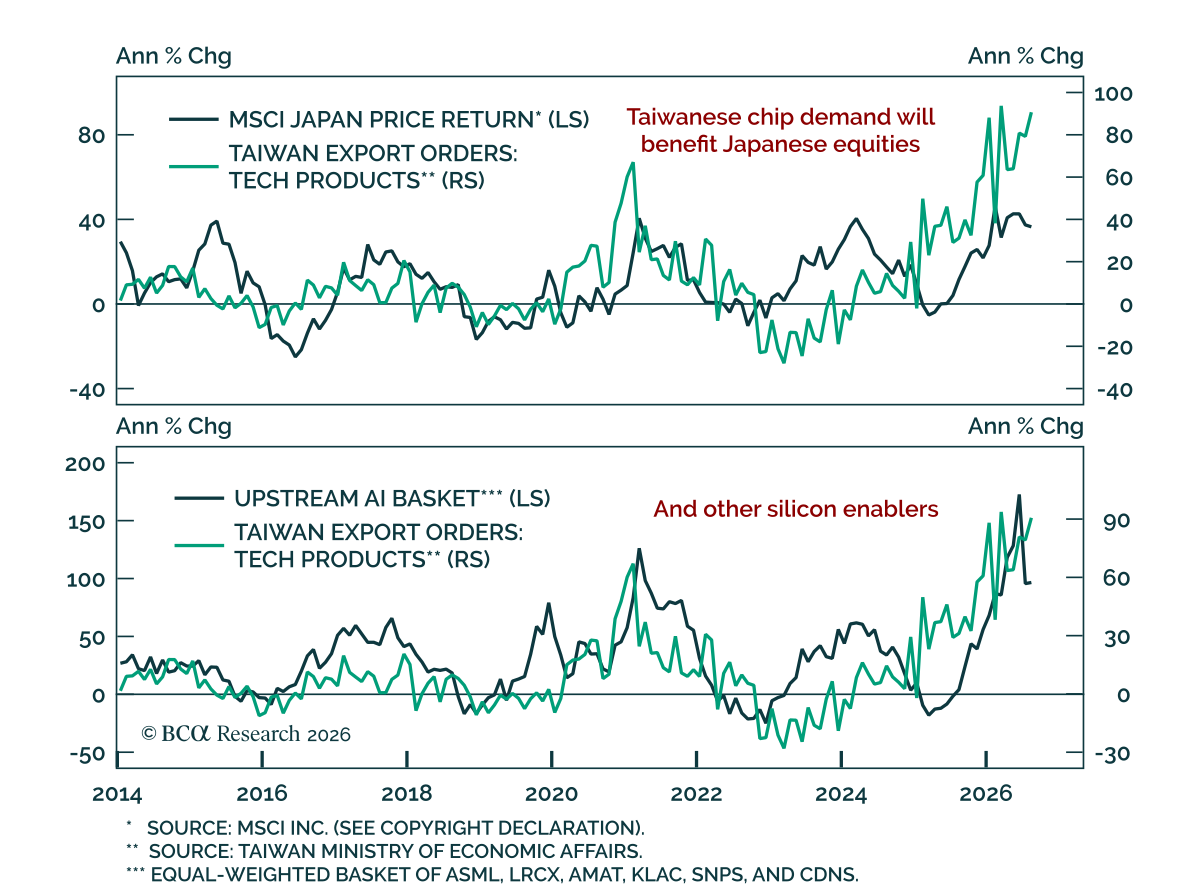
Taiwan’s tech export orders suggest that the global AI investment cycle remains strong, favoring Japan and upstream AI stocks linked to the buildout. Orders are near all-time highs, while the stable inventory-to-shipments ratio indicates that production has…
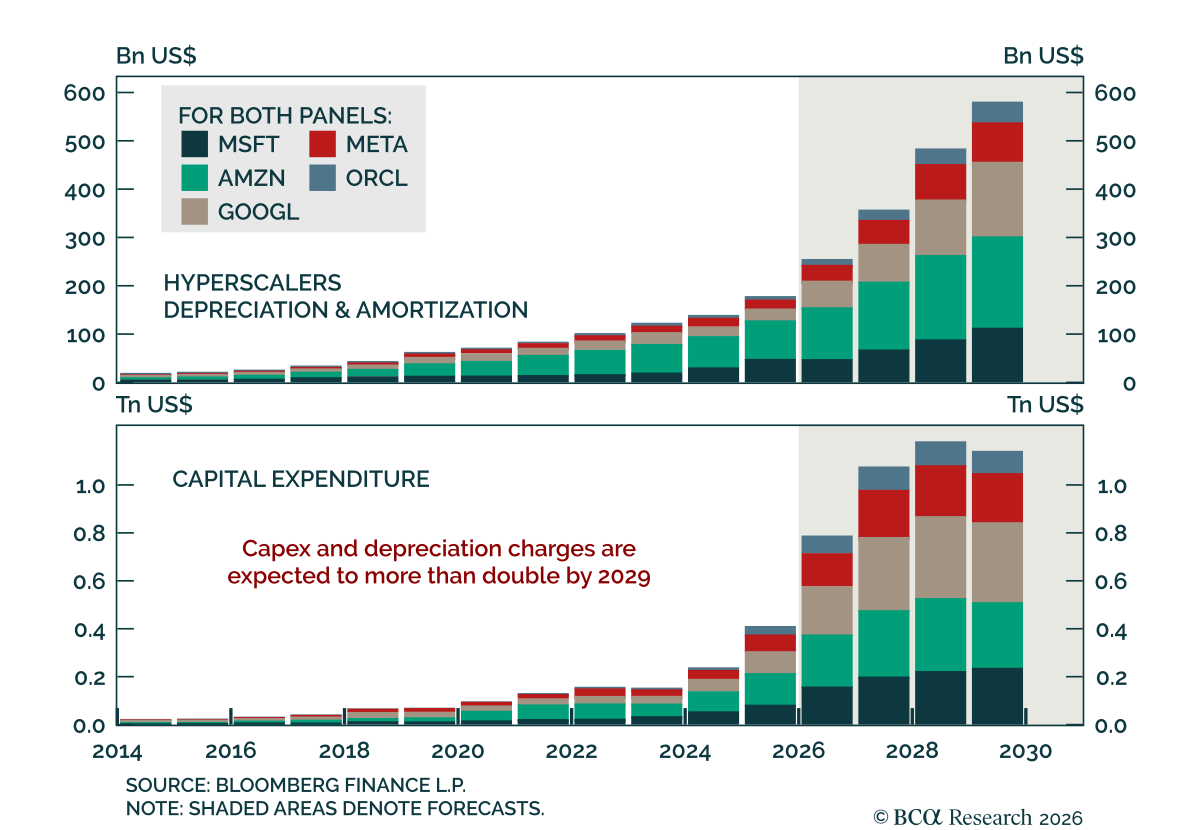
Our Global Investment strategists believe the AI industry's recent call for slowing development reflects financial self-interest as much as fear of AI doom. Major AI companies recognize they are locked in an arms race for dominance that they cannot sustain…