 CoreMacro
BCA’s flagship global macro and investment strategy platform, helping investors anticipate regime shifts, connect signals across regions and asset classes, and navigate the world’s most difficult macro questions.

Stay cautious. The Fed is only beginning to acknowledge what markets already realize. Eventually, they will back off, which reduces the odds of a further sustained equity decline. So far, however, the central bank is lagging deflationary forces acting on the U.S. economy, markets and profits. The weak ISM surveys are consistent with this. The risk is that employment follows suit.

DM central banks are shifting back into easing mode, with the BoJ's surprise cut the most dramatic example. Japan's adoption of negative rates represents another deflation-fighting step, ultimately leading to a price-level targeting regime and debt monetization. While the real yen will ultimately decline, near-term strength would force more aggressive policy. Stay neutral global equities, preparing to decrease exposure on any sustained rebound. U.S. 10-year yields are still on track to reach our target of 1.5% by year-end.

An improvement in the euro area credit impulse is encouraging, but we explain why it is not enough to sustainably boost risk-assets.


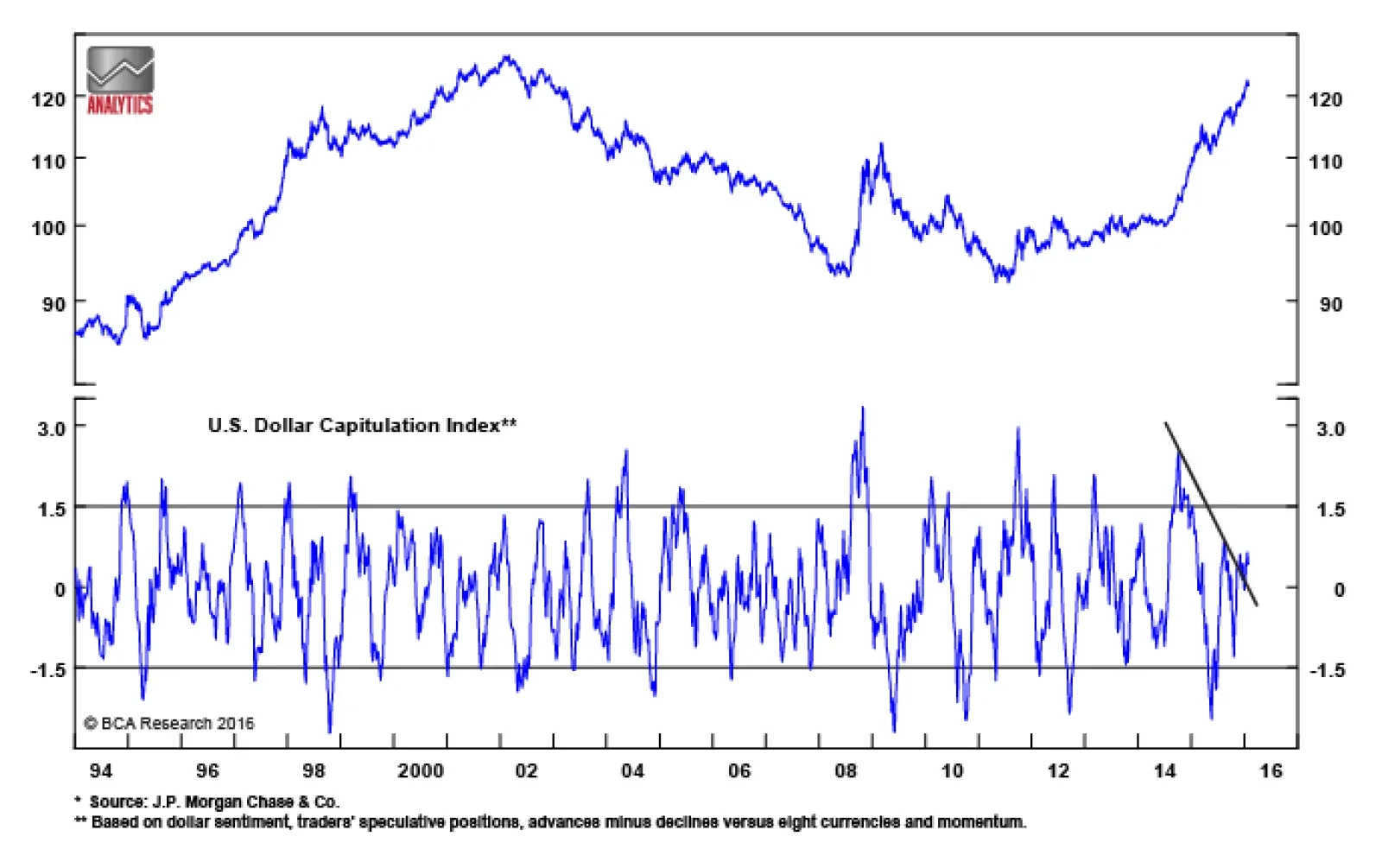
Rising demand for U.S. dollars in EM and further yen depreciation, if it transpires, assures global exchange rate volatility will rise. Rising currency volatility, especially in the RMB, will push the global risk premium higher, weighing on global share prices. In Turkey, a wage-inflation spiral is unfolding and the central bank is behind the curve; the currency will plummet further.

Any recovery in risk assets and selloff in safe havens is unlikely to extend into the cyclical horizon.
Last month, the model outperformed both global and U.S. equities in local-currency and U.S.-dollar terms. For February, the model is aggressively increasing its risk exposure and has included a bet on commodities for the first time since 2012. For equities, the largest overweight remains Europe, but EM and Canada enjoyed significant upgrades. For bonds, the model favors the European periphery.


Central banks follow backward-looking indicators but economies follow forward-looking indicators. So which indicators should investors follow? And what is the current message? Also, we see signs that London is cooling.

Corporate profits are more sensitive to selling prices than to volumes. Falling prices even amid mildly rising volumes could produce a meaningful profit contraction. Stay with deflation trades. In particular, maintain the short EM stocks / long U.S. 30-year Treasurys position. Indian stocks are still pricey and will deflate further in absolute terms.