What If TACO Doesn’t Work?
Cross-asset correlations remain the clearest signal of how investors are pricing the energy shock. Risk assets rebounded late Monday after President Trump described the Iran war as “very complete, pretty much.” However, the outcome depends on Iran’s response, leadership cohesion, and willingness to return to negotiations. With uncertainty elevated and developments rapid, market pricing offers a real-time guide.
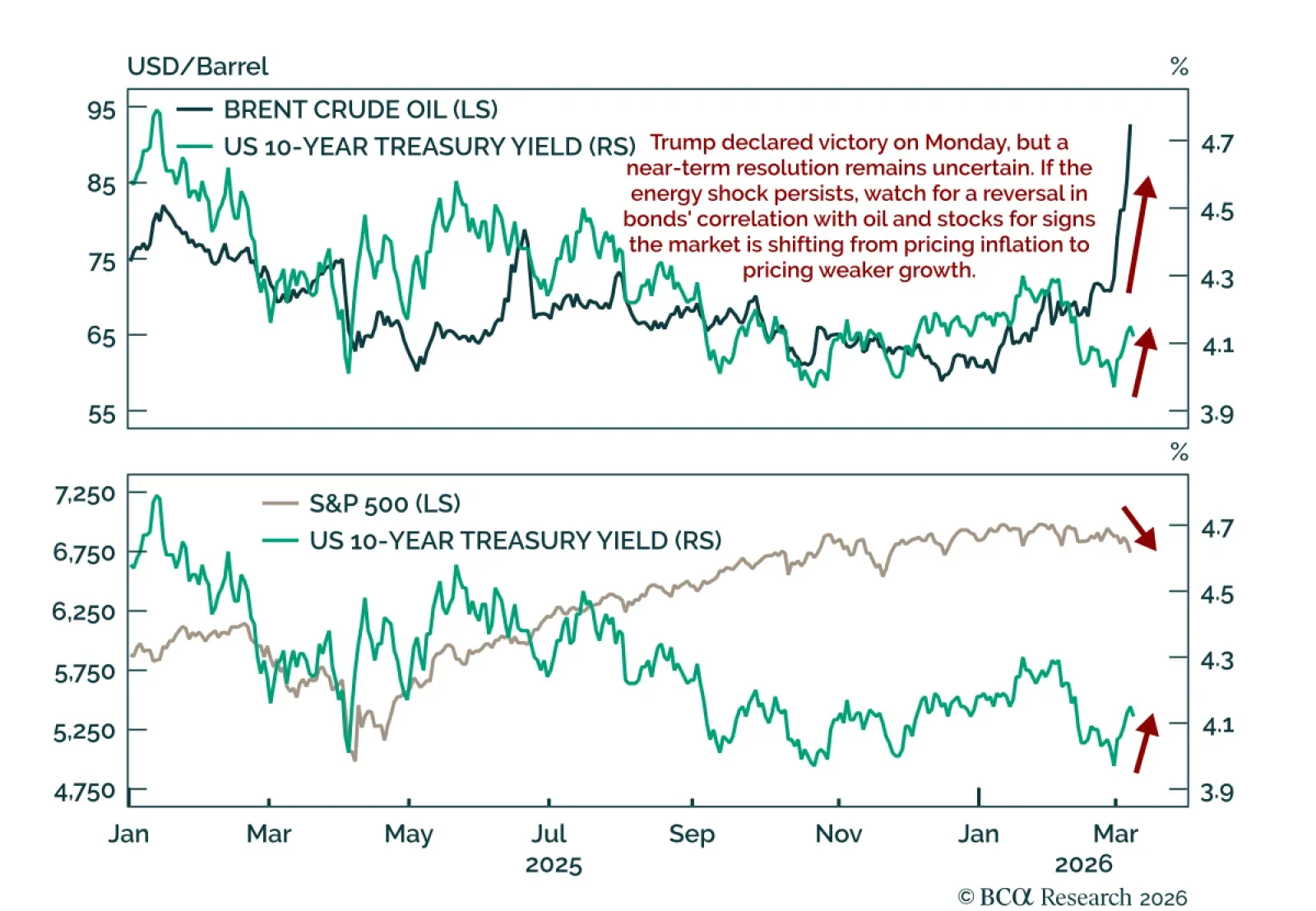
Cross-asset correlations help determine whether inflationary pressures or growth drag are dominating. If the energy shock persists, investors can monitor two key correlations: oil versus yields, and stocks versus yields. Oil and yields have moved higher together across both the 2- and 10-year maturities. A reversal, with yields falling, would suggest a shift from pricing a commodity shock to a safe-haven bid. Meanwhile, the stock-yield correlation has been negative, with rising yields and falling equities. A shift to a positive correlation would signal growth concerns overtaking inflation risks.
If inflation pressures persist, the front end of the curve would remain sticky while the back end declines, diverging from the usual pattern where duration extensions are paired with steepeners. While rate hikes remain unlikely, central banks are expected to stay on hold for now, as inflation expectations remain fragile in the post-pandemic environment.