Three Myths About The Third Gulf War
Our GeoMacro strategists argue that prevailing market narratives around the Gulf conflict rest on three flawed assumptions. First, that the UAE’s role as a financial hub is at risk; second, that Iran can sustain a closure of the Strait of Hormuz; and third, that the conflict is primarily about pressuring China.
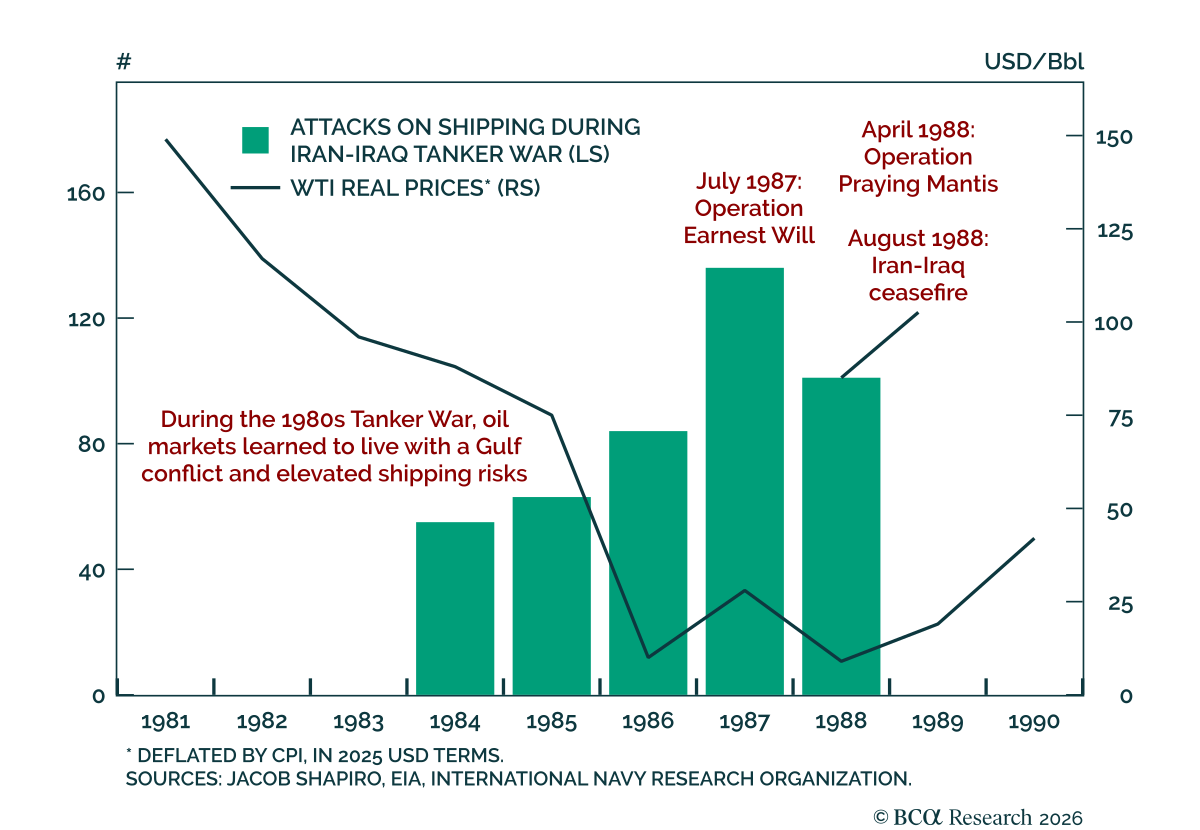
On the UAE, our colleagues argue its position as a hub for Global South capital remains intact, supported by strong governance, large reserves, and geopolitical neutrality. Capital continues to flow from regions facing greater instability, and history shows that financial centers can operate alongside geopolitical risk, as seen in Hong Kong and Singapore. On Hormuz, they argue Iran can disrupt flows in the near term but cannot sustain a prolonged closure. While Tehran currently holds leverage, a longer conflict would trigger a coordinated global naval response to keep trade moving, and markets would adapt to elevated shipping risks over time.
Finally, they reject the view that the conflict is primarily about China. Beijing already recognizes its energy vulnerability and is reducing reliance on seaborne oil through EV adoption and strategic stockpiles. Current tensions may accelerate this adjustment, gradually weakening the strategic importance of Hormuz for China.
To read this report in full: please click here.