Sorry, you need to enable JavaScript to visit this website.
Skip to main content

Canada

Tuesday’s CPI release confirmed that the disinflationary trend in Canada remains intact. After a brief relapse this summer, Canada’s inflation is headed in the right direction. As anticipated, headline CPI inflation came in at 3.1% y/y in October, down from…

In this Insight, we review the performance and rationale for our current set of tactical fixed income trade recommendations. Our highest conviction positions also happen to be our most successful trades: positioning for a narrowing of the German bund-JGB spread and wider Japanese inflation breakevens.

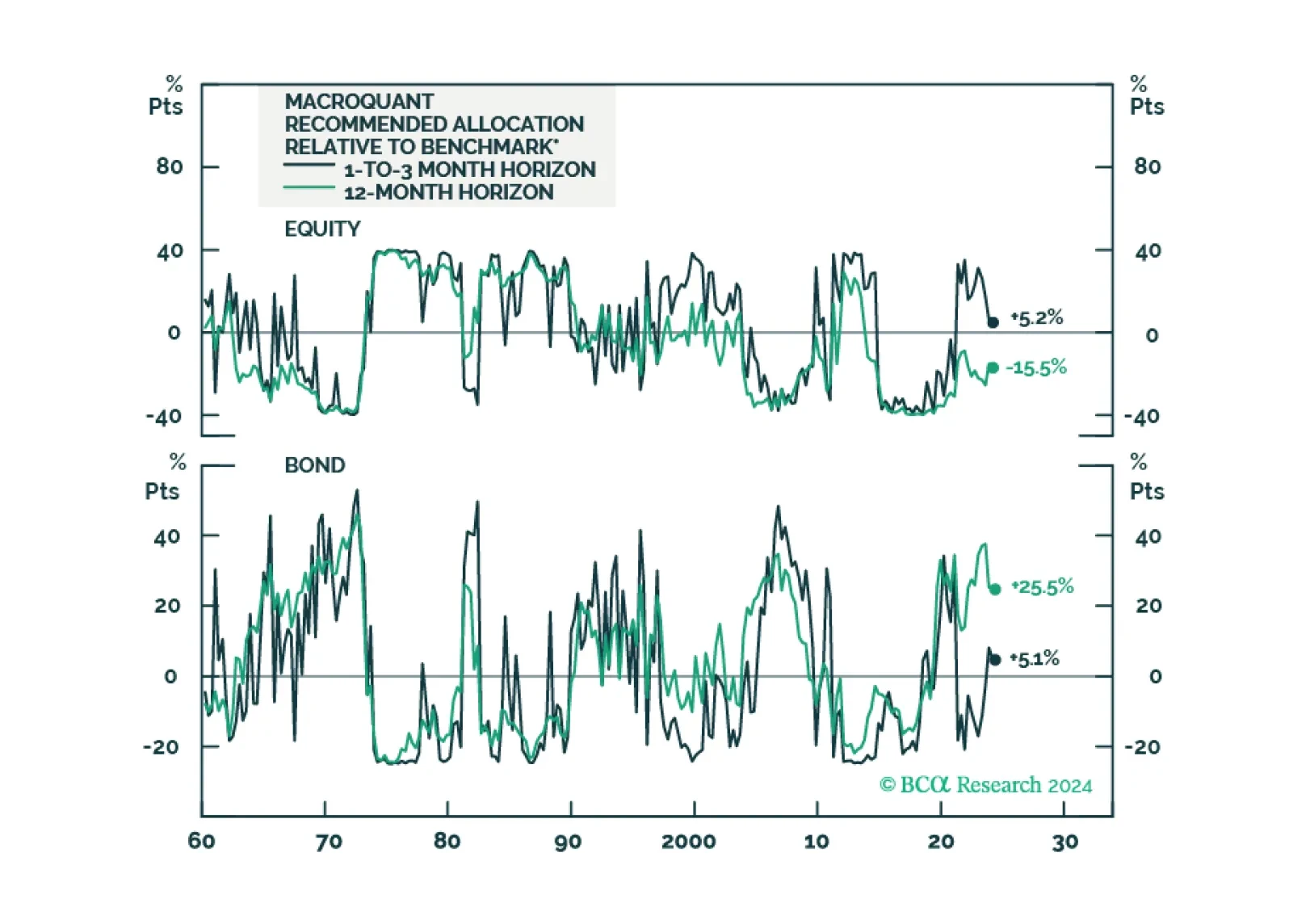
Labor markets are softening in most developed economies, as is usually the case in the lead-up to recessions. Our base case is that the global recession will begin in the second half of 2024, but we will be monitoring our MacroQuant model on a daily basis for confirmation.

The economies of Canada and Australia share many similarities.  Both nations are major commodity exporters, but with overvalued housing markets and highly indebted consumers.  Lately, however, a notable gap has appeared between the economic…
As expected, the Bank of Canada kept its target for the overnight rate unchanged at 5% for the second meeting in a row on Wednesday. The Bank cited clear evidence of the impact of elevated interest rates on demand — especially in durable and semi-durable…
Special Report

In this Special Report, we introduce two strategies that use our Central Bank Monitors for global fixed income country allocations and currency trades. We find that using the Monitors in country selection helps improve the performance of a developed markets government bond portfolio. The CBMs can also help substantially minimize the drawdowns on a standard FX carry strategy.

In this insight, we look at whether the recent data justifies a shift by the BoC, and some potential trades.

In this insight, we look at whether the recent data justifies a shift by the BoC, and some potential trades.

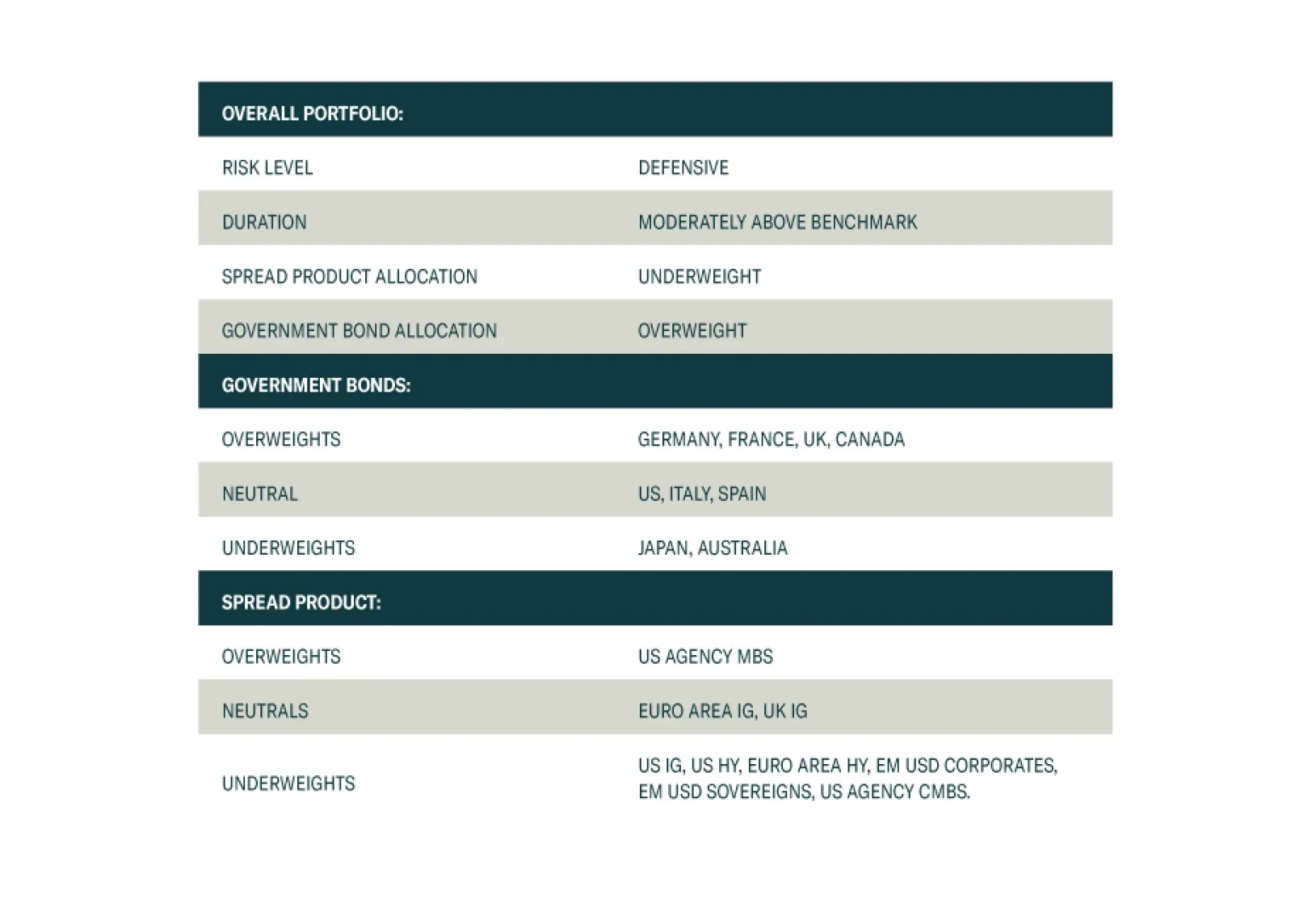
In this report, we present the quarterly review of the Global Fixed Income Strategy Model Bond Portfolio. The portfolio remains positioned for slower global growth momentum over the next 6-12 months, favoring government bonds over corporate debt. The portfolio also favors government bonds in countries flirting with recession where policy rates are too high (core Europe & the UK).

Results of the Banks of Canada’s Q3 business and consumer surveys reveal that the aggressive tightening cycle is dampening economic agents’ sentiment. Putting aside the sharp decline at the onset of the pandemic in Q2 2020, the Business Outlook Survey (BOS)…