Skip to main content

Consumer

The August Conference Board survey was mixed, but a rebound in labor perceptions and stronger current conditions point to continued consumer resilience. The headline index fell to 89.4 from a downwardly revised 90.2, missing estimates. Consumers’ assessment…
Special Report

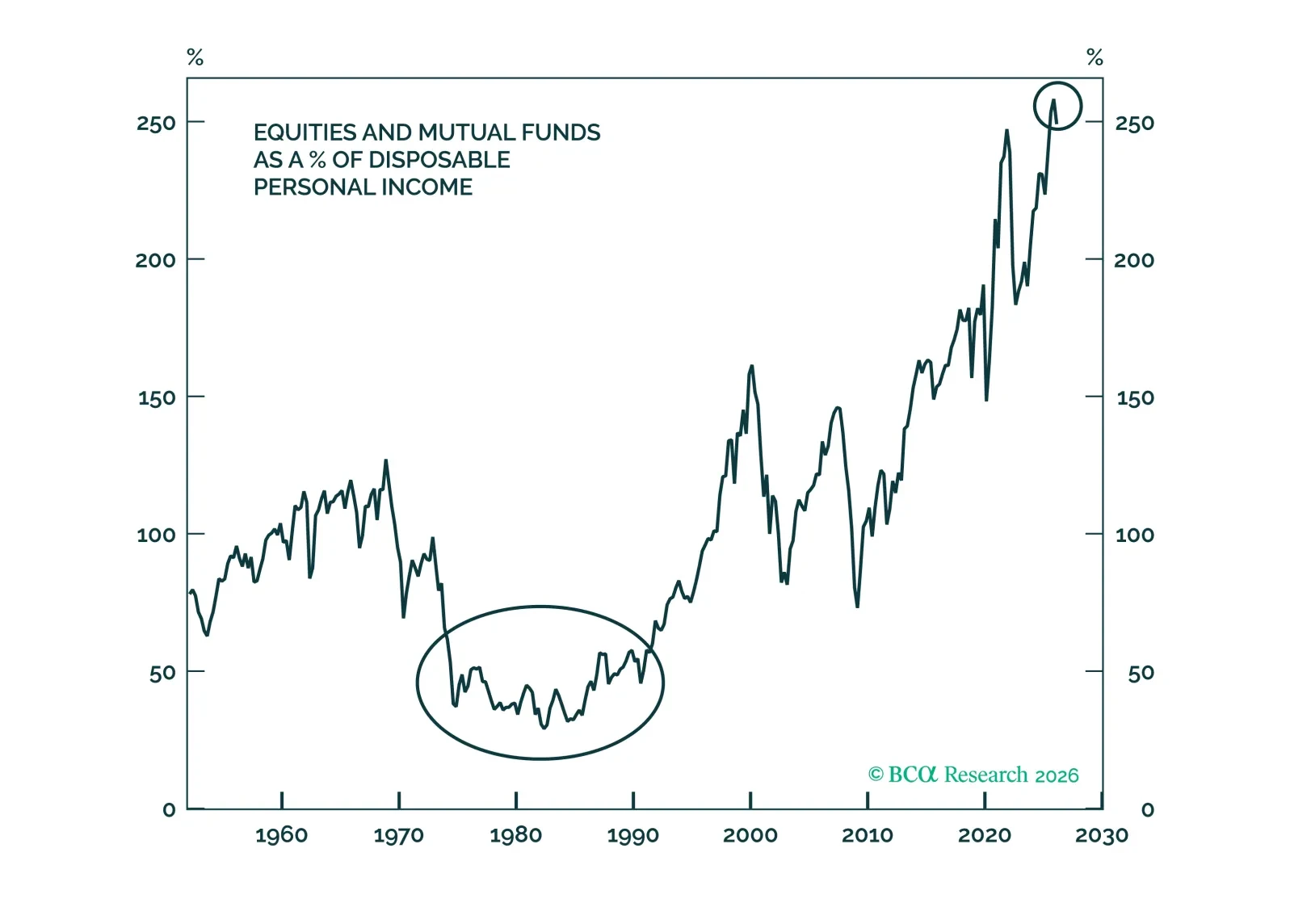
Four decades of robust stock market gains have positioned the equity wealth effect to play a larger role in the business cycle.
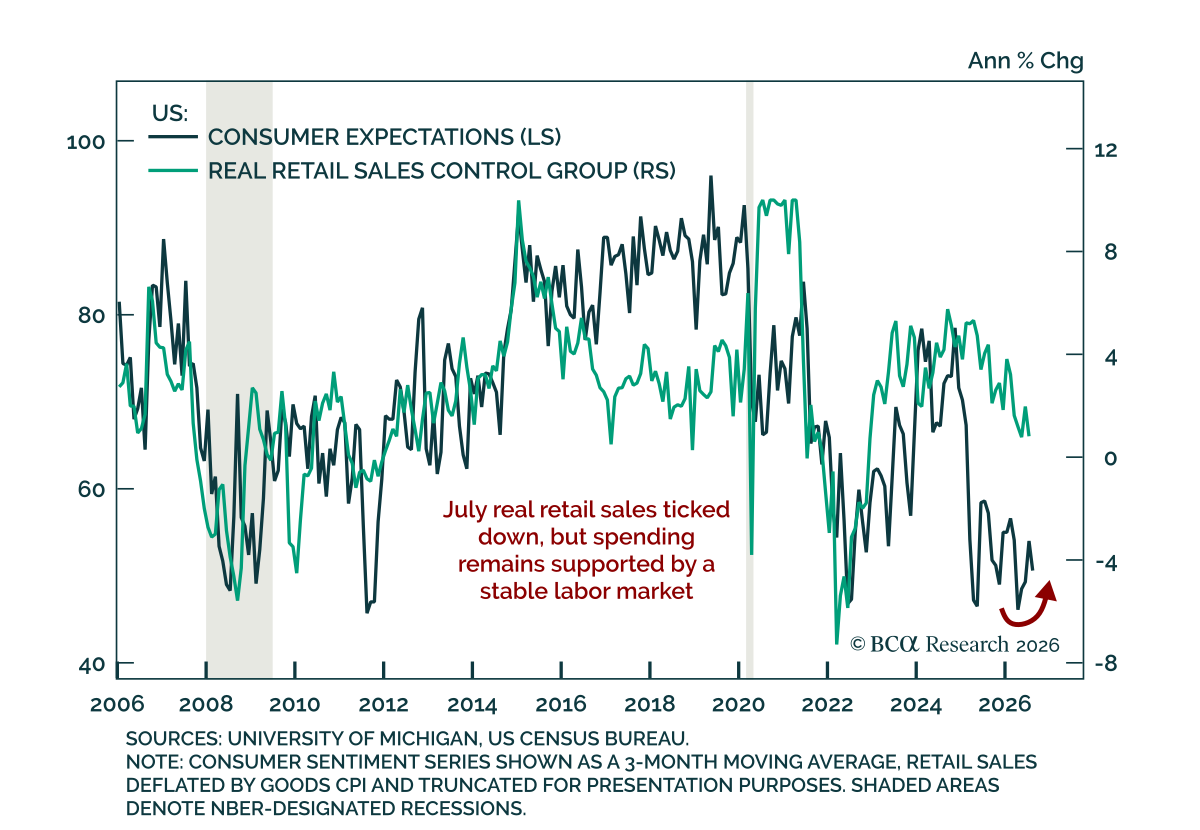
The latest consumer data show cooling momentum, reinforcing that the US economy is not overheating while leaving the broader equity case intact. July retail sales were weaker than estimates across the board. Headline sales fell 0.6% m/m, the core measure…
Special Report

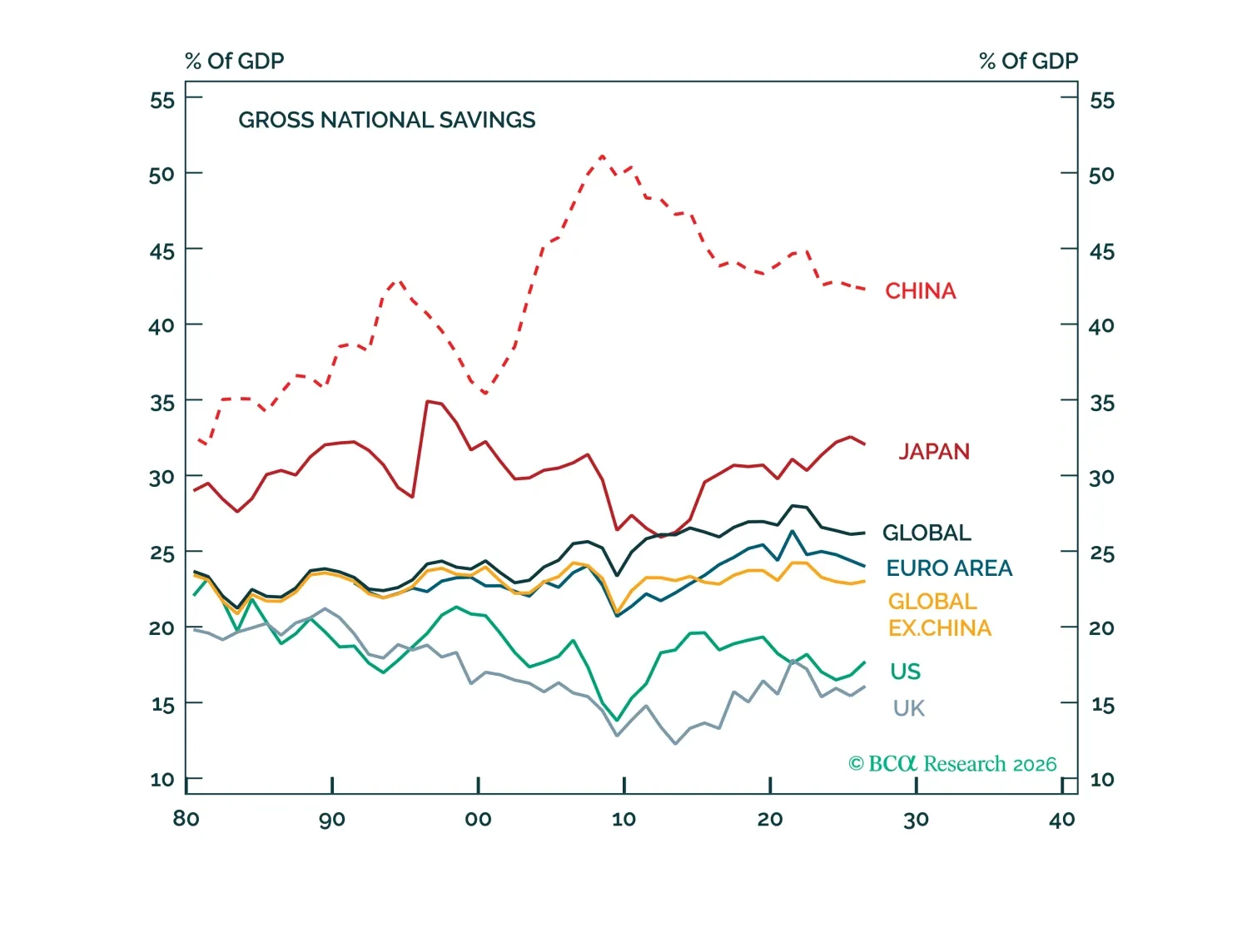
China does not produce too much. It spends too little. The only viable way for China to reduce investment without raising unemployment is by lowering national savings. Doing so is likely to be politically challenging, however. This suggests that China will suffer from subpar growth and deflationary pressures for the foreseeable future.
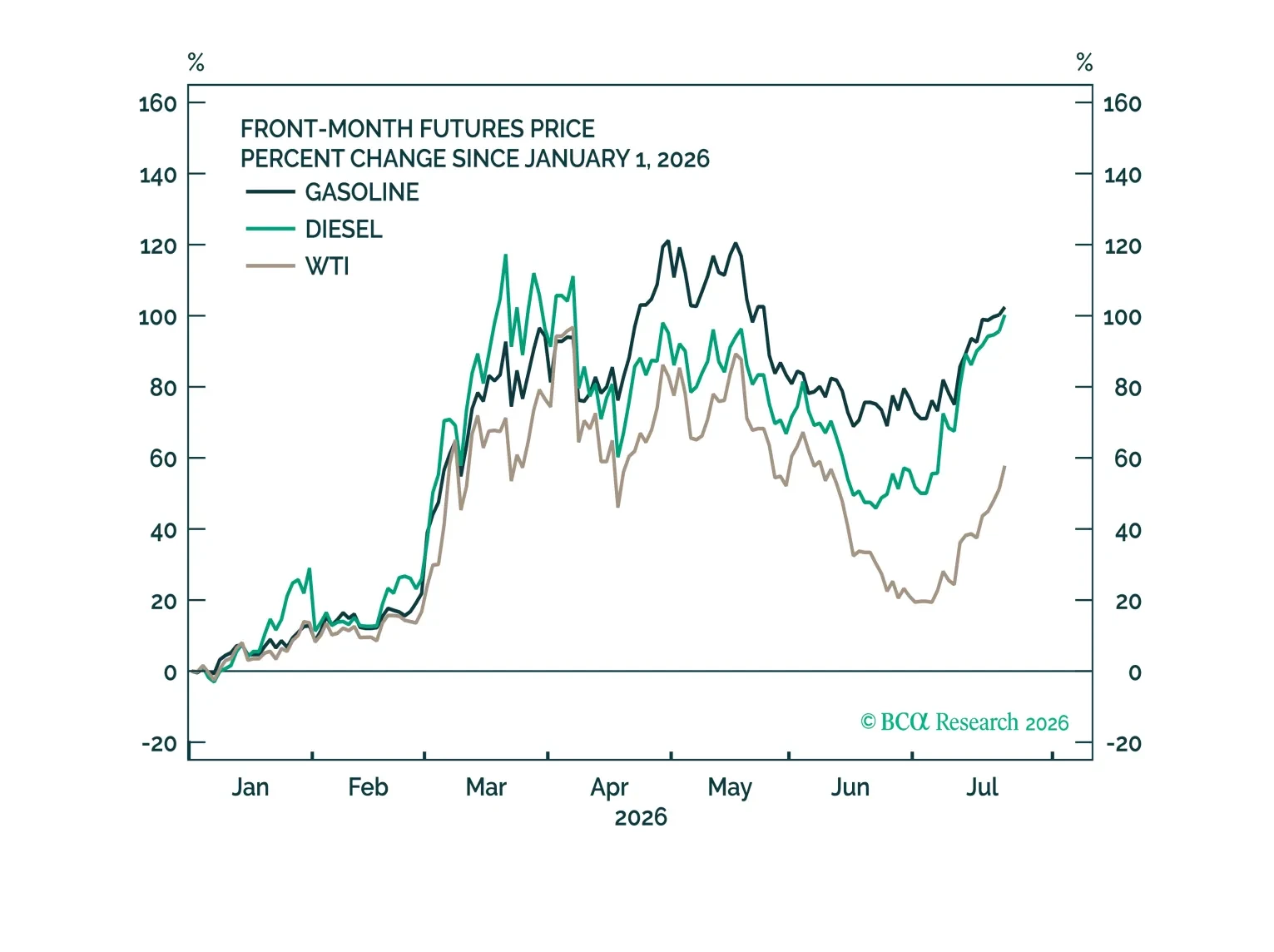
As long as the AI boom keeps booming, all other investment considerations will remain on the back burner. However, if the AI trade fizzles, this would expose deep-seated problems within the global economy, which could very well lead to an economic downturn as early as next year.
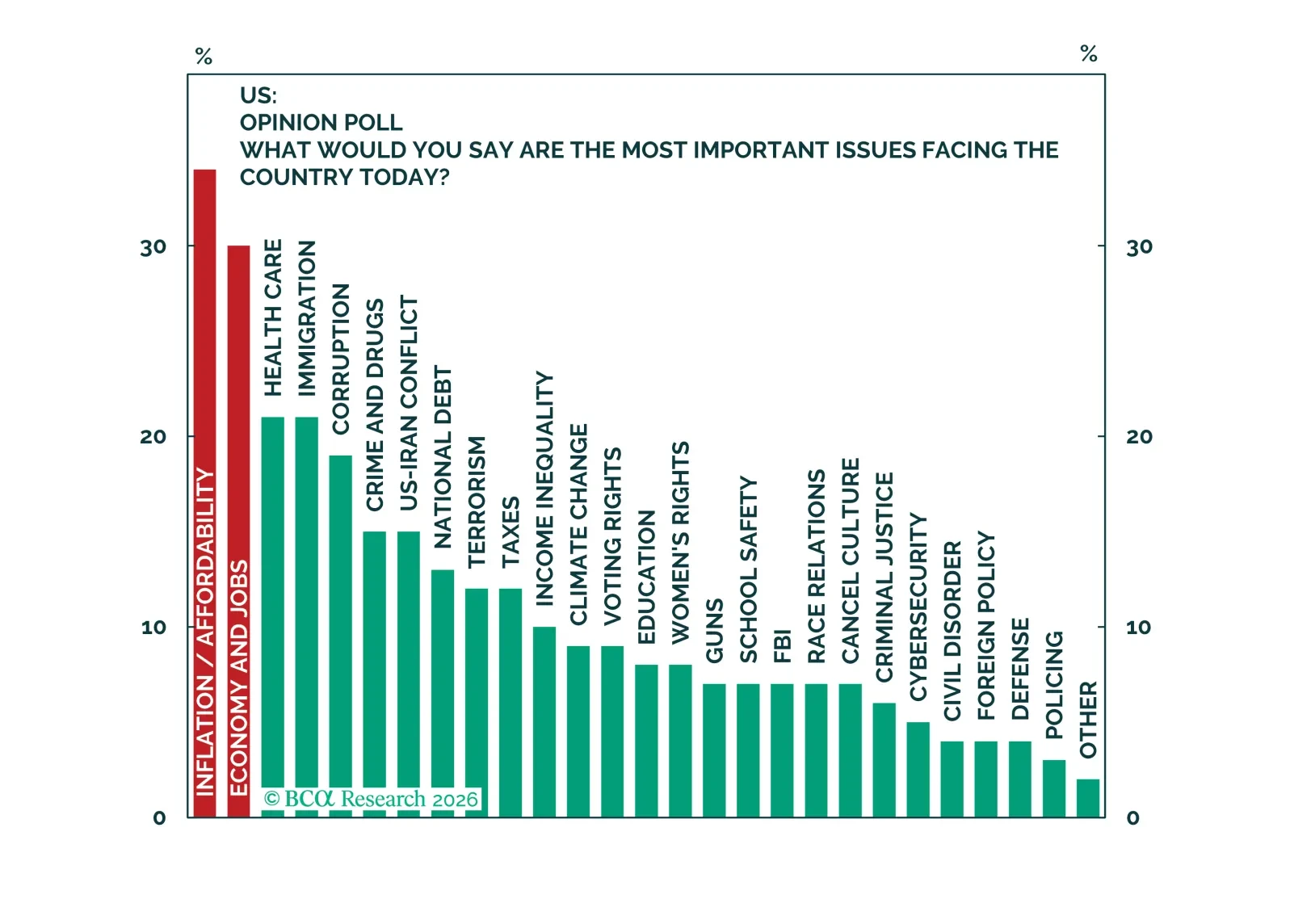
Special Report

News flash: Young urban professionals are not gasping under the weight of an impossible rent burden. Investors should not be led astray by lightly examined popular narratives.
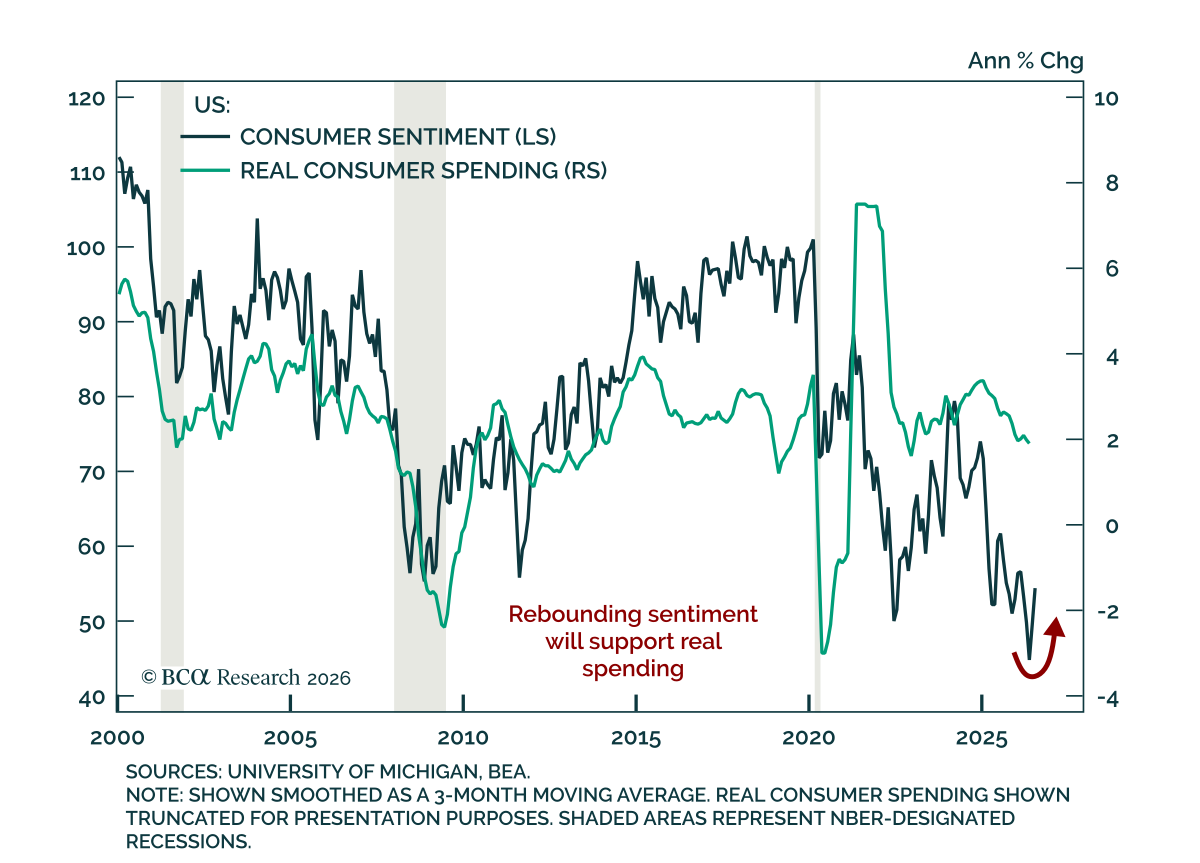
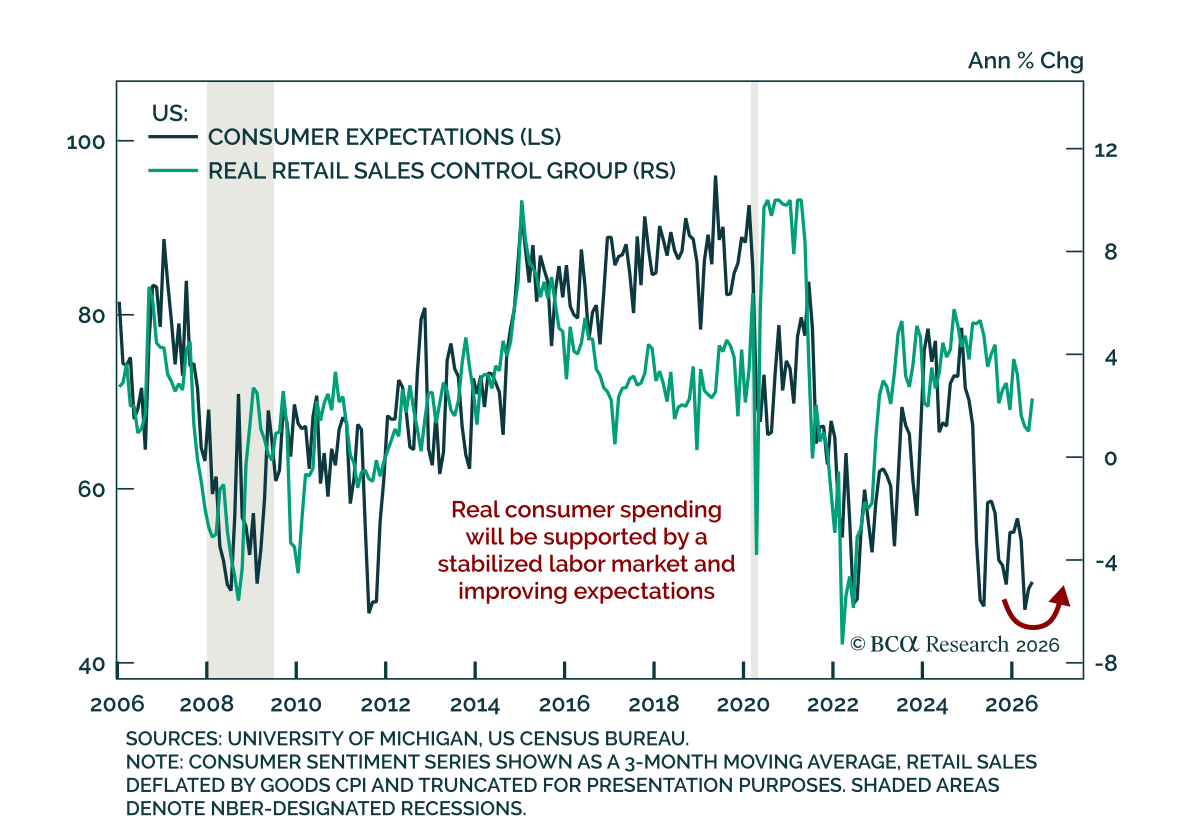
The preliminary July University of Michigan survey pointed to improving sentiment and anchored inflation expectations. The survey beat estimates, with the headline index rising to 54.4 from 49.5, driven by both consumers’ assessment of current conditions and…
US June retail sales were roughly in line with consensus, with the report pointing to resilient spending. Headline sales rose 0.2% m/m after a strong 1.0% gain in May. The core measure, excluding autos and gas, increased 0.4%, while the control group, which…
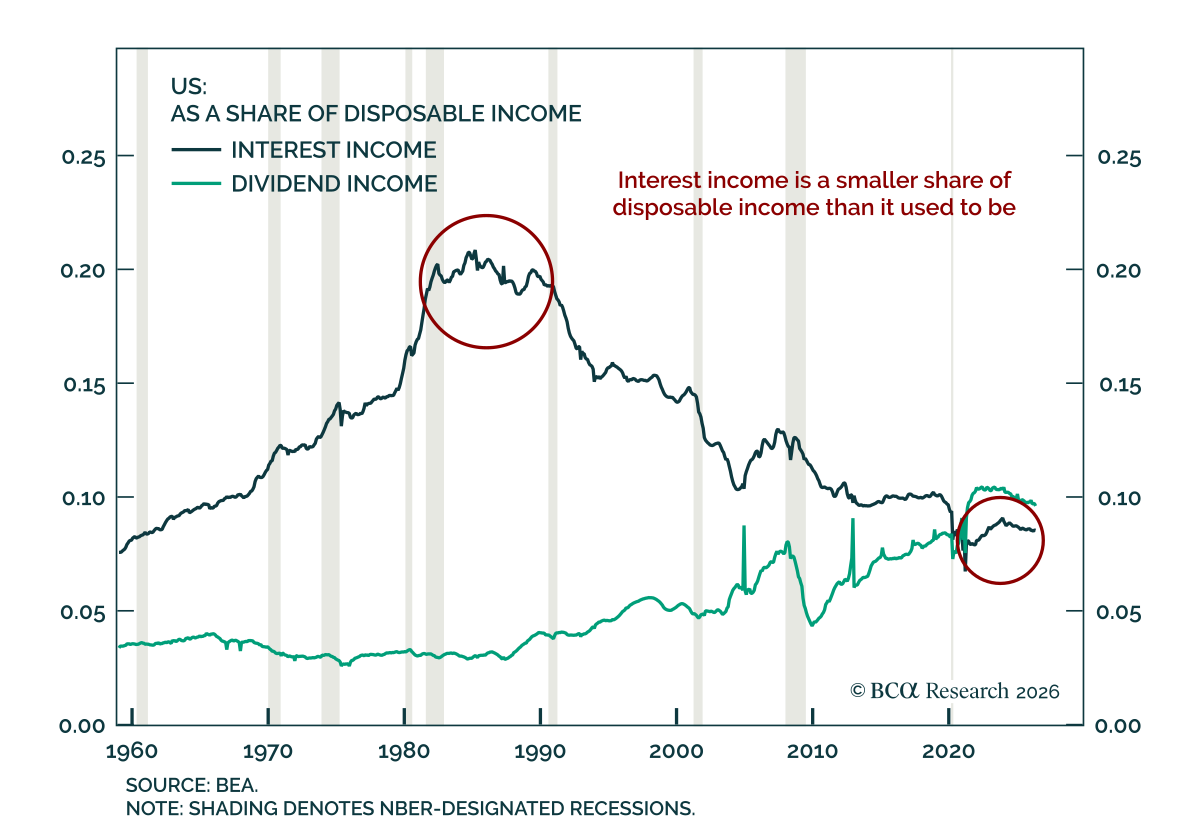
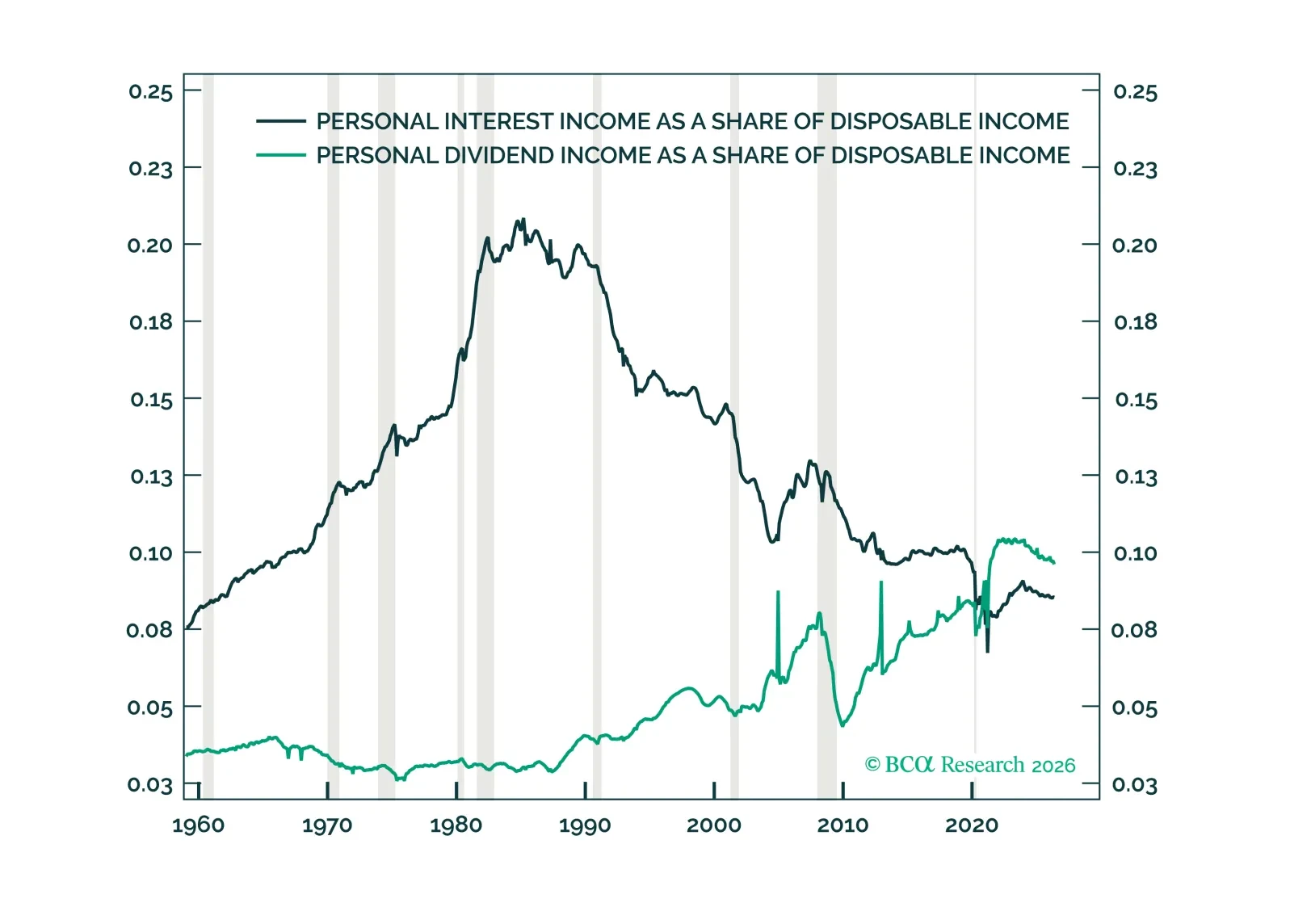
Our US Investment strategists argue that higher-than-expected interest rates are more likely to restrain consumption than support it. An idea gaining traction is that as rates rise, households collect more interest income and spend it, thus spurring…

We are increasingly being asked if higher for longer interest rates could help spur consumption by boosting interest income. This report examines household income and balance sheet data to see if they might.