メインコンテンツにスキップ
メインコンテンツにスキップ

Japan

大規模な原油ショックのような急性の地政学的リスクは和らぎつつあるかもしれません。しかし、構造的な地政学的リスクは依然として高い水準にあり、楽天的な市場を混乱させる可能性があります。米国が減速し、中国が引き続き苦戦する中、循環的な経済リスクは過小評価されています。投資家は、関税実施や厳しい経済データの減速を見越して利益確定を検討すべきです。

投資家はポートフォリオにおいて株式を控えめにアンダーウェイトにし、不況の具体的な兆しが見え次第、より積極的にディフェンシブな姿勢に転じるべきです。私たちはこれが数ヶ月以内に起こると考えています。
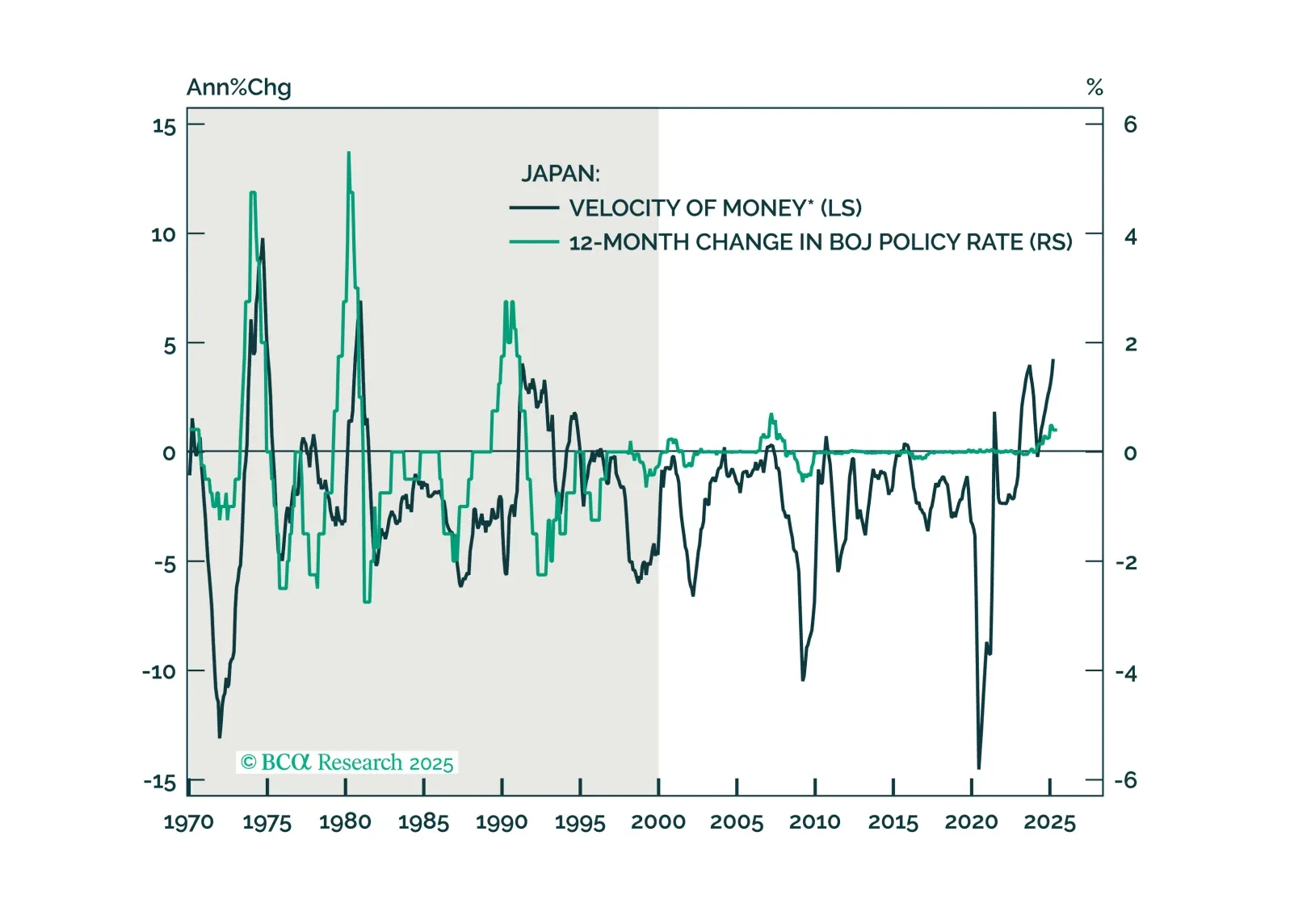
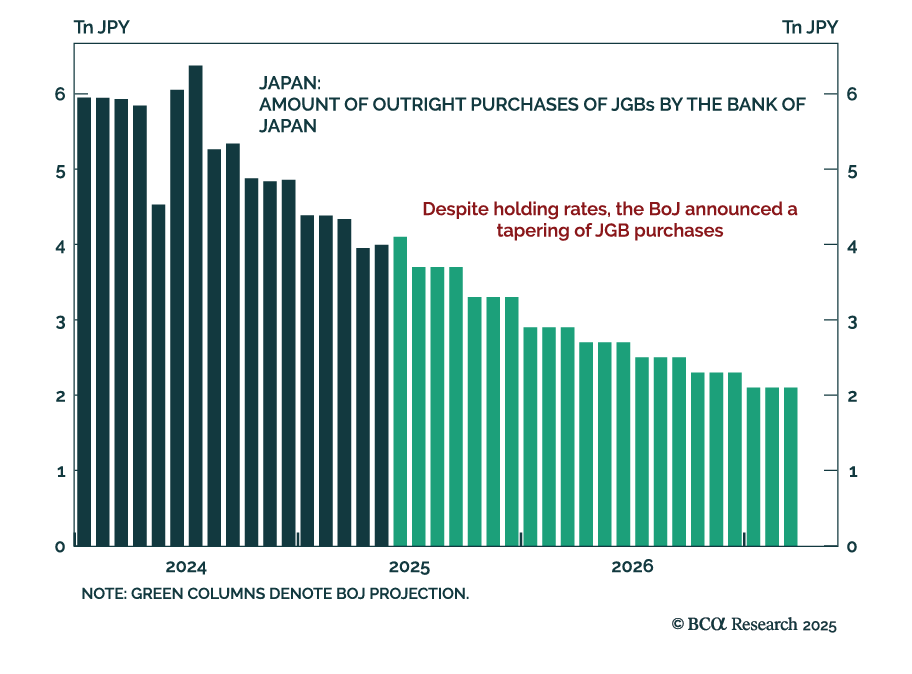
本ノートでは、昨夜の日銀会合を受けて、JGBに対するアンダーウェイトポジションおよび円ロングポジションを再確認します。 

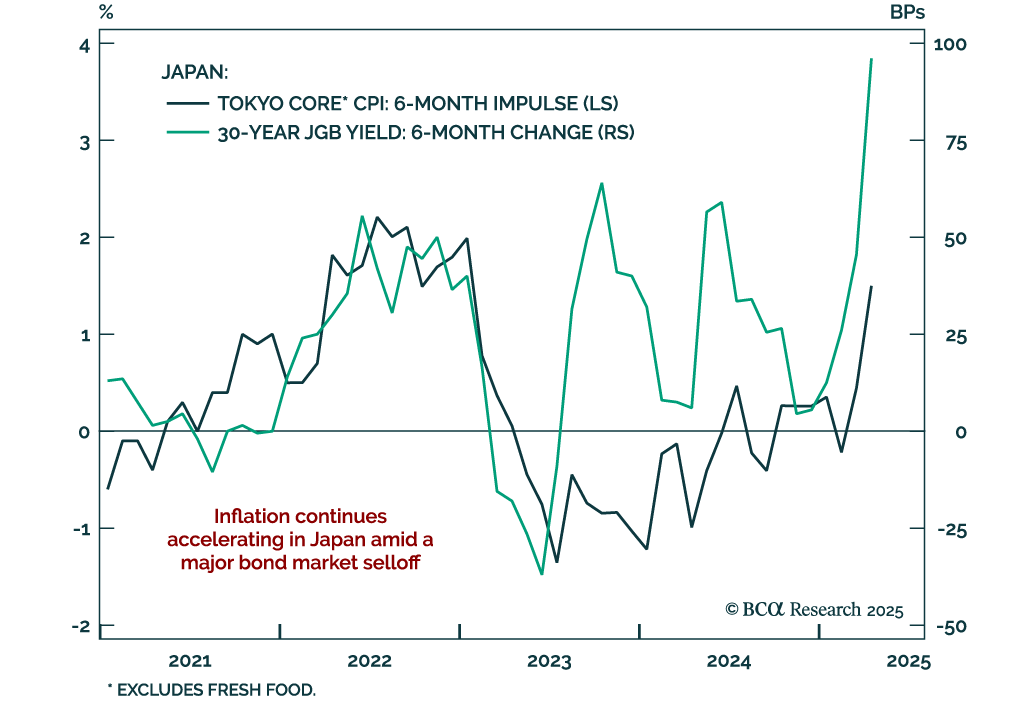
1 日銀:バランスの取れたポーズ 日銀:バランスの取れたポーズ 日本銀行(BoJ)が金利据え置きを決定しつつ、債券購入の縮小を発表したことは、JGBのアンダーウェイトスタンスと円へのロングバイアスを強化しています。この決定は概ね中立的ではありますが、資産購入の削減はタカ派的なニュアンスを加えており、特にインフレ期待が高まる中、日本経済が貿易と地政学的緊張の上昇に耐えている状況下ではその傾向が見られます。…

In this FX note, we provide a rationale for why it is important to pay attention to technical indicators, while still keeping your eyeball on the structural factors that drive currencies. This report answers the following questions: 1. Should you buy or sell the USD over a three-to-six month period from the pure lens of our proven technical indicators and 2. What are the best tactical cross trades among currencies. 
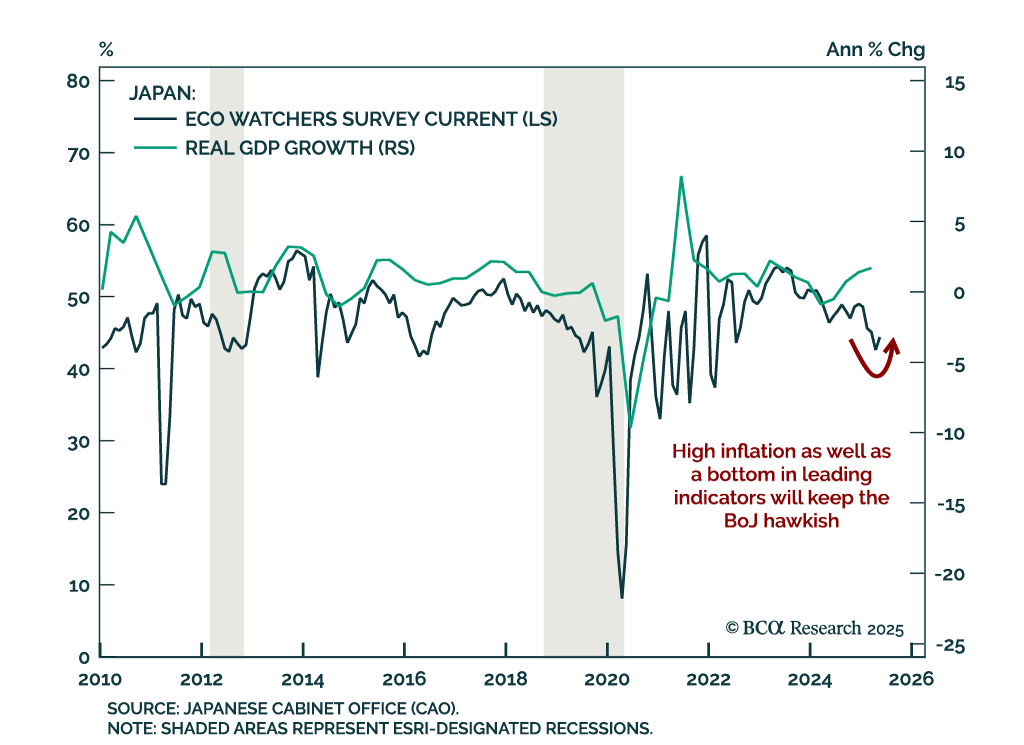
The BoJ will stay hawkish because of sticky inflation and better economic momentum. The May Eco Watchers Survey beat expectations, with current conditions rising to 44.4 and the outlook to 44.8. These levels still signal contraction, but the uptick, driven by…
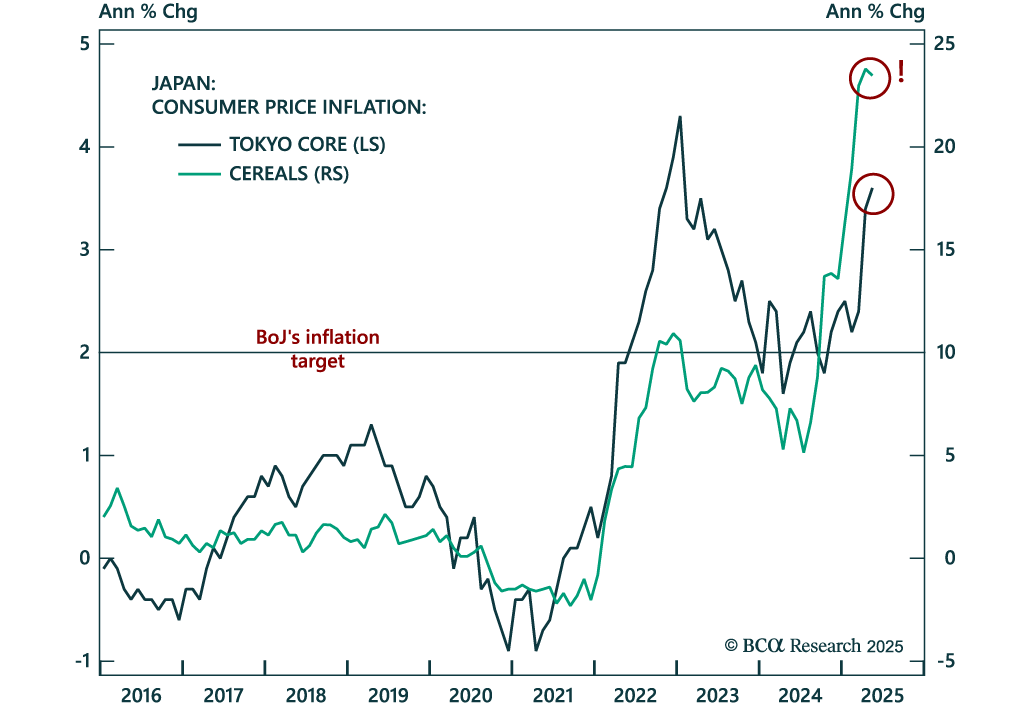
Bursting Japanese inflation warrants a cautious stance on the country’s bonds relative to other DM markets. Tokyo's annual core CPI reached 3.6% in May, the highest print in 44 years (excluding the post-pandemic inflation flare up). Inflationary pressures…
Tokyo CPI surprised to the upside in April, signaling that Japanese inflation shows no sign of deceleration and putting the Bank of Japan (BoJ) in a complicated position. Investors should remain maximum underweight in JGBs and overweight in inflation-linked…
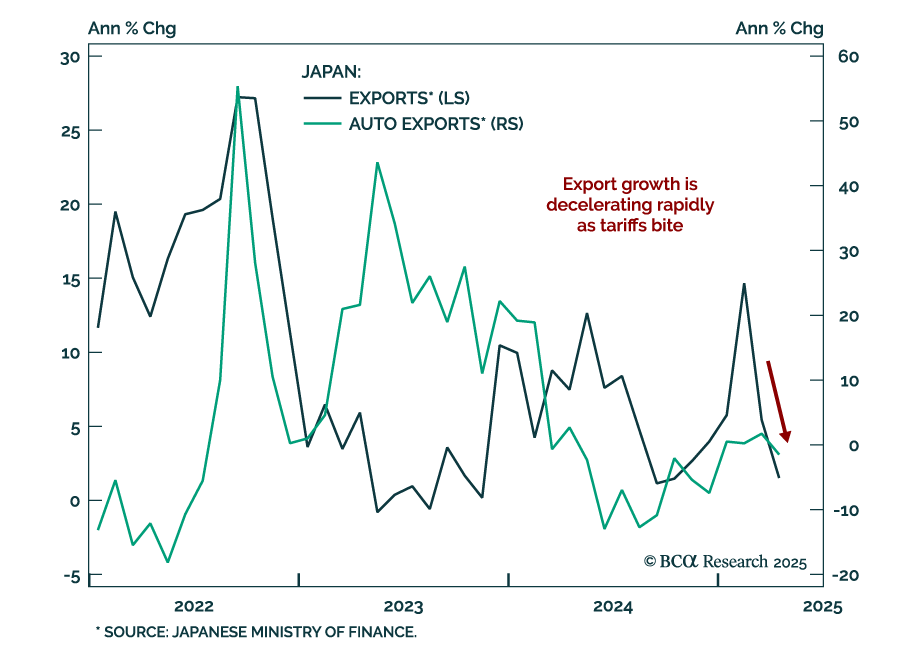
Japan’s export growth slowed materially in April as shipments to the US, Japan’s largest export destination, fell 1.8% from a year earlier. Japan has yet to make a trade deal with the US. Japanese export growth slowed to 2% from 4% in March, which aligns with…

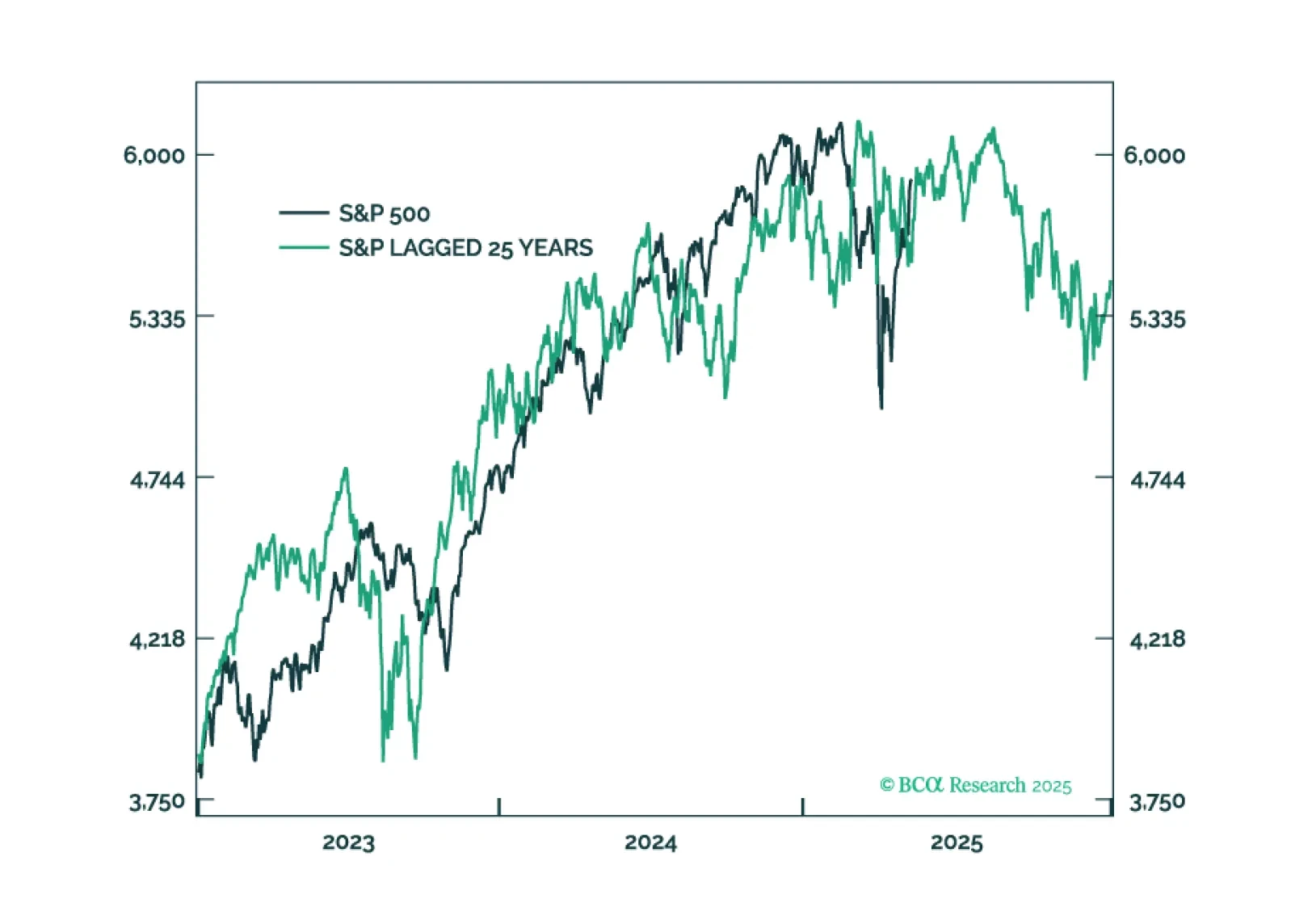
This year’s plunge in tech stocks followed by the recent strong countertrend rally is eerily reminiscent of 2000. But the market and economic parallels between 2025 and in 2000 run much deeper. This report lists 10 striking parallels between 2025 and 2020, then highlights some important differences, and ends by describing how the rest of 2025 might unfold based on a playbook that is: 2025 = ‘2000 with some tweaks.’