Latest from BCA Research
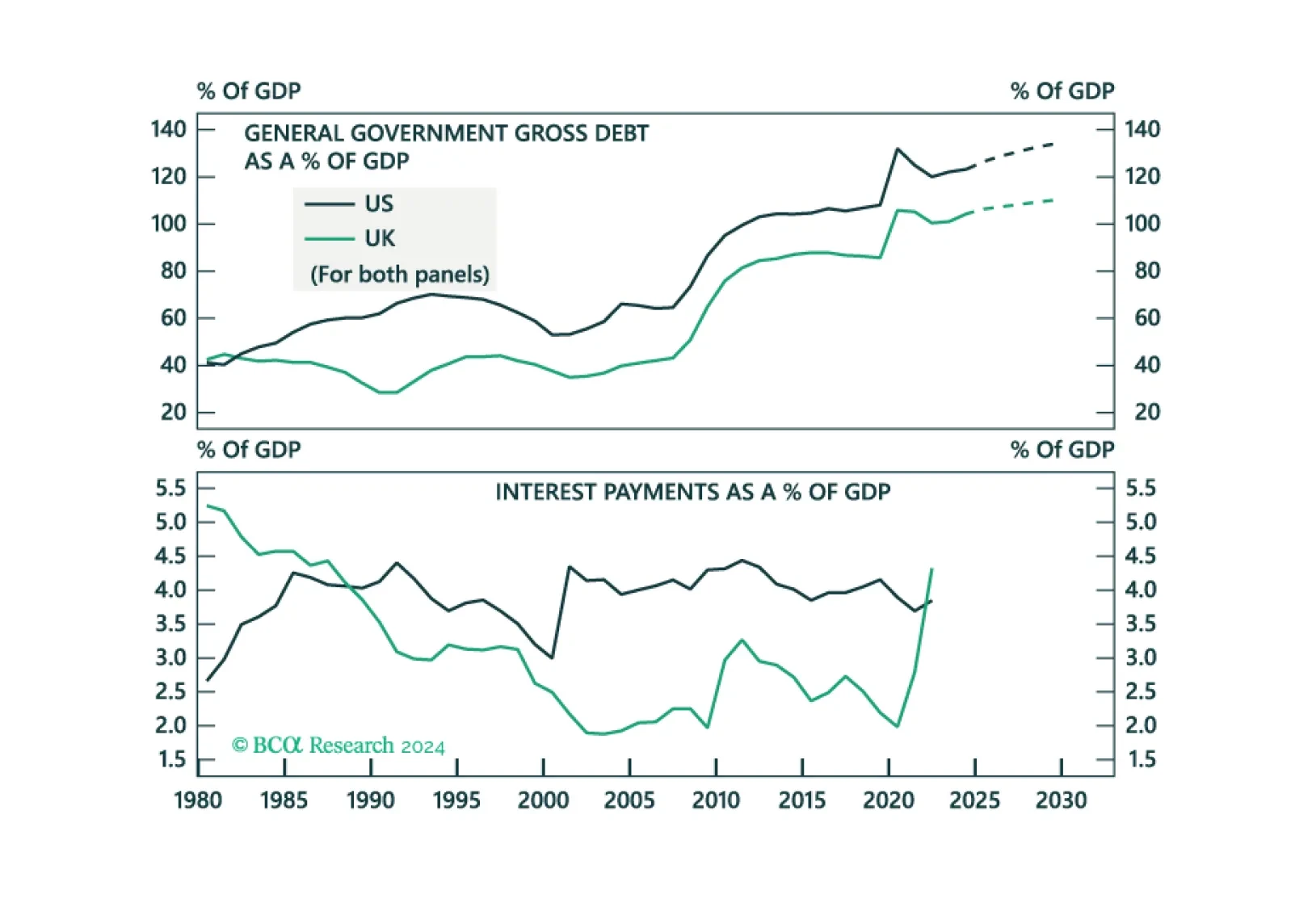
In this Insight, we assess whether investors should expect fiscal turbulence in the UK, that will drive UK yields higher and the pound lower.
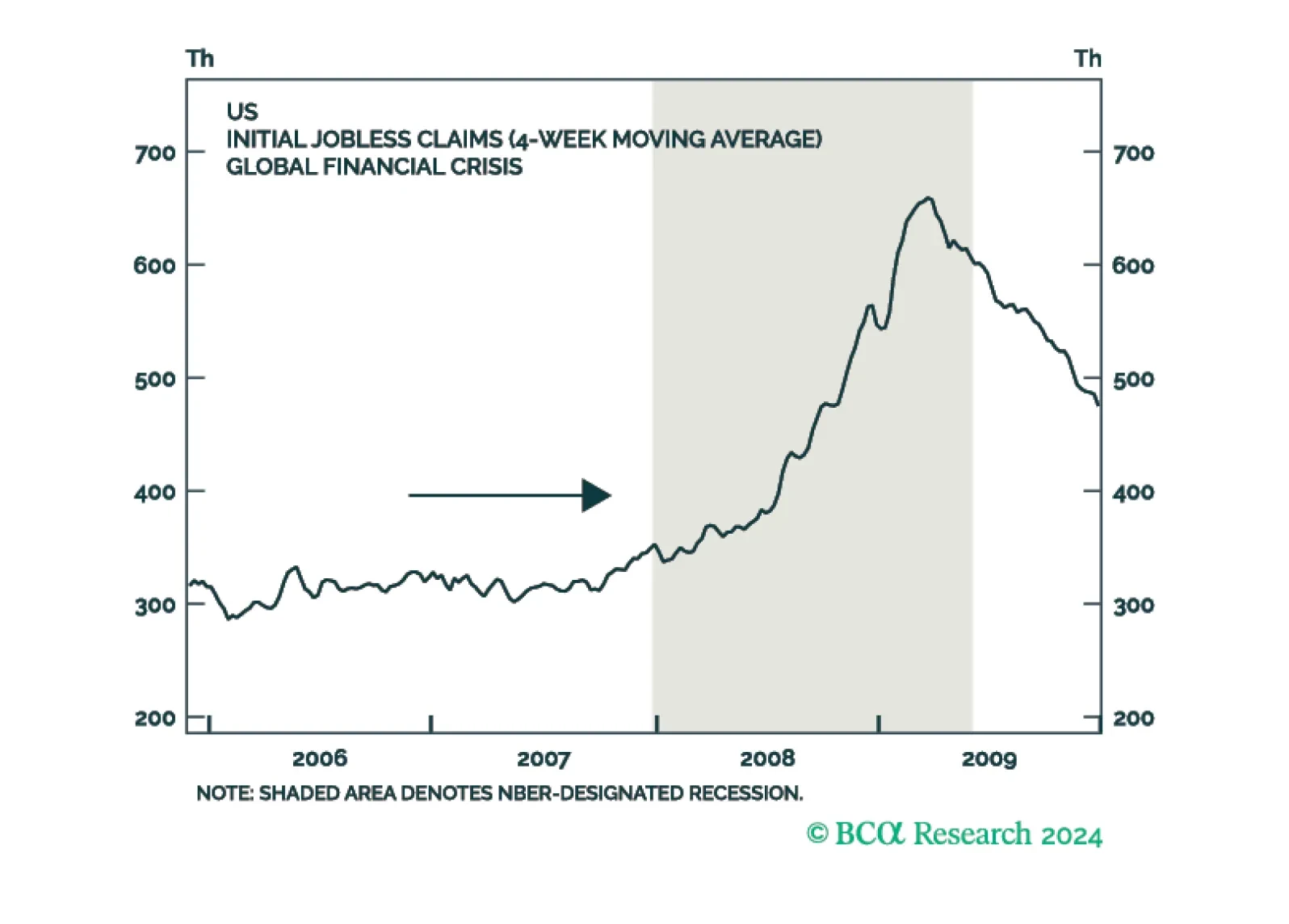
Whenever I present a skeptical view about the strength of the US labor market, I am often reminded that layoffs remain very low.
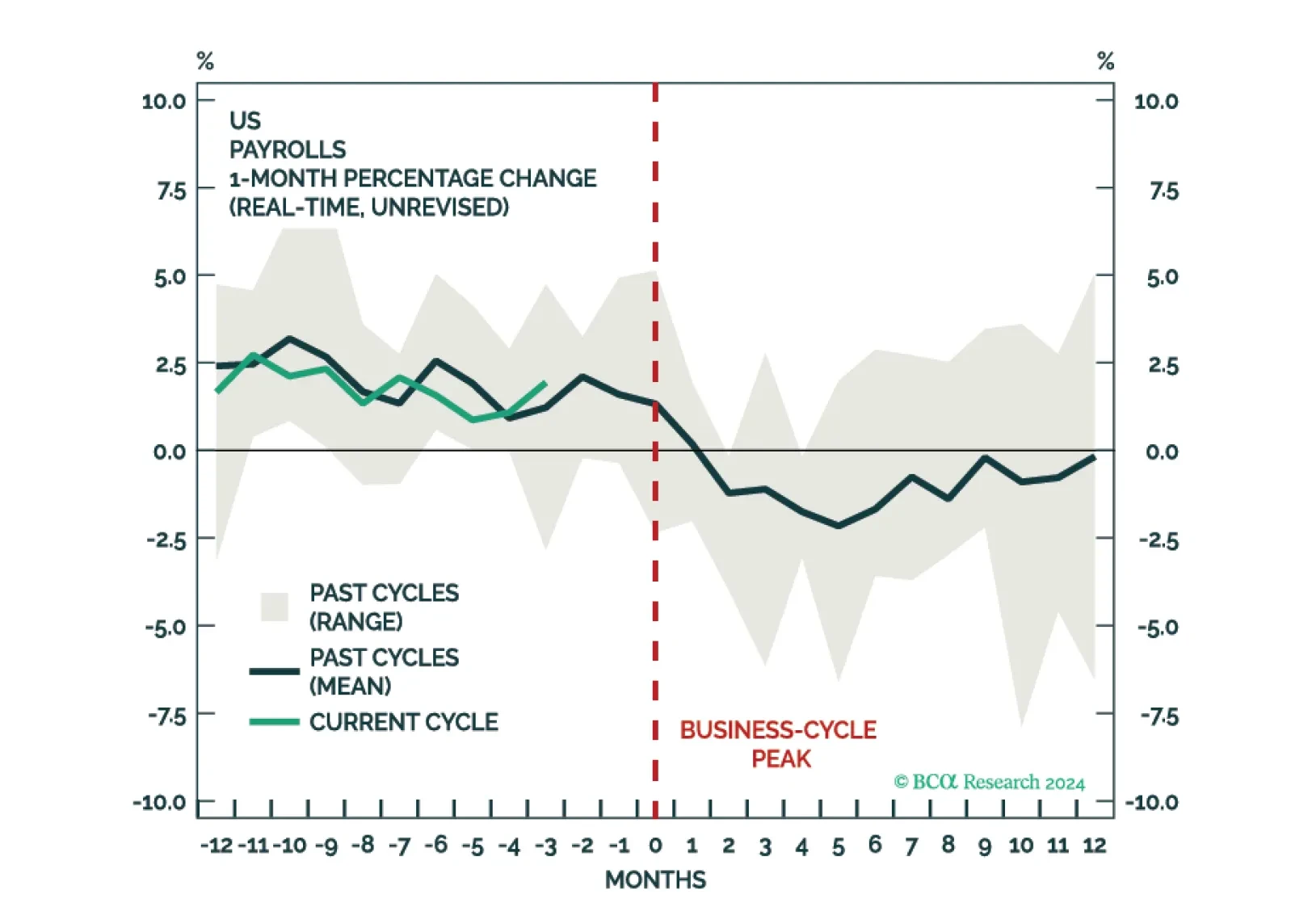
It is too early to say that the US labor market has turned the corner. We assign a 60% chance that the US will enter a recession over the next 12 months, with the downturn likely to begin in the first half of 2025. Accordingly, investors should underweight equities.
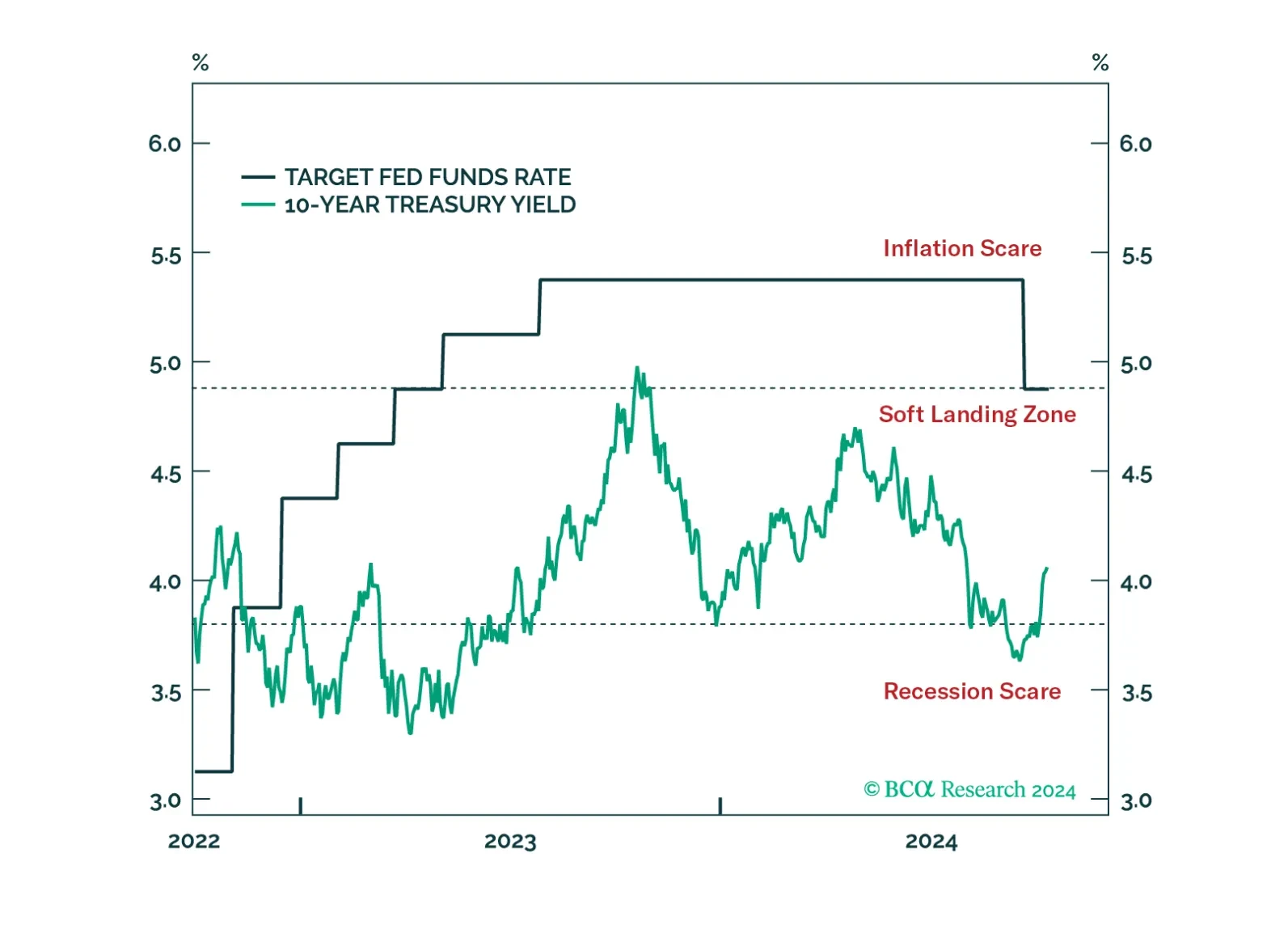
We give our thoughts on this morning’s CPI release and (lack of) market reaction. We also close our short position in January 2025 fed funds futures.
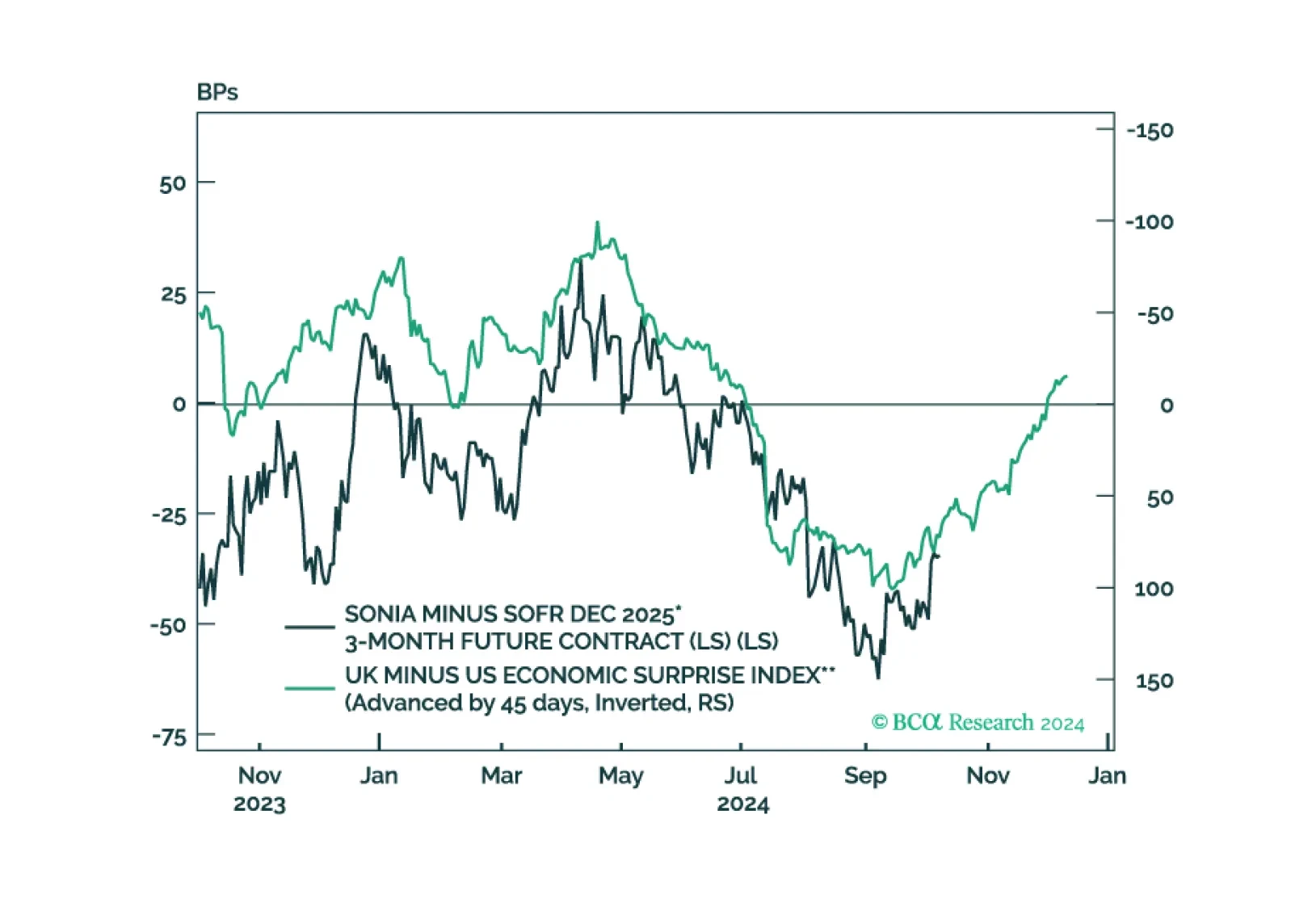
Our Q3 portfolio was defensive, which we believe will be the appropriate stance in the next six-to-twelve months. Data coming out of the US has remained robust which could cause US bond yields to temporarily overshoot. An overshoot in US bond yields will be an opportunity to dial up the portfolio’s defensive tilt. The average decline in 10-year Treasury yields 12 months after the first Fed rate cut is 100 bps. This time should be no different. There are not many changes to this quarter’s portfolio allocation. We have upgraded UK gilts to overweight and downgraded European credit to underweight. Portfolio duration remains the same. In terms of future changes, we are generally watching the trend in inflation given many central banks are delivering jumbo rate cuts. Any pause in the disinflationary trend we have seen will send bond yields soaring. This is a risk to our view. Otherwise, a recession in the first half of 2025 will cement our long duration stance.
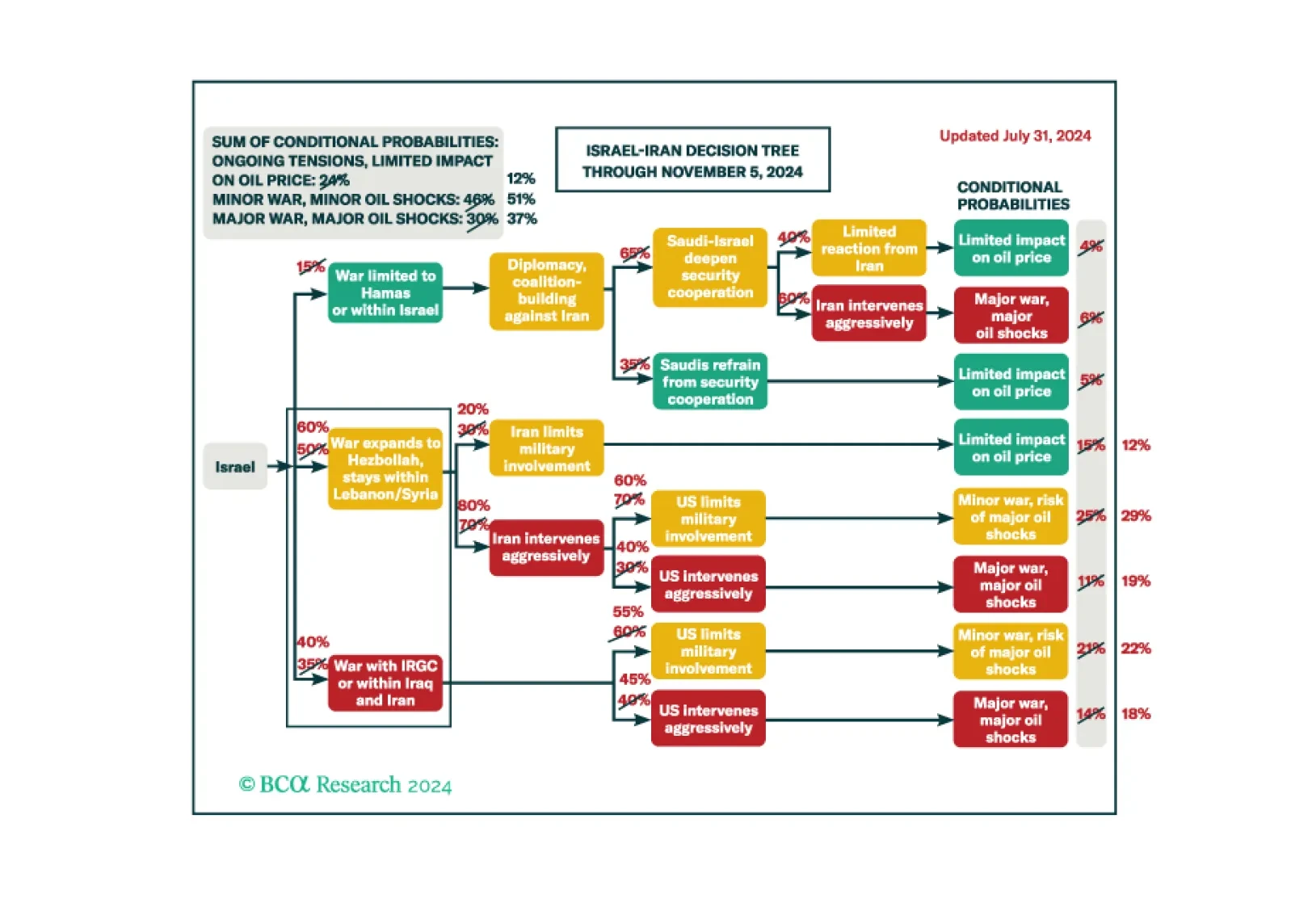
We maintain 37% odds of a major recessionary oil shock, 51% odds of minor shocks, and 12% odds of no shocks.
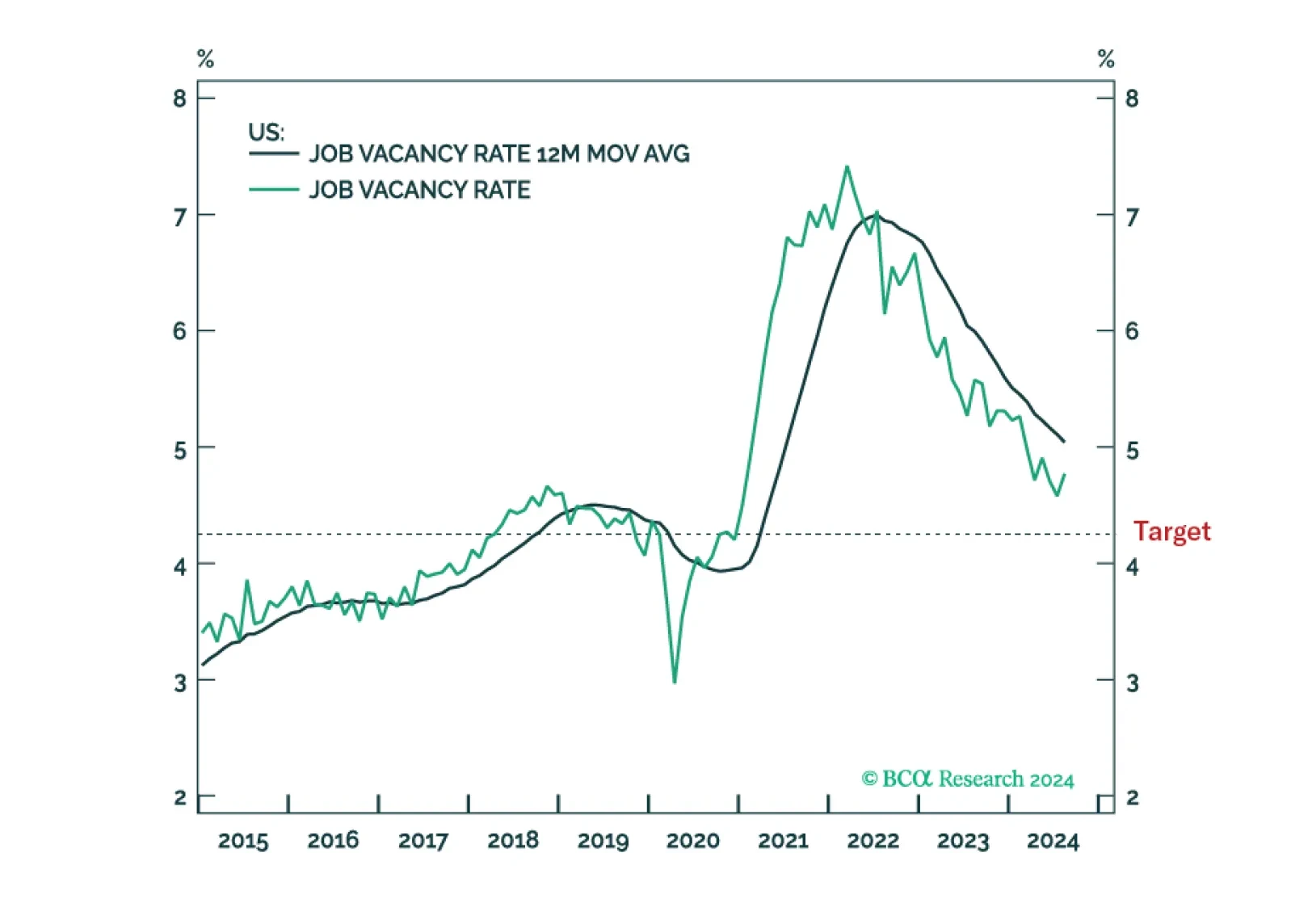
The good news is that we should not fear an imminent US recession. In the absence of a recession though, the Fed cannot cut rates as aggressively as is priced if it wants to keep inflation and inflation expectations anchored at 2 percent. This means that for stock markets the real risk is not a profits recession, the real risk is a valuation recession. We go through the investment implications for stocks, bonds, and currencies. Plus: we explain why, somewhat counterintuitively, gold is a tactical short.

One of the best things about working at the world’s largest – and oldest! – market research firm is that the “vault” contains research on almost any conceivable topic. As such, I pen this short missive to flag to the GeoMacro clients three reports on the risk of tech regulation – relevant in the context of the October 8 US Department of Justice statement that it may look to force Google to divest parts of its business.
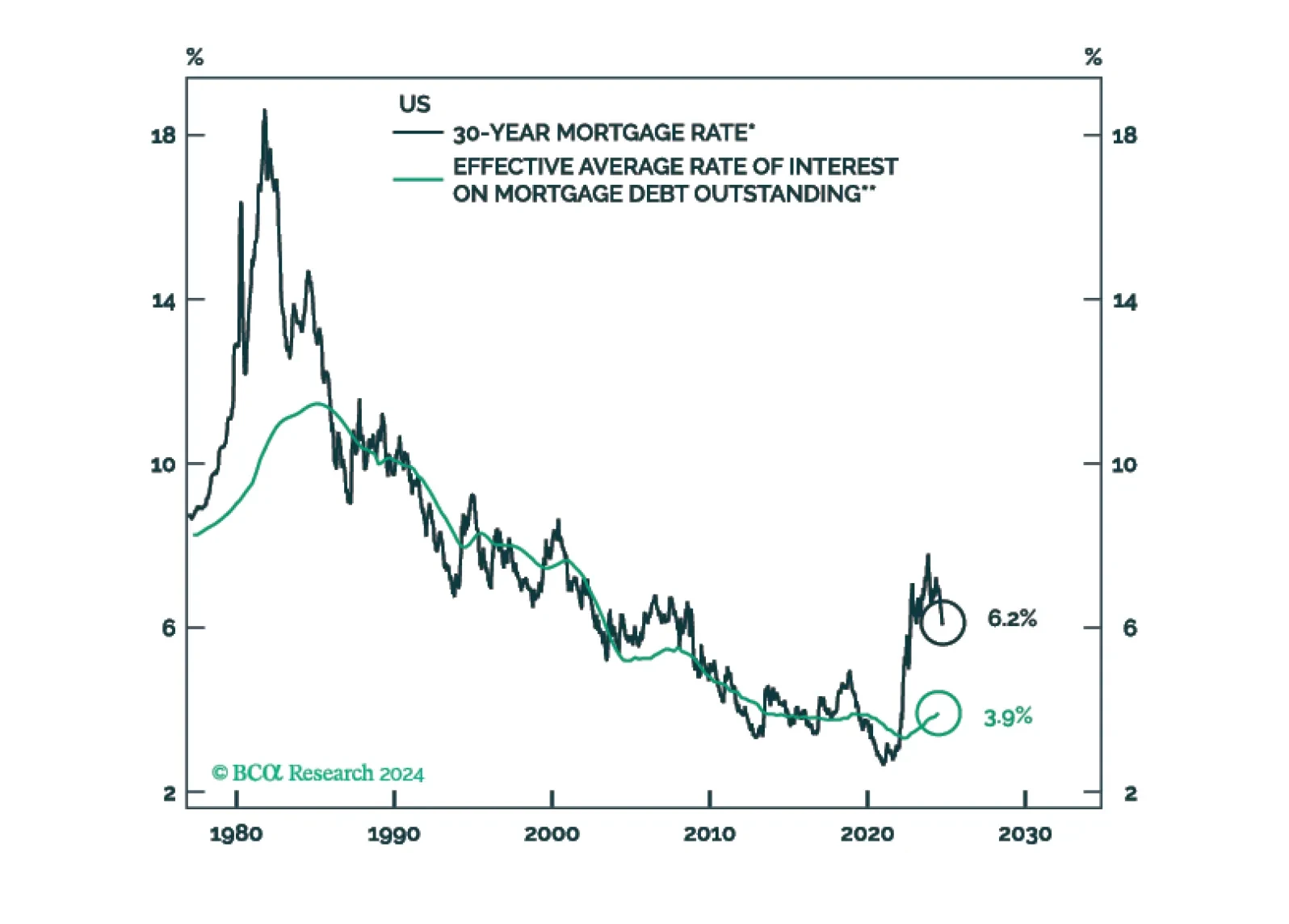
Following last week's strong jobs report, I'm hearing more people argue that a 4% Treasury yield is not that restrictive after all. To see why this view is wrong, suppose that the 10-year Treasury yield stays at 4% and mortgage rates remain roughly where they are.
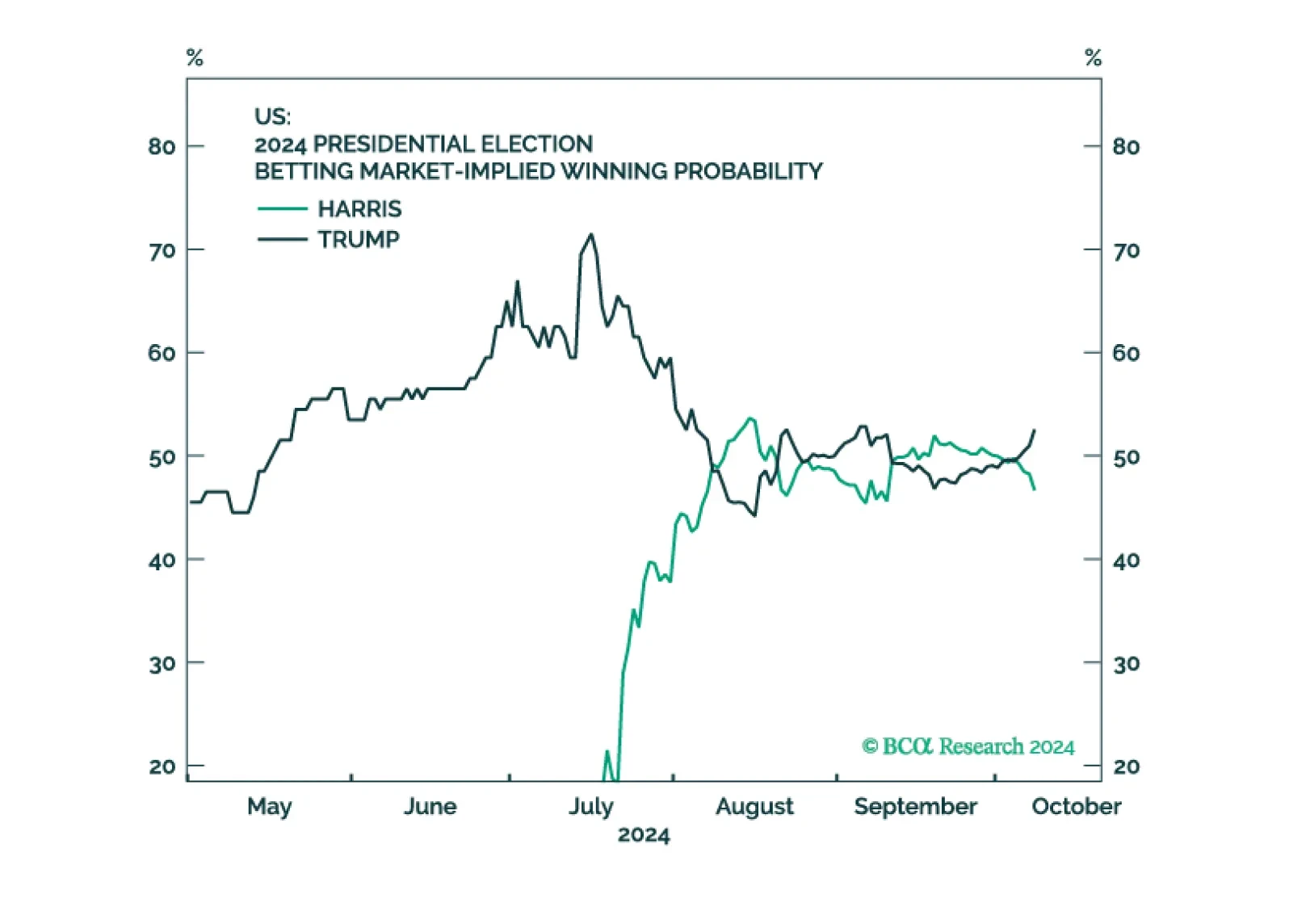
The month of October ahead of a US general election tends to be a volatile month with negative outcome for equities. As such, it is prudent to remain on the sidelines until after the election.