Previous


Dear Client,
BCA Research prides itself on thinking outside the box. Today’s report is an example of that. It envisions a radical future where new genetic and reproductive technologies come together in ways that reshape economies and financial markets. The report is not about what should happen, but what could happen under a plausible set of assumptions – and how this could affect your investment decisions.
Best regards,
Peter Berezin, Chief Economist
Executive Summary
- Part 1: Demographic Winter: How collapsing birth rates forced policymakers to take increasingly desperate measures to stabilize population levels, eventually culminating in the creation of “baby farms.”
- Part 2: Galton’s Revenge: How declining human intelligence revived concerns that had lain dormant for nearly 100 years.
- Part 3: Teaching Calculus to a Cat: How AI turned out to be a complement rather than a substitute for human intelligence.
- Part 4: Designer Babies: How new genetic technologies produced a rebound in human intelligence but also sowed the seeds for speciation and the effective end of the human race.
Part 1: Demographic Winter
Below Replacement Fertility Becomes the Norm
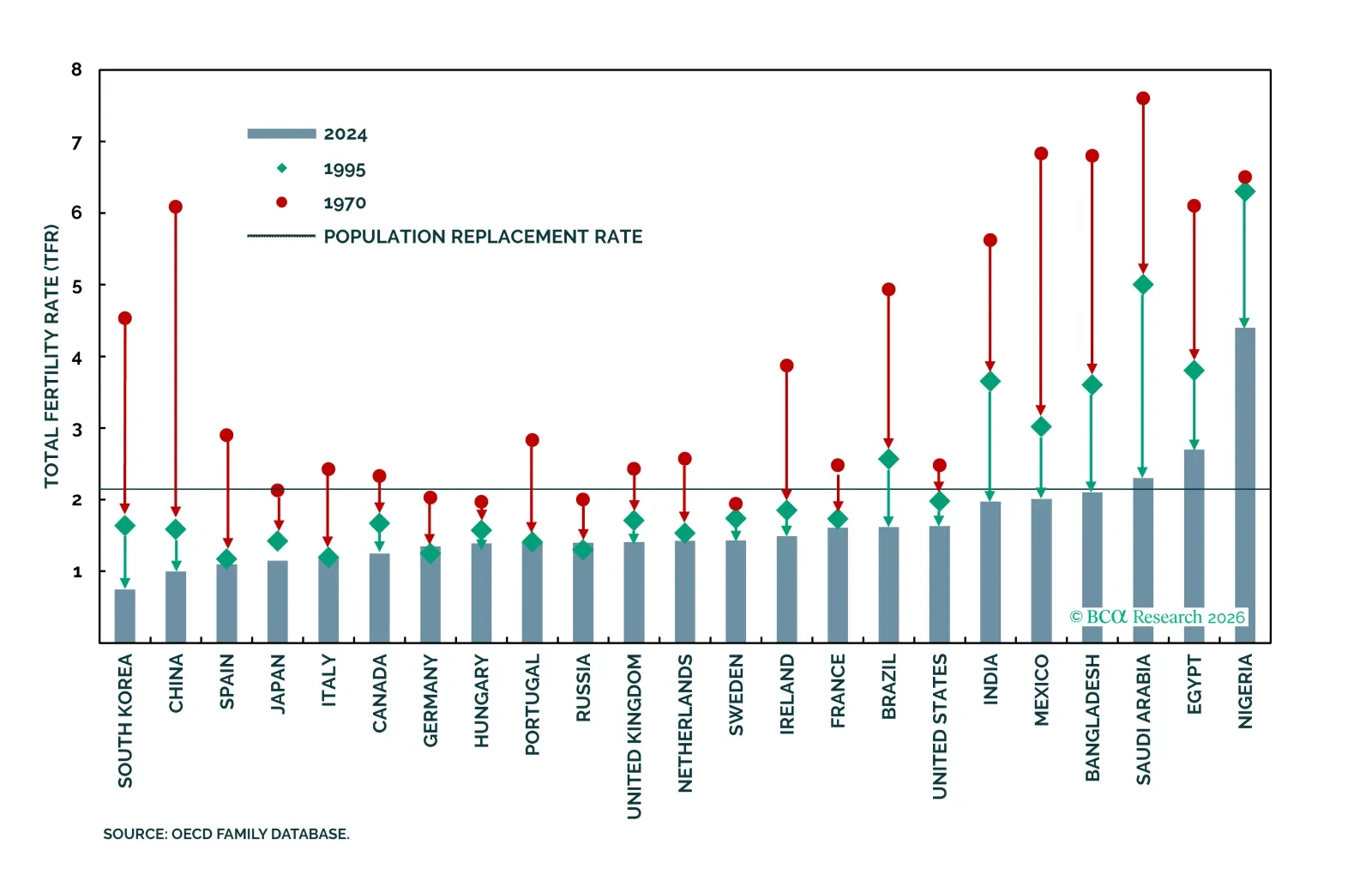
A stable population requires that every woman, on average, have around two surviving offspring. In 2026, birth rates in almost all developed economies had fallen far below that threshold (Chart 1).
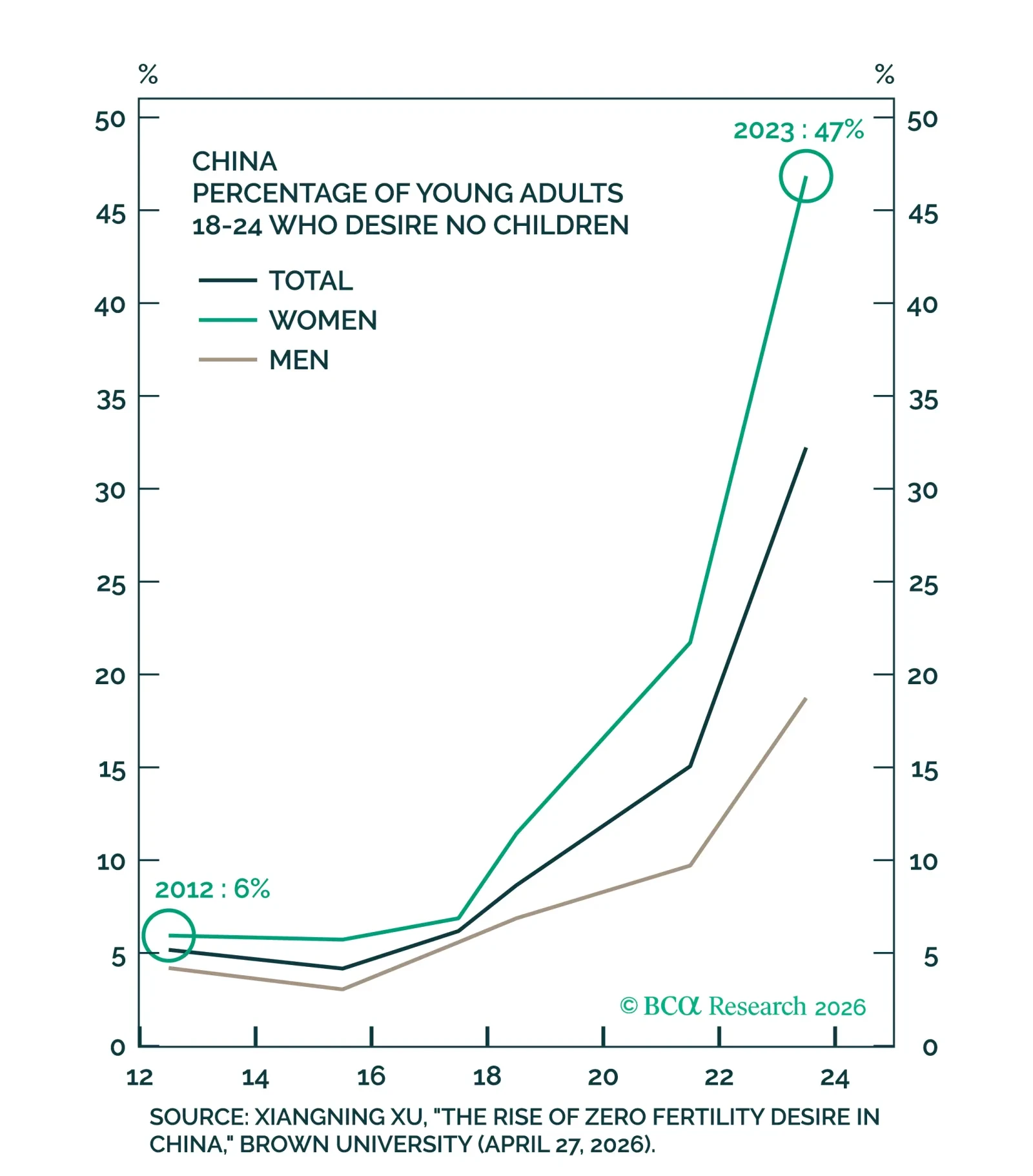
An increasing number of women decided motherhood was not for them. In China, the percentage of women between the ages of 18 and 24 who said they did not want children jumped from 6% in 2012 to 47% in 2023 (Chart 2).
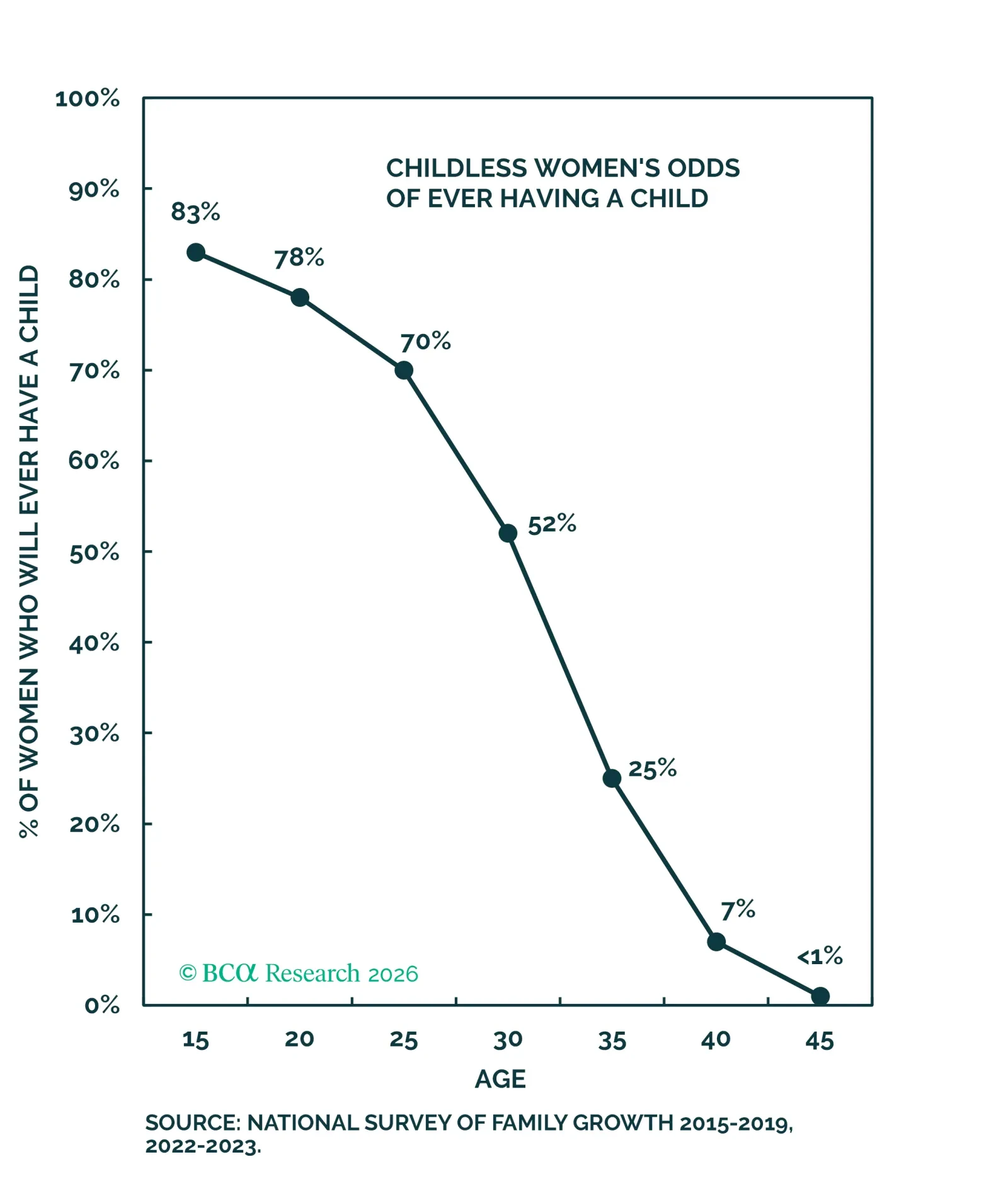
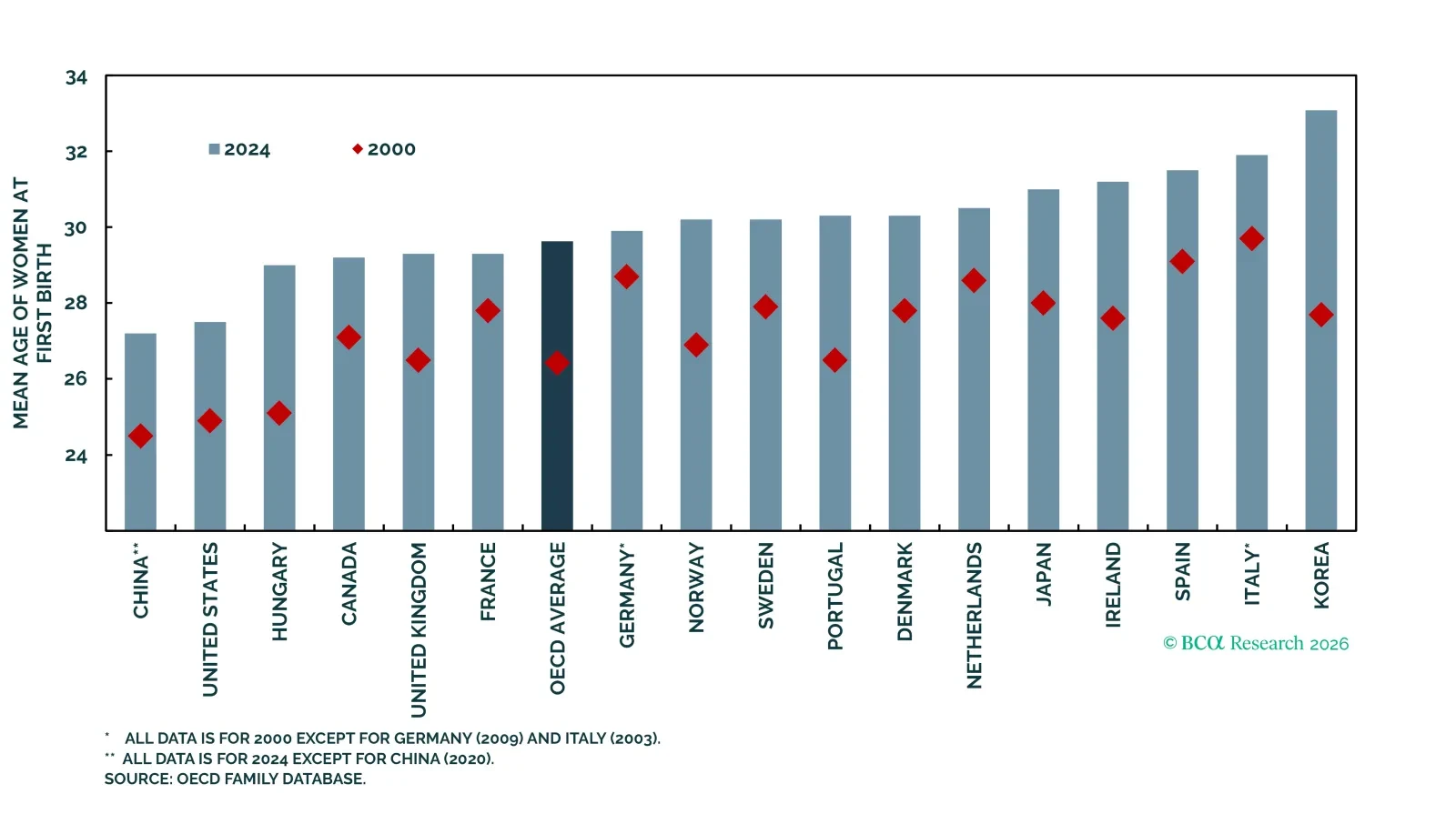
Fertility tends to drop off sharply starting in a woman’s early thirties (Chart 3). By 2024, the average age at which mothers in the OECD had their first child had risen to 29.6, up from 26.4 in 2000 (Chart 4). This left a growing number of women either involuntarily childless or unable to have as many children as they wished.
Across much of East Asia, the total fertility rate (TFR) dropped below 1, putting the populations of these countries on a course to fall by more than half with every passing generation.
Affordability Mattered (But Not That Much)
A variety of explanations were offered at the time for why fertility rates had plunged, most of which turned out to be wrong or, at best, incomplete.
One popular explanation focused on “affordability.” Many pundits claimed that the rising cost of housing and schooling had made it too expensive for many parents to have a child, let alone multiple children.
There was some truth to this argument, but it suffered from an obvious problem: People in 2026 were much richer than those in previous generations. If affordability had been the key constraint, this should have led them to have more children, not fewer.
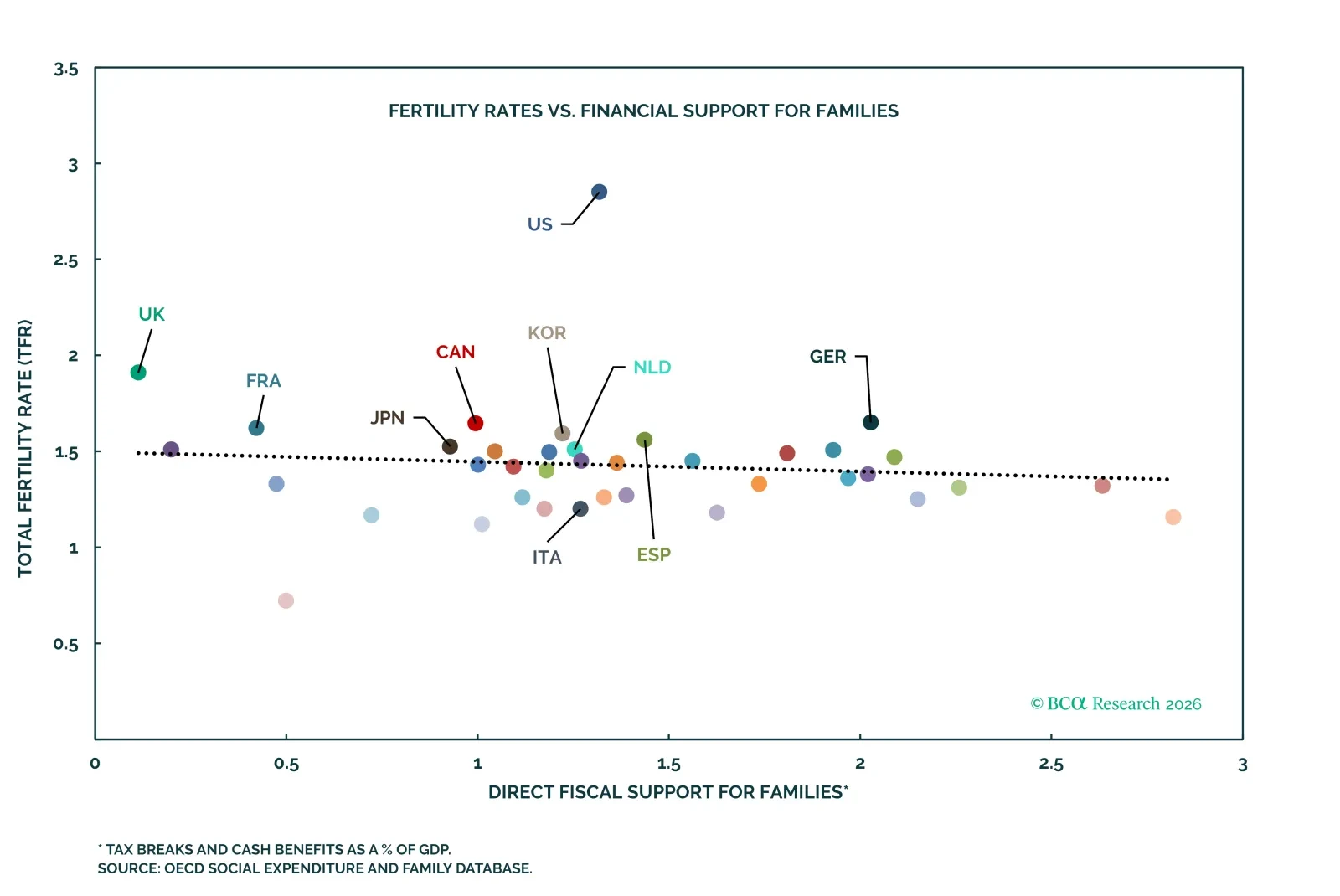
Generous government subsidies did very little to boost fertility rates (Chart 5). Most studies showed that cash payments to new parents influenced the timing of births but not the total number of births.
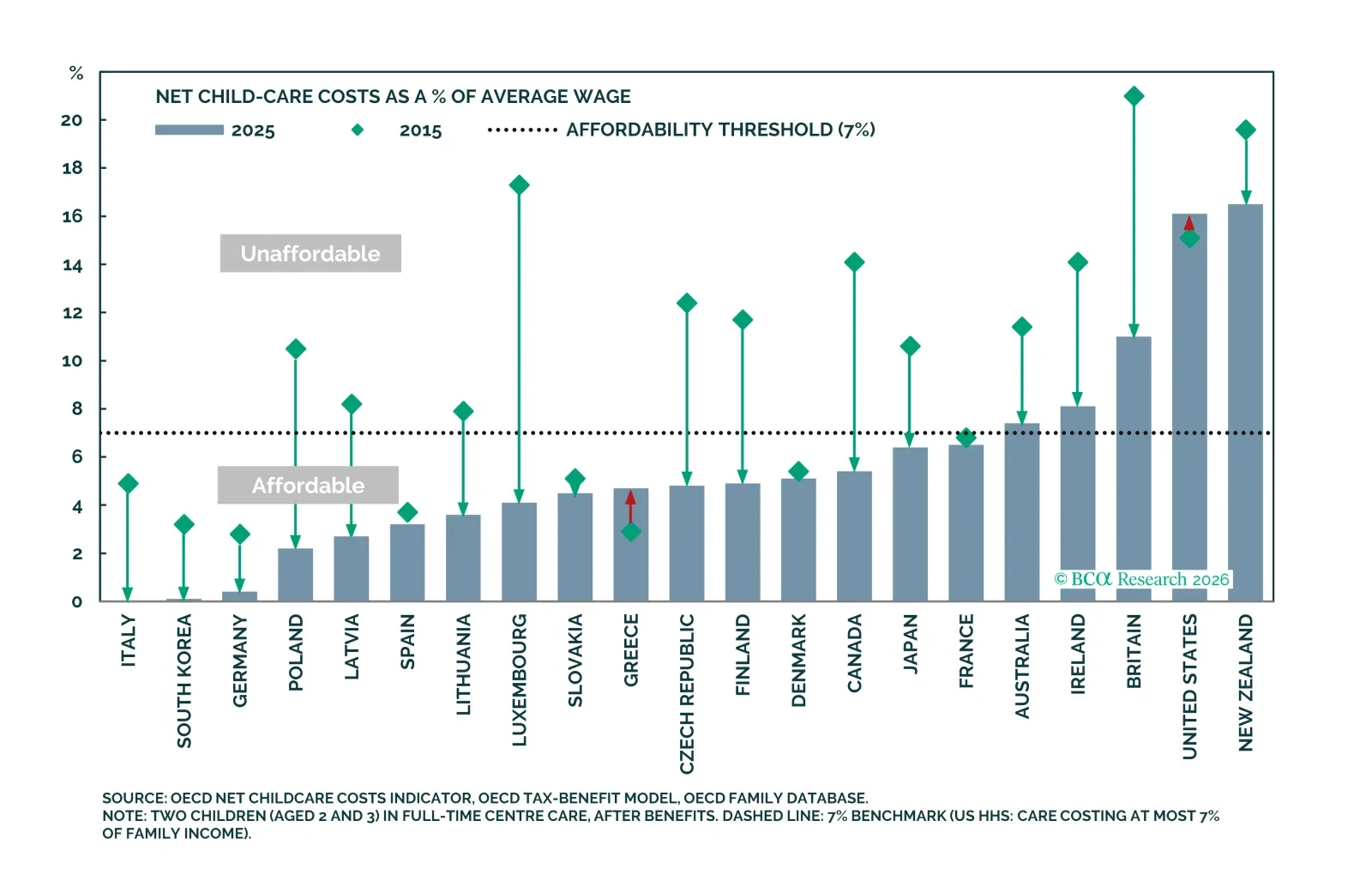
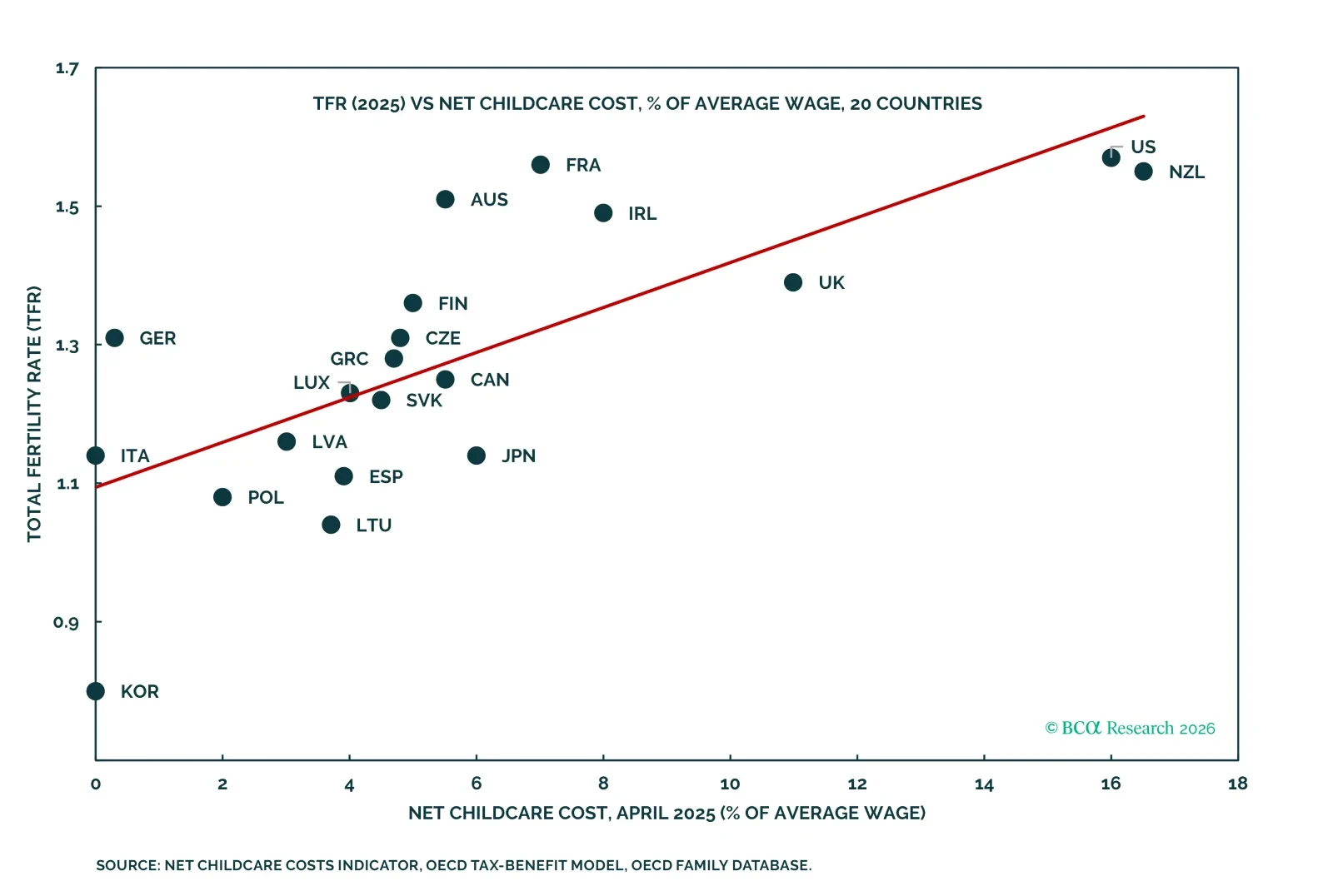
Greater spending on parental leave and childcare did raise fertility rates, but the effects were modest. Relative to income, childcare costs fell in most countries between 2015 and 2025, yet birth rates continued to decline (Chart 6). In fact, fertility was higher in countries where childcare was relatively more expensive (Chart 7).
Even Cheaper Housing Did Not Help Much
A 2023 OECD study found that a 10% reduction in housing expenditure raised the total fertility rate by only 2%, equivalent to +0.03 children per woman when the TFR starts at 1.5. A longer-term study of home prices and fertility spanning 1870 to 2012 reached a similar conclusion.
One reason for this modest effect is that while lower home prices made it easier for would-be parents to purchase a house, they also reduced the wealth of existing homeowners. A study by Dettling and Kearney estimated that a 10% increase in house prices reduced births among non-homeowners by about 1%, but increased births among homeowners by roughly 4 to 4.5%.
The historical experience bore this out: As in Japan during the preceding three decades, the decline in Chinese home prices starting in 2021 did nothing to arrest the fall in birth rates.
The Opportunity Cost of Children
The direct cost of raising a child is one determinant of birth rates. However, arguably more important are the indirect costs in terms of forgone income. Over the course of the 20th century, rising educational attainment among women increased the opportunity cost of staying out of the workforce. This was amplified by a steady increase in real wages. As women became more financially independent, motherhood ceased to be the default option.
For a while, there was hope that greater gender equality would allow birth rates to rebound. This expectation was buttressed by a variety of studies showing that women were likelier to have a second child when their partners shouldered more of the burden of housework and childcare.
Consistent with this view, the Scandinavian countries were able to sustain near-replacement fertility well into the 2010s. By the mid-2020s, however, even they experienced a steep drop in birth rates. In 2025, Sweden’s total fertility rate reached 1.42 (1.40 for the Swedish-born population and 1.52 for the foreign-born).
Cultural Explanations
The main drawback of economic explanations was that they failed to account for the rapid decline in birth rates in almost every country after 2010. For that, we need to look at cultural factors.
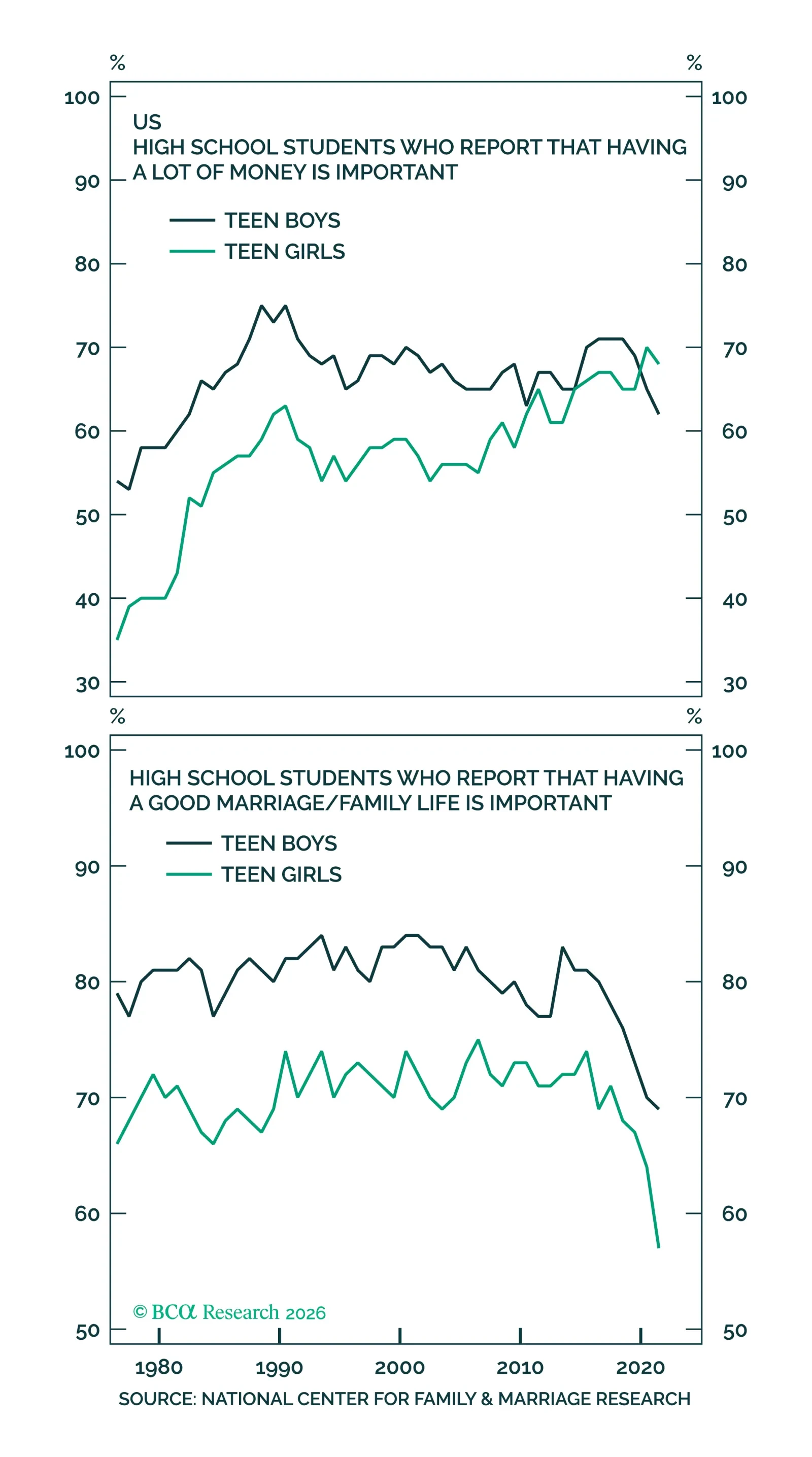
The introduction of smartphones and the pervasive use of social media produced an environment that discouraged family formation. Social media feeds glamorized fame, beauty, and wealth, not parenthood. The share of teenagers who said that “having a good marriage/family life was important” to them declined noticeably, while the share saying that “having a lot of money was important” increased. The rise in materialistic aspirations was especially pronounced among girls (Chart 8).
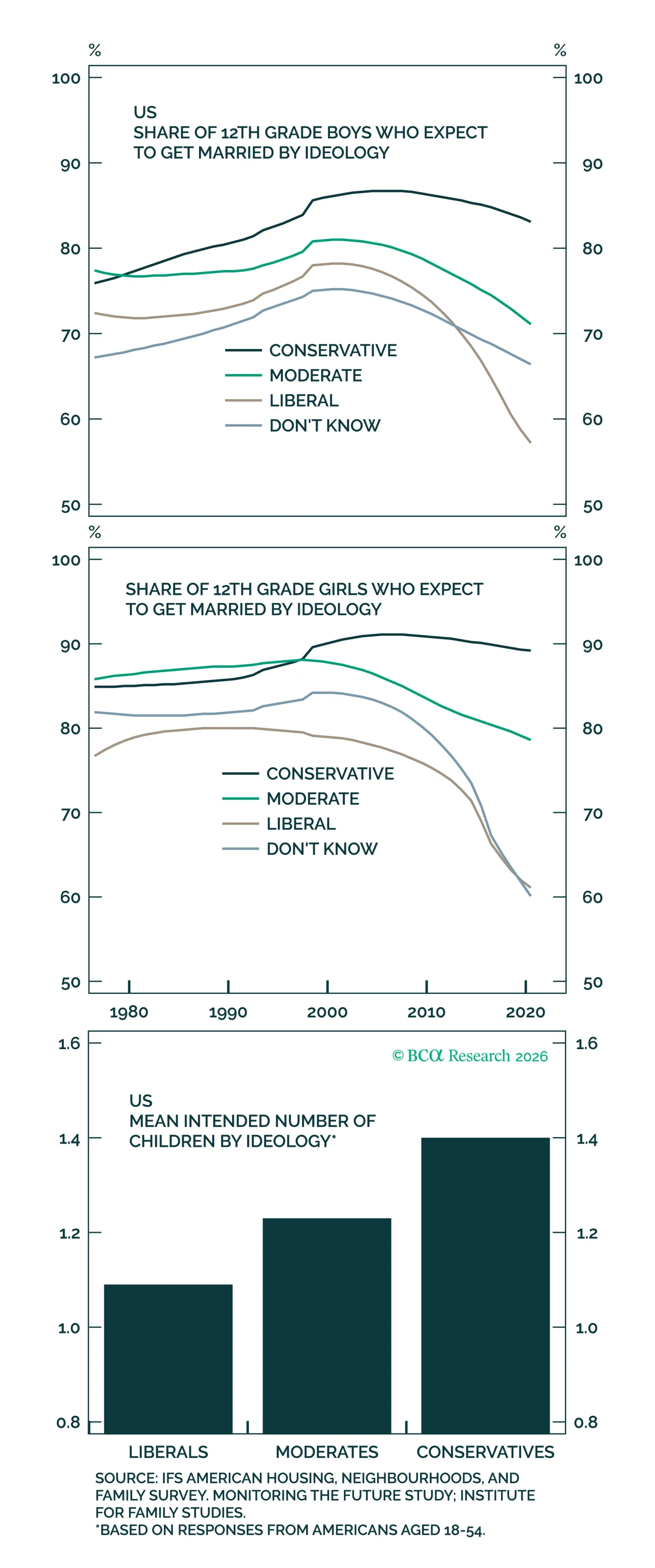
Once a status symbol, having a large family became increasingly viewed in a negative light. This was especially true in East Asia, where bigger households were often associated with rural backwardness and a lack of impulse control. It was also true among young liberal-leaning people in the West, whose desire to get married and have children began to collapse after 2010 (Chart 9).
At the same time, a plethora of choices made possible by dating apps created a sense of paralysis which inhibited long-term relationship formation. This problem was exacerbated by the rise of AI companions and, later on, humanoid robots.
Existential Crisis
Some argued that the growing use of robots in the workplace negated the need for human workers. Others countered that the aggregate welfare of a nation depended, at least in part, on how many people there were. What was the point of a higher GDP if there were few people around to enjoy it?
Moreover, in international relations, relative GDP mattered. If a country had a shrinking population, it would fade in geopolitical relevance, even if per capita income was rising.
Ultimately, these pronatalist arguments gained sway. By the late 2020s, apprehension about falling fertility rates had turned to outright panic. Something radical had to be done.
Part 2: Galton’s Revenge
The Two Most Controversial Letters in the English Language
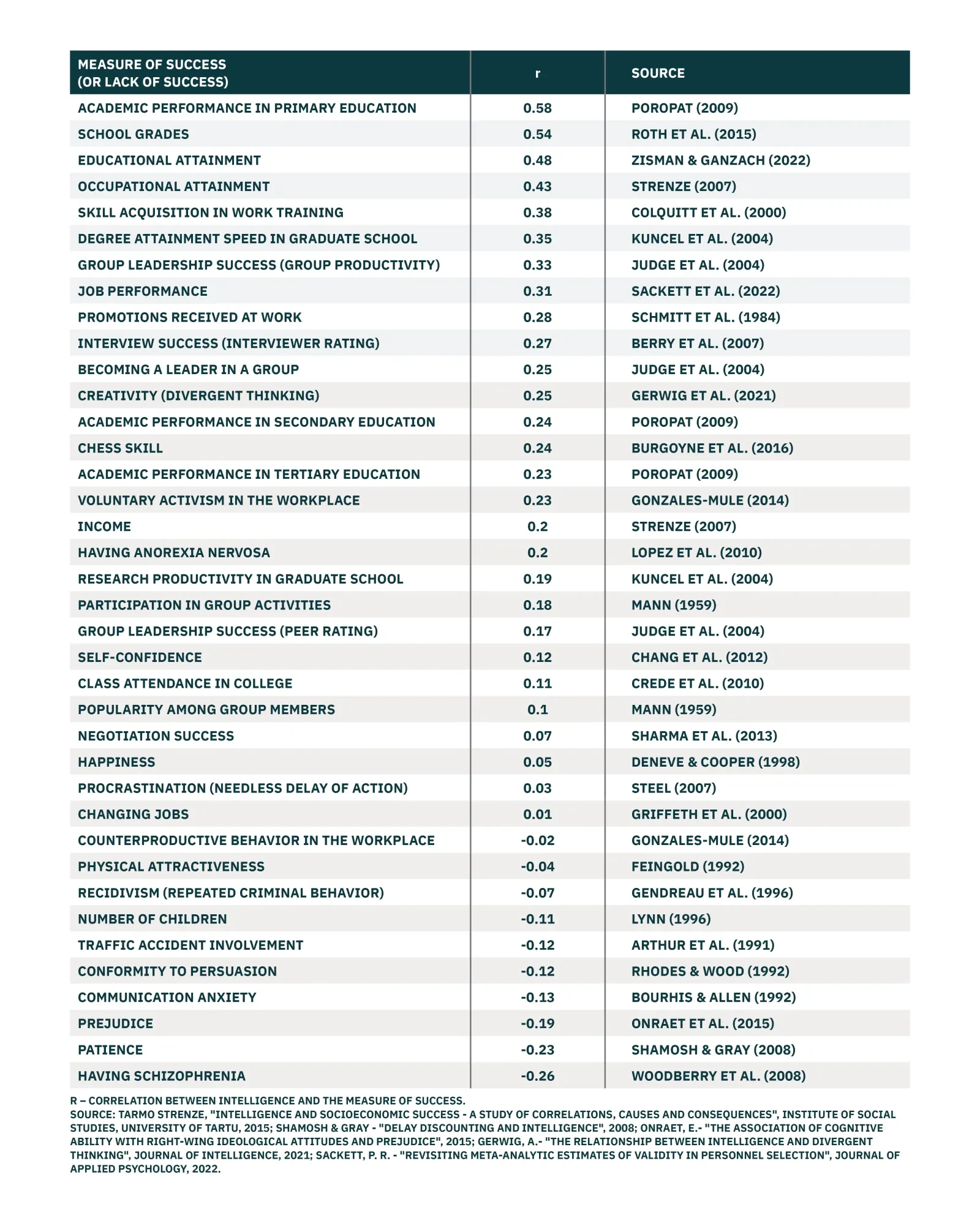
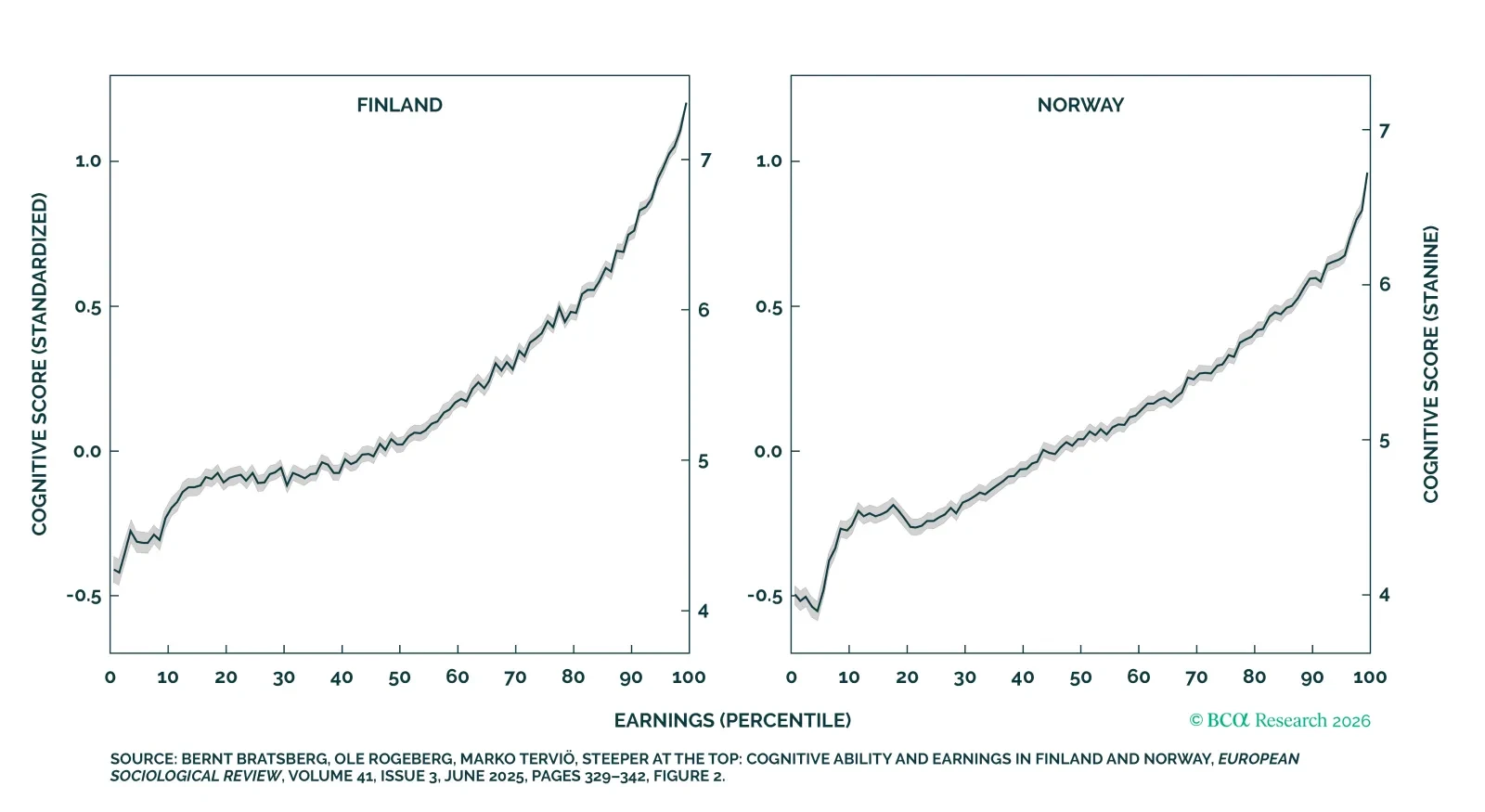
IQ has a long and contentious history. Yet, despite numerous efforts to jettison the concept, it has endured for one simple reason: It has more predictive power than virtually anything else in the psychological realm. A simple 30-minute IQ test can help predict future educational attainment, job performance, income, health, criminality, and fertility choices (Table 1 and Chart 10). IQ even predicts trader performance!
Although there is a great deal of variation among individuals, on average, more intelligent people earn higher incomes. This was demonstrated in a 2024 study of 367,000 Finnish and 417,000 Norwegian men. The authors matched scores on standardized military conscription tests of vocabulary, mathematics and abstract reasoning with earnings from administrative tax/income records. Men who received higher test scores when they were young, on average, went on to have higher incomes (Chart 11). A meta-analysis of 135 longitudinal studies also found that intelligence is a powerful predictor of success.
A Smarter World
The degree to which IQ and other psychological traits have evolved over time has been hotly debated. In his bestselling book, The Mismeasure of Man, Stephen Jay Gould argued that human evolution effectively stopped 50,000 years ago.
Whatever the merits of Gould’s other arguments about the misuse of IQ data, that particular claim was always rather suspect. The advent of agriculture and the growth of towns and cities reshaped the environment in which people lived. Environmental dislocations of this kind tend to generate selective pressures that cause evolution to speed up. Higher population levels should also have increased the number of potentially beneficial genetic mutations.
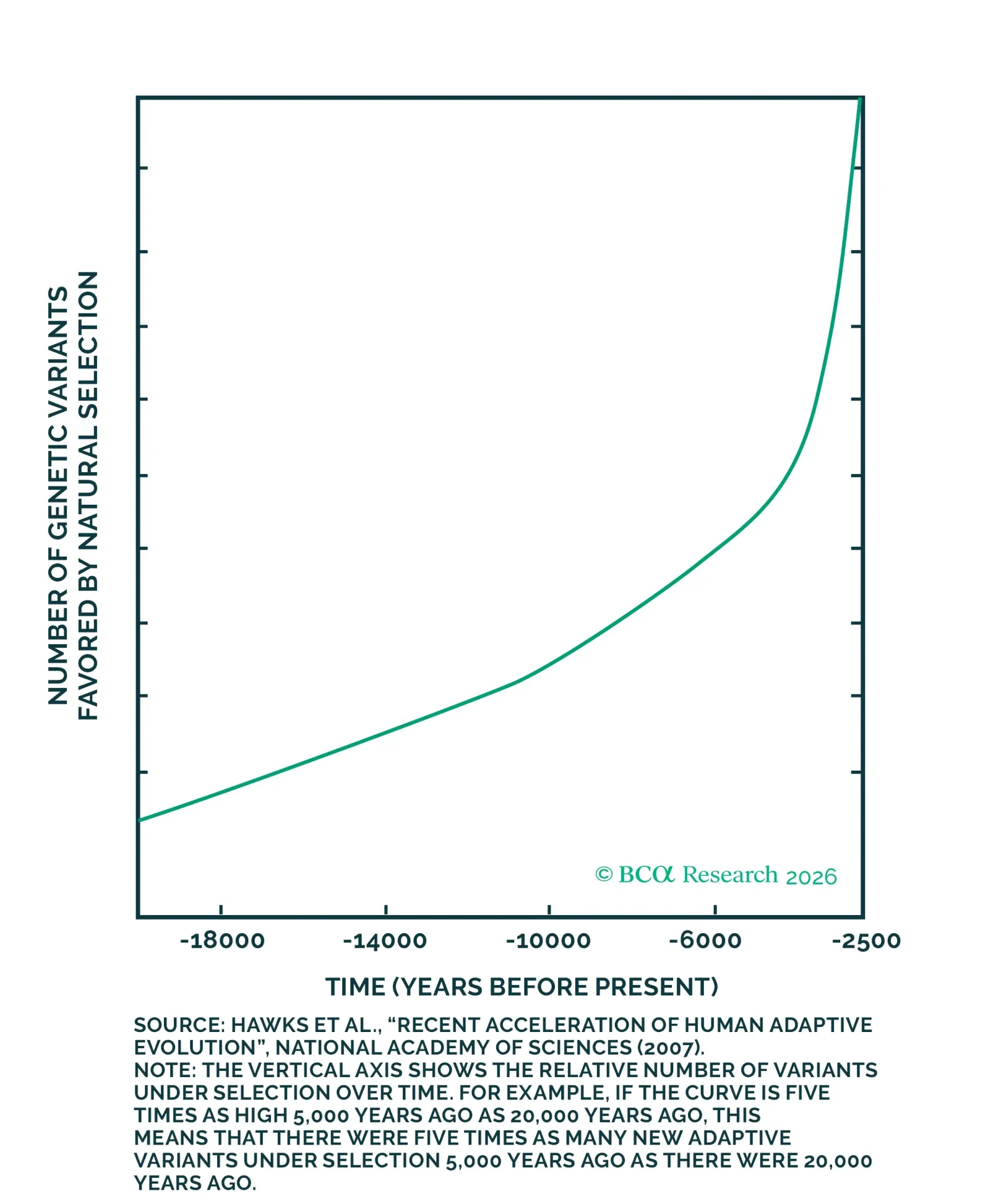
Contrary to Gould’s expectations, the International HapMap Project showed that evolution accelerated roughly a hundredfold starting about 10,000 years ago (Chart 12).
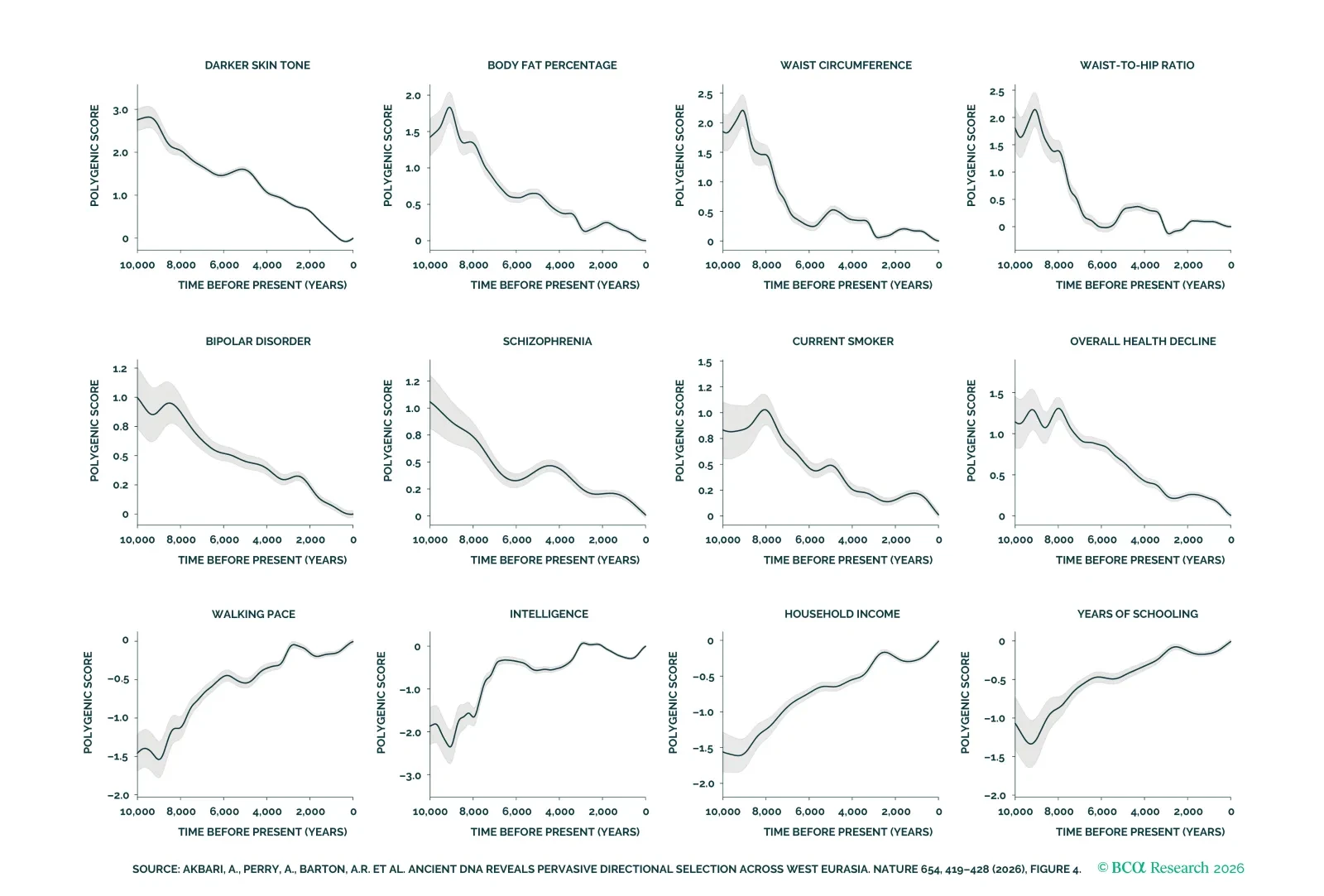
More recent data has clarified exactly what traits have been under selection. David Reich and his collaborators analyzed the genomes of 15,836 individuals from West Eurasia who lived over the past 18,000 years. Their paper in Nature showed that certain genetic variants that in the modern age were linked to higher intelligence, more years of schooling, and greater income had become more widespread in humans. Conversely, genetic variants that were more prevalent in smokers and those who suffered from certain mental disorders had become less common (Chart 13).
Consistent with the genetic data, economic historian Gregory Clark documented that members of skilled professions in medieval England had twice as many surviving children as unskilled workers (Chart 14). Indeed, the fledgling middle class of the time had even more surviving children than the aristocracy, who were often out fighting wars. As a result, craftsmen’s wages declined by a third relative to laborers between 1200 and 1800, implying that the supply of skilled labor grew more quickly than the supply of unskilled workers. The stunning implication of Clark’s work was that the timing of the Industrial Revolution was a question of “when, not if.”

In subsequent work, Clark argued that the spread of bourgeois values across preindustrial England was more consistent with a model of genetic transmission than a cultural one.
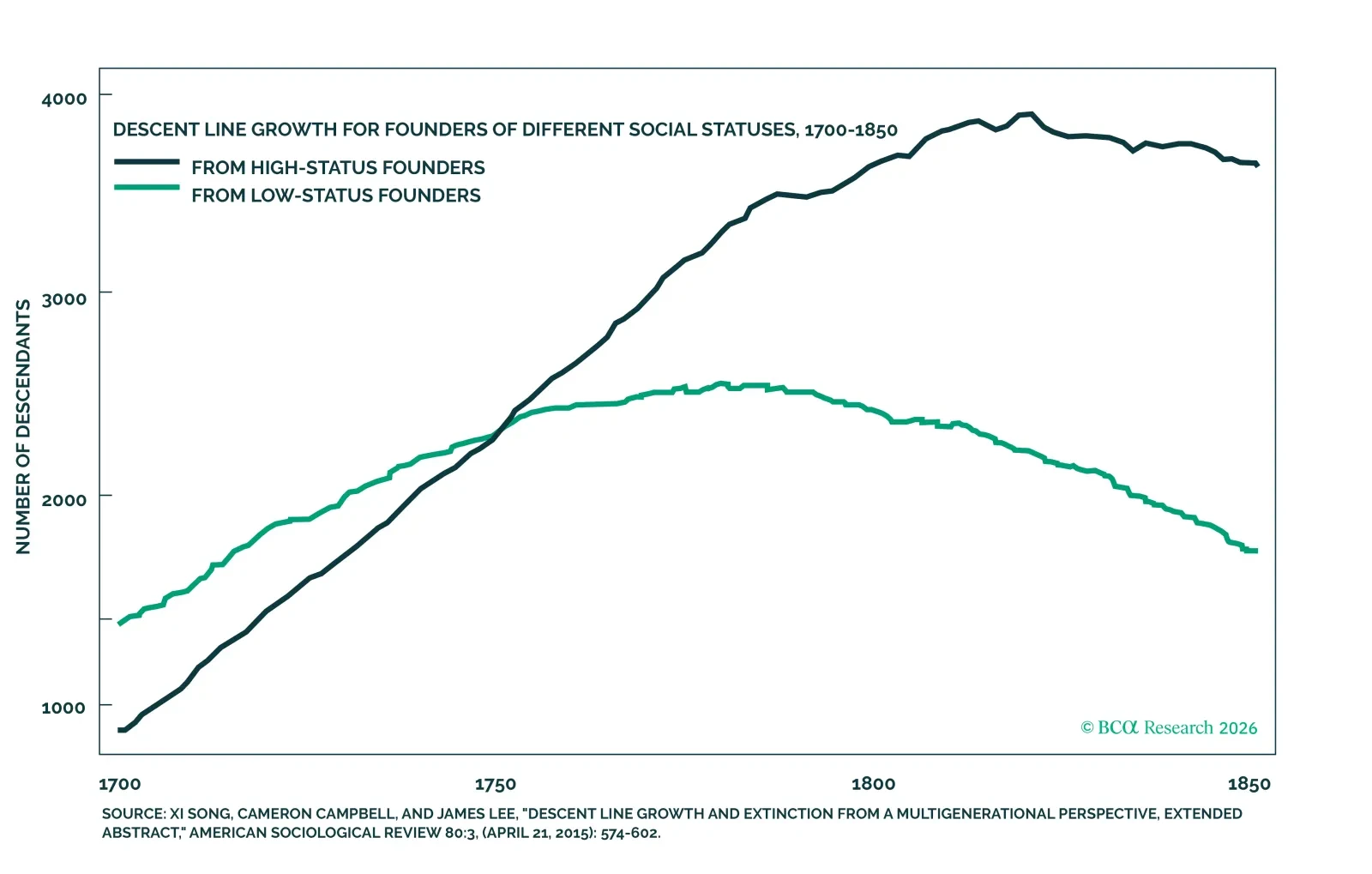
Similar dynamics most likely applied to other parts of the world. In China, the highly competitive imperial exam served as the gateway into the bureaucracy for a thousand years. Xi Song, Cameron Campbell, and James Lee showed that high-status Chinese men had more surviving children during the 18th and 19th centuries (Chart 15).
The Flynn Effect
By the late 19th century, it had become clear that the rich were no longer having as many children as the poor. This realization, together with the growing popularity of Charles Darwin’s theories, helped galvanize the eugenics movement.
Although Francis Galton, who coined the word “eugenics,” was a lifelong conservative, many of the most vocal proponents of eugenics were on the progressive left. George Bernard Shaw, Sidney and Beatrice Webb, and H. G. Wells were all socialists and eugenicists. So was William Beveridge, the future architect of Britain’s welfare state. John Maynard Keynes served as the Director of the British Eugenics Society between 1937 and 1944.
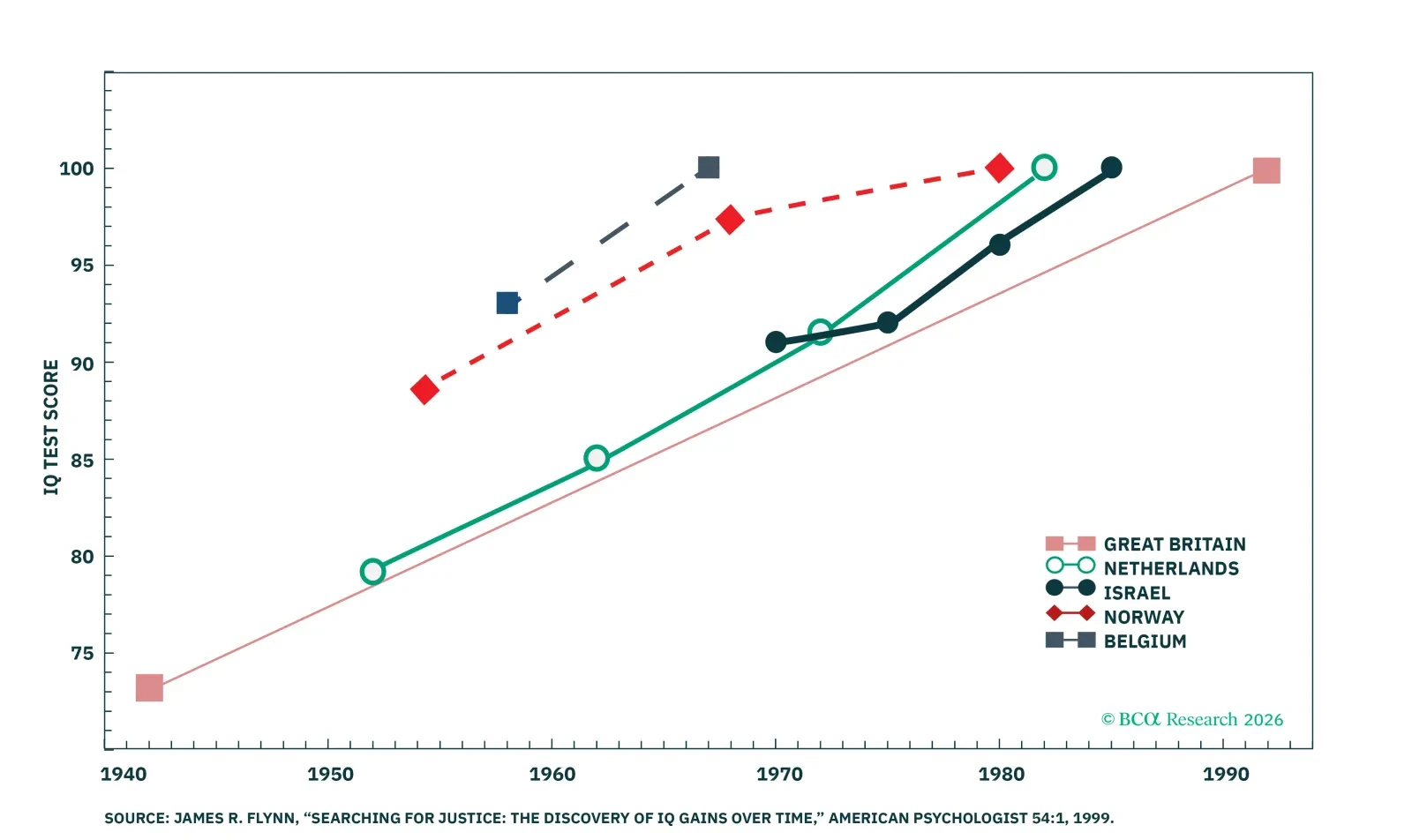
Yet, a funny thing happened on the road to idiocracy: Rather than becoming dimmer, people became smarter. This phenomenon is now known as the Flynn effect, named after James Flynn, a psychologist who was among the first to document it.
Chart 16 shows the evolution of IQ scores in a sample of countries between 1940 and 1990. The average country gained three points per decade, a remarkably large increase over such a short period of time.
IQ: The Importance of the Environment
In modern studies, the genetic contribution to IQ increases from 20% in early childhood to as high as 80% by one’s late teens and remains at that level well into adulthood, a phenomenon known as the Wilson Effect.
The problem with these studies was that they generally sampled individuals in rich countries where extreme malnutrition was largely a thing of the past.
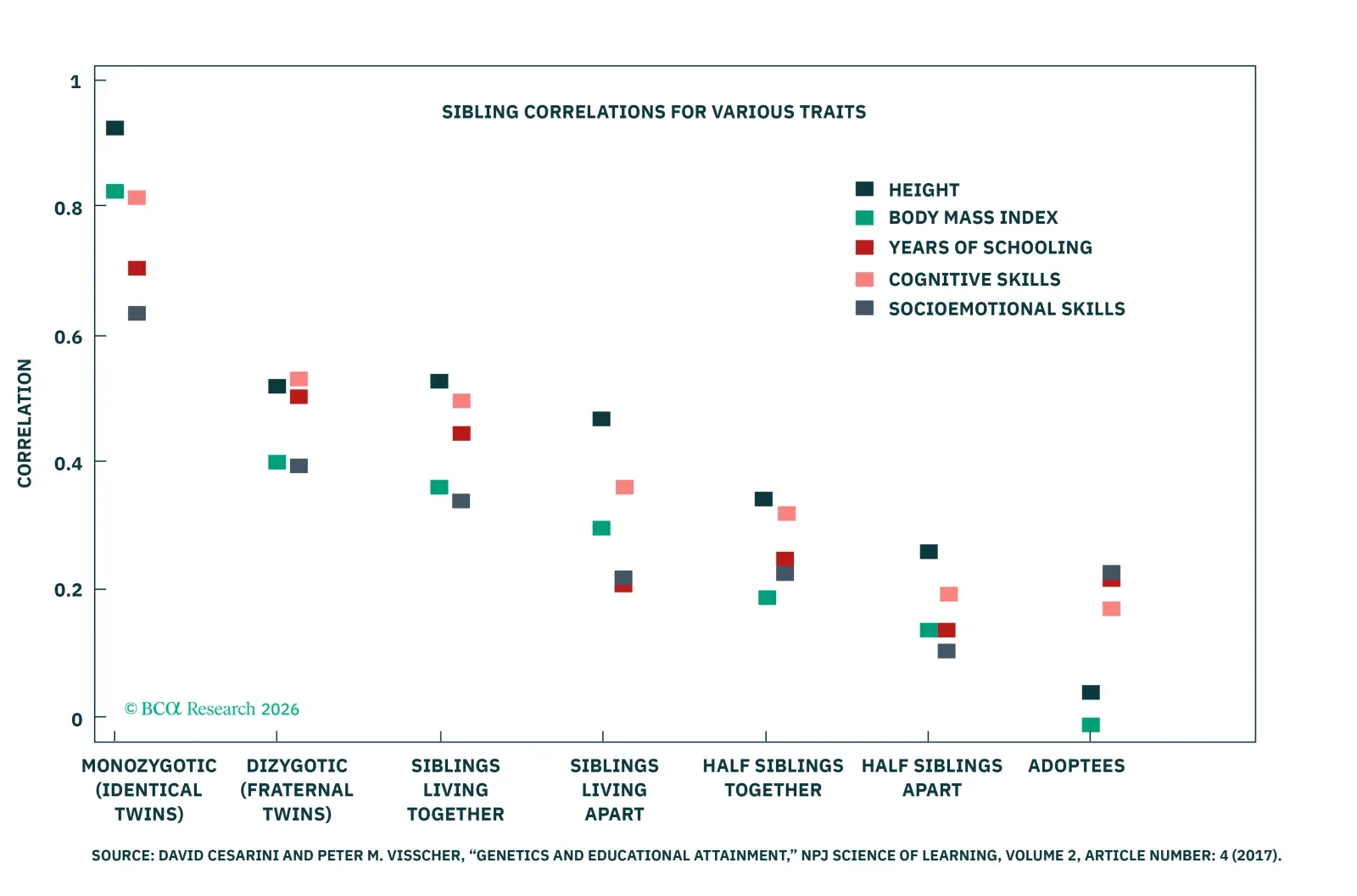
To see how this can skew the results, consider the example of height, which is only slightly more heritable than IQ (Chart 17). In the early 21st century, most of the difference in height among individuals in developed economies was the result of genetic factors. Yet, average height had still managed to rise significantly over the preceding 200 years (Chart 18).
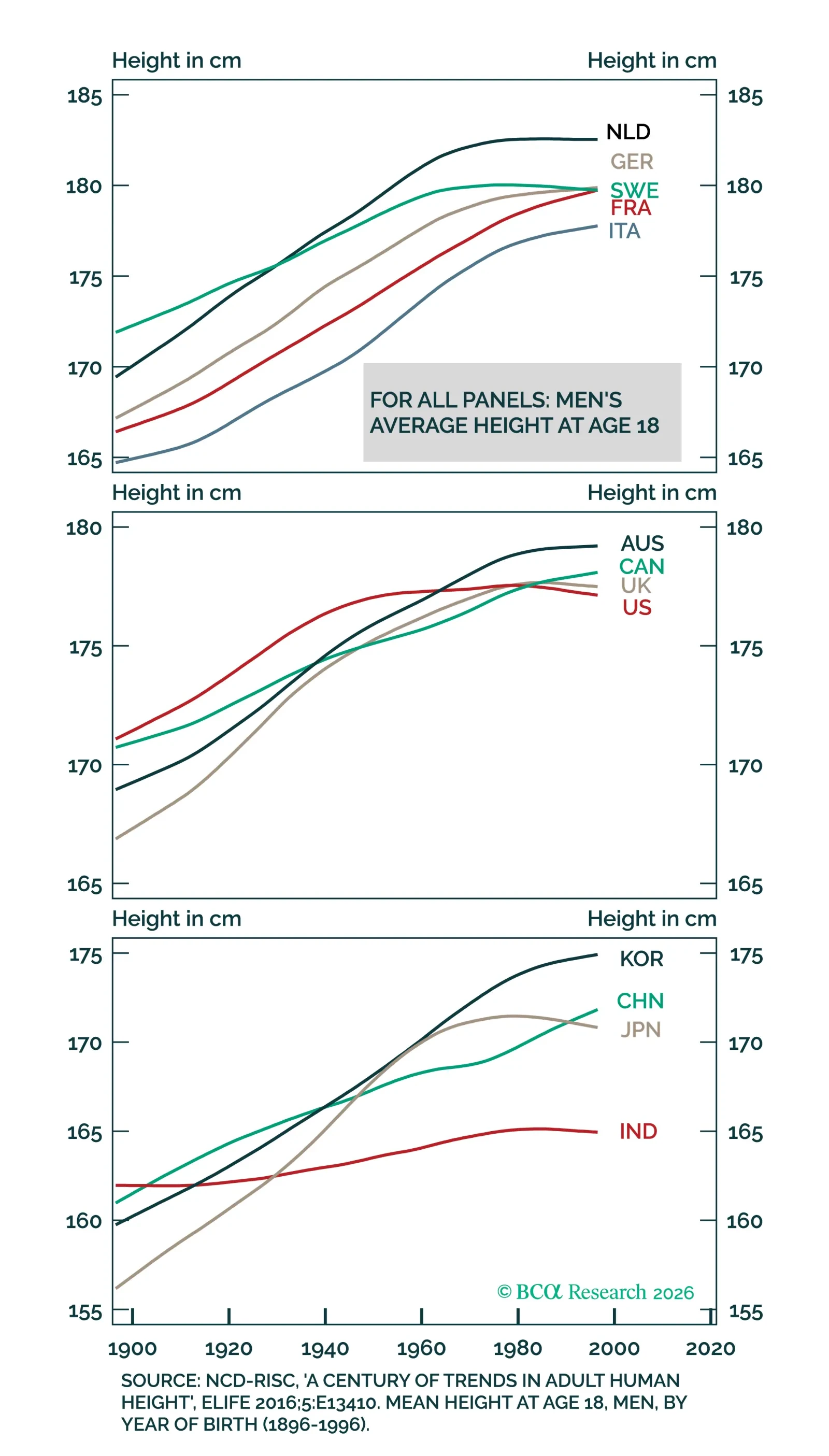
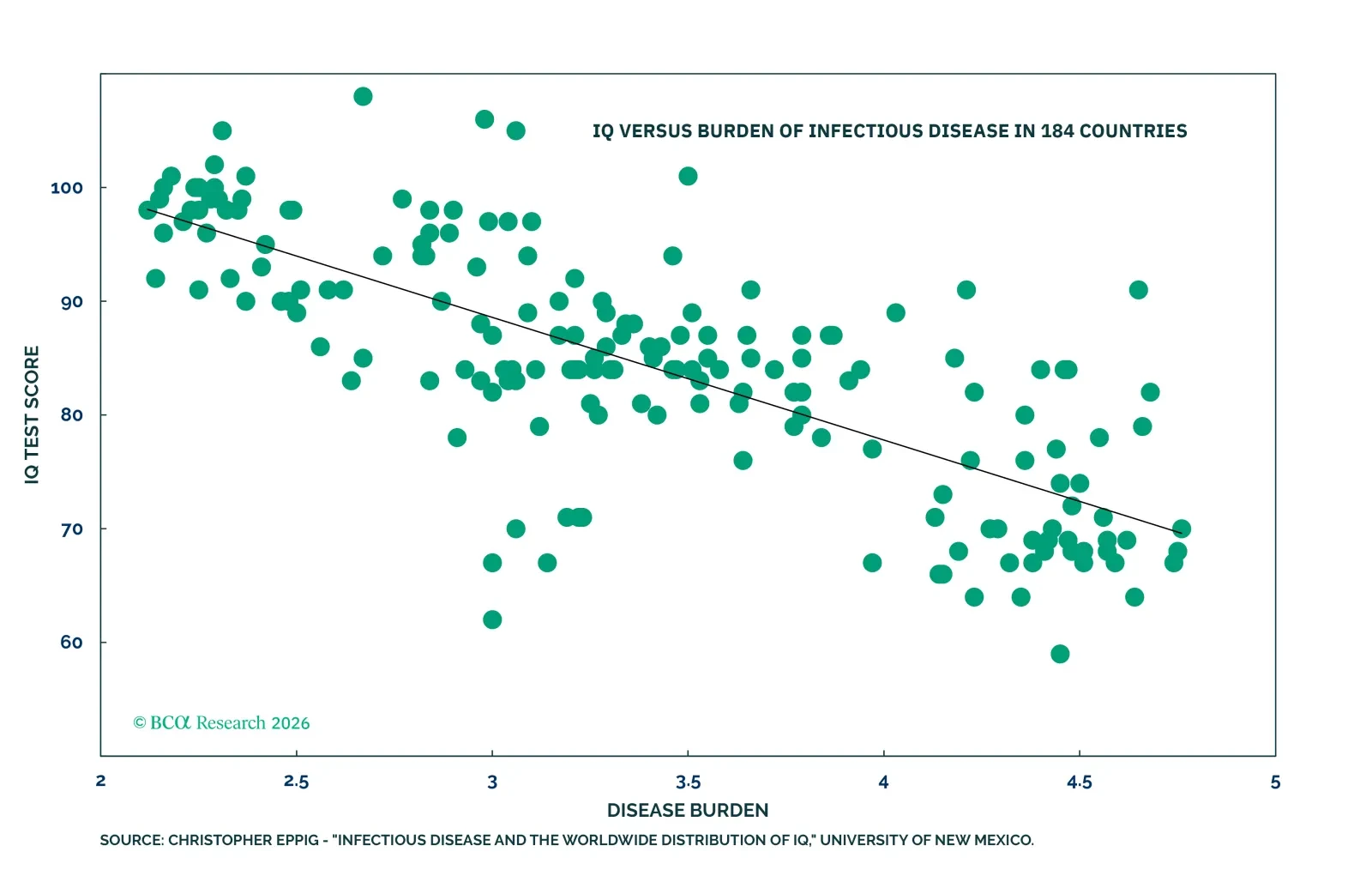
In the case of height, most of the increase occurred because of better health and nutrition. The same was probably true for IQ. Early childhood diseases reduce IQ by diverting the body’s resources away from mental development towards fighting off infections. There is a strong correlation between measured IQ and disease burden across countries (Chart 19). A number of studies documented a strong relationship between the timing of malaria eradication in the U.S. and other parts of the world and subsequent gains in childhood IQs.
Brain size and IQ are positively correlated. Forensic evidence from the U.S. suggested that the average volume of adult human skulls increased by 7% from the mid-1800s to the mid-1980s, roughly equal to the size of a tennis ball.
It has long been known that learning increases the amount of grey matter in the brain. For example, one study showed that the hippocampi of London taxi drivers tend to be larger because they must memorize and navigate complex routes.
The emergence of modern societies kicked off a virtuous circle in which the need to solve increasingly complex tasks encouraged people to hone their cognitive skills, leading to even more technological progress. In the process, rising intelligence not only benefited those with higher IQs but also generated positive externalities for society as a whole.
The End of Flynn
The problem with environmental effects is that they tend to eventually run into diminishing returns. That is what happened with the Flynn effect. By the 1960s, most of the factors that had supported rising IQ, ranging from better nutrition to universal education, were already in place. As a result, while IQs continued to rise in developing economies, they began to slip in richer countries.
In 2008, Flynn himself documented that 14-year-old British students scored more than two points lower on IQ tests than students in 1980.
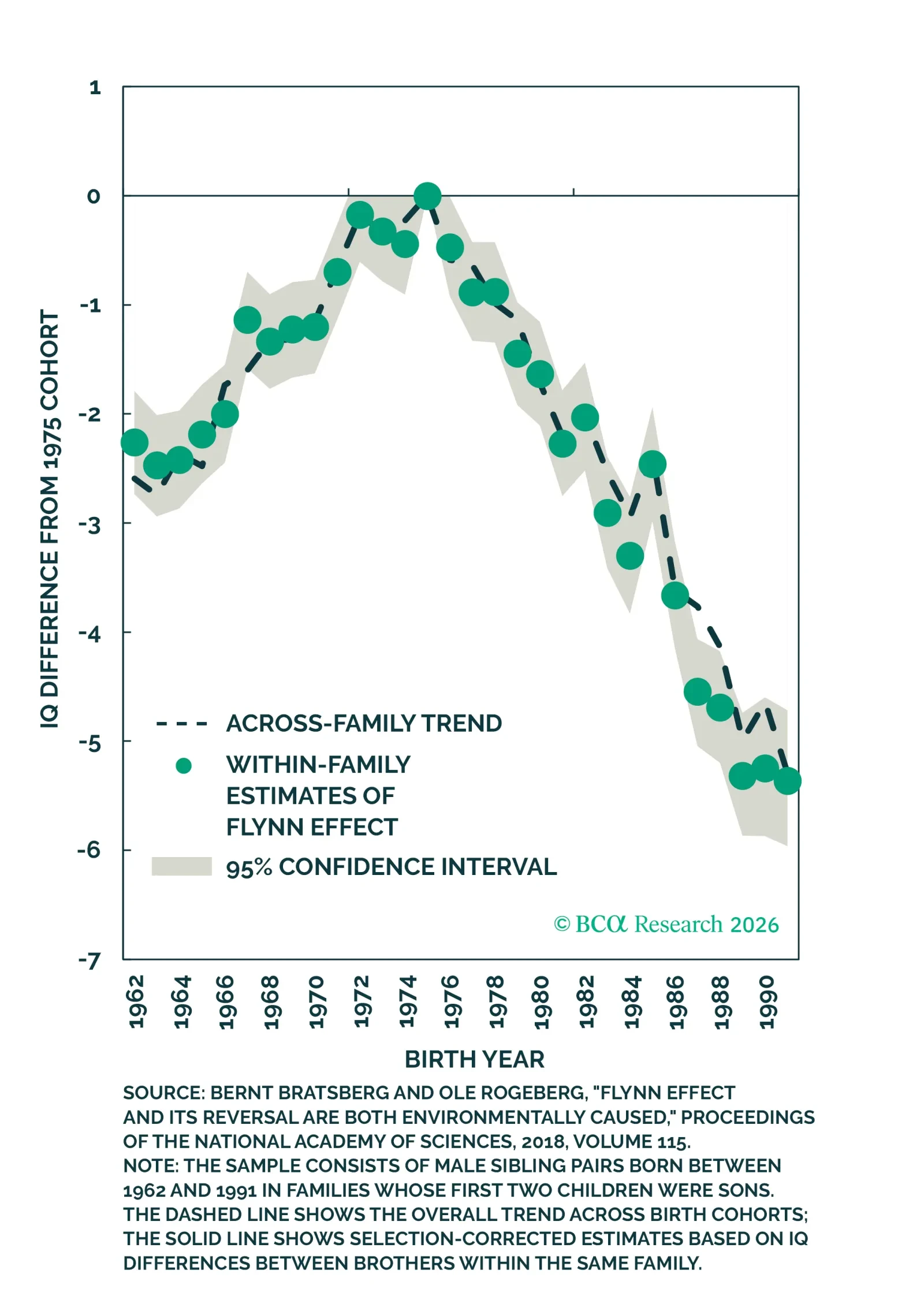
Data from other developed countries also showed falling IQs. One comprehensive Norwegian study found that men born around 1990 had average IQs about five points, or one-third of a standard deviation, below those born around 1975. Comparisons between brothers born in different years showed a similar pattern, suggesting that the decline was driven primarily by environmental factors operating within families (Chart 20).
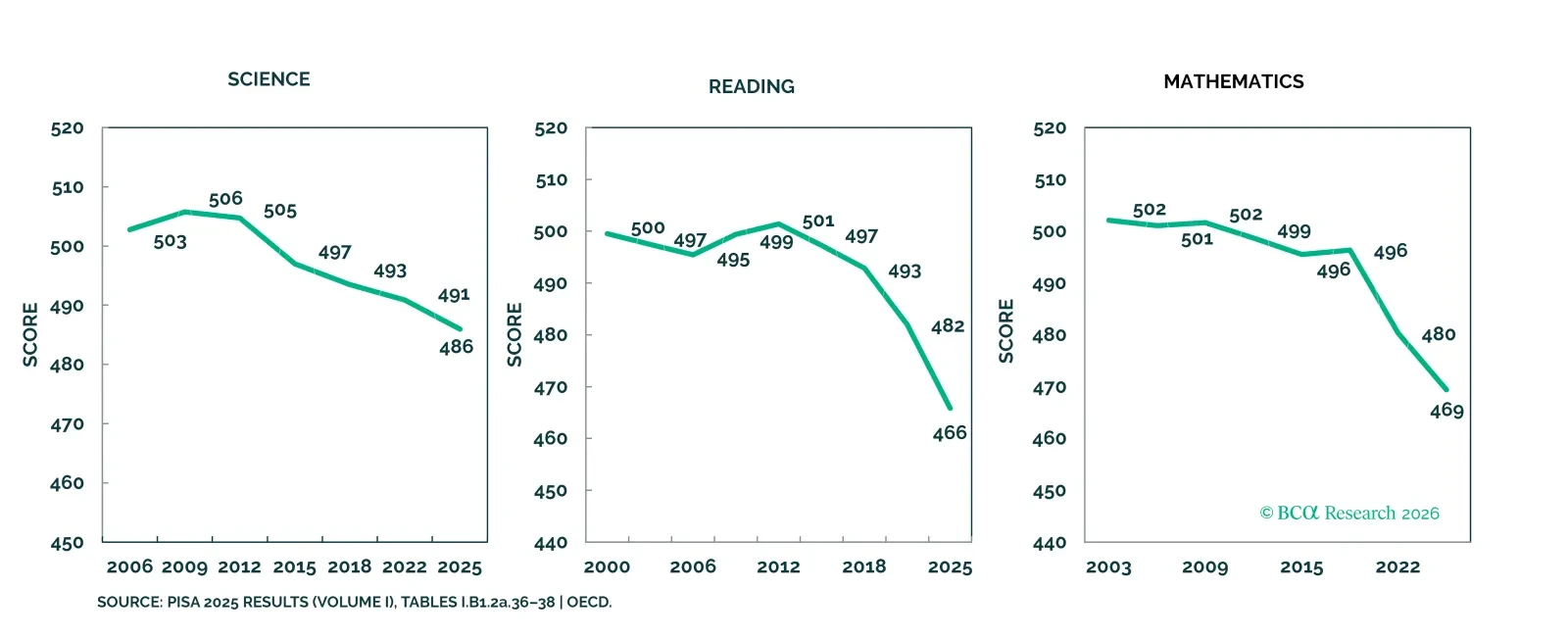
The same downtrend in test scores was visible in international datasets such as the OECD’s Programme for International Student Assessment (PISA). The results of the 2025 PISA cycle, released in September 2026, were especially shocking. Before the release, there was hope that the dismal results shown in the previous cycle in 2022 were just a pandemic-related aberration. They were not. The 2025 scores were even lower than those from three years earlier (Chart 21).
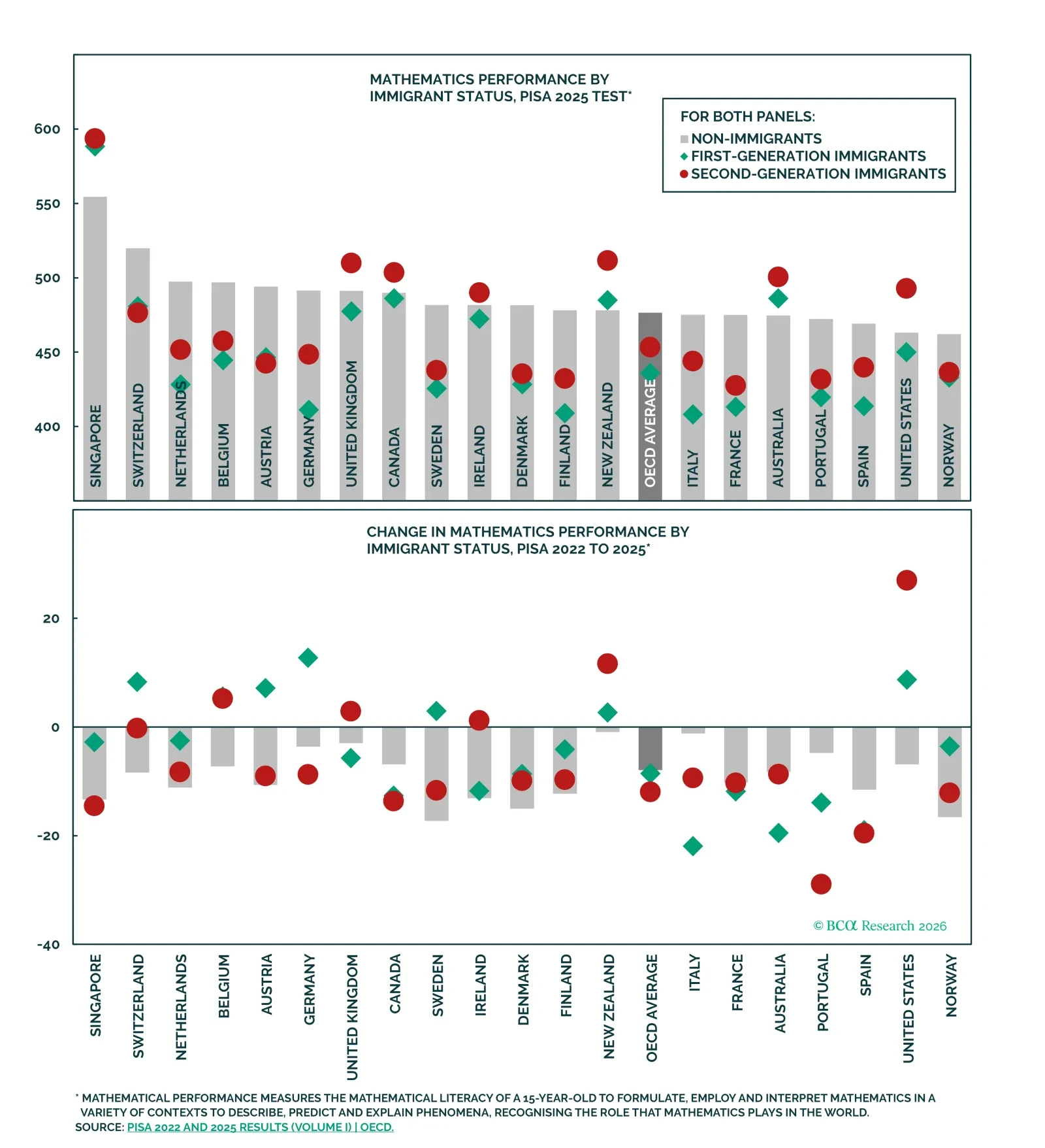
While a rising share of immigrant students in some countries helped explain the drop in average test scores, this was not the whole story. Test scores for non-immigrants also showed a meaningful decline (Chart 22).
The OECD attributed the decline in scores partly to lower student engagement and motivation. Notably, the fraction of students who disagreed with the statement “learning new things is boring” fell in 60 of 71 participating school systems between 2022 and 2025, with the other 11 systems showing essentially no change.
The share of students whom the OECD described as “hasty readers” – those who skimmed the text quickly but gave a wrong answer – jumped from about 7% in 2022 to over 11% in 2025.
Perhaps most ominously, students who used AI for summarizing texts, drafting essays, and conducting research scored about 20 points lower in science than those who did not.
Part 3: Teaching Calculus to a Cat
AI’s Financial Rollercoaster
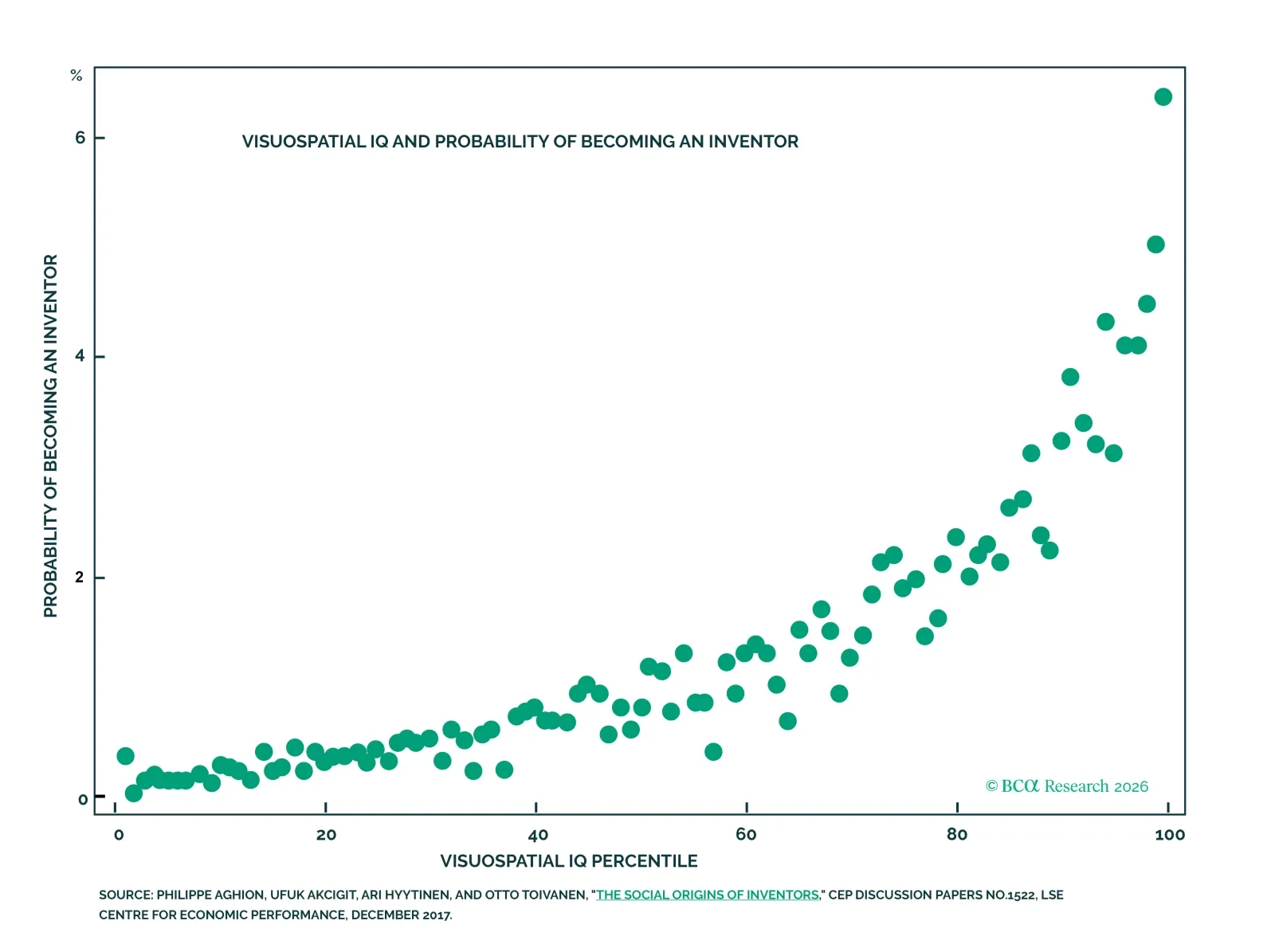
Modern economies are highly dependent on a specialized division of labor. They also rely on cutting-edge research, often produced by their brightest people (Chart 23). Shrinking populations and falling educational achievement threatened both drivers of economic growth.
Fortunately, there was a new technology on the horizon, AI, which promised to counteract these headwinds. The hope was that superpowered artificial minds would compensate for deteriorating human cognition, while artificial humanoid bodies would ease the looming labor shortage.
As with many new technologies, the financial history of AI was a rocky one. AI stocks rallied after the release of ChatGPT in November 2022 only to crash five years later. Massive investments in data centers produced a glut of computational capacity in 2028, which markets began to aggressively discount in 2027.
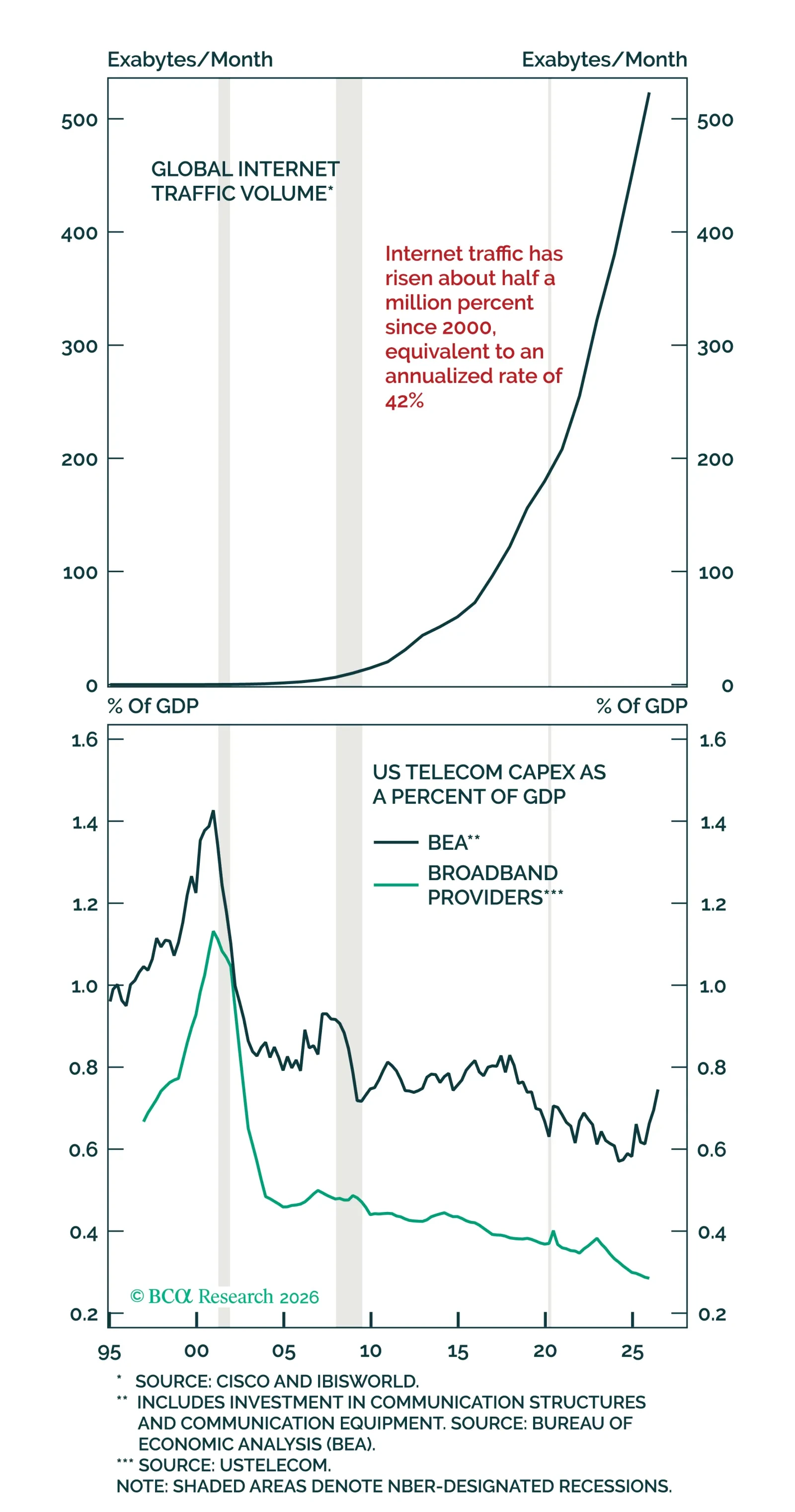
In many respects, the data center building boom paralleled the rollout of the internet a quarter of a century earlier. In the late 1990s, the presumption was that the exponential growth in data traffic would increase the revenues of telecommunications equipment providers. Although the volume of data transmitted over the internet did grow very rapidly, the data-carrying capacity of fiber-optic cables also improved dramatically. As a result, telecom capex stagnated (Chart 24).
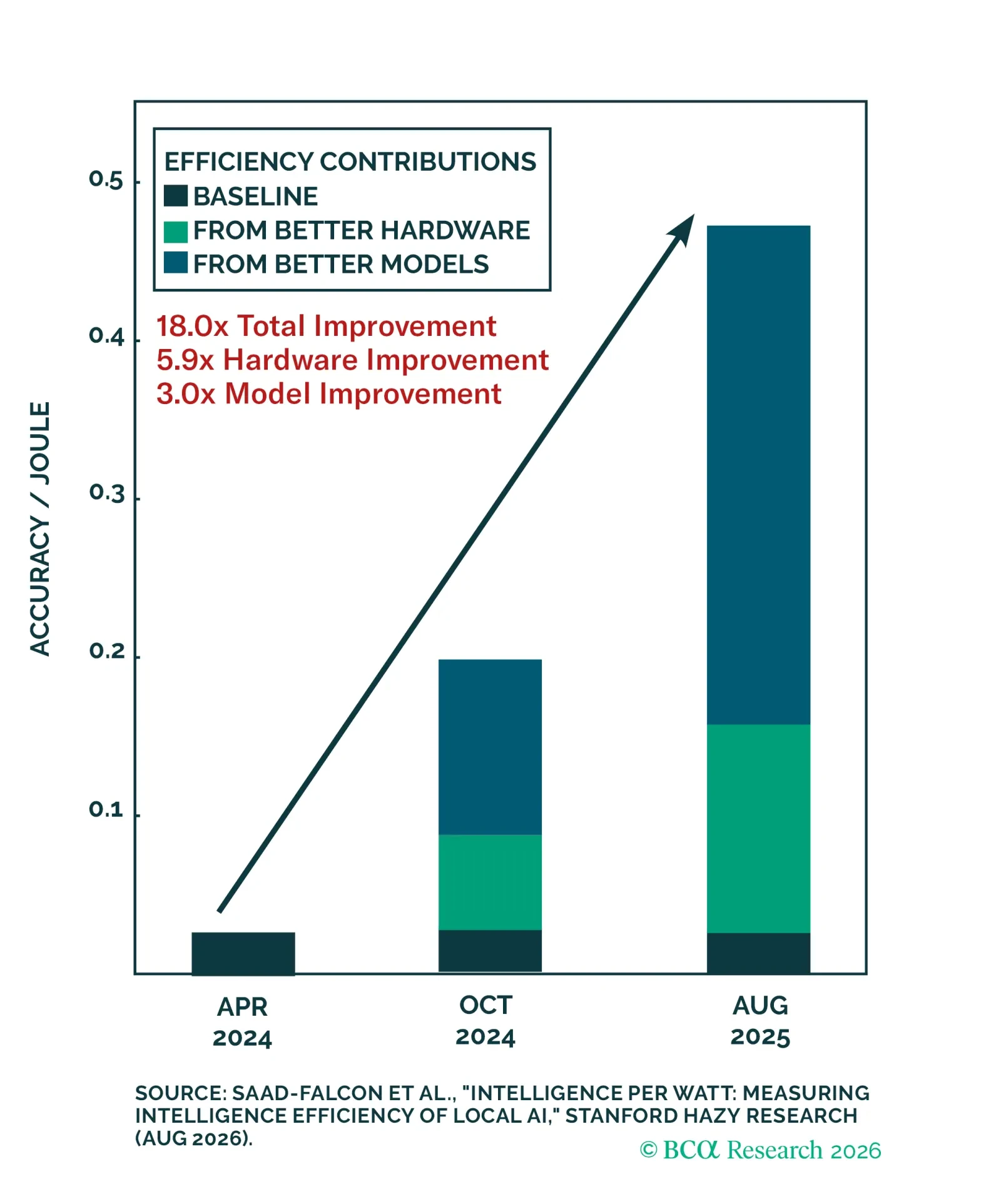
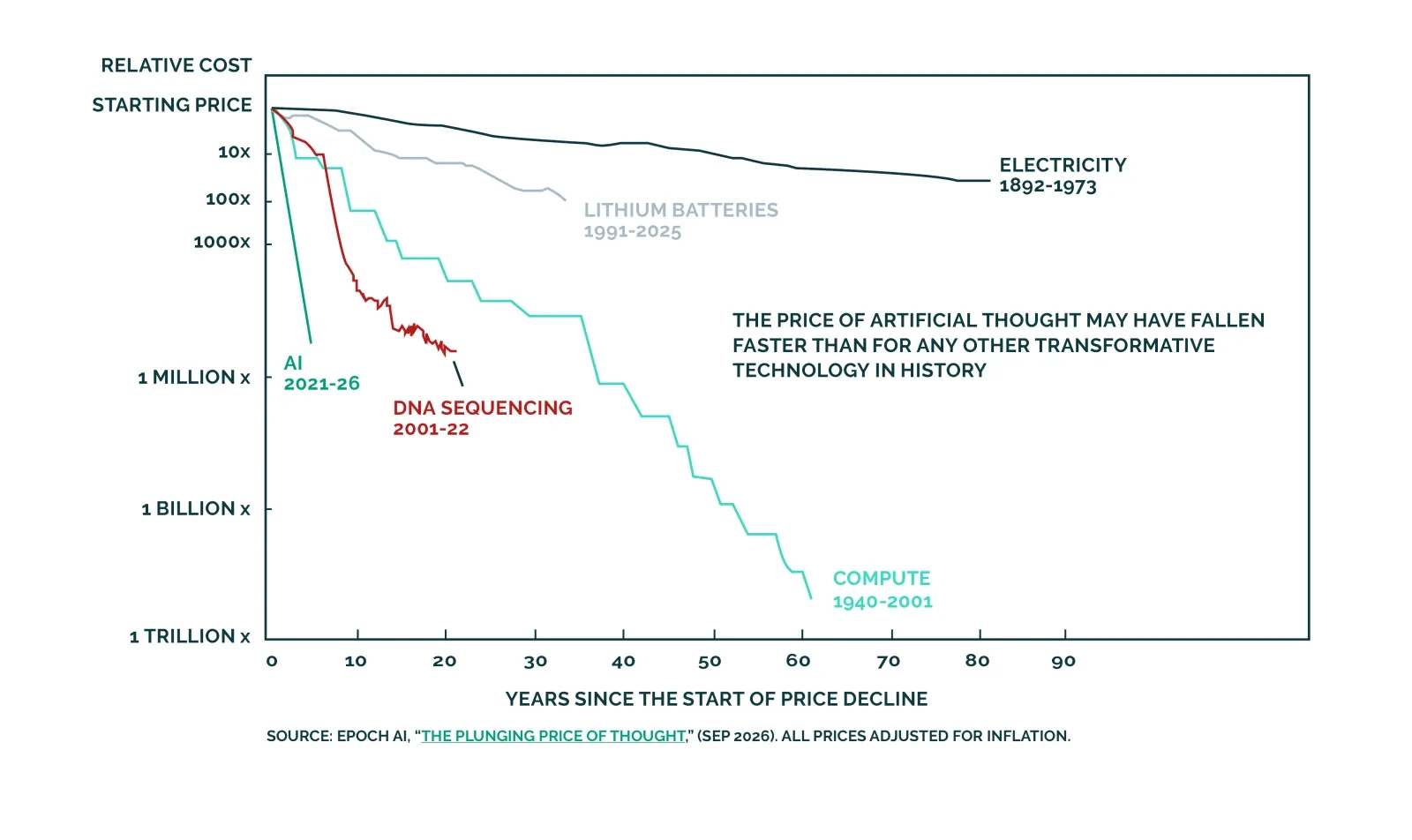
Something similar happened to AI. While the volume of tokens processed by AI models grew exponentially, token prices collapsed as both AI hardware and the models themselves became more efficient (Chart 25). The cost of AI fell more rapidly than during prior technological revolutions (Chart 26).
The competitive landscape hurt the financial performance of many AI companies. Unlike social media, AI did not benefit from network effects, which occur when people use a particular product or service because other people use it. The switching costs for AI models were not particularly high, and so when a better model came along, many people switched to it. This kept margins at paper-thin levels.
Despite all the talk about “scaling”, the AI industry generally lacked the robust economies of scale seen in social media, e-commerce, and traditional internet search. In those industries, adding an extra user was almost costless. With AI, however, adding users meant building more data centers, equipping them with pricey chips, and powering them with significant amounts of electricity.
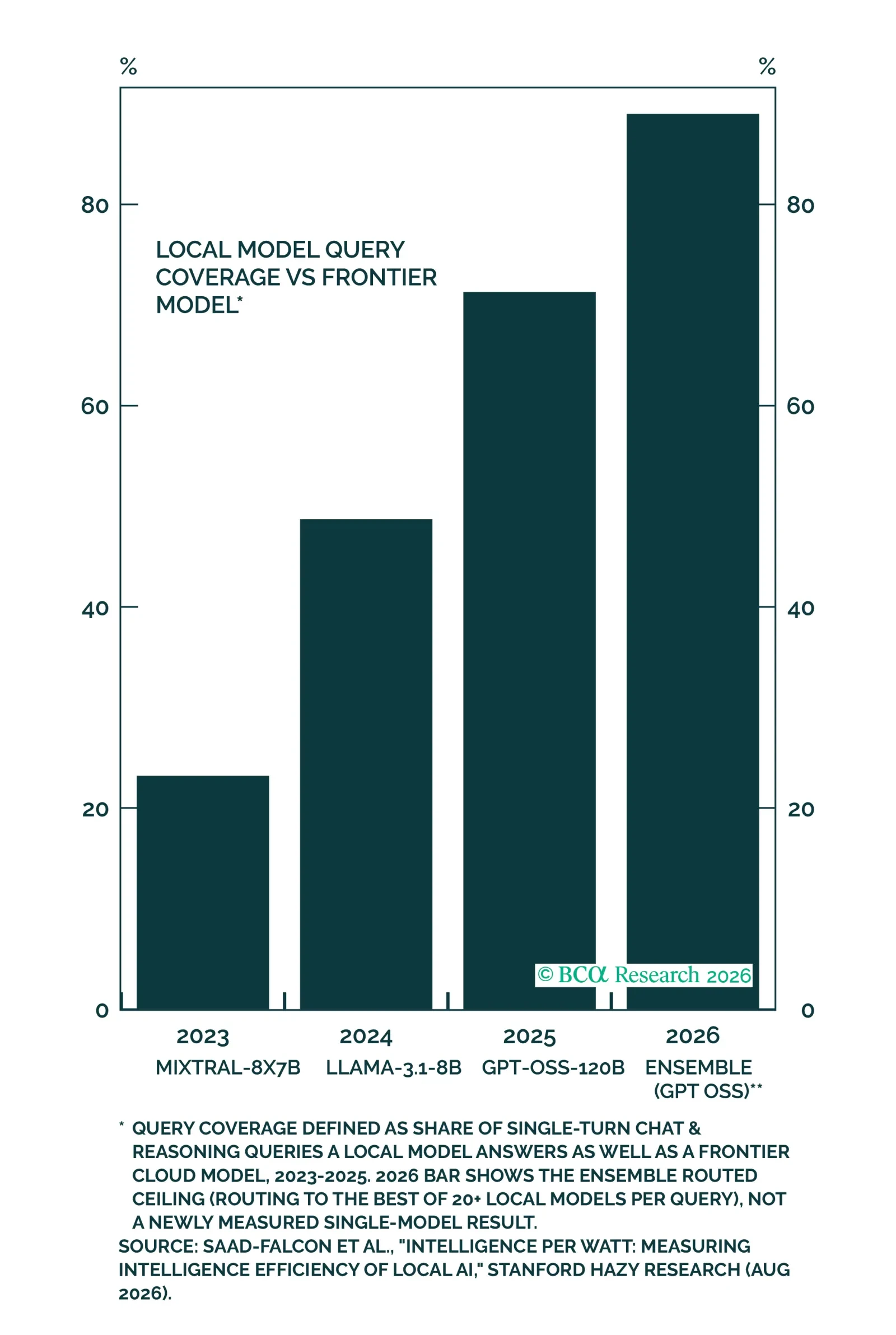
Demand for data centers also suffered as AI inference shifted to local devices such as laptops and smartphones. For an increasing number of tasks, local models were just as good as the frontier models housed in data centers (Chart 27). Data centers increasingly resembled mainframe computers from yesteryear.
Microsoft absorbed OpenAI in 2028 and Apple bought Anthropic in 2029. Both companies were acquired at significant discounts to their IPO prices. Most of the neoclouds went bankrupt.
Amid the Financial Ruins, Progress on AI Continued
Just as internet traffic continued to grow after the dotcom bust, AI continued to advance technologically after the bust.
The first generation of large language models (LLMs) was supplanted by multimodal models that could process different forms of information, including text, images, video, and audio. World models went a step further, allowing AI systems to make predictions about the world around them, such as what would happen if one pushed a glass off a table. AI agents could increasingly formulate many hypotheses and then use the massive computing resources at their disposal to systematically test them.
With time, AI progressed from synthesis (combining existing data in a useful way) to novel inference (inferring something from its training set that was not explicitly there before) to discovery (creating new knowledge that resided outside of its training set).
A seminal moment occurred in 2029 when a previously little-known Chinese company unveiled a model that had passed the so-called Einstein test. This test entailed training a model on the entire corpus of physics knowledge in 1910 to see if it could independently derive Einstein’s field equations of general relativity, which were published in 1915. Not only did the model derive Einstein’s equations, but it did so in a way that was consistent with modern approaches that treated spacetime as an emergent feature of quantum entanglement.
Enter the Robots
The fusion of multimodal models and agents, along with advances in robotics, paved the way for a new generation of AI-powered robots capable of carrying out tasks that previously only humans could perform.
Most humanoid robots were produced in China, whose large manufacturing base gave it a comparative advantage in the growing field. Chinese dominance in robot production kept prices low. This allowed for faster adoption but also made it difficult for companies in the rest of the world to compete.
Labor Received a Smaller Share of a Bigger Pie
The widespread use of AI increased the global economy’s productive capacity. As an arithmetical identity, output must equal income. Thus, AI made countries richer in the aggregate.
The gains from AI were not shared equally across the population, however. The share of income flowing to labor declined, while the share of income flowing to capital rose. This occurred less because the rate of return on capital increased and more because the capital stock rose sharply as robots proliferated, as did the factories in which they toiled.
A larger capital stock – especially one that was subject to faster depreciation than in the past – required a lot of ongoing investment. Globally, investment must equal savings. Higher real rates are normally necessary to encourage savings. However, the owners of capital tend to be wealthier, and wealthier people generally save more than poorer people. On balance, real rates rose modestly above their long-term average in the 2030s and 2040s. Borrowing rates then began to fall again in the second half of the century as rapid income growth saturated people’s material desires and a rising share of humans with less need for immediate gratification reached adulthood.
The Rising Return on Human Intelligence
Initially, AI replaced jobs that were fairly easy to automate. These included data-entry clerks, translators, proofreaders, and junior programmers. As self-driving vehicles became commonplace, the demand for truck and taxi drivers also declined.
As time wore on, more cognitively demanding jobs became vulnerable to AI displacement. This raised the question of what, if anything, human workers were supposed to do in a world where AI could do most of what they had done in the past.
For some, the answer was to basically do nothing – to live off generous government programs which a larger economic pie made possible. Yet, for many, that was not enough.
Humans care about status. As the economic pie grew, the question of who had control of that pie became more pertinent. As noted in Part 2, while the correlation between intelligence and wealth is far from tight, a positive association does exist. This placed a greater premium on human intelligence.
Safety concerns also made it impossible to outsource all tasks to AI. Like all sufficiently complex systems, AI was subject to “computational irreducibility.” In most cases, if one wanted to know what a complex system would do ten steps ahead, the best one could do was run through all ten steps. This posed a major challenge for AI safety because it meant that, even in principle, one could not predict what an AI system would do until it had done it.
Then there was what came to be known as the “teaching calculus to a cat” problem. No matter how great a teacher you are, you will not be able to teach advanced mathematics to a cat. As AI systems became increasingly capable, understanding their output became increasingly valuable. But with no improvement in human intelligence, this meant that an ever-smaller share of people could appreciate all the wisdom AI had unlocked.
Rather than being a substitute for artificial intelligence, human intelligence proved to be a complement: The smarter you were, the easier it was to function in an AI-powered world.
The only question was how to increase human intelligence. By the 2020s, an answer began to emerge. The groundwork for World War E had been laid.
Part 4: Designer Babies
Sex for the Bedroom, Reproduction for the Lab
In October 2026, a once little-known biotech company, Herasight, released CogPGT, a genetic predictor of cognitive ability. Drawing on the results of past studies that identified thousands of genetic variants associated with differences in cognitive ability, CogPGT was able to construct a “polygenic score” for each embryo.
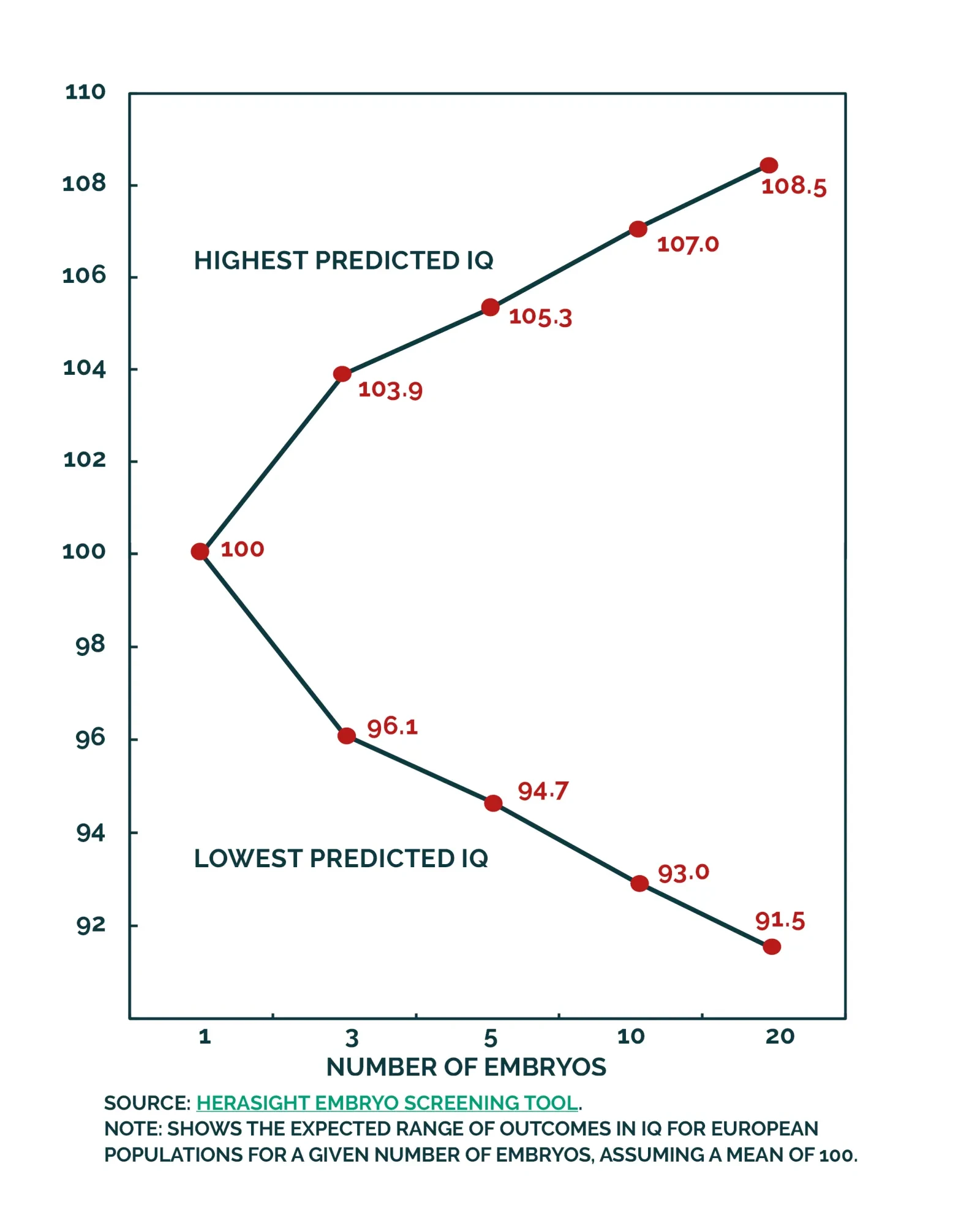
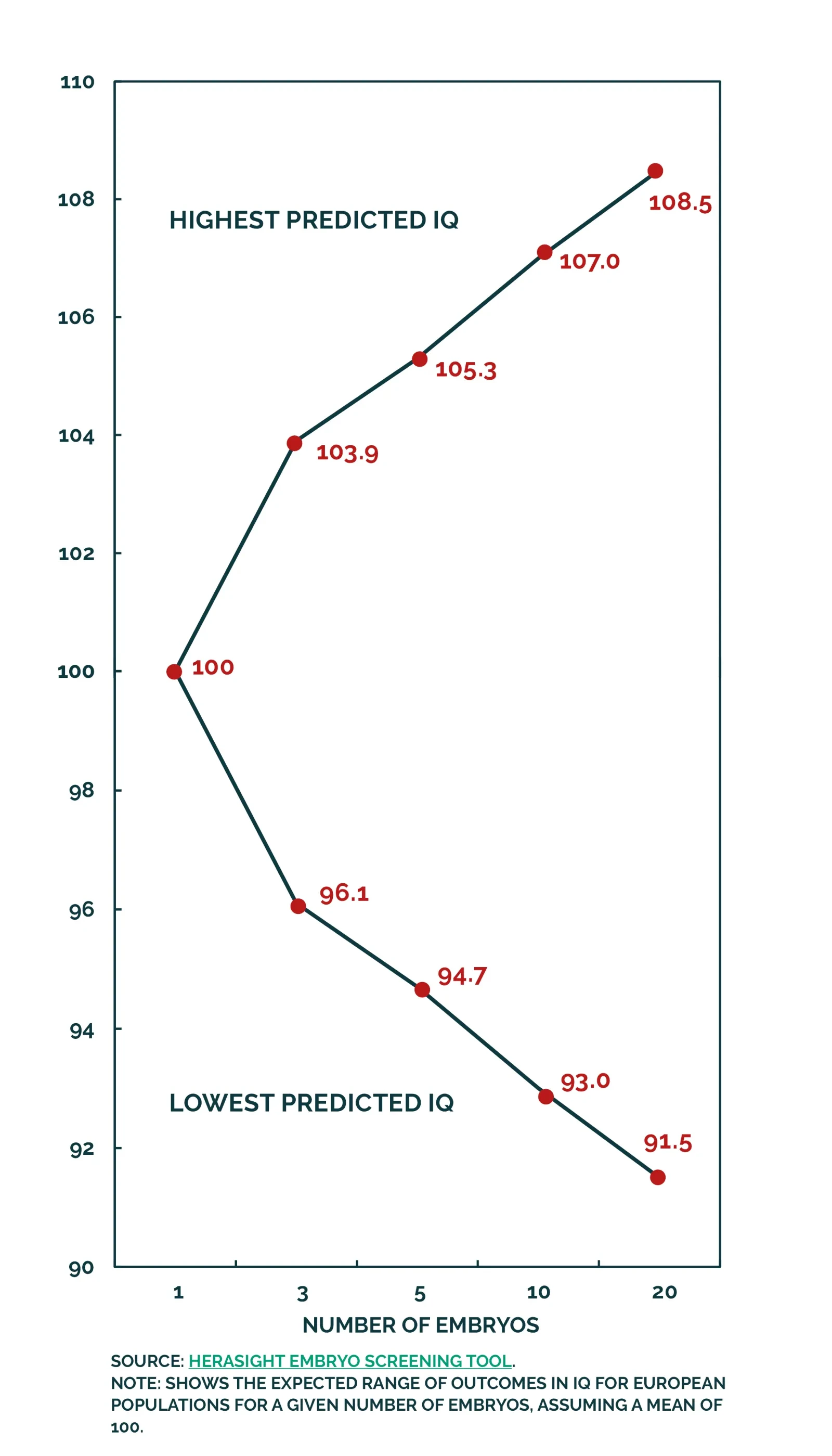
The company claimed that in a sample of five embryos from the same parents, the highest and lowest CogPGT scores would typically correspond to about a 10-point difference in predicted IQ. For 20 embryos, the difference rose to 17 IQ points (Chart 28).
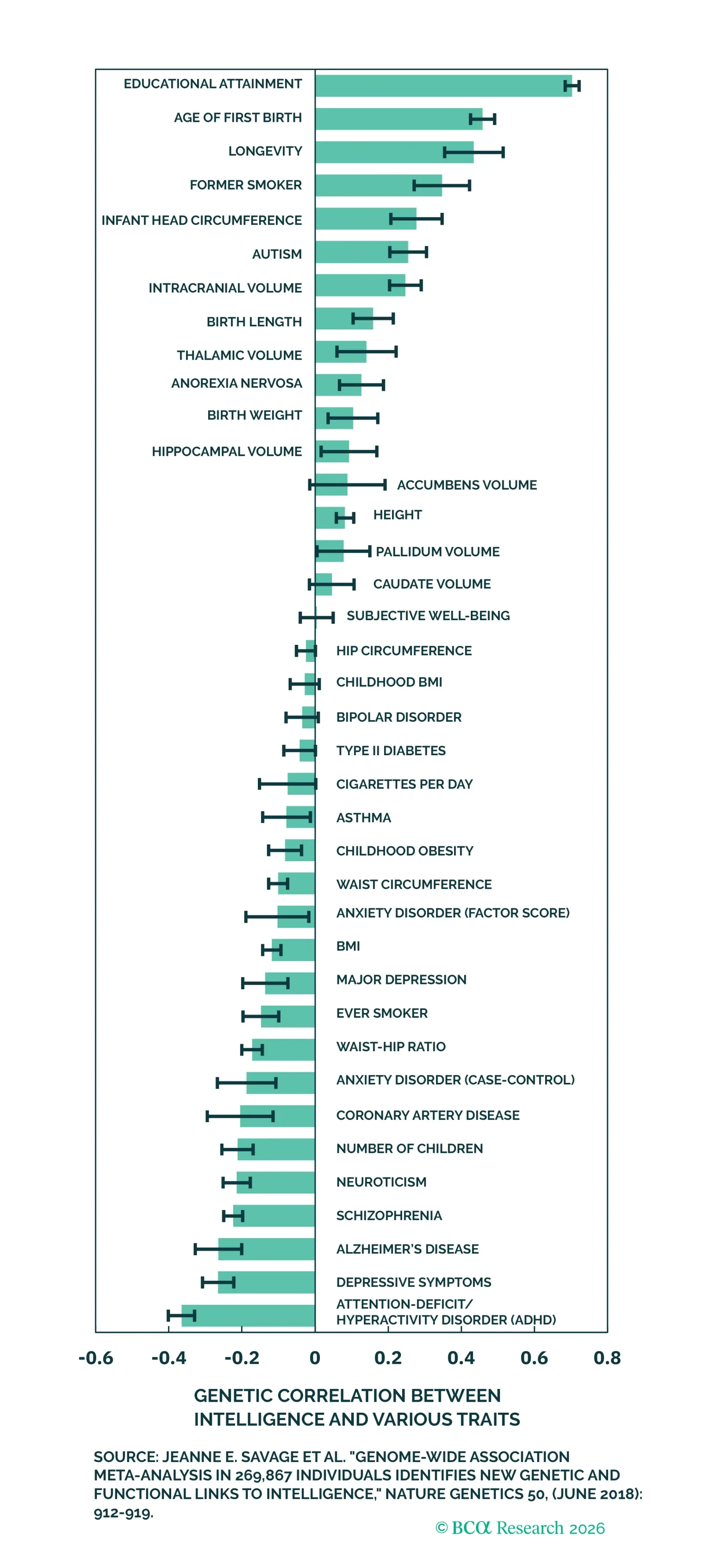
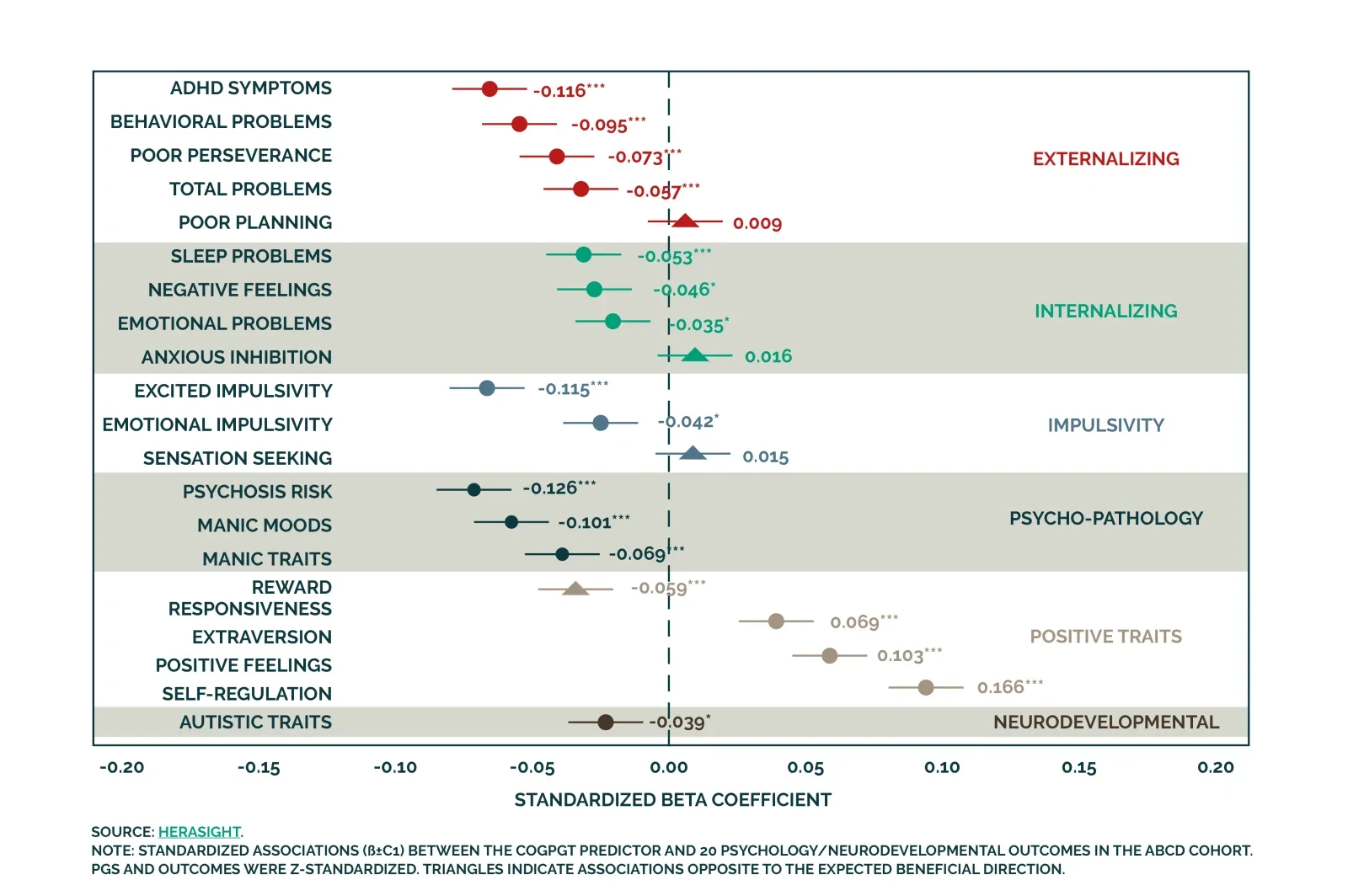
Very few Herasight clients prioritized IQ in embryo selection. The vast majority just wanted healthy, happy children. There was a twist, however: The polygenic score for IQ was positively correlated with polygenic scores for a variety of desirable behavioral traits and negatively correlated with those of several mental disorders (Chart 29). Thus, to some extent, selecting for IQ turned out to be a proxy for other traits that prospective parents wanted in their children.
A Bull Market in Reproductive Tech
Companies such as Herasight represented the leading edge of what would turn out to be a major development in the 21st century: the application of technology to human reproduction.
The burgeoning “reproductive tech” industry was given a boost by a technique known as in vitro maturation (IVM). Traditional IVF required 8 to 14 days of ovarian stimulation, along with daily hormone injections and repeated ultrasound and blood monitoring. Innovators such as Gameto, whose offering had already advanced to Phase III trials in 2026, developed techniques to shift much of that maturation process outside the woman’s body. These offerings promised to reduce IVF costs and lessen the physical burden on women.
Significant strides were made in automating IVF. The task of injecting sperm into an egg is extremely labor-intensive, requiring expensive microscopes and micromanipulators operated by highly trained embryologists. Companies such as Overture Life promised to simplify the process using robot microsurgery.
Meanwhile, research continued into replacing IVF entirely with a technique known as in vitro gametogenesis (IVG). Unlike conventional IVF, where eggs are collected from a woman’s ovaries, IVG created functional eggs from stem cells. This meant that older women, whose eggs were no longer viable, could still get pregnant. It also meant that dozens or even hundreds of embryos could be created and subjected to polygenic scoring.
Those who embraced the new technologies argued that something as important as the creation of a new life should not be left to chance. Those who opposed them insisted that selecting some embryos and discarding others on the basis of preconceived notions about which traits were desirable was fundamentally immoral. Although this particular concern was eventually attenuated by the advent of techniques that could predict the genetic makeup of an embryo before the egg and sperm were combined, the debate continued. The gulf between parents who wanted “enhanced” children and those who were repulsed by the idea continued to grow.
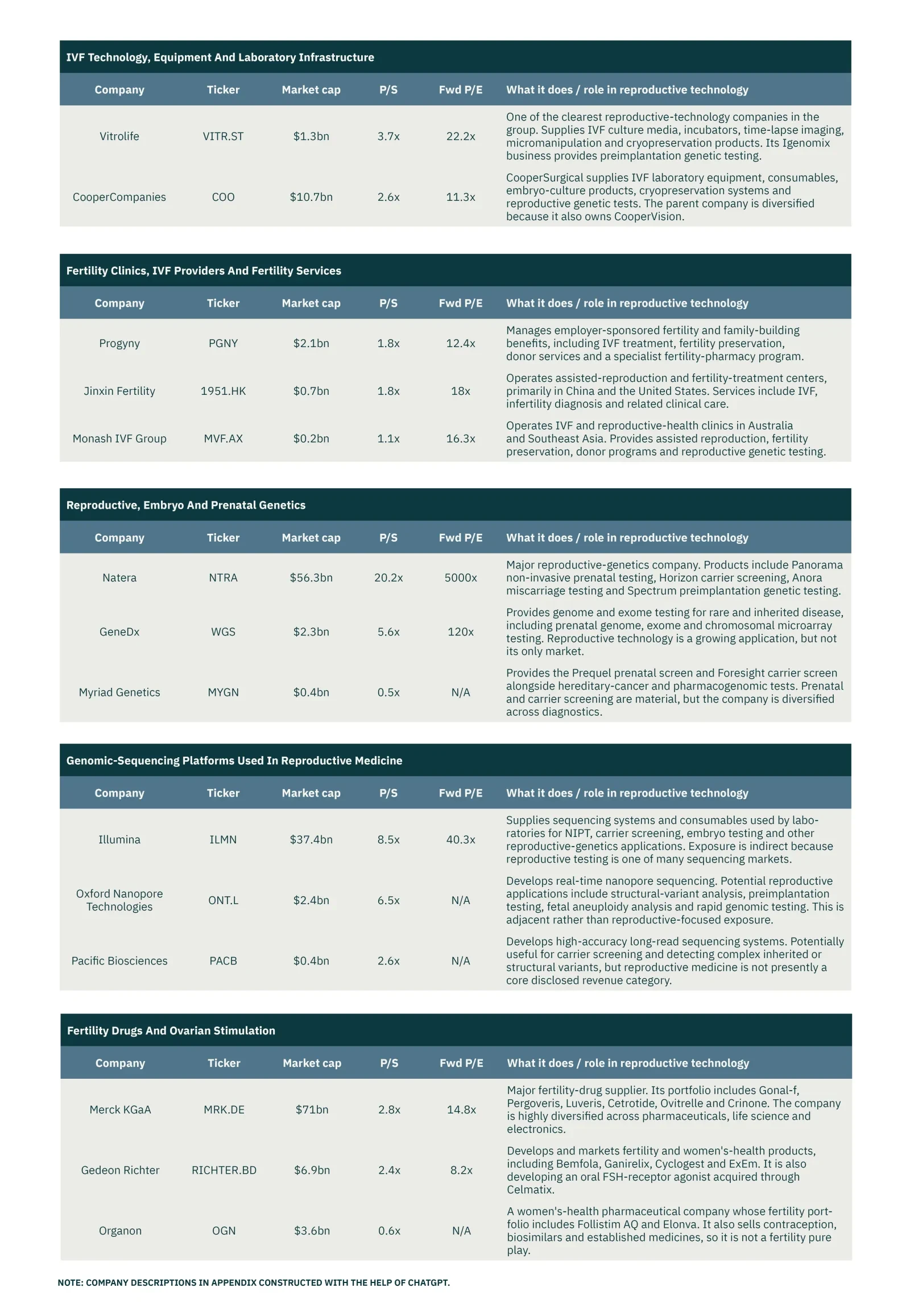
Many investors remained indifferent to the moral quandary, focusing instead on how much money they could make. “Reproductive tech” stocks entered a massive bull market in the late 2020s. Appendix A lists some of the key players in the field in 2026.
The Road to Baby Farms
Most of what transpired during World War E was not part of some grand plan. Rather, events unfolded like a set of falling dominoes, with one development triggering the next.
The creation of what came to be colloquially called “baby farms” was a good example of this phenomenon. In 2029, Singapore passed a new law that awarded parents a percentage of any future taxes that their children paid (the children themselves did not suffer any loss of income). The hope was that this would boost the country’s sagging birth rate.
Many economists and demographers applauded the law on the grounds that creating a child generates a positive fiscal externality: Parents bear the cost of raising the child, but the government captures some of the future benefits through taxes and social security contributions.
The policy had a modestly positive effect on fertility. This spurred other governments to adopt similar laws. In all cases, various conditions were introduced to protect the welfare of the child, such as revoking the parents’ claim to future payments in cases of abandonment or abuse.
Baby-Backed Securities
One drawback of these laws was that there was a long lag between when the parents bore the costs of raising the child and when they received a cut of the child’s tax payments. The financial industry, never shy about profiting from a new opportunity, quickly stepped in with what became jokingly known as “baby-backed securities.”
In essence, parents sold a portion of the claim on their children’s future tax payments to banks. Banks then bundled these claims into pooled securities and sold them to institutional investors.
The ability of parents to quickly monetize the decision to have a child further raised fertility rates. Perhaps even more consequentially, it created a strong incentive for parents to maximize their children’s future earnings. Banks offered higher payments to parents whose children had undergone embryo screening and had high polygenic scores for IQ and other relevant traits.
Parenthood in the 21st Century
If parents could raise children, why not corporations? With governments now subsidizing parenthood, the question suddenly became relevant.
The US Constitution did not explicitly rule out this possibility, although it did not endorse it either. In a highly controversial opinion in 2031, the Supreme Court ruled that corporations could enter the parenting business as long as the children they helped create could reasonably be considered better off for having been born, even if they were not as well off as those reared in more traditional families.
These businesses typically purchased embryos from cryobanks. They then paid surrogates – some of whom had lost their previous jobs to AI – to carry the baby to term. The children were then placed in foster families or regulated institutions. To reduce loneliness, the same sperm and egg donors were usually used for multiple children. This ensured that most children had many biological brothers and sisters.
Starting in the 2040s, the use of surrogates was phased out in favor of artificial wombs. This significantly increased the number of children born outside of the traditional family setting.
In some cases, the governments themselves entered the parenting business. China was particularly aggressive on that front. By 2050, 40% of children were born through state-run programs. After nearly three decades of population decline, China’s population began to recover.
There was another reason why governments welcomed this development: It gave them an additional lever to shape the future characteristics of their populations.
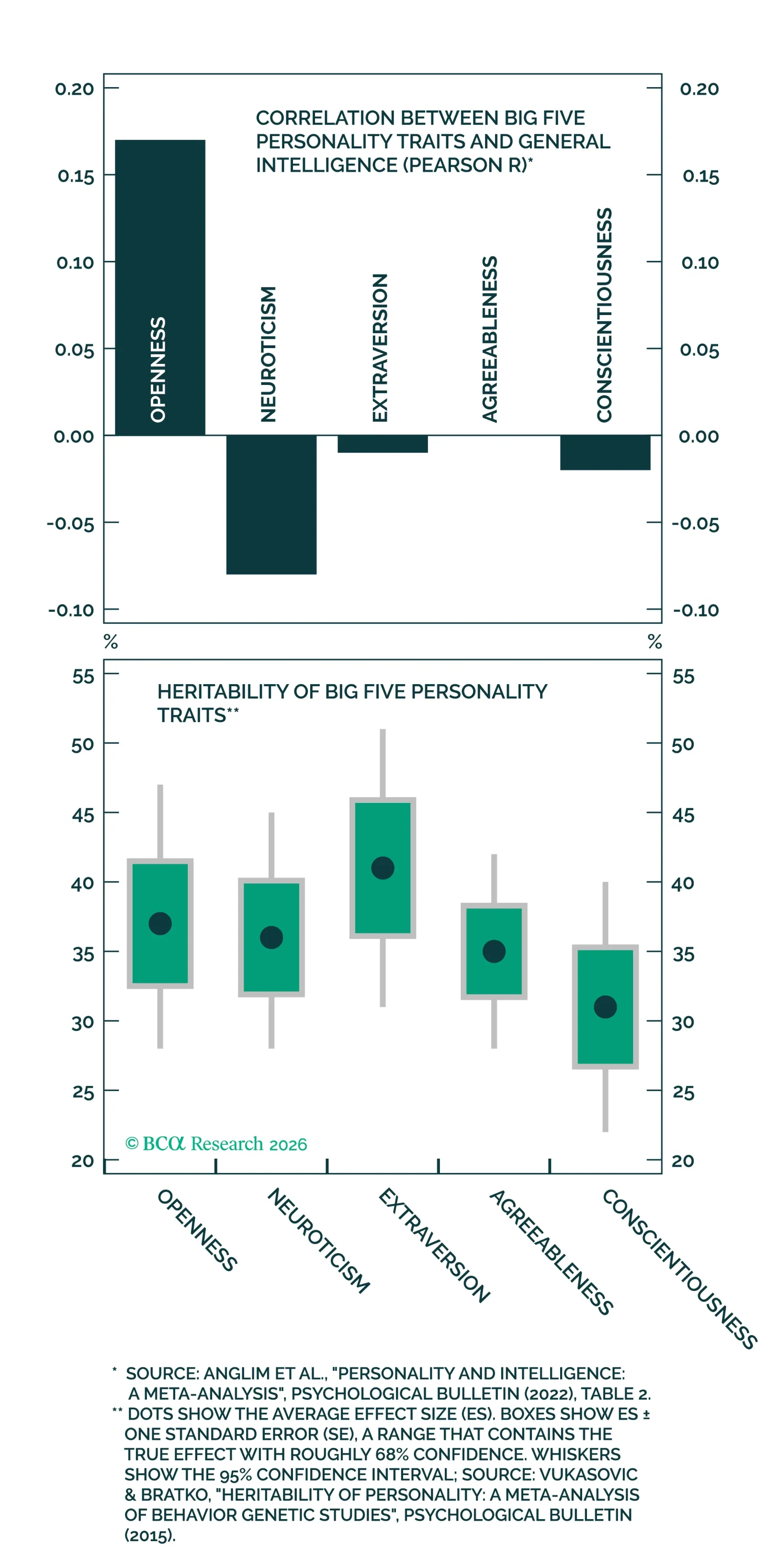
On average, the Big Five personality traits are about 40% heritable (Chart 30). In addition to higher IQs, many governments prioritized high conscientiousness and agreeableness in embryo selection. They also placed greater weight on low neuroticism, which tended to correlate with greater happiness and higher IQ.
Generation E Comes of Age
When polygenic scoring became available in the 2020s, there was a lot of debate about the impact the new technology would have on the well-being of future generations. Follow-up studies showed that many children expressed regret that they did not grow up in traditional families. However, a surprisingly large number said that they preferred their upbringing, citing the advantage of having many biological brothers and sisters and being able to excel at school.
Economically, the children did well. They were overrepresented in academia and in business leadership roles. In state-run programs that favored genetic markers for athletics, many went on to excel in sports. By the 2060s, Chinese athletes were dominating the Olympics.
The fear that China was pulling away economically caused other countries to double down on their own efforts to both expand and enhance their populations. The genetic arms race went into full swing.
Initially, those on the political left opposed embryo selection. Indeed, most European governments banned the practice in the 2020s and early 2030s, although some couples were able to use loopholes in privacy laws to obtain information about their embryos. As time went by, however, it became clear that this was one technological genie that could not be put back in the bottle. At that point, the left’s view shifted from “no one can have it” to “if someone can have it, everybody should have it.”
The End Of The Human Race
The hope of some on the left that universal access to these new technologies would eliminate group differences fizzled. Although past disparities did subside, new and even larger ones emerged.
One social fissure that quickly arose was between those who grew up with parents and those who did not. An even deeper divide occurred between the “genetically enhanced” and the unenhanced. The latter often resented the former, while the former increasingly looked down on the latter.
Two major developments in the second half of the 21st century further inflamed these tensions.
The first was large-scale genetic engineering. While gene editing was possible in the 2010s and 2020s with techniques such as CRISPR-Cas9, the ability to create a new genome from scratch opened up a vista of possibilities. Variation among humans increased dramatically to the point that different branches of humanity effectively became different species. The human race, at least as a singular concept, began to vanish.
The integration of AI and robotics into the human body only supercharged this trend. The human brain was extremely efficient at some tasks but poor at others. For example, it had very little working memory, to the point that many people struggled to recall a sequence of 10 random numbers. The integration of digital storage and neural processing gave people superhuman cognitive powers.
Economic growth soared to unprecedented levels, but so did social strife. How the Earth survived those turbulent times remains hotly debated. Some say luck. Others attribute it to a multiverse selection effect.
In any case, life did not remain confined to Earth for long. Millions of self-replicating probes were sent to distant stars. Once a suitable planet was found, the probes would terraform it. Each colonist’s genetic information, along with a near-perfect scan of all the chemical, molecular, and dynamic states in their brain, was transmitted through long-range radio signals to the new world. There, this information was used to assemble a physical body, complete with all their memories.
Darwinian selection continued in a different guise. Colonists who were most eager to spread their biomechanical blueprints to other star systems became the progenitors of future civilizations. Worries about underpopulation vanished as the cosmos exploded with life. The last domino had fallen. A new chapter had begun.
Peter Berezin
Chief Economist
peterb@bcaresearch.com
Follow me on
Linkedin & X