Sorry, you need to enable JavaScript to visit this website.
メインコンテンツにスキップ
メインコンテンツにスキップ

アメリカ合衆国

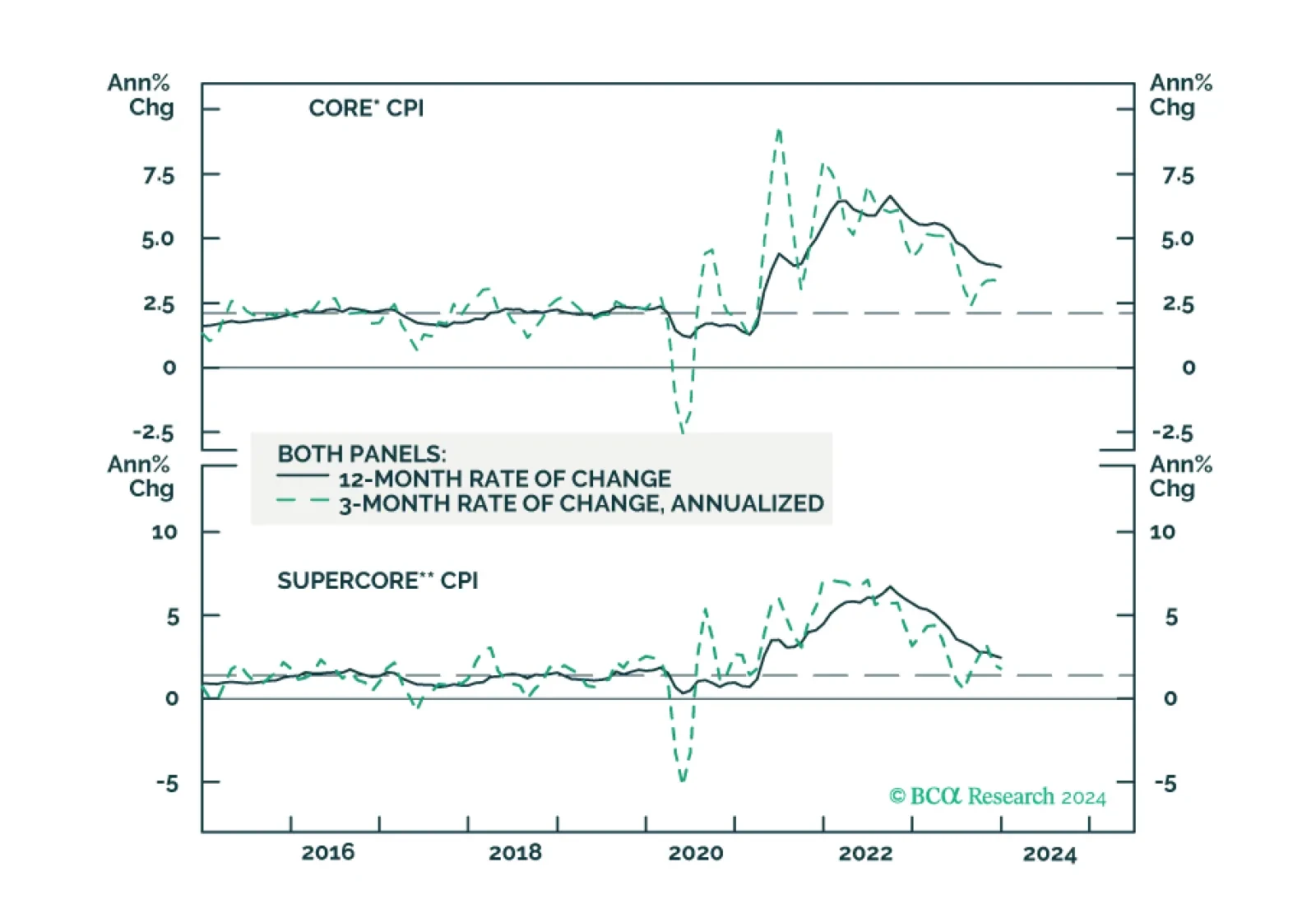
US CPI inflation for December came in slightly hotter than anticipated. Headline inflation accelerated from 0.1% to 0.3% on a month-over-month basis and rose from 3.1% to 3.4% on a year-over-year basis. Both the monthly and yearly changes in headline…
US corporate bonds performed well last year with both investment grade and high-yield spreads narrowing in 2023. Indeed, the 12-month breakeven spreads are relatively low – especially in the case of investment grade.  This means that corporates have a…
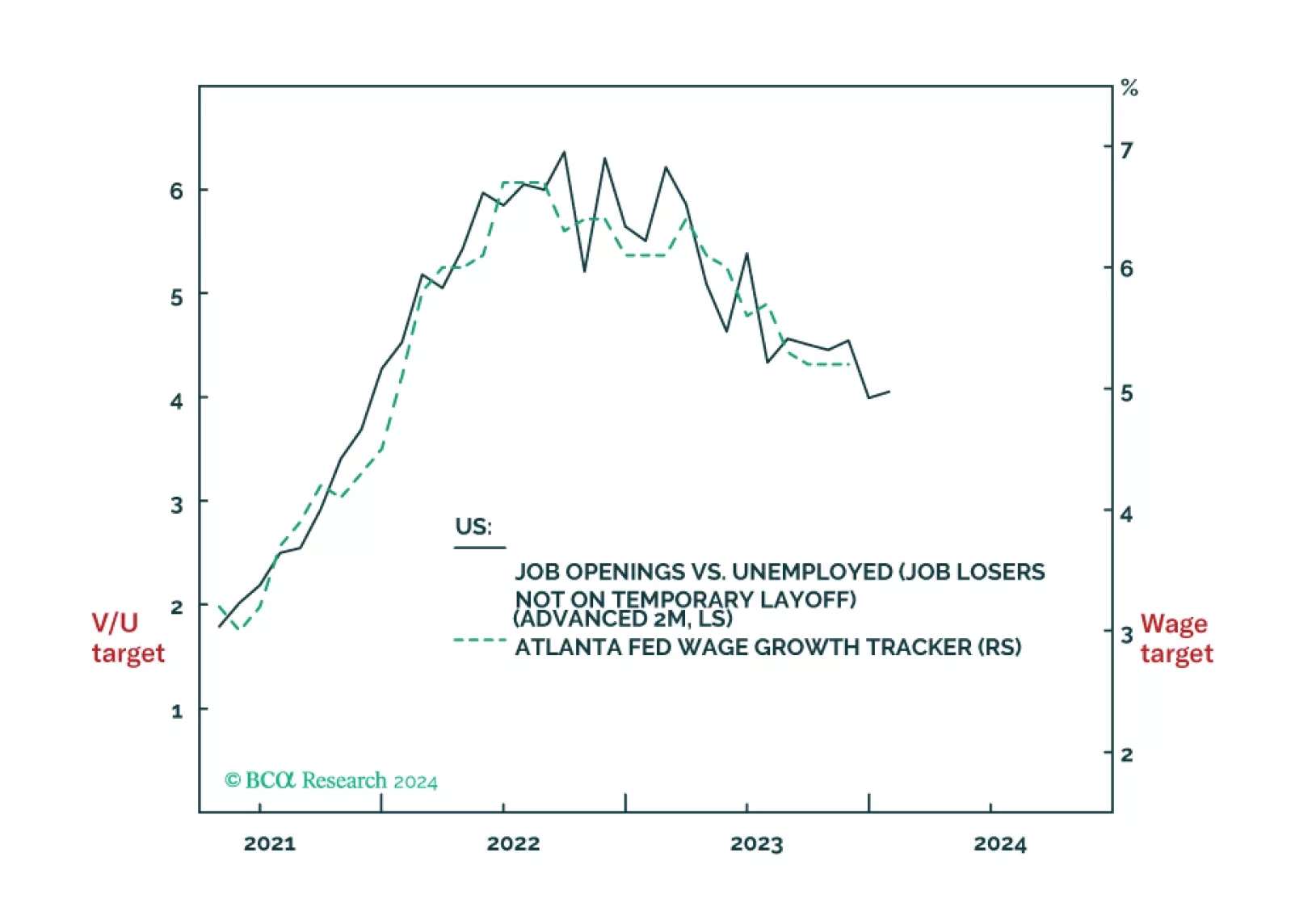
The best leading indicator for post-pandemic US wage inflation is the ratio of job vacancies to ‘bad’ unemployment (V/U), where bad unemployment refers to ‘job losers not on temporary layoff’. This ratio has already declined from 6.4 to 4.1 and wage…

We update our inflation forecast following this morning’s CPI report.
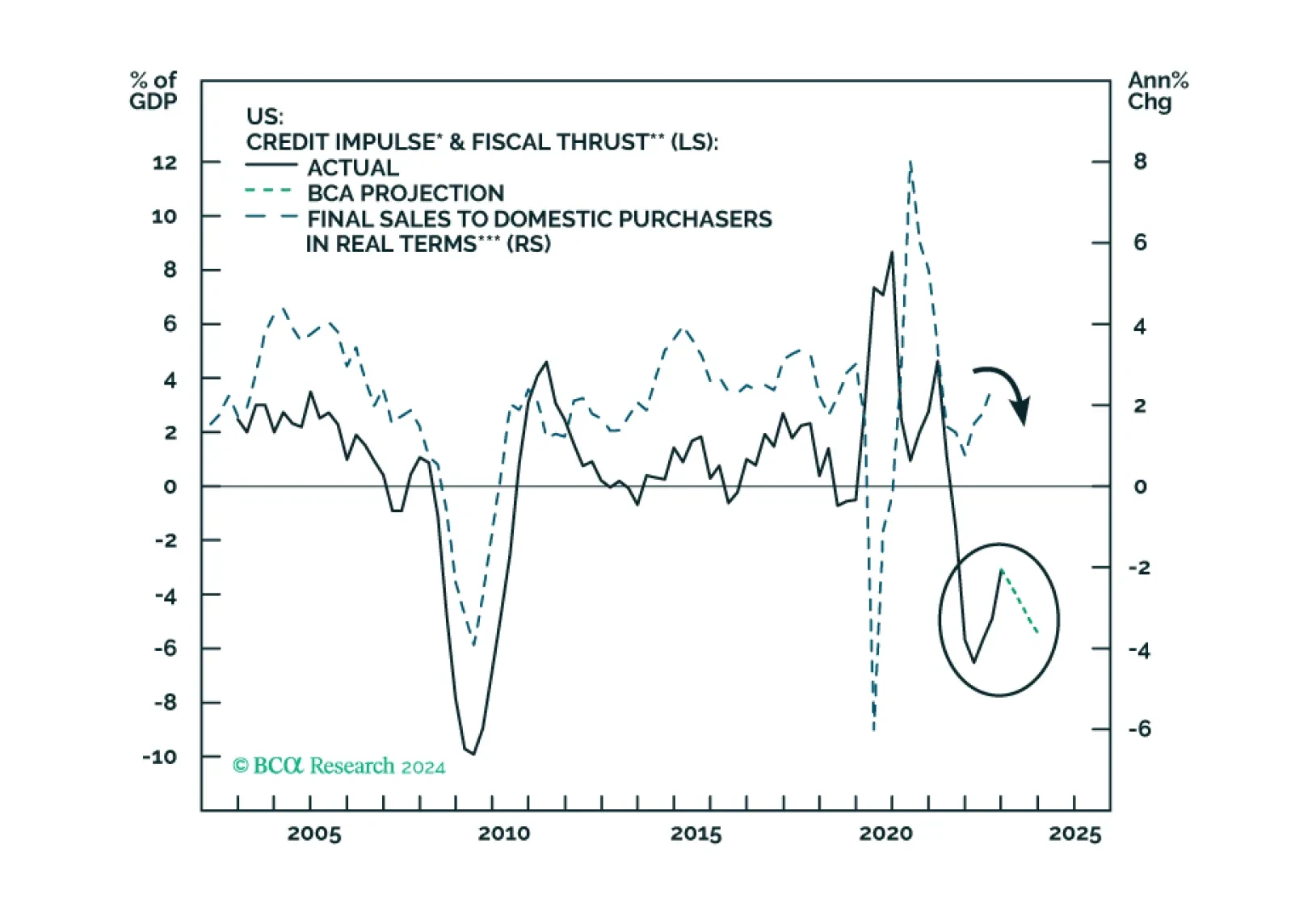
The combined US credit impulse and fiscal thrust indicator will likely relapse in 2024, heralding growth weakness. Stalling US sales volume and falling inflation, combined with sticky labor costs, will herald a non-trivial profit margin compression. The recent increase in Asian exports will likely prove to be a mid-cycle improvement rather than a cyclical recovery.
Australian CPI inflation fell from 4.9% y/y to a 22-month low of 4.3% y/y in November – slightly below expectations of 4.4%. Underlying measures of core inflation also indicate that price pressures eased in November. The rate of growth in CPI excluding…
The Atlanta Fed’s US Wage Growth Tracker stalled at 5.2% in December, unchanged from November. Notably, after falling from a peak of 7.1% in June 2022, this indicator has stabilized at still-elevated levels in recent months. This dynamic raises the question…
Crude oil prices weakened following the release of the US EIA’s weekly report on Wednesday, reversing gains earlier in the session and ultimately ending the day lower. The data release showed commercial crude inventories unexpectedly rose by 1.3 million…

The Fed faces a dilemma. Cut rates early to avoid a recession, but at the risk of not slaying wage inflation. Or, not cut rates early to ensure that wage inflation is slayed, but at the risk of a downturn. Faced with such a dilemma, the lesser evil is to slay wage inflation even at the risk of a downturn. Meaning that the market has overpriced early rate cuts. We discuss some other investment implications, and identify two rebound candidates.

The Santa Claus rally started in late October lifting the S&P 500 by 15.8%. However, there are signs that the rally is getting tired. Consider the following: The S&P 500 has been trading at around 4,750 since the middle of December. …