Sorry, you need to enable JavaScript to visit this website.
Saltar al contenido principal

Hungría

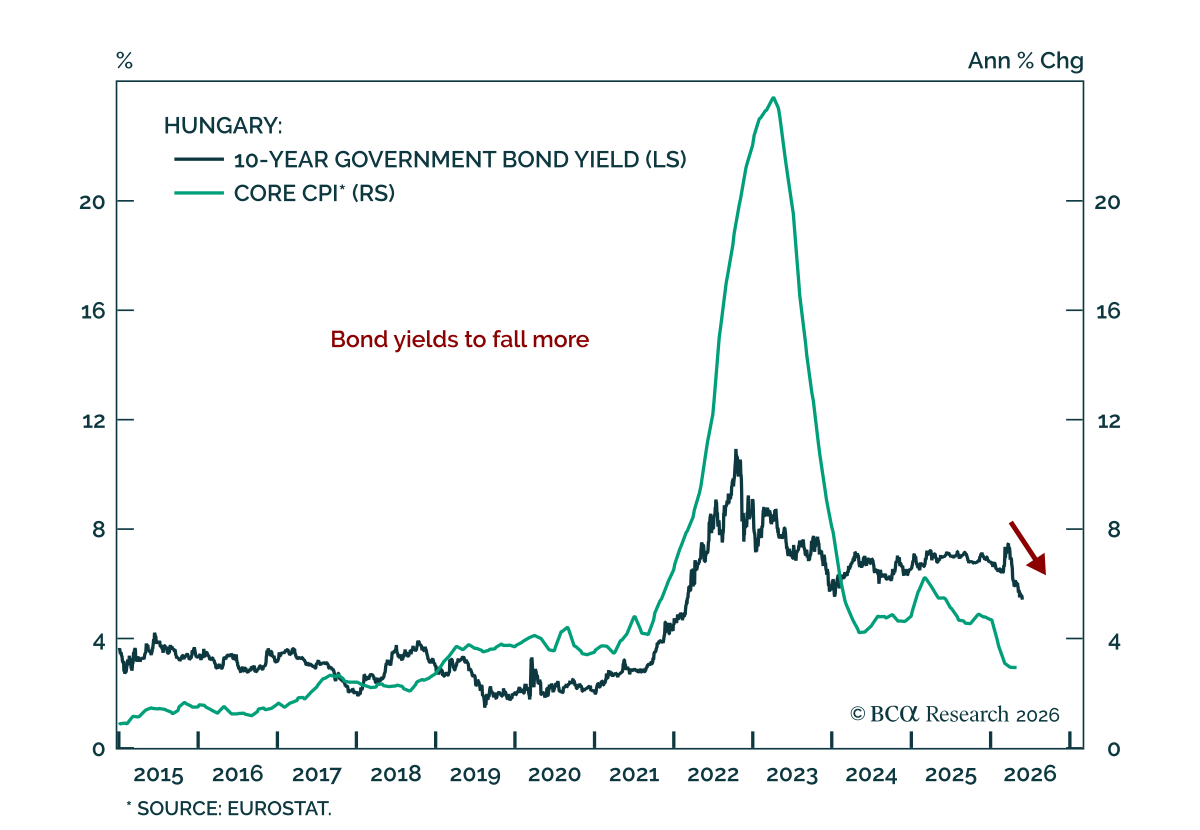
La combinación de políticas de Hungría se está volviendo favorable para los bonos. El Banco Nacional de Hungría mantuvo los tipos en 6,25 %, citando una mejor perspectiva de la inflación respaldada por un forinto más fuerte y la retrasada eliminación gradual…
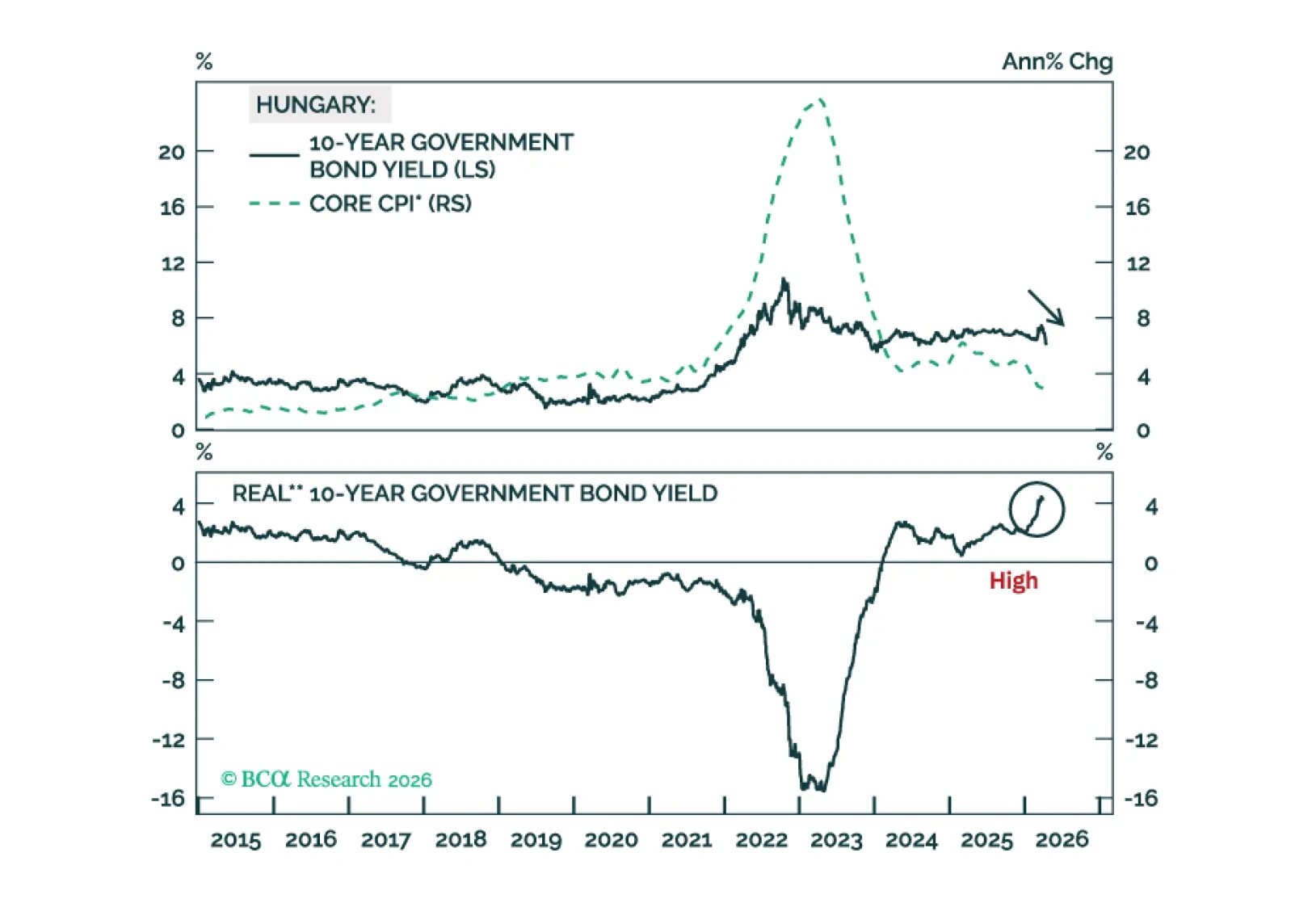
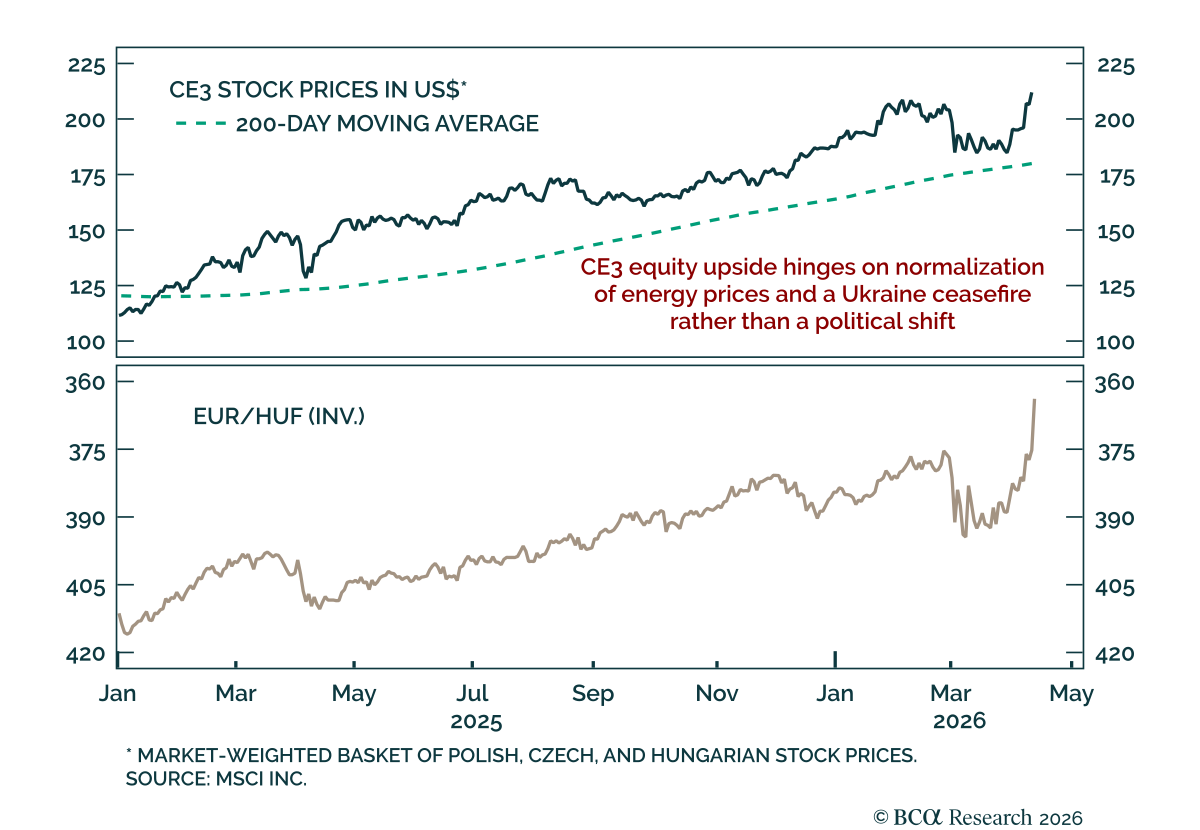
Los activos y la moneda húngara han subido desde las elecciones generales del pasado fin de semana. ¿Pueden subir más? Sostendríamos que sí. Los vientos a favor de Hungría son fuertes. Los inversores deberían posicionarse para beneficiarse del cambio de régimen de políticas en Hungría.  Una historia alcista El crecimiento húngaro ha sido el más débil de los tres países de Europa Central (Polonia, República Checa y Hungría - CE3) durante los últimos años. Esto cambiará ya que Hungría se beneficiará de la reanudación de fondos significativos de la UE y de una prima de riesgo país materialmente menor. Es probable que el nuevo gobierno enmiende las relaciones deterioradas de Hungría con la UE. Este cambio podría desbloquear fondos de la UE previamente congelados por disputas sobre políticas euroescépticas y preocupaciones sobre el Estado de derecho. Hungría podría recibir hasta 26.000 millones de euros adicionales en subvenciones y préstamos del “Fondo de Cohesión” y del “Mecanismo de Recuperación y Resiliencia” en los próximos años. Para contexto, los flujos netos de cuenta de capital y financiera hacia Hungría sumaron 5.000 millones de euros en 2025. Esta nueva financiación equivale al 12 % del PIB de Hungría en 2025, muy por encima de la de otros pares de Europa central y oriental (ver Tabla 1).  Tabla 1 Desglose de los fondos de la UE para los países de Europa Central Desglose de los fondos de la UE para los países de Europa Central Hungría también podría recibir otros 16.200 millones de euros en el marco de la Acción de Seguridad para Europa (SAFE). SAFE ofrece financiación adicional en forma de préstamos a largo plazo con una duración máxima de 45 años y un período de gracia de 10 años para el reembolso del principal. Los préstamos están destinados a la adquisición de material de defensa, exigiéndose que al menos el 65 % de los costes de los componentes procedan de la UE, del EEE-EFTA o de Ucrania. Gráfico 1 Abrir una posición larga en el forint frente al dólar estadounidense Abrir una posición larga en el forint frente al dólar estadounidense Sin embargo, el acceso continuado a los fondos de la UE requerirá el cumplimiento de las normas fiscales de la UE. El déficit fiscal de Hungría ronda el 5 % del PIB. El Consejo Fiscal húngaro estimó en diciembre de 2025 que será necesario un ajuste fiscal del 1,7 % para 2027 para cumplir con las normas fiscales de la UE. Esto implica un endurecimiento fiscal significativo en los próximos dos años.  El nuevo gobierno eurofílico cumplirá al menos mínimamente con las normas fiscales de la UE y seguirá una política fiscal relativamente ortodoxa. Eso debería anclar las expectativas de inflación y atraer flujos de capital privado extranjeros. En conjunto con el renovado compromiso del gobierno con la UE y la OTAN, este cambio conducirá a una nueva caída de la prima de riesgo de Hungría. Un alto el fuego en Ucrania produciría el mismo efecto.  Las implicaciones para los mercados financieros de todo esto serán significativas.  Un gran flujo de capital reforzará al forint. En los próximos 12 meses, es probable que el forint húngaro se aprecie no solo frente al dólar estadounidense y al euro, sino también frente a la corona checa y al zloty polaco (Gráfico 1).  Los rendimientos de la deuda doméstica húngara disminuirán durante el próximo año a medida que los inversores revalúen este mercado, incluso si la inflación repunta en el segundo semestre de 2026. Cabe destacar que los rendimientos reales húngaros son actualmente bastante altos (Gráfico 2).  Recesión manufacturera latente Las perspectivas para las otras dos economías de Europa Central, Polonia y la República Checa, son menos halagüeñas. Esto se debe a que la producción manufacturera en Europa está destinada a disminuir en los próximos meses (Gráfico 3). Esa debilidad también se trasladará a las economías CE3. Gráfico 2 Los rendimientos reales de los bonos húngaros son altos Los rendimientos reales de los bonos húngaros son altos Gráfico 3 La industria manufacturera europea se contraerá. La industria manufacturera europea se contraerá. Las exportaciones europeas hacia EE. UU. caerán más a medida que los precios más altos del gas empiecen a afectar la demanda de los consumidores estadounidenses. Crucialmente, la contracción de las importaciones estadounidenses podría durar más que el shock petrolero.  Al caer los flujos netos de capital hacia EE. UU., el déficit por cuenta corriente de EE. UU. también deberá estrecharse. La forma más plausible para que el déficit por cuenta corriente de EE. UU. se reduzca es una disminución de las importaciones estadounidenses. En consecuencia, las exportaciones europeas hacia EE. UU. seguirán contrayéndose en el futuro previsible (Gráfico 4). Las perspectivas para las exportaciones a China son igualmente débiles. La demanda menguante en el Reino Medio y la dura competencia local han llevado a una caída de las exportaciones europeas desde 2023 (Gráfico 5).  Gráfico 4 Las exportaciones europeas a EE. UU. se reducirán aún más... Las exportaciones europeas a EE. UU. se reducirán aún más... Gráfico 5 ...También lo harán las exportaciones a los mercados emergentes y a China ...También lo harán las exportaciones a los mercados emergentes y a China Las empresas europeas también se enfrentarán a la competencia de rivales chinos en mercados domésticos, otros emergentes y desarrollados. China ganará cuota de mercado a Europa porque el euro se apreciará frente al yuan de manera significativa en los próximos 12 meses. Una manufactura central europea más débil es negativa para las economías CE3, dada su alta exposición a la cadena de suministro manufacturera europea.  Cabe destacar que la manufactura representa un 18 % del PIB en Polonia, un 23 % en la República Checa y un 16 % en Hungría. Una contracción en este sector pesará sobre el crecimiento total, especialmente en Polonia y la República Checa. La economía húngara será comparativamente más resistente, ya que las transferencias fiscales desde Bruselas proporcionarán cierto colchón.  En términos de implicaciones de mercado, una recesión manufacturera será alcista para los bonos domésticos. TENEMOS una perspectiva positiva sobre los bonos de Europa Central y los Bunds alemanes en el horizonte cíclico. Una contracción manufacturera inminente será negativa para el zloty y la corona frente al euro. El Gráfico 6 muestra que estas monedas suelen depreciarse respecto al euro cuando la producción manufacturera de la zona euro se contrae.  Dicho esto, es poco probable que el forint se debilite frente al euro, dados los amplios flujos de capital esperados en Hungría. Como tal, el forint se apreciará frente a sus homólogos polaco y checo en el próximo año (Gráfico 7).  Gráfico 6 La Recesión Manufacturera Será Negativa Para El Zloty Y La Koruna La Recesión Manufacturera Será Negativa Para El Zloty Y La Koruna Gráfico 7 El Forint se fortalecerá frente al Zloty y a la Koruna El Forint se fortalecerá frente al Zloty y a la Koruna ¿Y la inflación? Gráfico 8 El elevado crecimiento salarial establecerá un piso para la inflación subyacente El elevado crecimiento salarial establecerá un piso para la inflación subyacente A pesar del lento crecimiento económico en los países de Europa Central, la inflación general aumentará desde los mínimos actuales en la segunda mitad del año. Sin embargo, la recesión manufacturera latente mantendrá contenidas las presiones sobre los precios. La razón inmediata para que la inflación general deje de caer es el shock del precio del petróleo.  Más allá del corto plazo, los mercados laborales estructuralmente ajustados en los CE3 implican que el crecimiento de los salarios permanecerá elevado. La dinámica salarial influye fuertemente en la inflación subyacente de los CE3 (Gráfico 8).  Cabe destacar que los salarios en las tres economías de Europa Central todavía crecen a ritmos elevados de un solo dígito. Si bien esto mantendrá el consumo de los hogares robusto, también sostendrá las presiones de costos para las empresas. En efecto, colocará un piso bajo la inflación subyacente. Estas dinámicas están impulsadas por la persistente escasez de mano de obra debido al descenso de la población y de la fuerza laboral. El Gráfico 9 muestra que la tasa de participación de la fuerza laboral ha subido bruscamente en los últimos 15 años. Cuando se combina con la baja tasa de desempleo, esto sugiere una capacidad sobrante limitada en la población en edad de trabajar.  Estos problemas demográficos no pueden resolverse rápidamente, por lo que el crecimiento salarial permanecerá elevado en un futuro previsible. Como resultado, la inflación subyacente en los CE3 tocará fondo más pronto que tarde.  Conclusiones de inversión: Divisa: Recomendamos una nueva operación de divisas dado nuestro panorama constructivo sobre el forint húngaro durante el próximo año: Adoptar una posición larga en el forint húngaro / corta en el dólar estadounidense.  Somos bajistas respecto al dólar estadounidense frente al euro. El forint se apreciará de forma significativa frente al dólar estadounidense. Renta fija: Los inversores deberían mantener una cesta de bonos domésticos de los CE3 en largo sin cubrir el riesgo de divisa.  Las carteras dedicadas de bonos domésticos de mercados emergentes deberían mantener una sobreponderación en bonos CE3. Los bonos de Europa Central superarán a sus homólogos de mercados emergentes en términos de rendimiento total en moneda común. Esto se debe a que las monedas CE3 se comportarán mejor que la mayoría de las demás monedas de mercados emergentes debido a su vinculación con el euro, que creemos que superará a la mayoría de las demás monedas de mercados desarrollados en un horizonte cíclico. Gráfico 9 La escasez de mano de obra en Europa Central es un problema estructural La escasez de mano de obra en Europa Central es un problema estructural Renta variable: Las acciones CE3 han superado a su referencia de mercados emergentes por un margen considerable en los últimos tres años. Dado el inminente enfriamiento del crecimiento en Europa, existe la probabilidad de que las acciones CE3 entren en un periodo de indigestión. Las carteras de renta variable de mercados emergentes deberían degradarlas de sobreponderadas a neutras (Gráfico 10). Gráfico 10 Realizar ganancias en las acciones de CE3 y rebajar la recomendación de sobreponderar a neutral Realizar ganancias en las acciones de CE3 y rebajar la recomendación de sobreponderar a neutral   Rajeeb PramanikEstratega de mercados emergentesrajeeb.pramanik@bcaresearch.com
Hungría cambia de tono, no de rumbo Hungría cambia de tono, no de rumbo La derrota de Orbán marca un cambio político en Hungría, pero no una ruptura ideológica limpia con el pasado. La victoria de Peter Magyar, que a su vez es una escisión de Fidesz, apunta a…
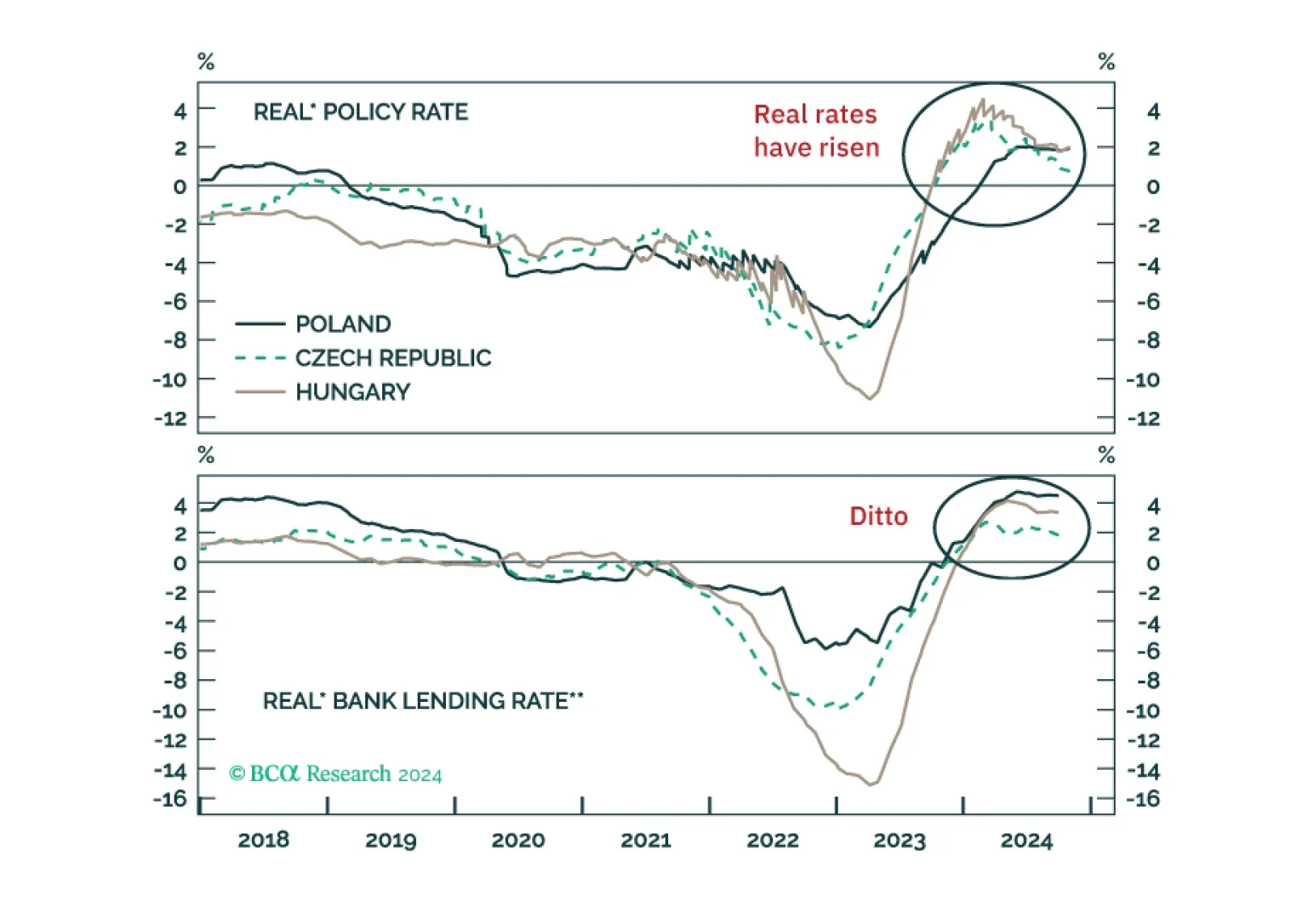
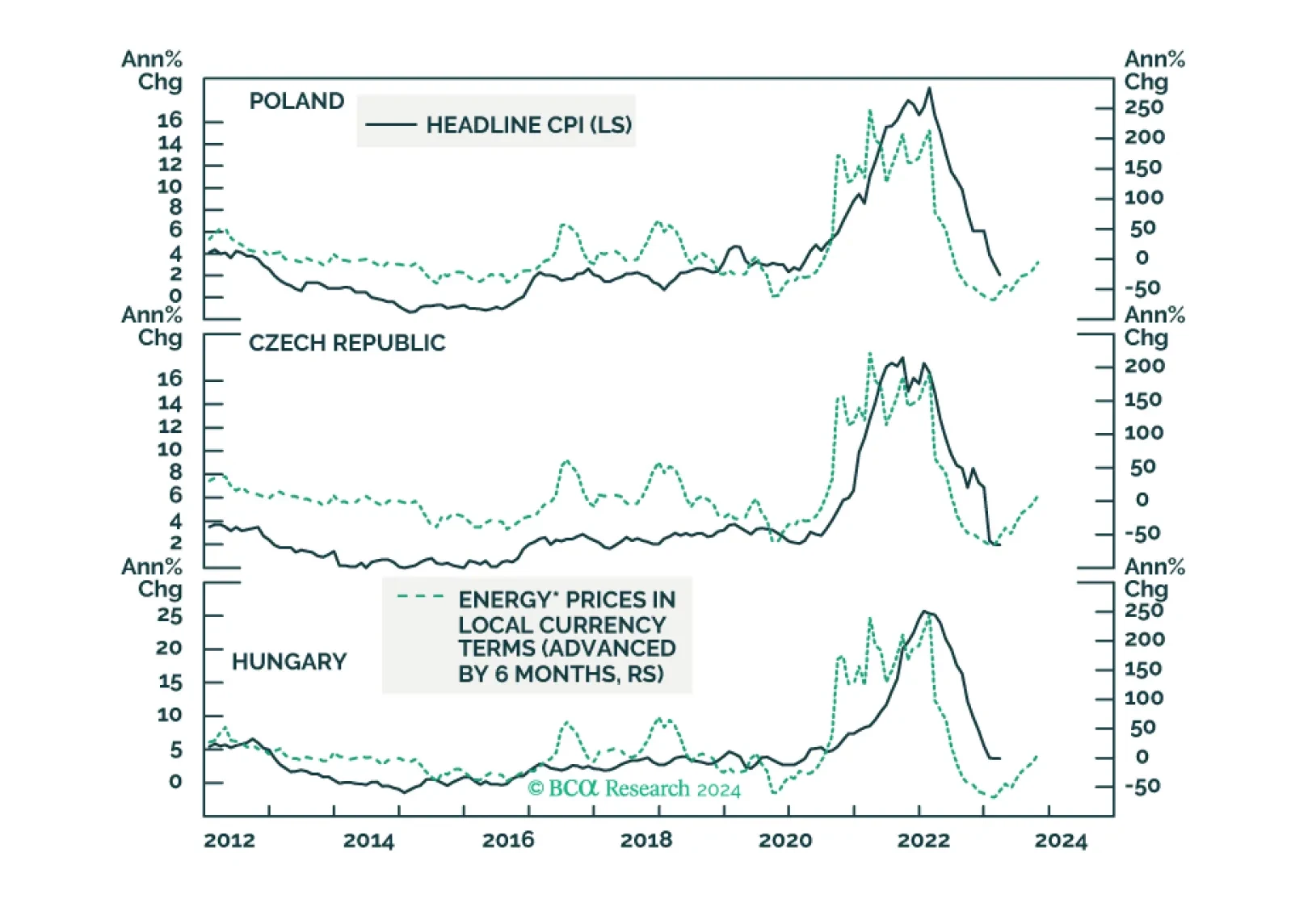
Domestic bond yields in the three major central European markets have recently inched up more than their German counterparts. This is despite economic growth staying quite weak in CE3. What should investors make of it (Chart 1)?Our take is that the CE3 yield differential over German bunds will widen in the coming months. That is due both to CE3 currency depreciations and diverging inflation outlooks. CE3 currencies are headed lower as growth in core Europe will continue to struggle.In addition, persistently high wage growth entails that core inflation in CE3 is unlikely to fall any further in the coming months, even if growth disappoints. The end of their disinflation cycle will prevent CE3 bond yields from declining considerably in the next six to nine months. Currencies And Bonds: The Drivers And Outlook CE3 currencies are heading lower vis-à-vis the greenback and the euro. That is because a crucial driver of these currencies—the growth outlook in core Europe—remains tepid (Chart 2). That is unlikely to change much going forward. Uncertainties surrounding Trump’s looming tariffs on Europe will continue to hurt business sentiments and growth in Europe. While the timing of tariffs is unknown, European capitals are preparing for executive actions shortly after Trump’s inauguration on January 20. A weak CE3 currency outlook is also negative for CE3 domestic bonds. Chart 3 shows that a depreciating currency usually coincides with a widening yield differential of CE3 domestic bonds over German Bunds. That means CE3 bonds are set to underperform their German counterparts in common currency terms as both drivers of return (‘spreads’ and currency) will work against them. Apart from the currency impact, the CE3 inflation outlook is also bond-negative. Core inflation in the central European economies appears to have bottomed out for now. The reason is persistently high wage growth – mostly due to severe labor shortages. The labor force participation rate is very high in these three countries, leaving little spare capacity in the labor force (Chart 4). Since such demographic challenges cannot be resolved anytime soon, wage growth rates will remain steep in the foreseeable future. Chart 5 shows that wage growth rates dictate CE3 core inflation. The latter, therefore, will likely hover above the central bank’s upper target bands in the foreseeable future. That, in turn, will put a floor under bond yields. The bottom line is that CE3 domestic bond spreads versus German bunds will widen both due to CE3 currency weakness and cyclical inflation outlook. That calls for underweighting CE3 domestic bonds vis-à-vis bunds in fixed-income portfolios. CE3 bonds will also underperform their EM counterparts on a similar logic: the cyclical disinflation process is over in CE3 but not in most EM economies. As such, CE3 will likely witness relative bond yield widening vis-à-vis elsewhere in EM. A Whiff Of Stagflation?Weak core European growth usually depresses central Europe's highly connected economies. Indeed, the persistent contraction in European manufacturing orders points toward muted CE3 growth ahead (Chart 6). The latter’s domestic headwinds will accentuate that weakness. These headwinds will hurt the Czech and Hungarian economies much more than the Polish economy (details below). However, as mentioned, inflation will remain above the central bank targets everywhere. That suggests a stagflationary environment. Real policy rates in CE3 have not only turned positive, but they are also higher than pre-pandemic levels (Chart 7, top panel). The same can be said about real bond yields. Real bank lending rates have also become restrictive, especially in Poland and Hungary (Chart 7, bottom panel). Put differently, monetary conditions have tightened meaningfully, which is growth-negative.The central banks of Poland and the Czech Republic recently revised down their growth projections for 2025, while revising up their inflation projections. The Polish and Hungarian central banks have also paused their easing cycles. The Czech National Bank lowered its base rate by 25 basis points earlier this month but acknowledged that inflation will remain above the target next year.All this indicates that policymakers are bracing for a stagflationary environment, in which growth remains low but inflation remains above the central bank’s targets.This also means further policy rate cuts will be difficult to come by. The upshot is that real borrowing costs will remain relatively high, further weighing on growth.Data indicates that domestic demand is already weak, particularly in the Czech Republic and Hungary. This can also be seen in retail sales volume levels – which have remained below their 2021-22 peak (Chart 8). Fiscal policy has been a headwind, too, particularly in the Czech Republic and Hungary this year. Next year, however, the fiscal thrust will be only marginally negative, as per the IMF. To be sure, Poland is much less exposed to a struggling core Europe than the other two. The country is also set to receive a significant EUR 9.4 billion of EU grants and loans in the coming months (in addition to the EUR 6.3 billion they received in 2024 so far). This will help put a floor under its growth, as those funds will be deployed in various infrastructure projects. Overall, the Polish growth will fare relatively better than the other two. Polish core inflation will also likely perk up more than others. Czech inflation, on the other hand, will be the least pronounced. Geopolitical Risk Premium Spikes In Near TermThe Ukraine war escalated in a way that caught global investors’ attention on November 18 when US President Joe Biden gave Ukraine approval to use long-range missiles against Russia, including targets in the Russian heartland.Biden’s action stemmed from North Korea’s deployment of nearly 10,000 troops to fight Ukrainians near Kursk, Russia, where Ukraine invaded in August. The United Kingdom also gave approval for Ukraine to use long-range missiles. Ukraine promptly staged attacks against Russian supply lines using these missiles, triggering a harsh Russian reaction.Russia retaliated by firing a new hypersonic missile against Ukraine and revising its nuclear doctrine to lower the threshold for the use of nuclear weapons. Previously Russia only said it would use the bomb in the event of an existential threat to the state. Now Russia says it will consider an attack by a non-nuclear state (Ukraine) allied with a nuclear state (e.g. the US or UK) as a joint attack and potentially worthy of a nuclear retaliation. In particular, an extensive Ukrainian barrage of US-made missiles and drones targeting interior Russian cities could cross the new threshold.That is a convincing reason for Ukraine to limit the use of the missiles to targets close to its border, sporadically and only to hit military supply lines. Kiev does not have an interest in crossing Russia’s red lines and provoking a nuclear attack when it cannot be certain of the extent of that attack, the targeting, or that NATO would retaliate. Russia, for its part, would prefer not to use nuclear weapons because of the potential radioactive cloud close to home and the risk that NATO would retaliate by staging a conventional military strike against Russian forces operating in Ukraine. The Kremlin cannot be certain since the NATO states have a strong interest in preventing nuclear blackmail from becoming a new norm.Ultimately, Russia will use nukes if Ukraine goes too far – otherwise, it would not have staked its credibility on this new threat. Note that there is a high probability of near-term escalation of the war, including nuclear brinksmanship, even if the odds of a nuclear detonation remain in the low single digits.First, Ukraine’s fear of abandonment – and need to gain leverage ahead of any ceasefire talks – forces Kiev to escalate the war in the short run.Ukraine expects Trump and the Republicans to reduce military and financial aid since they were elected on the back of inflation and will seek to cut government spending. A loss of American support will signal to Europe that the war is effectively decided, as Ukraine will never join NATO.The Europeans want the war to end sooner rather than later because they fear the danger of a spillover into NATO territory as well as rising domestic political opposition. German and French leaders have already spoken to Vladimir Putin since Trump’s election, as they see the writing on the wall. Thus, Ukraine must take the initiative to prevent the West and Russia from foisting a ceasefire upon it, which is precisely what occurred in 2015 after Russia invaded Crimea.Second, the outgoing Biden administration views the incoming Trump administration as a threat to American democracy and a friend to Russian strategy. Trump wants to bring the war to a rapid ceasefire, but Russia would then succeed at establishing a sphere of influence and exposing a lack of resolve on the part of the Western democracies. Hence, Biden is attempting to speed up financial and military aid to Ukraine so that it can improve its war efforts, increase its leverage, and potentially create enough momentum to prevent Trump from utterly abandoning Ukraine or approving a lopsided ceasefire in Russia’s favor. Thus, the war is escalating as we go to press and will continue for at least the final two months of Biden’s “lame duck” presidency. After that, Trump’s inauguration on January 20 creates a clear diplomatic avenue for the reduction of tensions. Later, after Trump takes office, another risk will emerge for central Europe: the risk that Russia will stage a provocation against a NATO country to test whether Trump will “defend every inch” of the alliance’s territory, as Biden pledged to do. If Trump hesitates, Russia will undermine Eastern European trust in NATO, increasing the central European geopolitical risk premium. If not, Russia knows its limits for a while. Bottom Line: There is a major increase in Russia-NATO tensions around the endgame in Ukraine, which should inject a risk premium into Polish, Hungarian, and Czech currency and assets at least for the next few months around the US power transition and possibly for a while longer. Investment ConclusionsCurrency: The Polish zloty has been the strongest of the three currencies over the past year as the markets celebrated Poland’s political return to the European manifold after the elections late last year. Now that event has been largely priced in, and the geopolitical risk is rising again. Investors should expect a relapse in Poland’s currency and share prices. A weak core European growth outlook means all CE3 currencies have a further downside compared to the greenback. Currency investors should stick with our recommendation of shorting an equal-weighted basket of CE3 currencies versus the greenback (Chart 2, above).Fixed Income: Considering the inflation outlook and currency prospects, we recommend that EM domestic bond portfolios downgrade the Czech Republic from overweight to neutral and Poland and Hungary from neutral to underweight.Investors should also take the same stance relative to German bunds: neutral the Czech Republic and underweight the other two (Chart 9).Notably, on October 21, 2024, we closed our long position in Czech domestic bonds. For USD-based investors, this recommendation has returned a 12.7% gain since its inception on December 08, 2022.We also booked profits on our trade “Pay Polish 2-year swap rates / Receive Czech 2-year swap rates,” which yielded 120 bps gains since its initiation on November 22, 2023. Equity: Given the weak growth outlook, the CE3 stock prospects remain lackluster. Tight monetary stances in all three countries and a negative fiscal thrust in the Czech Republic and Hungary will add to their headwinds. EM equity portfolios should downgrade both Polish and Czech stocks from overweight and neutral, respectively, to underweight. Hungary should also remain underweight (Chart 10). The rise in geopolitical risk in the region will likely exacerbate pressures on CE3 assets in the short term.Rajeeb PramanikSenior EM Strategistrajeeb.pramanik@bcaresearch.comMatt Gertken Chief Geopolitical Strategist mattg@bcaresearch.comFollow me onLinkedIn & X 
BCA Research’s Emerging Markets Strategy service concludes that among the CE3 currencies, the zloty and the koruna will be the relative winners, while the forint will likely be the worst performer of the three. That said, all three CE3 currencies will weaken…

The disinflation process is over in Poland and Hungary. Only the Czech Republic will see its core inflation meet its central bank target this year. The reason is much tighter labor market dynamics in the first two. Investors should continue to short a basket of CE3 currencies vis-à-vis the US dollar.

A market-cap weighted index of CE3 economies (Poland, Hungary and Czechia) returned a whopping 64% in common currency terms since its 2022 low. Polish and Hungarian equities led the rally, advancing by a respective 86% and 78% in local currency terms…

Real wages are set to rise in CE3 economies with implications for their asset markets and currencies. Of the three, Polish assets and the zloty are the most vulnerable.

The growth and inflation profiles of the three central European countries are set to diverge. The outlook for Polish and Hungarian Bonds are not attractive anymore. Book profits on them. Instead, initiate a new trade: pay Polish / receive Czech 10-year swap rates.

It’s time to go overweight Hungarian domestic bonds in an EM and European core bond portfolios. Currency investors should book profits on our long CZK / short HUF trade, which has generated 29.4% gains since its inception in June last year.