Sweden
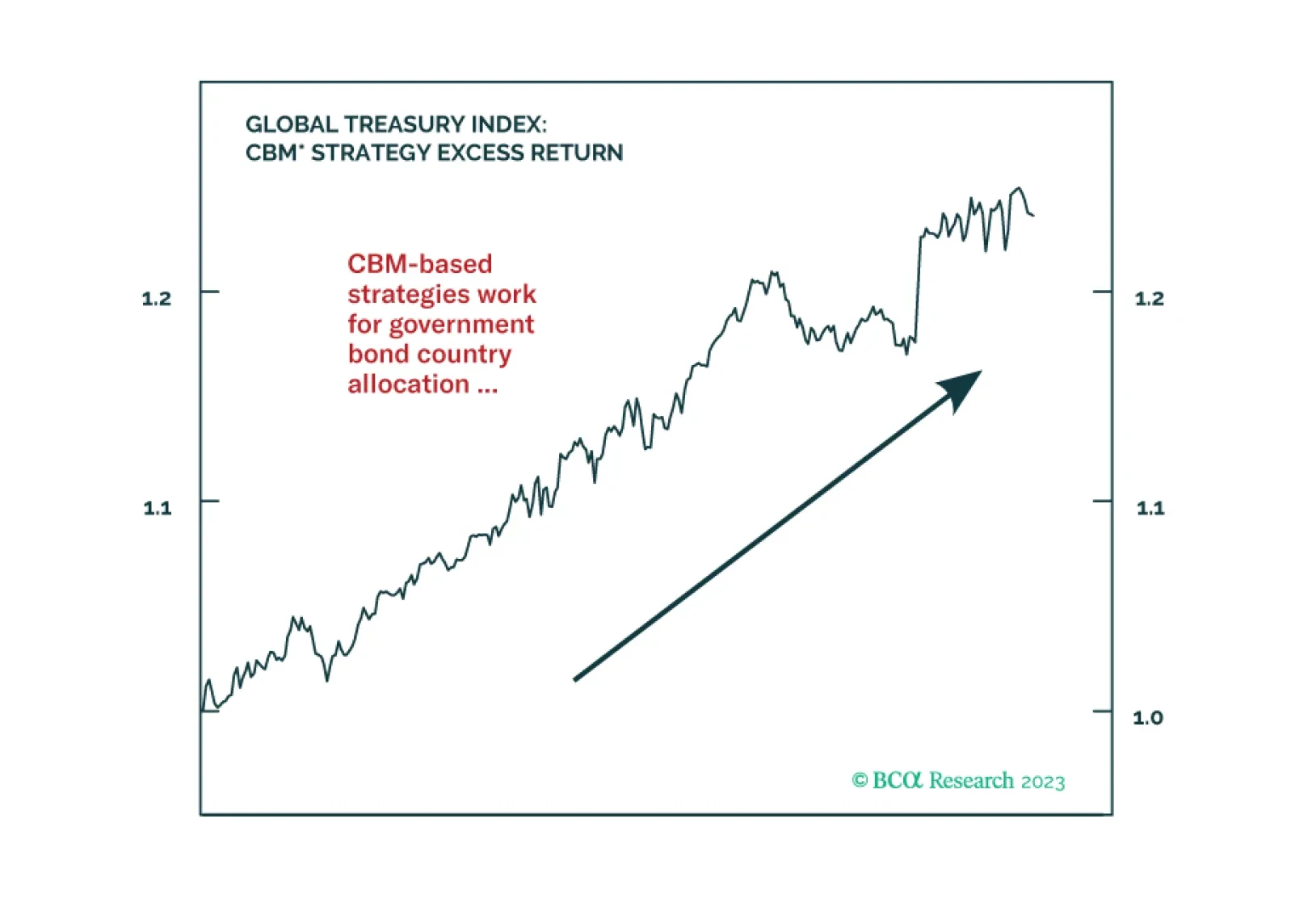
In this Special Report, we introduce two strategies that use our Central Bank Monitors for global fixed income country allocations and currency trades. We find that using the Monitors in country selection helps improve the performance of a developed markets government bond portfolio. The CBMs can also help substantially minimize the drawdowns on a standard FX carry strategy.


The DXY will continue to have near-term upside, as economic growth holds up in the US, while it deteriorates in other parts of the world. Remain constructive on the DXY at current levels, but pivot to a short position on evidence US growth is boosting the rest of the world.
In this Month-In-Review report, we go over the latest G10 data releases and rank currencies’ fundamental standing based on our updated macroeconomic model.
It is easy to conclude that European equities are attractively valued by looking at multiples; however, a method rooted in fundamentals is essential to find out which bourses are genuinely cheap.
Our Central Bank Monitors support the recent shift in tone from central bankers in Europe. Find out what it means for European fixed-income portfolio allocation.