Sorry, you need to enable JavaScript to visit this website.
Skip to main content

Sweden

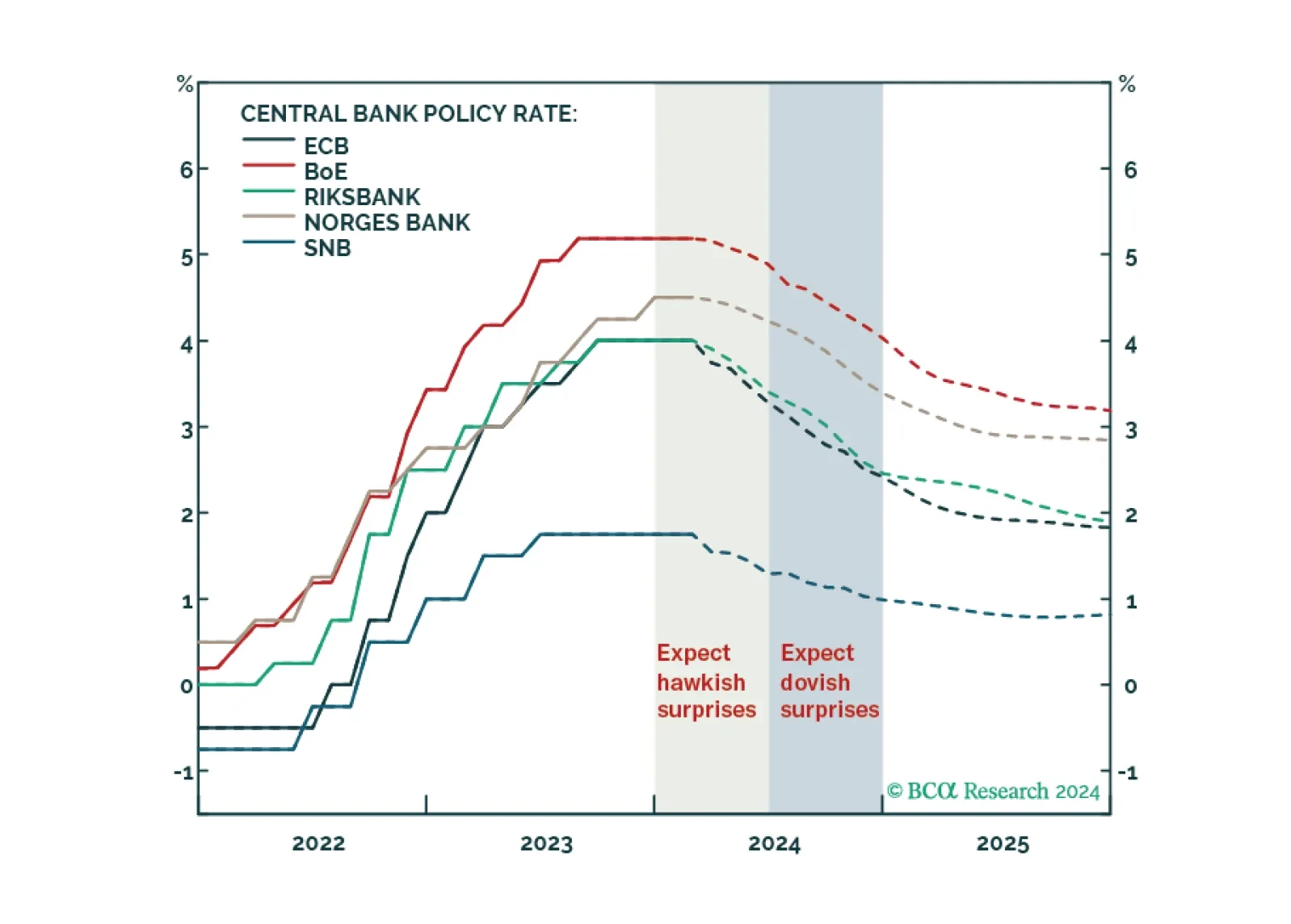
Our Central Bank Monitors support European central bankers’ decision to hold rates steady. Find out what it means for European fixed-income portfolio allocation.
Over the past few months, we have been highlighting that several indicators are pointing to an industrial recovery in Europe. Notably, Swedish indicators were a cause for optimism. The Swedish PMI’s new orders-to-inventories ratio has rebounded sharply over…
German factory orders sent a disappointing signal on Wednesday.  New orders at German factories unexpectedly declined by 3.7% m/m in October, disappointing expectations of a 0.2% m/m rise following two consecutive months of increase. The annual rate of…

This report looks at the prospects for the Swedish krona, following the pause by the Riksbank.
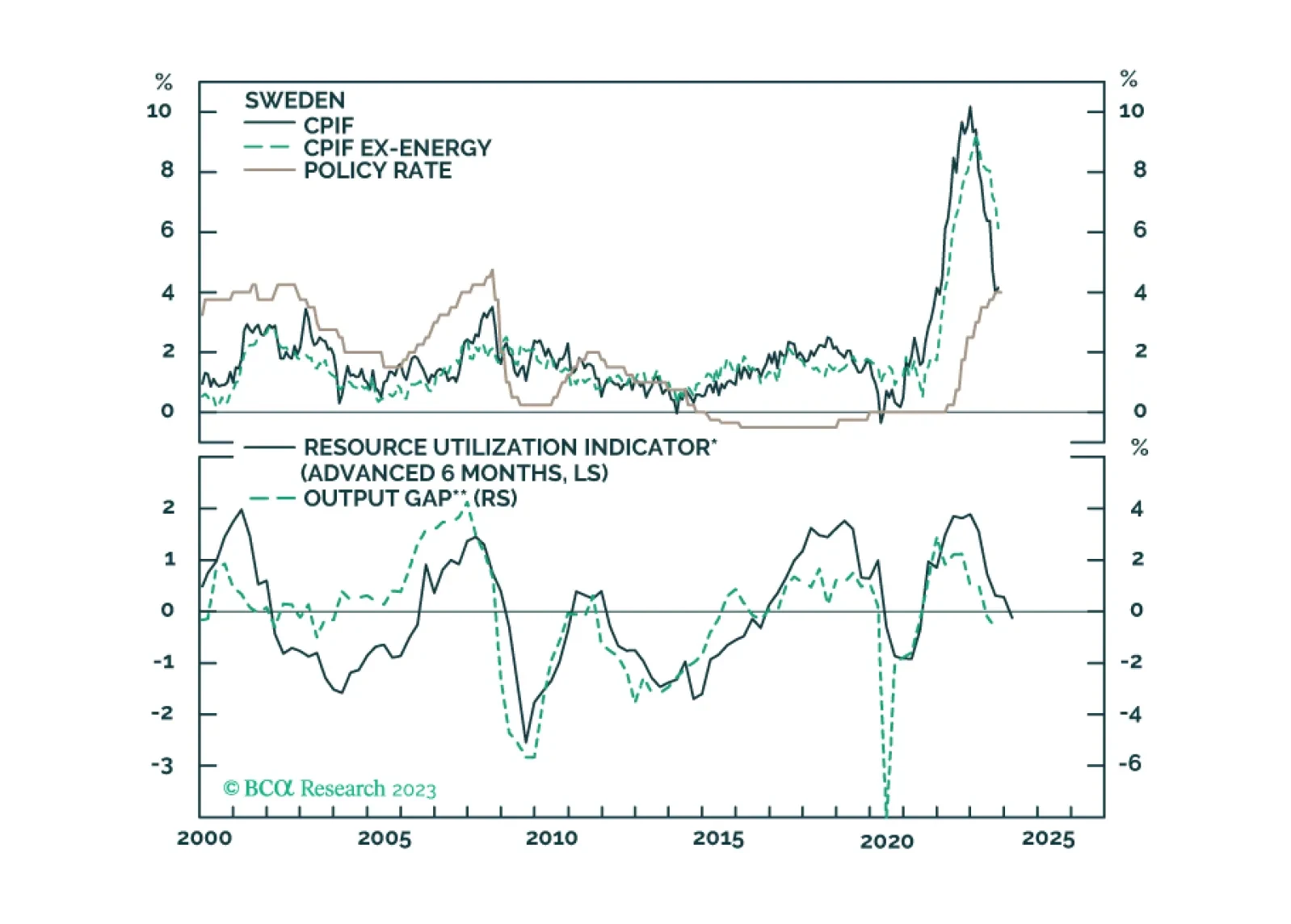
The Swedish krona was among the worst performing G10 currencies on Thursday after the Riksbank kept the policy rate unchanged at 4%, surprising consensus expectations of a 25bps hike. The post-meeting press release underscored that although inflation is…

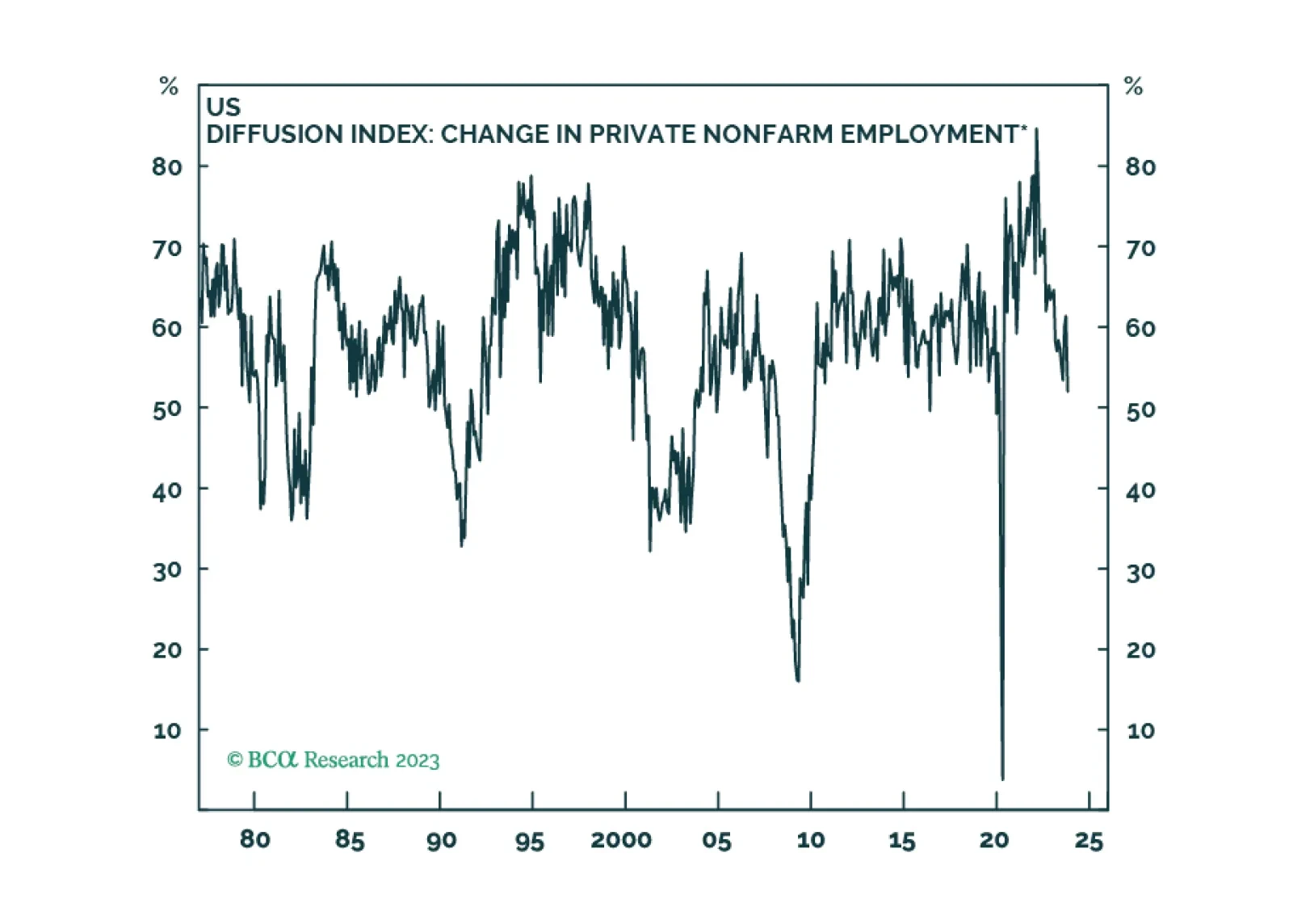
Labor markets are softening in most developed economies, as is usually the case in the lead-up to recessions. Our base case is that the global recession will begin in the second half of 2024, but we will be monitoring our MacroQuant model on a daily basis for confirmation.

Special Report

In this Special Report, we introduce two strategies that use our Central Bank Monitors for global fixed income country allocations and currency trades. We find that using the Monitors in country selection helps improve the performance of a developed markets government bond portfolio. The CBMs can also help substantially minimize the drawdowns on a standard FX carry strategy.

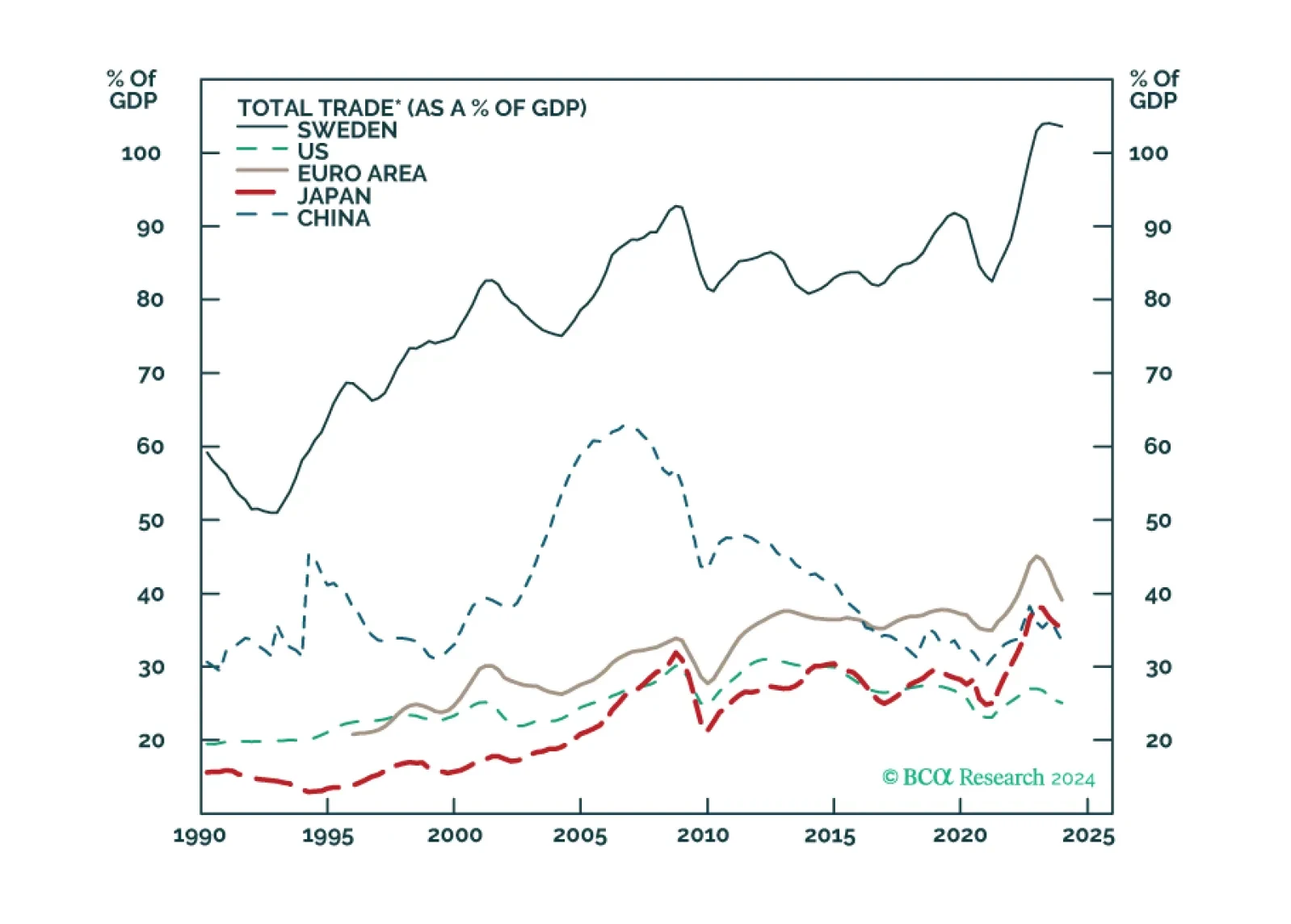
Scandinavian currencies are bearing the brunt of the recent US dollar strength. The Swedish krona and Norwegian krone are the worst performing G10 currencies since the DXY’s mid-July bottom, losing 8.6% and 7.6% of their value vis-à-vis the USD, respectively.…
Sweden’s preliminary Flash GDP data, which is subject to revisions, points a 1.5% quarter-over-quarter and 2.4% year-over-year contraction. However, this report could potentially constitute the trough in the country’s economic slowdown. Indeed, Sweden’s…
The Global Manufacturing PMI remained unchanged at 48.7 in July, indicating that the pace of decline steadied at the start of the third quarter. The details of the release show accelerating rates of decline in production, new orders, and new export orders.…