東ヨーロッパと中央アジア
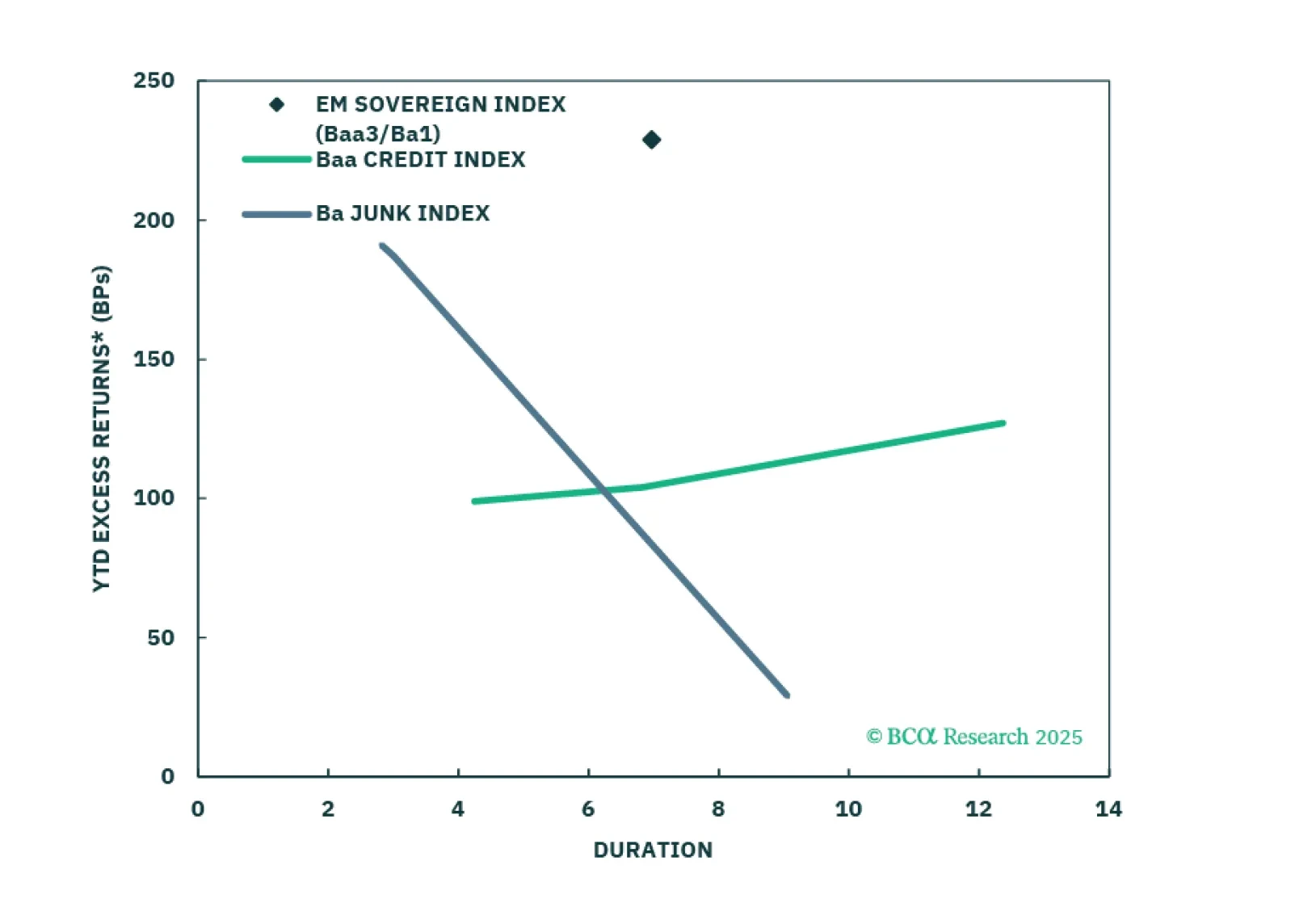
米ドル建ての新興市場債券は、過去1年間で米国企業債を上回るパフォーマンスを示しています。この上昇がまだ終わっていないと考えています。
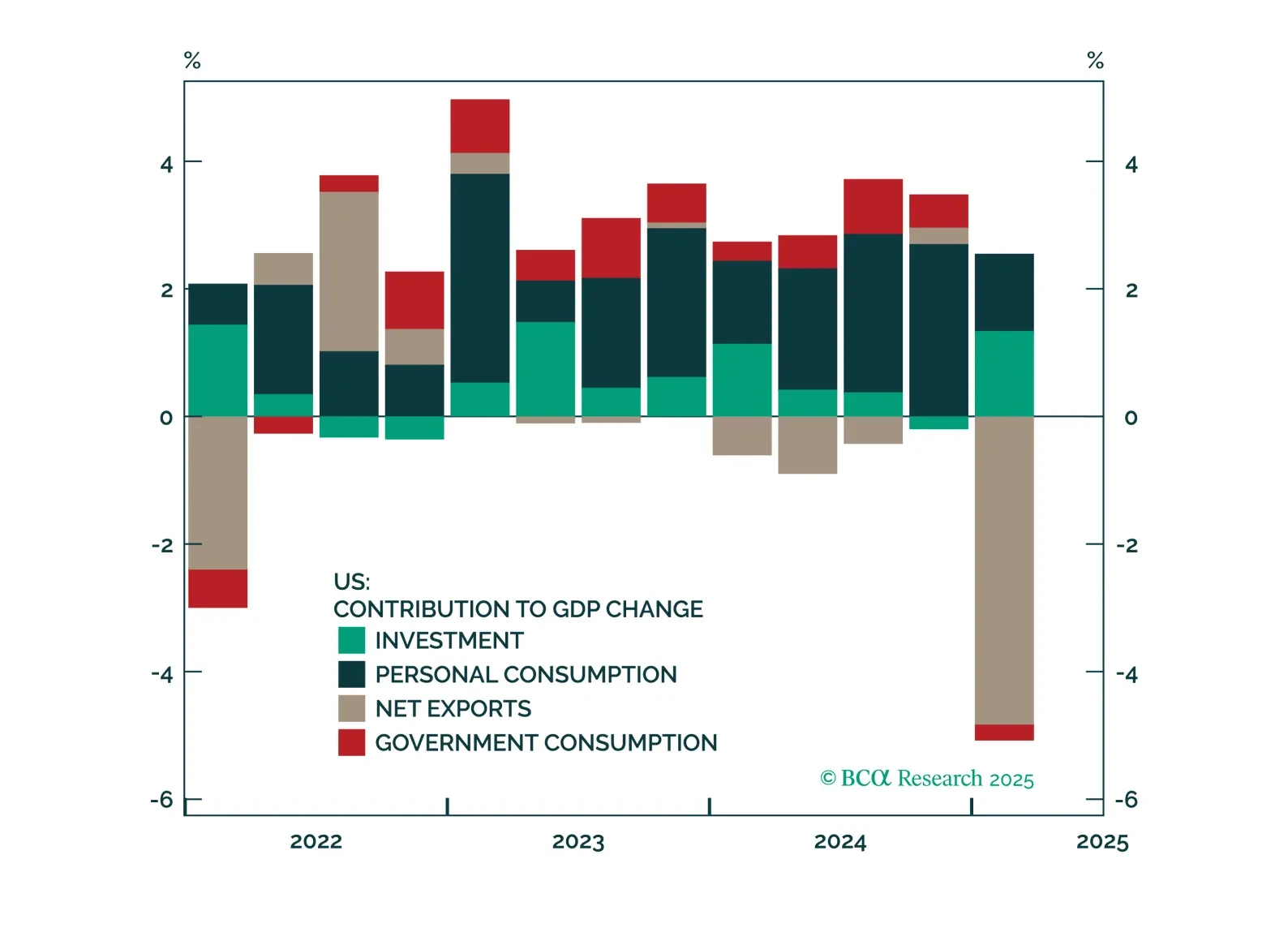
Negotiations on trade, Iran, and Ukraine will prove critical this month. Markets will remain volatile because positive data surprises enable the White House to press its hawkish tariff hikes, while negative surprises force the White House to backpedal.
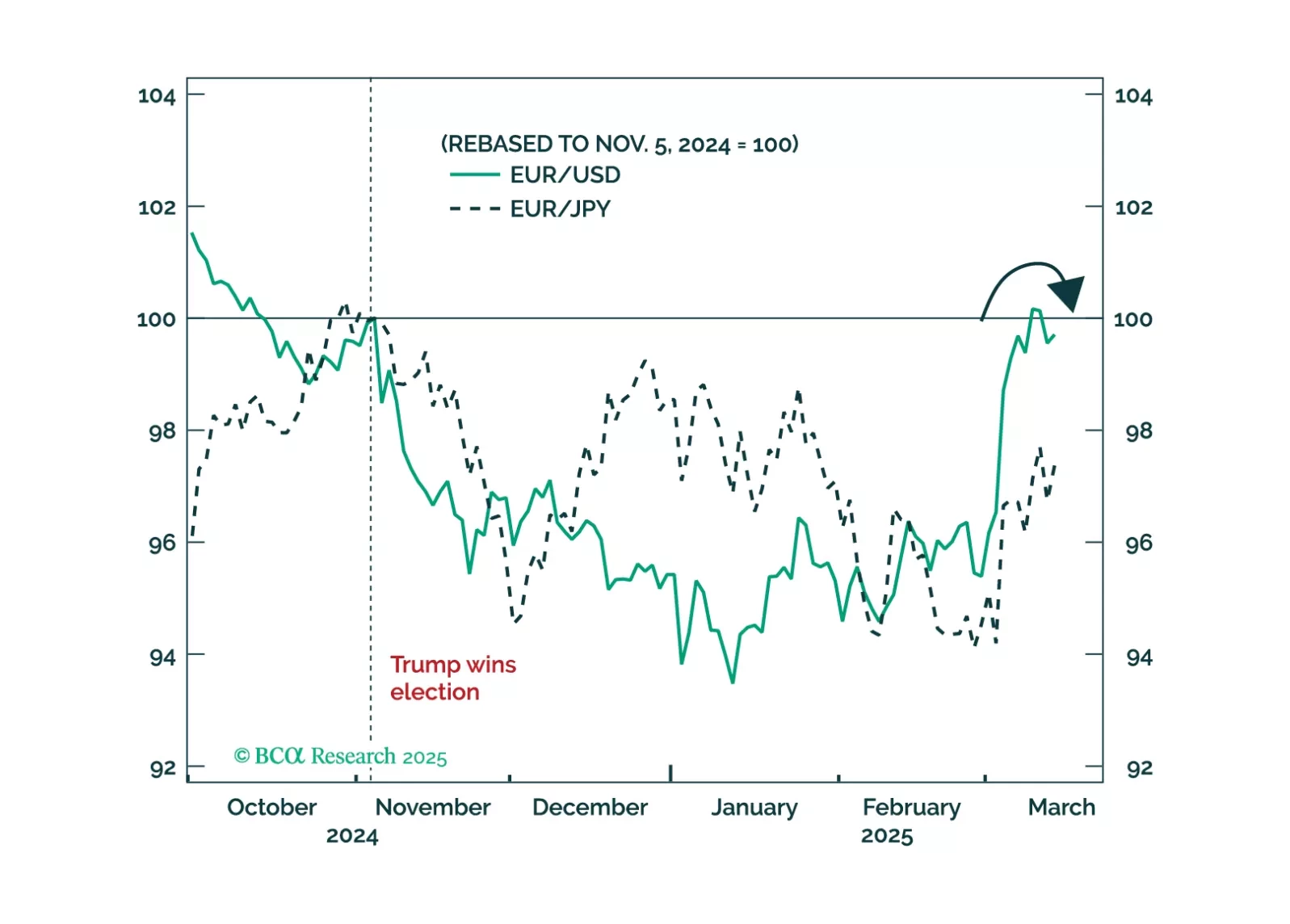
Trump’s foreign policy can be explained by rational US interests, but it requires settling the trade war with allies sooner rather than later. Book gains on EUR-USD for now.
- Congress will pass tax cuts by end of 2025 producing a fiscal thrust of about 0.9% of GDP in 2026.
- Trump will count on that stimulus as a basis for slapping tariffs on leading trade partners.
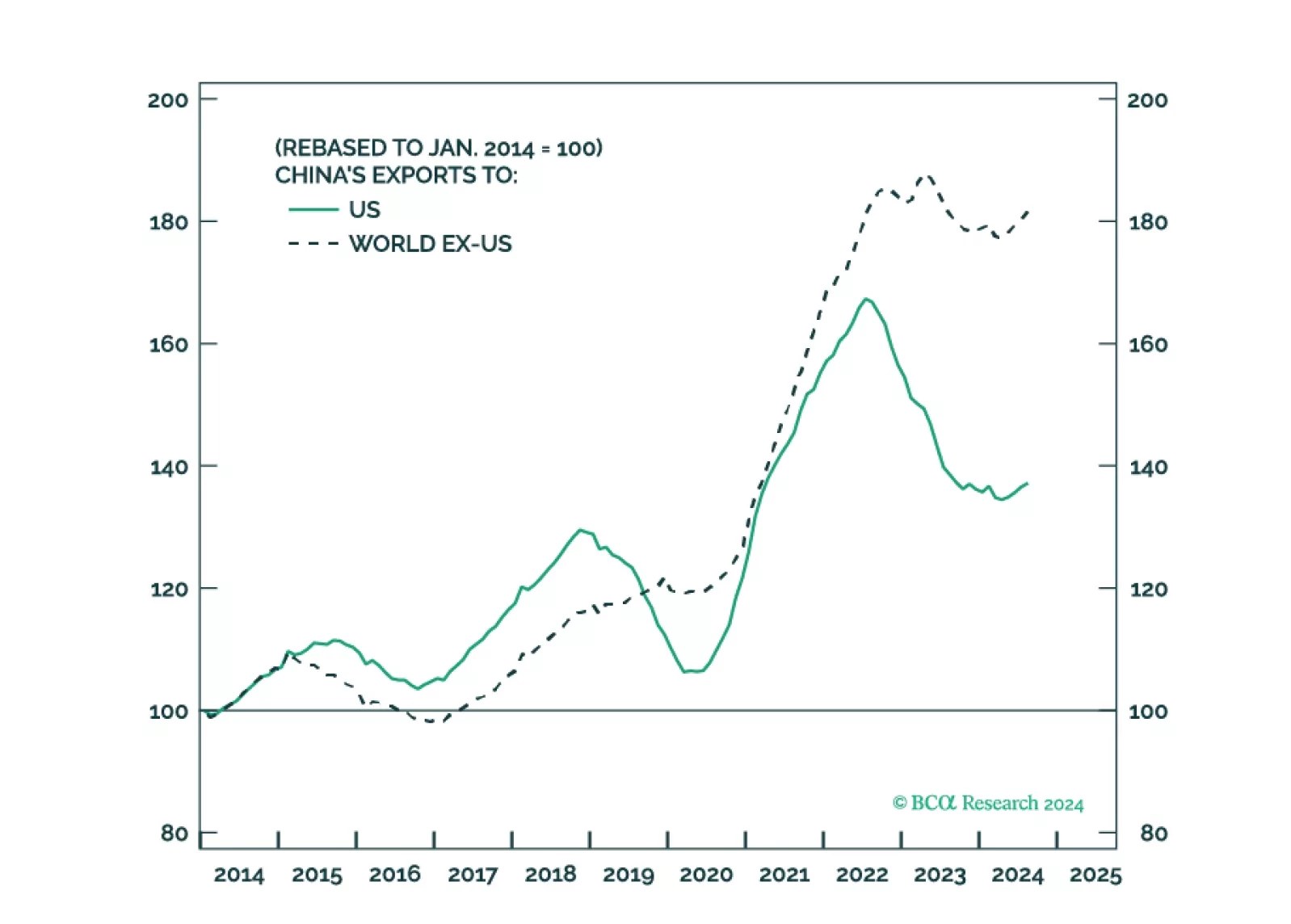
- China will retaliate against Trump and stimulate its domestic economy, while pursuing stronger trade ties with other countries. Europe will also retaliate.
- Geopolitical risk will shift from Ukraine-Russia to Israel-Iran, where the conflict will continue to escalate until a crisis point is reached within 2025.
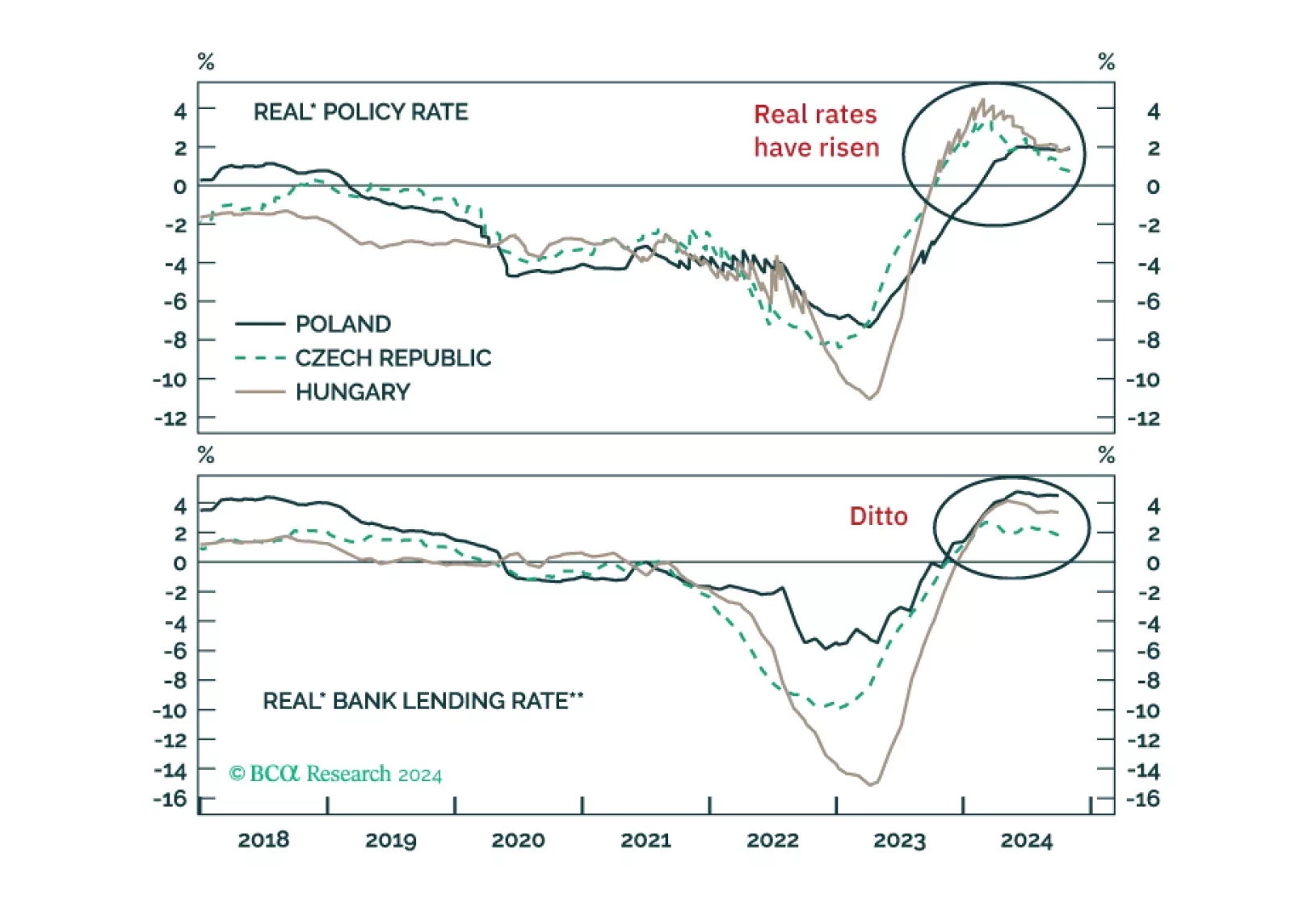
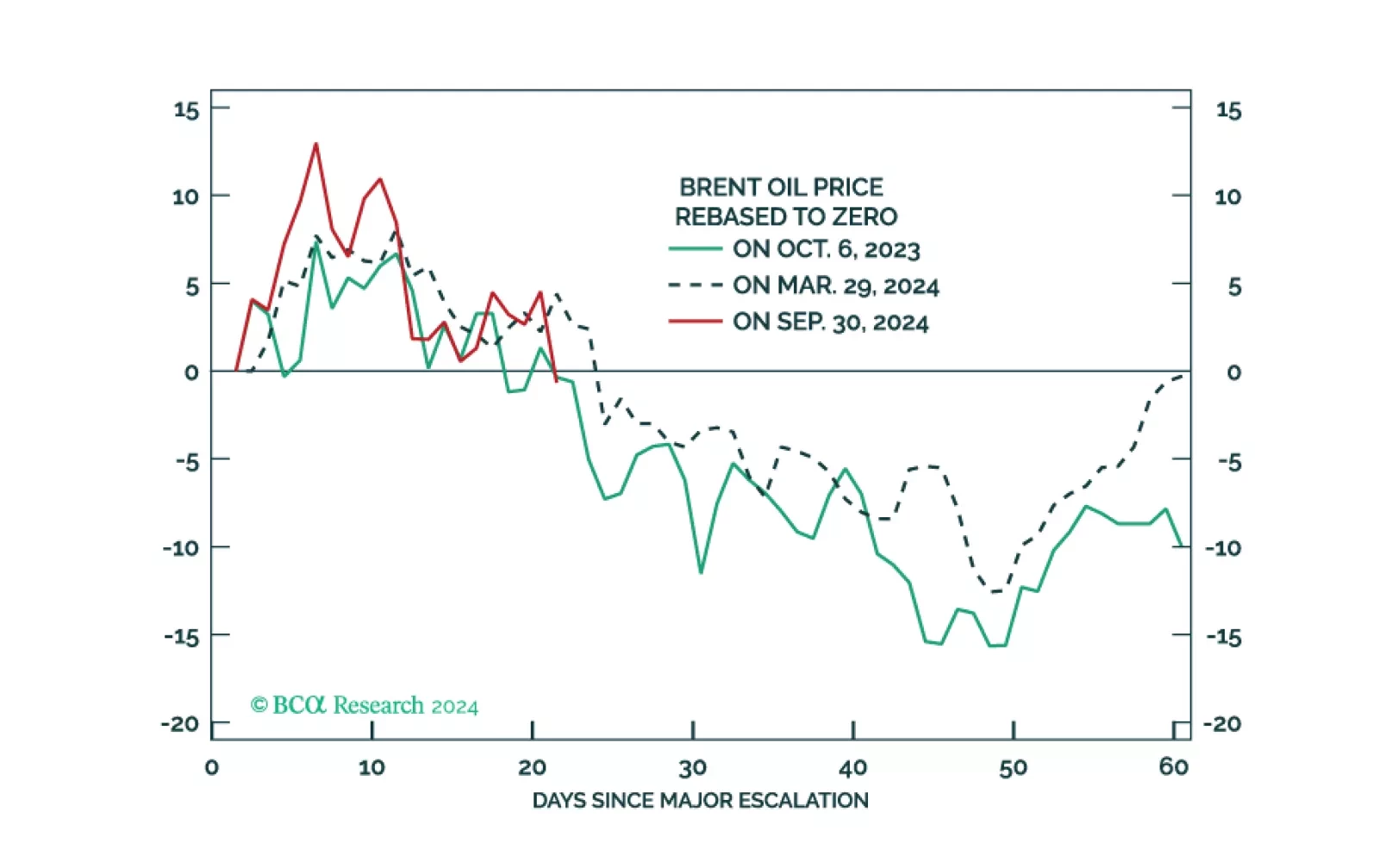
Domestic bond yields in the three major central European markets have recently inched up more than their German counterparts. This is despite economic growth staying quite weak in CE3. What should investors make of it (Chart 1)?Our take is that the CE3 yield differential over German bunds will widen in the coming months. That is due both to CE3 currency depreciations and diverging inflation outlooks. CE3 currencies are headed lower as growth in core Europe will continue to struggle.In addition, persistently high wage growth entails that core inflation in CE3 is unlikely to fall any further in the coming months, even if growth disappoints. The end of their disinflation cycle will prevent CE3 bond yields from declining considerably in the next six to nine months. Currencies And Bonds: The Drivers And Outlook CE3 currencies are heading lower vis-à-vis the greenback and the euro. That is because a crucial driver of these currencies—the growth outlook in core Europe—remains tepid (Chart 2). That is unlikely to change much going forward. Uncertainties surrounding Trump’s looming tariffs on Europe will continue to hurt business sentiments and growth in Europe. While the timing of tariffs is unknown, European capitals are preparing for executive actions shortly after Trump’s inauguration on January 20. A weak CE3 currency outlook is also negative for CE3 domestic bonds. Chart 3 shows that a depreciating currency usually coincides with a widening yield differential of CE3 domestic bonds over German Bunds. That means CE3 bonds are set to underperform their German counterparts in common currency terms as both drivers of return (‘spreads’ and currency) will work against them. Apart from the currency impact, the CE3 inflation outlook is also bond-negative. Core inflation in the central European economies appears to have bottomed out for now. The reason is persistently high wage growth – mostly due to severe labor shortages. The labor force participation rate is very high in these three countries, leaving little spare capacity in the labor force (Chart 4). Since such demographic challenges cannot be resolved anytime soon, wage growth rates will remain steep in the foreseeable future. Chart 5 shows that wage growth rates dictate CE3 core inflation. The latter, therefore, will likely hover above the central bank’s upper target bands in the foreseeable future. That, in turn, will put a floor under bond yields. The bottom line is that CE3 domestic bond spreads versus German bunds will widen both due to CE3 currency weakness and cyclical inflation outlook. That calls for underweighting CE3 domestic bonds vis-à-vis bunds in fixed-income portfolios. CE3 bonds will also underperform their EM counterparts on a similar logic: the cyclical disinflation process is over in CE3 but not in most EM economies. As such, CE3 will likely witness relative bond yield widening vis-à-vis elsewhere in EM. A Whiff Of Stagflation?Weak core European growth usually depresses central Europe's highly connected economies. Indeed, the persistent contraction in European manufacturing orders points toward muted CE3 growth ahead (Chart 6). The latter’s domestic headwinds will accentuate that weakness. These headwinds will hurt the Czech and Hungarian economies much more than the Polish economy (details below). However, as mentioned, inflation will remain above the central bank targets everywhere. That suggests a stagflationary environment. Real policy rates in CE3 have not only turned positive, but they are also higher than pre-pandemic levels (Chart 7, top panel). The same can be said about real bond yields. Real bank lending rates have also become restrictive, especially in Poland and Hungary (Chart 7, bottom panel). Put differently, monetary conditions have tightened meaningfully, which is growth-negative.The central banks of Poland and the Czech Republic recently revised down their growth projections for 2025, while revising up their inflation projections. The Polish and Hungarian central banks have also paused their easing cycles. The Czech National Bank lowered its base rate by 25 basis points earlier this month but acknowledged that inflation will remain above the target next year.All this indicates that policymakers are bracing for a stagflationary environment, in which growth remains low but inflation remains above the central bank’s targets.This also means further policy rate cuts will be difficult to come by. The upshot is that real borrowing costs will remain relatively high, further weighing on growth.Data indicates that domestic demand is already weak, particularly in the Czech Republic and Hungary. This can also be seen in retail sales volume levels – which have remained below their 2021-22 peak (Chart 8). Fiscal policy has been a headwind, too, particularly in the Czech Republic and Hungary this year. Next year, however, the fiscal thrust will be only marginally negative, as per the IMF. To be sure, Poland is much less exposed to a struggling core Europe than the other two. The country is also set to receive a significant EUR 9.4 billion of EU grants and loans in the coming months (in addition to the EUR 6.3 billion they received in 2024 so far). This will help put a floor under its growth, as those funds will be deployed in various infrastructure projects. Overall, the Polish growth will fare relatively better than the other two. Polish core inflation will also likely perk up more than others. Czech inflation, on the other hand, will be the least pronounced. Geopolitical Risk Premium Spikes In Near TermThe Ukraine war escalated in a way that caught global investors’ attention on November 18 when US President Joe Biden gave Ukraine approval to use long-range missiles against Russia, including targets in the Russian heartland.Biden’s action stemmed from North Korea’s deployment of nearly 10,000 troops to fight Ukrainians near Kursk, Russia, where Ukraine invaded in August. The United Kingdom also gave approval for Ukraine to use long-range missiles. Ukraine promptly staged attacks against Russian supply lines using these missiles, triggering a harsh Russian reaction.Russia retaliated by firing a new hypersonic missile against Ukraine and revising its nuclear doctrine to lower the threshold for the use of nuclear weapons. Previously Russia only said it would use the bomb in the event of an existential threat to the state. Now Russia says it will consider an attack by a non-nuclear state (Ukraine) allied with a nuclear state (e.g. the US or UK) as a joint attack and potentially worthy of a nuclear retaliation. In particular, an extensive Ukrainian barrage of US-made missiles and drones targeting interior Russian cities could cross the new threshold.That is a convincing reason for Ukraine to limit the use of the missiles to targets close to its border, sporadically and only to hit military supply lines. Kiev does not have an interest in crossing Russia’s red lines and provoking a nuclear attack when it cannot be certain of the extent of that attack, the targeting, or that NATO would retaliate. Russia, for its part, would prefer not to use nuclear weapons because of the potential radioactive cloud close to home and the risk that NATO would retaliate by staging a conventional military strike against Russian forces operating in Ukraine. The Kremlin cannot be certain since the NATO states have a strong interest in preventing nuclear blackmail from becoming a new norm.Ultimately, Russia will use nukes if Ukraine goes too far – otherwise, it would not have staked its credibility on this new threat. Note that there is a high probability of near-term escalation of the war, including nuclear brinksmanship, even if the odds of a nuclear detonation remain in the low single digits.First, Ukraine’s fear of abandonment – and need to gain leverage ahead of any ceasefire talks – forces Kiev to escalate the war in the short run.Ukraine expects Trump and the Republicans to reduce military and financial aid since they were elected on the back of inflation and will seek to cut government spending. A loss of American support will signal to Europe that the war is effectively decided, as Ukraine will never join NATO.The Europeans want the war to end sooner rather than later because they fear the danger of a spillover into NATO territory as well as rising domestic political opposition. German and French leaders have already spoken to Vladimir Putin since Trump’s election, as they see the writing on the wall. Thus, Ukraine must take the initiative to prevent the West and Russia from foisting a ceasefire upon it, which is precisely what occurred in 2015 after Russia invaded Crimea.Second, the outgoing Biden administration views the incoming Trump administration as a threat to American democracy and a friend to Russian strategy. Trump wants to bring the war to a rapid ceasefire, but Russia would then succeed at establishing a sphere of influence and exposing a lack of resolve on the part of the Western democracies. Hence, Biden is attempting to speed up financial and military aid to Ukraine so that it can improve its war efforts, increase its leverage, and potentially create enough momentum to prevent Trump from utterly abandoning Ukraine or approving a lopsided ceasefire in Russia’s favor. Thus, the war is escalating as we go to press and will continue for at least the final two months of Biden’s “lame duck” presidency. After that, Trump’s inauguration on January 20 creates a clear diplomatic avenue for the reduction of tensions. Later, after Trump takes office, another risk will emerge for central Europe: the risk that Russia will stage a provocation against a NATO country to test whether Trump will “defend every inch” of the alliance’s territory, as Biden pledged to do. If Trump hesitates, Russia will undermine Eastern European trust in NATO, increasing the central European geopolitical risk premium. If not, Russia knows its limits for a while. Bottom Line: There is a major increase in Russia-NATO tensions around the endgame in Ukraine, which should inject a risk premium into Polish, Hungarian, and Czech currency and assets at least for the next few months around the US power transition and possibly for a while longer. Investment ConclusionsCurrency: The Polish zloty has been the strongest of the three currencies over the past year as the markets celebrated Poland’s political return to the European manifold after the elections late last year. Now that event has been largely priced in, and the geopolitical risk is rising again. Investors should expect a relapse in Poland’s currency and share prices. A weak core European growth outlook means all CE3 currencies have a further downside compared to the greenback. Currency investors should stick with our recommendation of shorting an equal-weighted basket of CE3 currencies versus the greenback (Chart 2, above).Fixed Income: Considering the inflation outlook and currency prospects, we recommend that EM domestic bond portfolios downgrade the Czech Republic from overweight to neutral and Poland and Hungary from neutral to underweight.Investors should also take the same stance relative to German bunds: neutral the Czech Republic and underweight the other two (Chart 9).Notably, on October 21, 2024, we closed our long position in Czech domestic bonds. For USD-based investors, this recommendation has returned a 12.7% gain since its inception on December 08, 2022.We also booked profits on our trade “Pay Polish 2-year swap rates / Receive Czech 2-year swap rates,” which yielded 120 bps gains since its initiation on November 22, 2023. Equity: Given the weak growth outlook, the CE3 stock prospects remain lackluster. Tight monetary stances in all three countries and a negative fiscal thrust in the Czech Republic and Hungary will add to their headwinds. EM equity portfolios should downgrade both Polish and Czech stocks from overweight and neutral, respectively, to underweight. Hungary should also remain underweight (Chart 10). The rise in geopolitical risk in the region will likely exacerbate pressures on CE3 assets in the short term.Rajeeb PramanikSenior EM Strategistrajeeb.pramanik@bcaresearch.comMatt Gertken Chief Geopolitical Strategist mattg@bcaresearch.comFollow me onLinkedIn & X

With cross-asset price action mainly revolving around the Trump trade since the election, Tuesday’s headlines surrounding Russia and Ukraine brought investors’ attention back abroad. As predicted by our Geopolitical strategists, Russia responded to the Biden…
11月6日(水)東部標準時(EST)午前10時にライブでご参加ください。米国大統領選の影響について、BCA ライブ&アンフィルタードの会合で議論します。サービスは例外的に全てのクライアントに公開されます。
エグゼクティブ・サマリー
銀行クレジット・インパルスのマイナスは実質GDPの大幅な鈍化を示唆
銀行のクレジット・インパルスがマイナスであることは、実質GDPが大幅に鈍化することを示している
銀行のクレジット・インパルスがマイナスであることは、実質GDPが大幅に鈍化することを示している
トルコは持続的なインフレ鈍化への道筋を確立しようとしている。しかし、その道筋はマクロ政策を長期間にわたり引き締めたままにし、経済の大幅な弱化と失業率の上昇を容認することを必要とするだろう。
早期の緩和はインフレの再加速を招くだろう。
クレジット・インパルスがマイナスであることは、トルコの経済成長がさらに鈍化することを示している。製造業の受注が縮小していることも同様の方向を示している。
名目売上高の伸びが鈍化する一方で借入コストと賃金負担が非常に高止まりしているため、トルコ企業のマージンは急落するだろう。
それに伴う利益の縮小は設備投資を抑制し、解雇を引き起こすだろう。
結論: 現時点では、政策当局が引き締め的政策の約束を守ると仮定している今後数か月間は。その結果、トルコの現地通貨建て債券の利回りは低下するだろう。 投資家は国内債券をEMベンチマークに対するアンダーウェイトからニュートラルへ格上げすべきである。 とはいえ、政府が今後数か月を越えて金融・財政政策を積極的に緩和しないと確信しているわけではない。だからこそ、トルコの国内債券をEMベンチマークに対してオーバーウェイトに格上げし、トルコの金融市場に構造的に強気になるところまでは踏み切っていない。
トルコ株式は企業収益の縮小によりさらに下落するだろう。EMベンチマークに対して引き続き劣後する見込みである。
トルコのソブリン・クレジットもEMベンチマークに対して劣後するだろう。
特集
トルコのマクロ環境は分岐点にある。もし当局が引き締め的政策を維持すれば、今後数か月で本格的なインフレ鈍化を達成する可能性がある。そうでなければ、再びインフレの波を経験することになるだろう。
現時点では、政策当局はインフレを低下させることに意欲を示しているように見える。ただし、現在の50%から一桁台への持続的なインフレ鈍化を達成するには、金融政策と財政政策の双方を長期間にわたって引き締めたままにしておく必要がある。
経済がつまずいており失業が上昇する可能性があることから、当局が早期に引き締めを放棄する可能性もある。そうした場合、インフレが再び台頭するだけでなく、インフレ鈍化のトレードも崩壊する──債券利回りは再び急上昇し、リラは急落するだろう。
現状では、これまでの金融引き締めの遅行効果がトルコ経済に浸透している。経済成長は急速に低下している。その結果、ヘッドラインおよびコアのインフレは低下しつつあり、とはいえ2025年半ばでも約30%と高い水準にとどまるだろう。
進行中のインフレ鈍化と中央銀行の政策金利の変更がないことは、トルコの実質金利が今後数か月間プラスを維持し、場合によっては上昇することを意味する。進行するインフレ鈍化の中での高い実質金利はトルコ通貨とフィクスト・インカム市場を支える可能性がある。通常、国内債利回りが低下するとトルコ株は好調になることが多いが、今回は下で説明するように例外になる可能性がある(チャート 1)。
チャート 1
債券利回りが低下するとき、トルコ株はしばしば好調
債券利回りが下落すると、トルコ株の価格はしばしば好調になる
債券利回りが下落すると、トルコ株の価格はしばしば好調になる
成長の急減速とそれに伴うインフレ鈍化の可能性が高まっていることを踏まえ、投資家にはEMのフィクスト・インカム・ポートフォリオにおいてトルコの現地通貨建て債券をアンダーウェイトからニュートラルへ格上げすることを推奨する。もし当局が早期に景気刺激の兆候を示すようなら、我々は今後数か月で再び評価を引き下げる。
一方、トルコ株は利益の急落というより強い逆風に直面している。したがって, EMの株式ポートフォリオにおいてトルコ株をアンダーウェイトのままにしておくべきである。
引き締め政策のもたらす不満
チャート 2
実質の借入コスト上昇がクレジット成長を押し下げた
実質借入コストの上昇が信用拡大を鈍化させている
実質借入コストの上昇が信用拡大を鈍化させている
トルコ中央銀行は政策金利を2023年6月の8.5%から今年3月にかけて50%まで引き上げ、その後据え置いた。この措置はトルコの内需を大幅に減速させた:
経済の弱さがインフレの低下に寄与し、その結果、実質金利は数年間の深刻なマイナスからついにプラス圏に入った(チャート 2、上二つのパネル)。
実質ベースでの高い借入コストはクレジット成長を押し下げた。現地通貨建ての銀行ローン成長率は85%から30%未満に減速した。インフレで調整すると、現在は実質で10%の縮小に転じている(チャート 2、下段)。
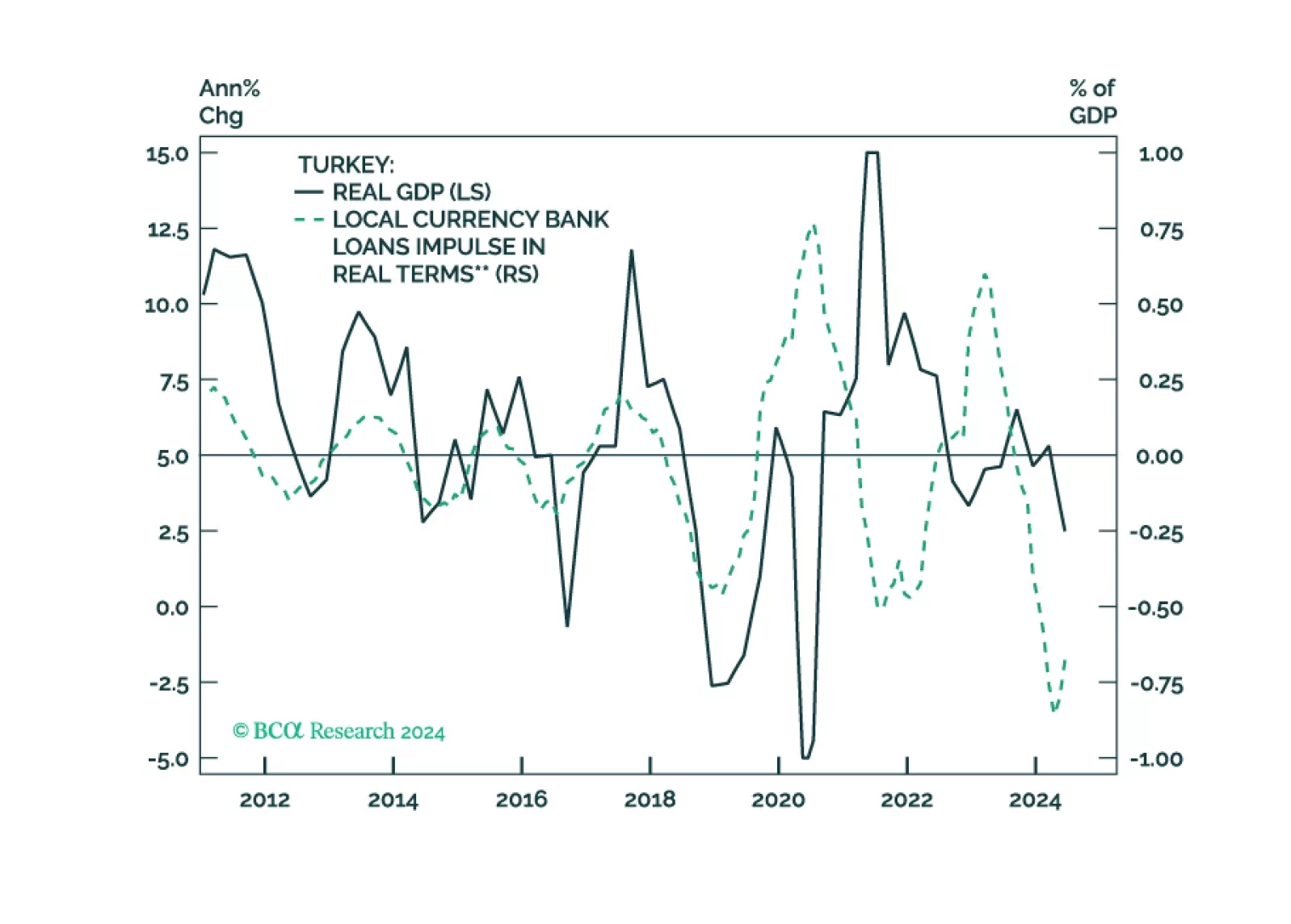
銀行クレジット・インパルス(銀行クレジットの二階微分)も実質でマイナスに転じている。歴史的に、実質の銀行クレジット・インパルスがマイナスに転じたときはいつも実質GDPの著しい鈍化の先触れであった。今回も例外ではないだろう(チャート 3)。 とはいえ、トルコ経済が高インフレ体制を断ち切るには、経済はさらに大きく減速し、おそらくしばらくの間縮小する必要がある。
一方、2025年の財政計画では政府は名目の財政支出を50%増加させることを提案しており、これは2024年9月までの12か月間で実際の財政支出が100%増加したのとは対照的である(チャート 4)。
実質ベースでは、政府支出の成長率は(2025年のインフレが平均30%になると仮定した場合でも)依然として強い15%となる見込みである。ただし、過去12か月の実質財政支出の35%増よりは低い。
チャート 3
銀行クレジット・インパルスのマイナスは実質GDPの大幅な鈍化を示唆
マイナスの銀行信用インパルスは、実質GDPの大幅な鈍化を示唆している
マイナスの銀行信用インパルスは、実質GDPの大幅な鈍化を示唆している
チャート 4
予算案は来年の財政支出が減速することを示唆
予算案は来年の財政支出が減速することを示している
予算案は来年の財政支出が減速することを示している
この1年間の過度な財政支出は、金融引き締めの効果を一部相殺することでインフレを助長してきた。来年の予定予算はよりインフレ抑制的である。もし財政支出の伸びがこれまで提案されている水準より低くなるなら、経済はさらに大きく減速し、失業は著しく上昇するだろう。
当局は折れるか?
チャート 5
トルコの製造業はさらに収縮するだろう
トルコの製造業はさらに縮小する見込みだ
トルコの製造業はさらに縮小する見込みだ
重要な問いは、当局がインフレを断ち切るために必要な経済の大幅な減速や景気後退、失業率の急上昇を容認するかどうかである。
この問いは早晩重要になるだろう。トルコ経済は既に著しく減速しており、失業率は大幅に上昇する見込みである。
家計消費は2024年第2四半期時点で実質でわずか2%にまで落ち込み、今後さらに低下する見込みである。その一因は、消費者ローンやクレジットカードを含む実質の銀行クレジットが縮小していることである。
供給面でも減速は明白である。製造業生産はマイナス5%で縮小している。製造業の新規受注が深刻な縮小モードにあるため、この収縮は続く見込みである(チャート 5、上段)。
ちなみに、トルコの主要輸出先である欧州連合からの受注も同様に弱い。したがって、全体の製造業の見通しは暗いままである(チャート 5、下段)。
成長の減速はトルコ企業の売上高成長の急落にも表れている。売上高の弱さは、より高い借入コストの下で企業の利益率にも既に悪影響を与え始めている(チャート 6)。
さらに企業の問題を追い打ちしているのは、労働コストの急上昇である。高い賃金負担と売上高の減速が同時に起きることは、マージンが大幅に低下するもう一つの理由である。
全般的に、非金融企業のネットマージンは現在の異常に高い9%から今後1年で6~7%台へと大幅に低下する可能性が高い。名目の売上高成長率がプラスを維持したとしても、大きな利益縮小を伴うことになる(チャート 7)。
チャート 6
売上高の減速で利益率は大きく低下するだろう…
トップラインの減速に伴い、利益率は大幅に低下する…
トップラインの減速に伴い、利益率は大幅に低下する…
チャート 7
…高い借入コストと急騰する賃金負担がそれに重なる
…が高い借入コストと大幅な賃金支出に直面する
…が高い借入コストと大幅な賃金支出に直面する
利益の急激な縮小は負の外部効果をもたらす。既に実質で停滞している設備投資をさらに抑制するだろう(チャート 8)。
利益の縮小は採用抑制も招く。マンパワー調査は今後数か月でトルコの失業率が著しく上昇することを示唆している(チャート 9)。差し迫った解雇は家計支出をさらに抑制し、全体の成長減速を強化するだろう。
チャート 8
設備投資は縮小へ
設備投資が縮小へ
設備投資が縮小へ
チャート 9
トルコの失業率は大幅に上昇する見込み
トルコの失業率は大幅に上昇する見込みだ
トルコの失業率は大幅に上昇する見込みだ
結論として、当局が引き締め的なマクロ政策を維持するならば、成長と雇用は大幅に低下する方向へ向かう。政策当局はインフレの「魔物」を退治するためにこれらの社会経済的結果を必要な代償として受け入れなければならない。もし当局が折れて早期に緩和すれば、インフレは再び加速するだろう。
国際収支
チャート 10
正統的な政策追求は国際収支とリラにとってプラス
オーソドックスな政策の追求は、国際収支(BoP)とリラにとって好材料になるだろう
オーソドックスな政策の追求は、国際収支(BoP)とリラにとって好材料になるだろう
引き締め的な政策を継続すれば、トルコの国際収支(BoP)の最近の改善は持続されるだろう。国際収支の黒字は通貨にとってプラスに働く(チャート 10、上段)。
引き締めを続ければ内需は急落し、結果として輸入は縮小するだろう。加えて、世界的なエネルギー価格の低下があればエネルギー輸入代金を低く抑えるのに寄与する。こうしたことから、最近のトルコの貿易・経常収支の改善は持続する可能性が高い(チャート 10、下段)。
高い実質金利に誘発された外国からのフィクスト・インカム資金流入は、狭い赤字を十分にファイナンスする可能性が高い。ちなみに、トルコへのフィクスト・インカム資金流入は株式資金流入よりはるかに大きく、したがって国際収支にとってより重要である。
結論として、トルコの政策当局が金融・財政のタイトな運営を続ける限り、リラの下落ペースは過去数年ほど急ではないだろう。トルコ基準では緩やかな為替の切り下げは、国内債券市場にとってはある程度恩恵となるだろう。
投資に関する結論
通貨:通貨フォワード市場は今後12か月でリラが米ドルに対して約28%下落することを織り込んでいる。もし当局が金融・財政を引き締めるなら、実際の下落幅はそれより小さくなる可能性が高い。一方で、早期の金融・財政緩和があれば、はるかに大きな通貨下落を招くだろう。
株式:企業収益の縮小はトルコ株をさらに大きく押し下げるだろう。加えて、信用成長の鈍化と不良債権の増加は銀行収益を圧迫する。これらの逆風は、インフレ低下とそれに伴う国内債利回りの低下からのプラス要因を上回るだろう。したがって、トルコ株はEMベンチマークに対して引き続き劣後する見込みである(チャート 11)。
国内債券: 我々は政策当局が今後数か月間引き締め的な政策の約束を守ると想定している。したがって、トルコの現地通貨建て債券の利回りは低下するだろう(現在の10年国債利回りは28.6%)。結果としてのキャピタルゲインは適度な通貨切り下げによって一部相殺されるだろう。総じて、トルコの国内債券はEM国内債ポートフォリオにおいてアンダーウェイトからニュートラルへ格上げされるに値する。
とはいえ、政府が今後数か月を越えて金融・財政政策を緩和しないと確信しているわけではない。だからこそ、トルコの国内債券をEMベンチマークに対してオーバーウェイトに格上げし、トルコの金融市場に構造的に強気になるところまでは踏み切っていない。
ソブリン債:過去1年でトルコのソブリン・スプレッドは著しく縮小したが、それは無分別な財政拡大にもかかわらず起きている。今後数か月、このハイベータ市場はEM全体でのスプレッド拡大の中で劣後する可能性が高い(EM全体でのスプレッド拡大の最中に)。したがって、投資家はEMソブリン・クレジット・ポートフォリオにおいてトルコをアンダーウェイトのままにするべきである(チャート 12)。
チャート 11
大幅な利益縮小がトルコ株の劣後を招く
大幅な利益縮小がトルコ株の相対的パフォーマンス低下を招く
大幅な利益縮小がトルコ株の相対的パフォーマンス低下を招く
チャート 12
トルコのソブリン・クレジットは今後数か月で劣後するだろう
トルコのソブリン・クレジットは今後数か月でアンダーパフォームする見込み
トルコのソブリン・クレジットは今後数か月でアンダーパフォームする見込み
ラジーブ・プラマニク シニア EM ストラテジスト rajeeb.pramanik@bcaresearch.com
EM credit markets have recently defied the selloffs in EM equities, currencies, local currency bonds, and commodities. According to our Emerging Markets Strategy colleagues, such a decoupling is unusual. A potential Trump re-election could weigh heavily on…
Silver has shone this year, especially after it breached a multi-decade downward slopping trendline. Silver is a precious metal, but its heavy usage in industrial processes makes us wonder whether it is sending a bullish message on the global economy,…