Inflación/Deflación
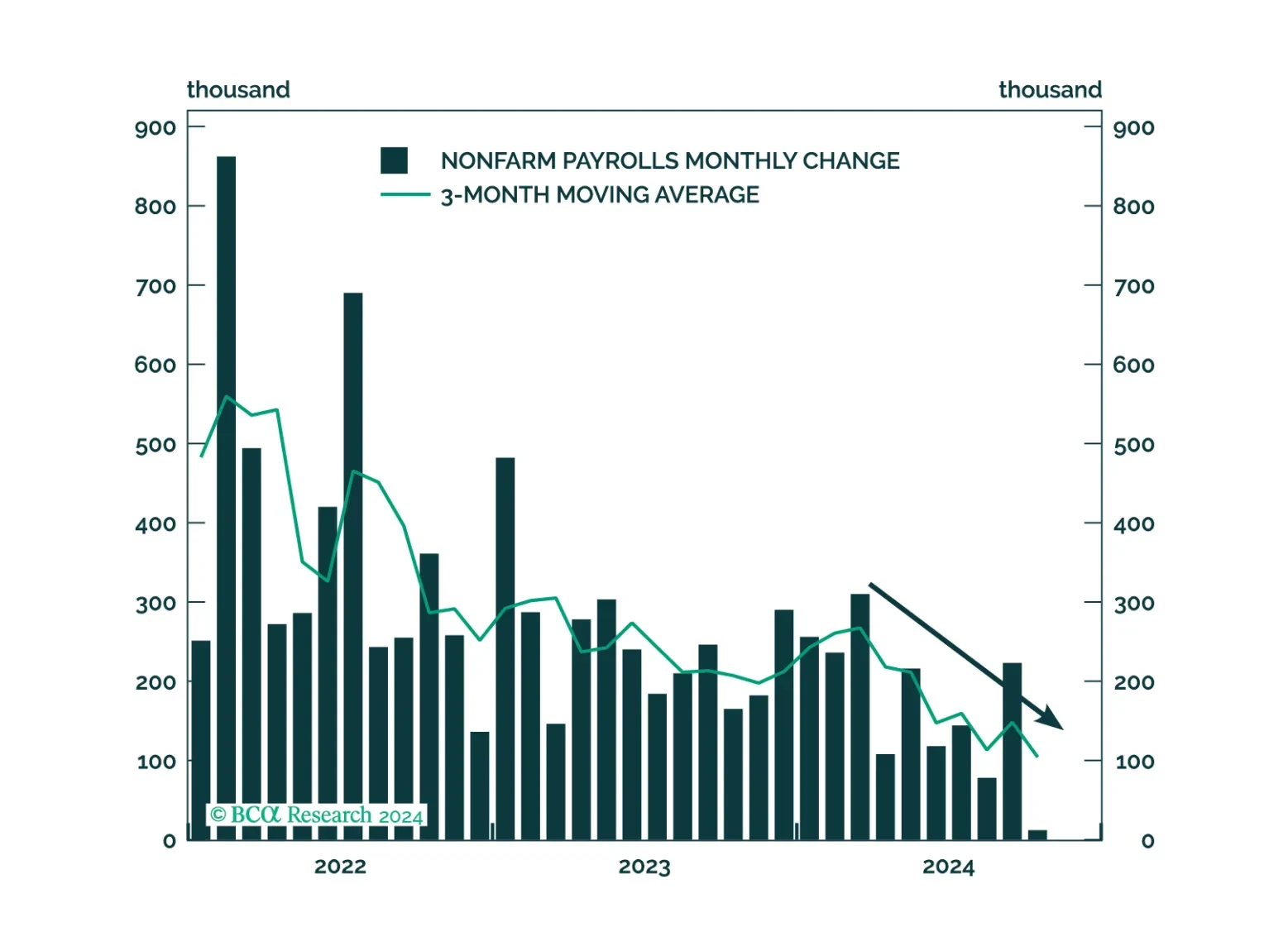
El impulso postelectoral nos lleva a creer que podríamos vernos obligados a salir de nuestra posición defensiva antes de que termine la semana, pero seguimos creyendo en nuestro pronóstico de recesión. Si finalmente somos obligados a salir, buscaremos un punto de entrada más oportuno para apostar contra los activos de riesgo una vez que la fiebre electoral haya pasado.

Our China Investment Strategy team recently met with clients in China to assess investor sentiment and discuss the outlook as Beijing unveils new stimulus measures. China’s economic recovery faces headwinds and is unlikely to stabilize until mid-2025.…
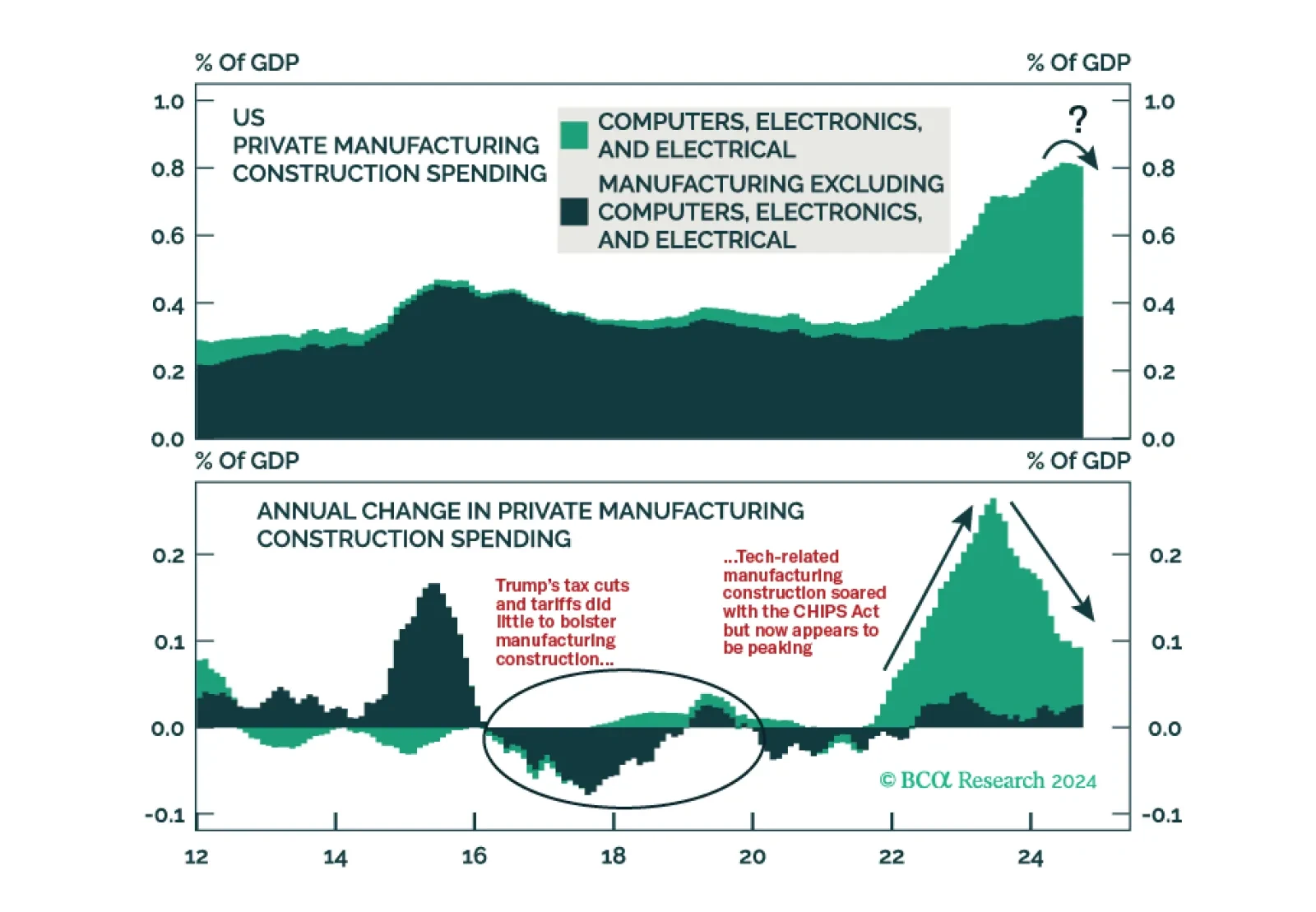
La perspectiva de una nueva guerra comercial compensa con creces las demás partes proempresariales de la agenda de Trump. Con el mercado laboral ya debilitándose de cara a las elecciones, estamos elevando nuestra probabilidad de recesión en Estados Unidos a 12 meses del 65% al 75%.

Our thoughts on the bond market’s reaction to the election and this afternoon’s FOMC meeting.
The Federal Reserve cut interest rates by 25 bps as expected yet introduced uncertainty on the timing of its next move. The statement was relatively unchanged, except for the removal of a segment from September highlighting they had gained greater confidence…
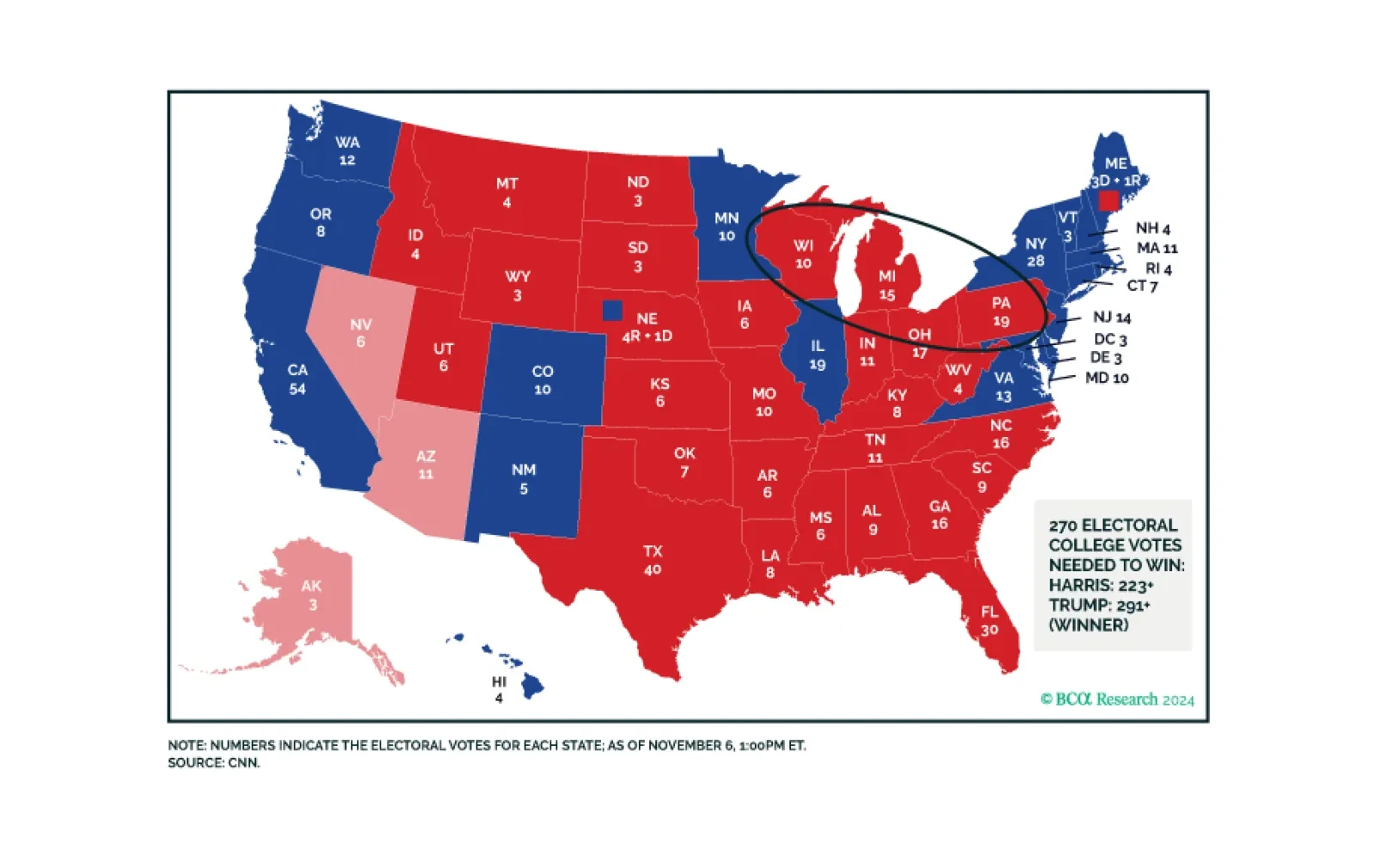
Trump’s resounding victory brings a popular mandate that ensures deregulation and higher trade tariffs. Higher budget deficit and immigration reform are also in the cards as the Republicans look like they may squeak a thin margin in the House of Representatives. Foreign policy will become more unilateral, with US assets outperforming initially.
The post-COVID inflation pushed bond yields higher, turning the stock-bond yield correlation negative and taking away bonds’ hedging properties. The relationship normalized this summer as economic data surprised negatively, pushing equities and yields lower.…
The October ISM non-manufacturing PMI beat expectations, rising to 56 from 54.9 in September, up from a sub-50 low in June. Most components indicate an expansion, but the only significant increase came from employment. New orders retreated two points to 57.4.…
Given the charged atmosphere surrounding the US election, our Bank Credit Analyst colleagues investigate whether the Fed’s dovish pivot last December was politically motivated. The Fed’s actions appear overly dovish, but the answer lies deeper. Their dovish…
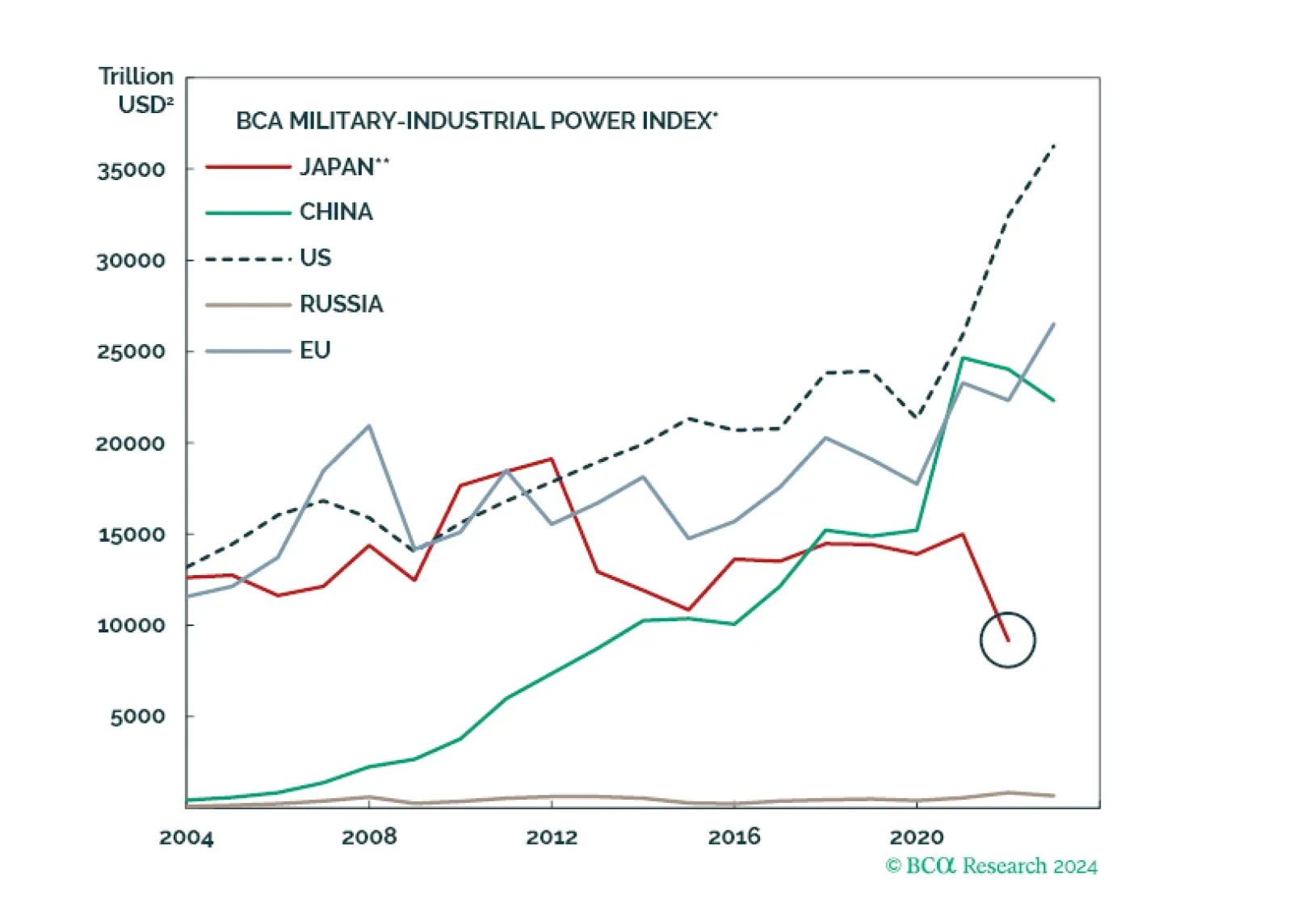
En los próximos meses, el nuevo gobierno de Japón relajará la política fiscal, lo que mejorará la demanda interna marginalmente. La política monetaria puede endurecerse más a corto plazo, pero no demasiado a largo plazo. El contexto geopolítico empuja a Japón hacia una política económica acomodaticia.